Artwork
White Mountains, New Hampshire
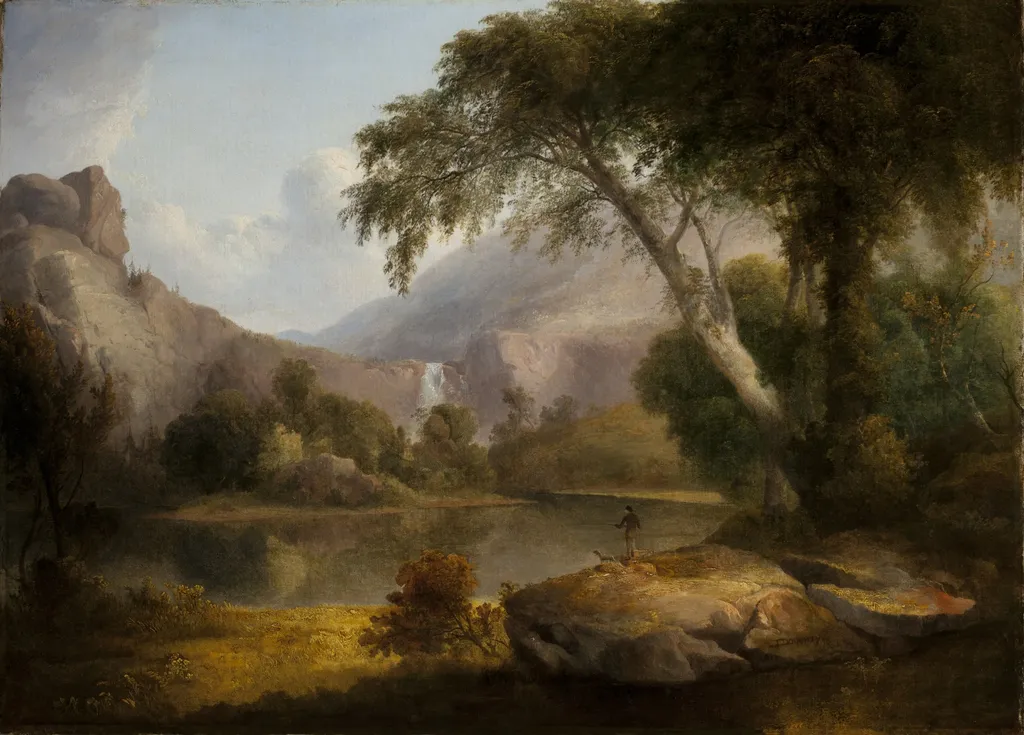
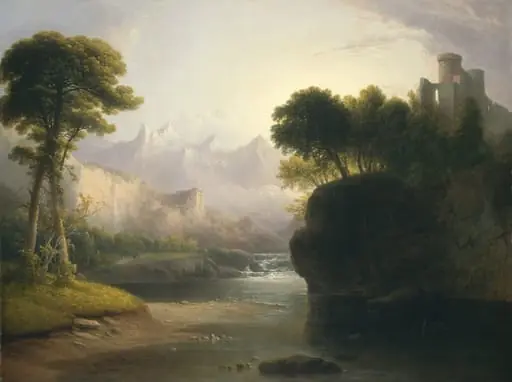
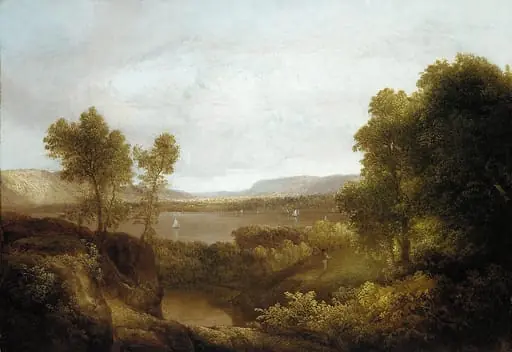
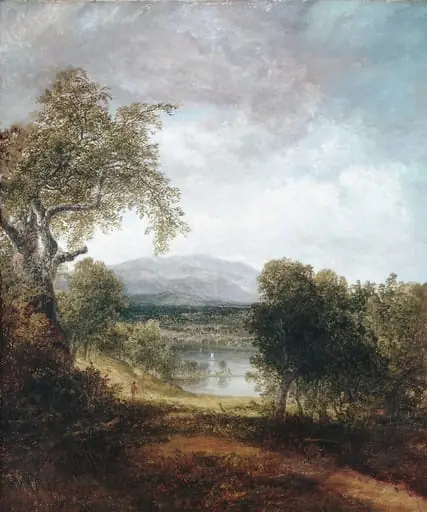
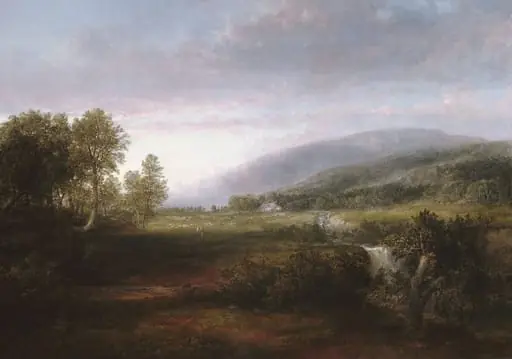
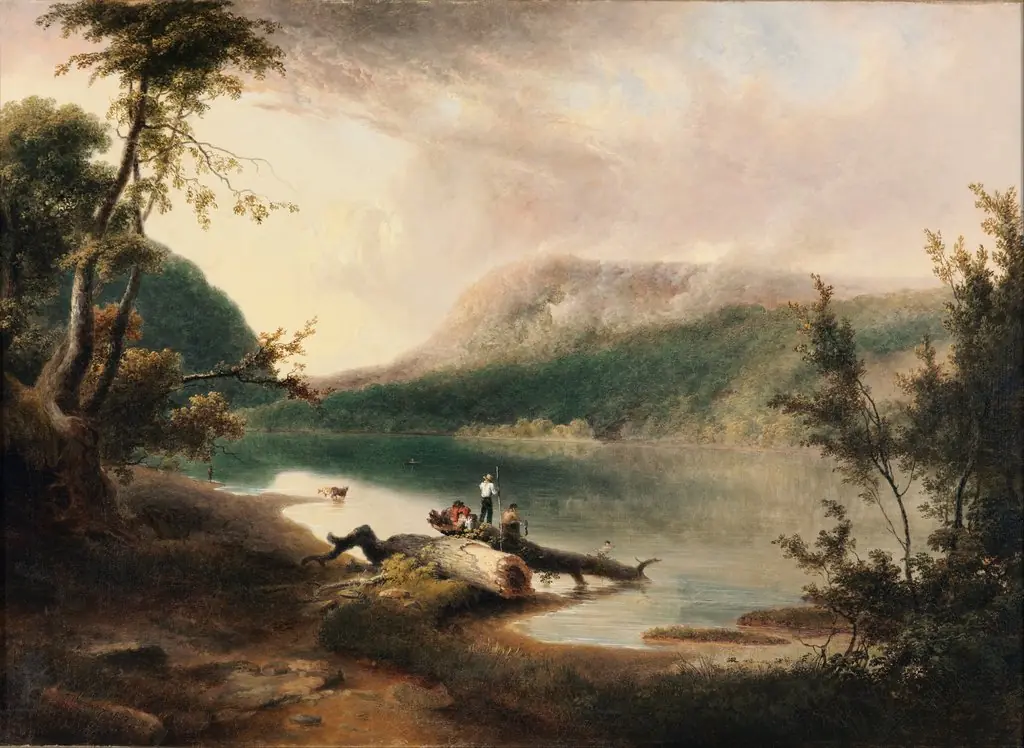
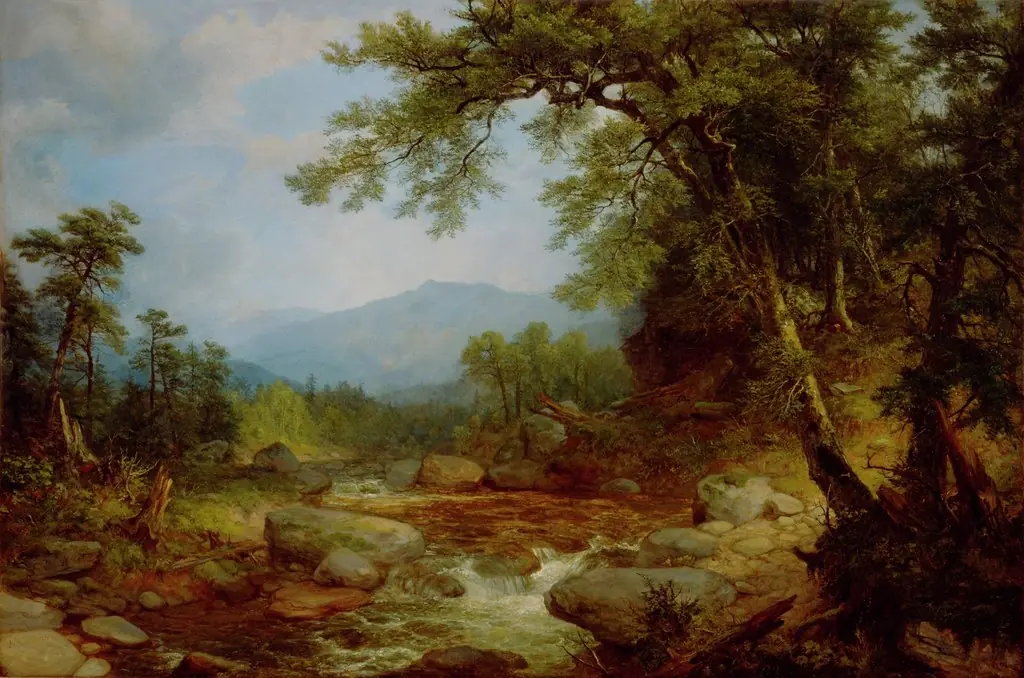
White Mountains, New Hampshire is an oil painting by the Hudson River School artist Thomas Doughty. It dates from 1836 and is held in the collection of the Los Angeles County Museum of Art.
About this work
Subject & Meaning
The painting reflects antebellum American landscape ideals, where the White Mountains were prized as emblematic of national scenic beauty and untouched nature.
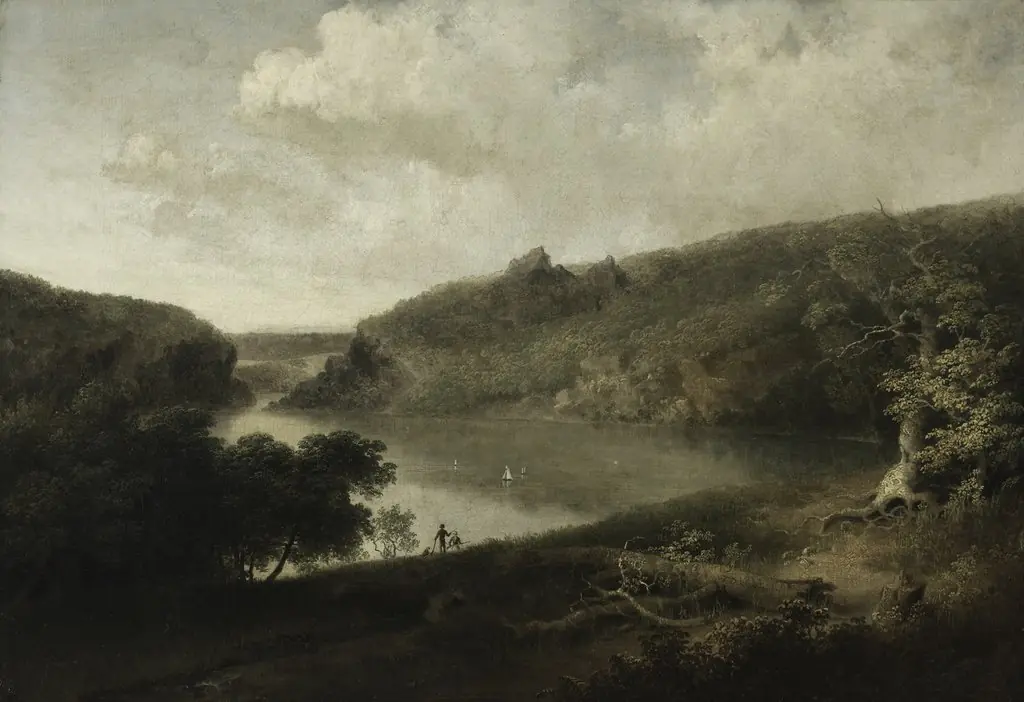
Thomas Doughty’s White Mountains, New Hampshire depicts a tranquil upland scene centered on the White Mountains region. The composition emphasizes undramatic natural features, rolling forested hills, a still lake, and a low waterfall, rendered with smooth, blended brushwork and a muted palette of greens and soft blues. A solitary figure appears fishing by the lake, an inclusion that underscores the landscape’s appeal as a retreat for quiet recreation rather than a sublime wilderness.
The painting reflects antebellum American landscape ideals, where the White Mountains were prized as emblematic of national scenic beauty and untouched nature. By excluding grand spectacles of mountain peaks or stormy skies, Doughty presents a domesticated, picturesque view aligned with contemporary taste for accessible, restorative scenery rather than rugged sublimity.
Technique & Style
Thomas Doughty's White Mountains, New Hampshire is executed in oil paint on canvas, a standard medium for mid-19th-century American landscape painting. Created in 1836, the work depicts a natural scene featuring the White Mountains, a lake, trees, and a waterfall under a cloudy sky. The composition includes a human figure engaged in fishing with a rod, integrating a narrative element within the broader scenic view.
As a landscape genre piece, the painting utilizes the oil medium to render atmospheric effects and topographical details characteristic of the era's artistic approach to the American wilderness.
History & Provenance
Thomas Doughty painted White Mountains, New Hampshire in 1836 as an oil landscape for the Los Angeles County Museum of Art, which retains it in its collection.
The work entered the museum's holdings shortly after its creation and has remained part of the institution's permanent collection since its acquisition.
Thomas Doughty painted White Mountains, New Hampshire in 1836; the work is an oil on canvas landscape that entered the collection of the Los Angeles County Museum of Art, where it remains on view. The painting has been included in exhibitions focusing on early American landscape art at the museum, highlighting its significance within the genre.
Overview
Created in 1836, this oil on canvas presents a tranquil view of New Hampshire's White Mountains. A solitary figure on a rocky ledge holds a fishing rod, gazing toward a distant waterfall that feeds a calm lake. The composition balances natural grandeur with a quiet, human presence.
Context
Doughty was a leading figure in early American landscape painting, often depicting the New England region. This piece reflects the period's growing interest in depicting the nation's natural scenery as both picturesque and morally uplifting.
Own this work as a print
Artist & collection
Artist
Thomas Doughty was an American artist associated with the Hudson River School.