Artwork
Cala Forn
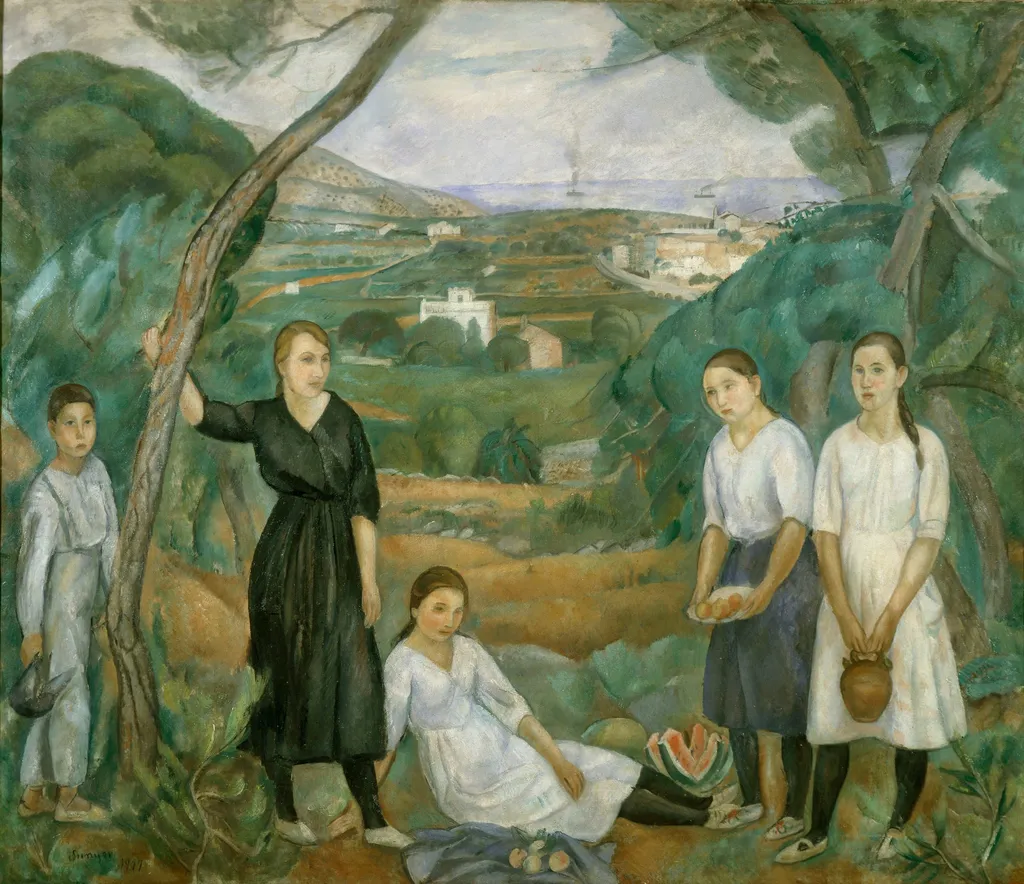
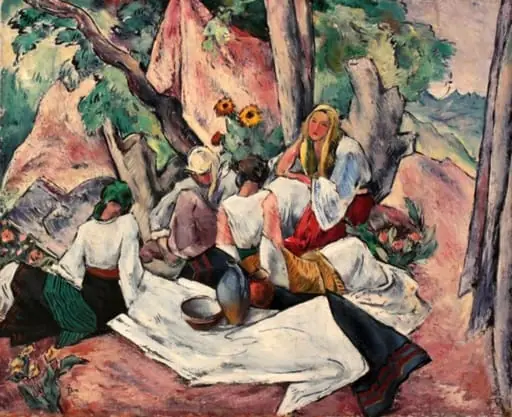
Cala Forn is an oil painting by Joaquim Sunyer. It dates from 1917 and is held in the collection of the Museu Nacional d'Art de Catalunya.
About this work
Overview
Joaquim Sunyer painted Cala Forn in 1917 using oil on canvas, capturing a quiet coastal scene in Catalonia.
Joaquim Sunyer painted Cala Forn in 1917 using oil on canvas, capturing a quiet coastal scene in Catalonia. The work reflects his engagement with both local landscapes and broader European artistic currents. Though rooted in the Noucentisme movement’s emphasis on order and classical harmony, Sunyer’s approach incorporates subtle impressionistic textures and a measured use of color to evoke atmosphere rather than narrative.
Subject & Meaning
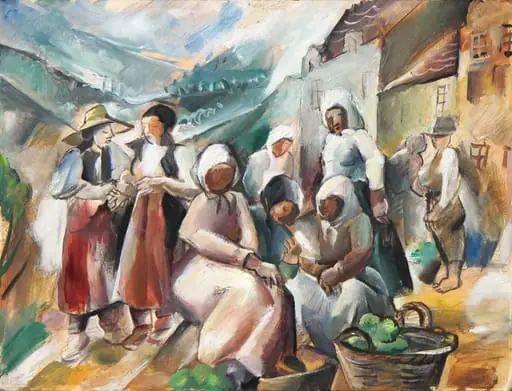
Five women are depicted in a tranquil coastal setting, one seated on the ground and the others standing nearby. Dressed in modest, light or dark garments, they appear absorbed in their surroundings rather than engaged with one another. The scene suggests a moment of stillness, evoking rural life and the quiet rhythm of coastal communities without overt symbolism or drama.
Technique & Style
Sunyer employs a dual approach: the figures are rendered with precise, realistic detail, particularly in their facial features and posture, while the background, trees, distant buildings, and water, is handled with looser, more atmospheric brushwork. This contrast enhances spatial depth and directs focus toward the figures, blending academic precision with the luminous effects of neo-impressionist color theory.
History & Provenance
Created in 1917, Cala Forn entered the collection of the Museu Nacional d'Art de Catalunya, where it remains today. Sunyer, trained under his uncle and influenced by his time in Paris, consistently returned to Catalan subjects throughout his career. The painting reflects his mature style, developed after years of studying light and form in both urban and rural environments.
Context
In early 20th-century Catalonia, Noucentisme emerged as a cultural response to modernism, favoring clarity, balance, and classical ideals. Sunyer’s work aligned with this movement’s ideals, yet retained a sensitivity to natural light and everyday life. Cala Forn exemplifies how regional identity and international techniques coexisted in Catalan art during this period.
Legacy
The painting contributes to the broader understanding of Catalan modernism as a nuanced, non-revolutionary current. Sunyer’s ability to merge realism with atmospheric landscape painting influenced later generations focused on regional identity. Cala Forn endures not as a dramatic statement, but as a quiet record of place, presence, and perception.
Artist & collection
Artist
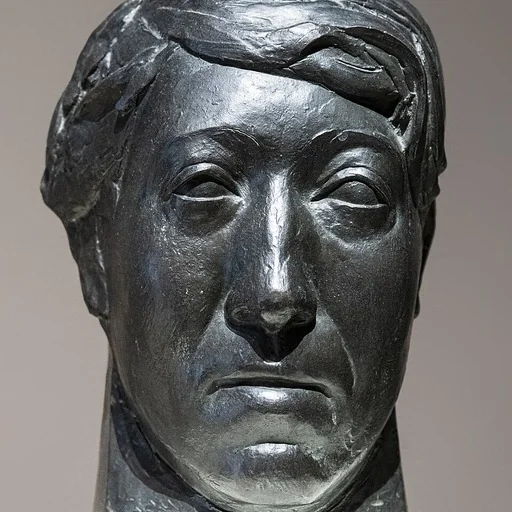
Joaquim Sunyer (Catalan pronunciation:; 1874 in Sitges – 1956) was a Catalan painter often linked to the Noucentisme movement.