Artwork
The Lady on the Terrace
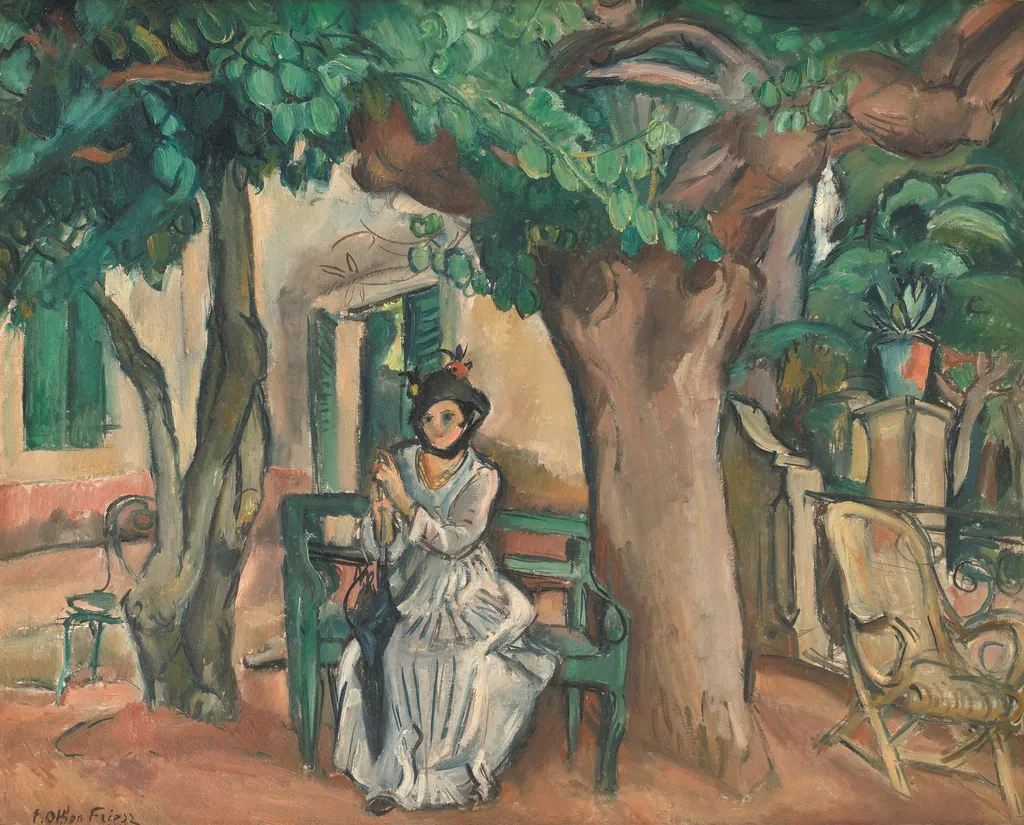
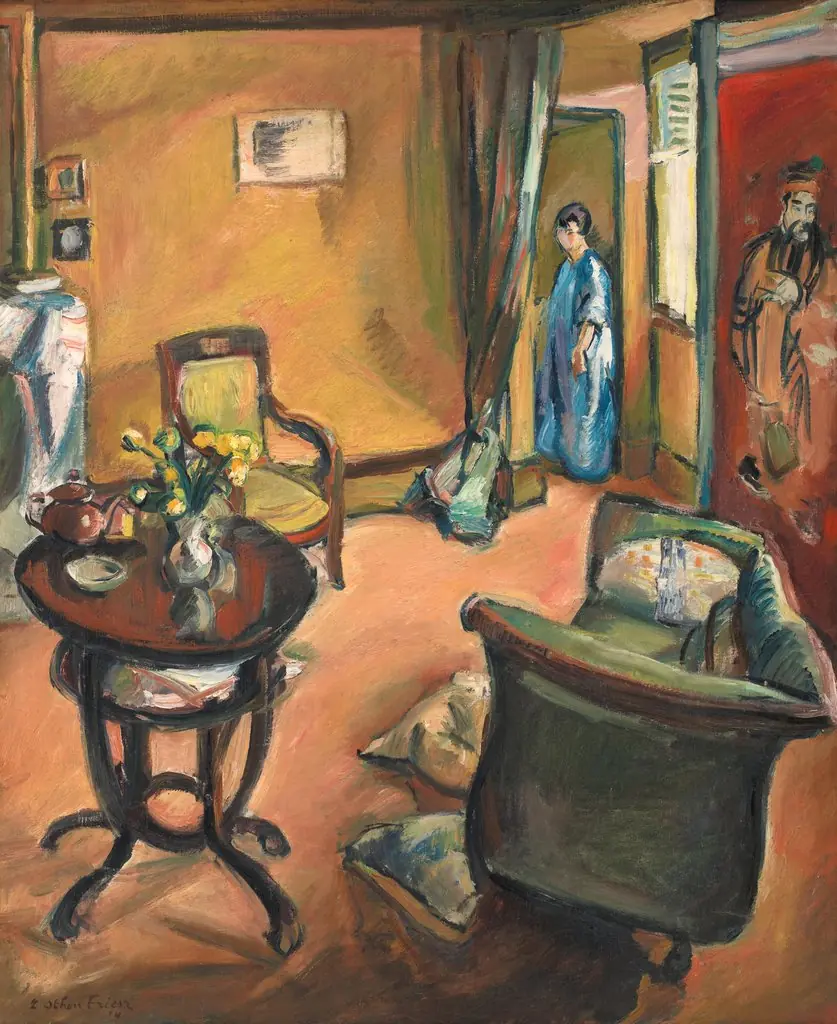
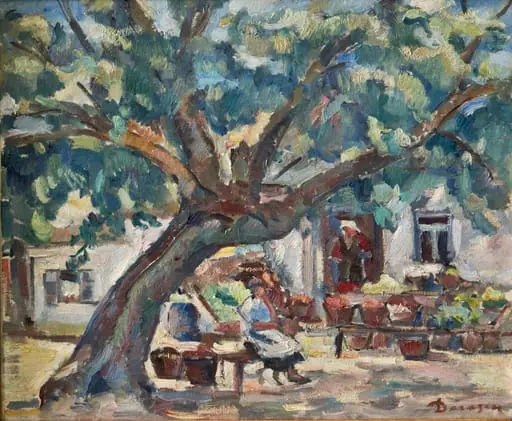
The Lady on the Terrace is an oil painting by the Cubism Synthetic artist Othon Friesz. It dates from 1914 and is held in the collection of the Statens Museum for Kunst.
About this work
Overview
The composition balances natural elements with architectural geometry, revealing Friesz’s evolving approach to modernist abstraction.
Painted in 1914 by French artist Othon Friesz, this oil-on-canvas work depicts a woman seated on a terrace. Though Friesz was initially linked to Fauvism, this piece reflects a shift toward Synthetic Cubism, characterized by simplified forms and structured color planes. The composition balances natural elements with architectural geometry, revealing Friesz’s evolving approach to modernist abstraction.
Subject & Meaning
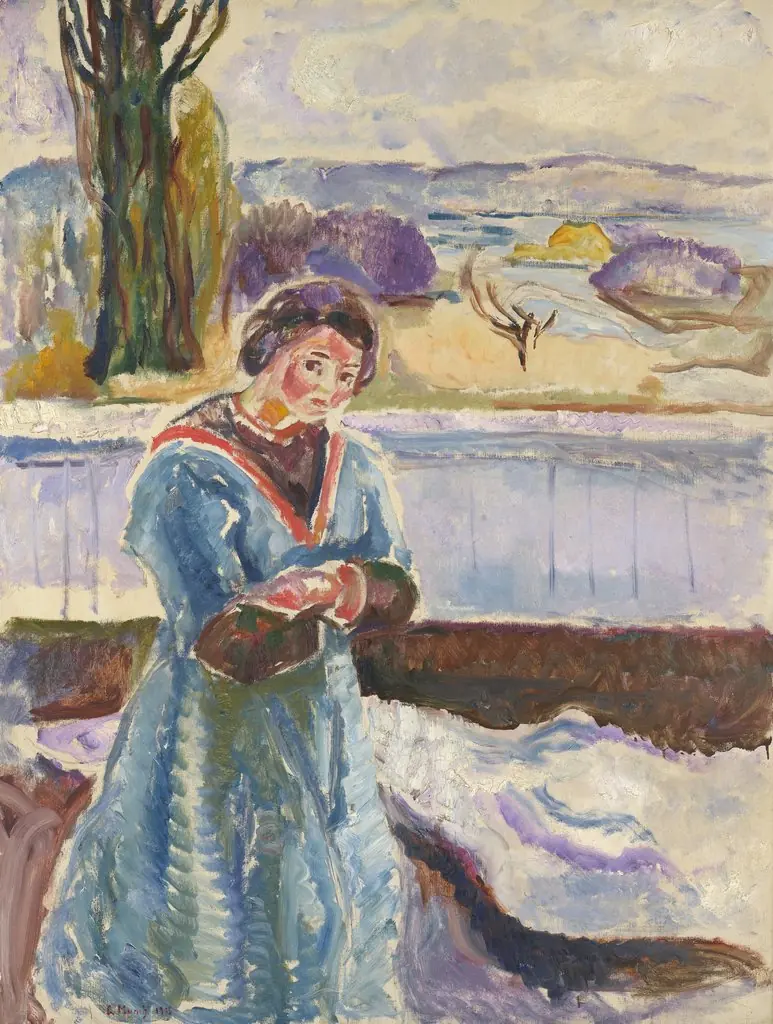
The figure, a woman in a loose white dress and a black hat adorned with a red flower, sits calmly on a green bench, holding a black parasol. Her direct gaze and relaxed posture suggest quiet contemplation. The setting, a terrace with a tree, brick floor, and distant building, anchors the scene in everyday life, yet the stylized rendering distances it from realism, inviting focus on form and mood rather than narrative.
Technique & Style
Friesz employs thick, deliberate brushstrokes and saturated hues to define surfaces: the red bricks, green foliage, and white dress are rendered with flat, angular planes. Color is used structurally, not descriptively, with contrasts between the woman’s pale attire and the bold greens and reds of her surroundings. The tree’s branches frame the figure, reinforcing the painting’s compositional balance through rhythmic, simplified lines.
History & Provenance
Created during a period of artistic transition, the painting emerged after Friesz moved away from the intense chromaticism of early Fauvism. He had adopted the name Othon Friesz by this time, distancing himself from his birth name. The work reflects his engagement with contemporaries like Braque and Picasso, though his palette retains a distinct, earthy vibrancy that sets it apart from pure Cubist austerity.
Context
In 1914, as Europe edged toward war, many artists turned inward, rethinking representation through abstraction. Friesz, like others in his circle, sought to reconcile emotional expression with formal order. This painting sits at the intersection of lingering Fauvist color and emerging Cubist structure, embodying a moment when modern art was redefining how the visible world could be interpreted on canvas.
Legacy
Though less widely recognized than his Fauvist peers, Friesz’s later works, including this one, demonstrate a thoughtful synthesis of color and form. The Lady on the Terrace illustrates his unique path through modernism, neither fully abandoning emotion nor surrendering to pure geometry. It remains a quiet testament to his sustained exploration of how perception and structure coexist in painted space.
Own this work as a print
Artist & collection
Artist
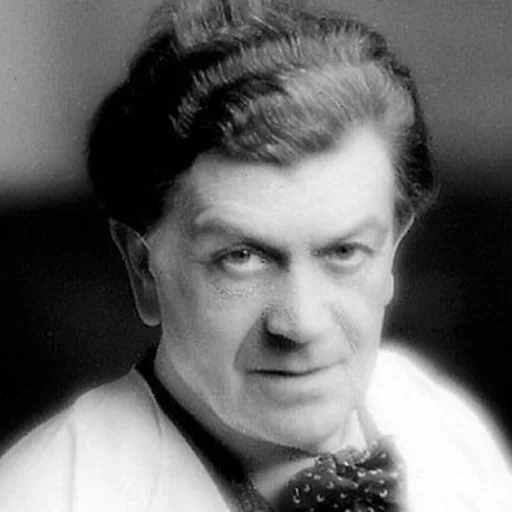
Achille-Émile Othon Friesz (6 February 1879 – 10 January 1949), who later called himself Othon Friesz, a native of Le Havre, was a French artist of the Fauvist movement.