Artwork
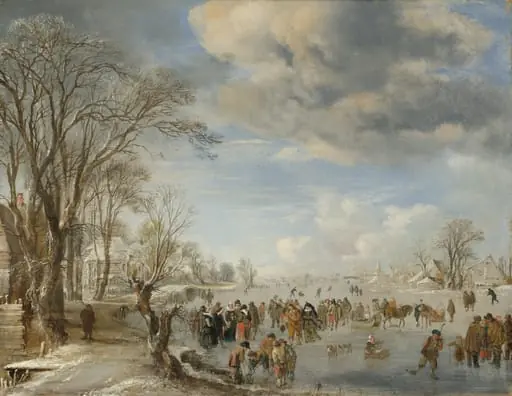
Skating on the Wissahickon
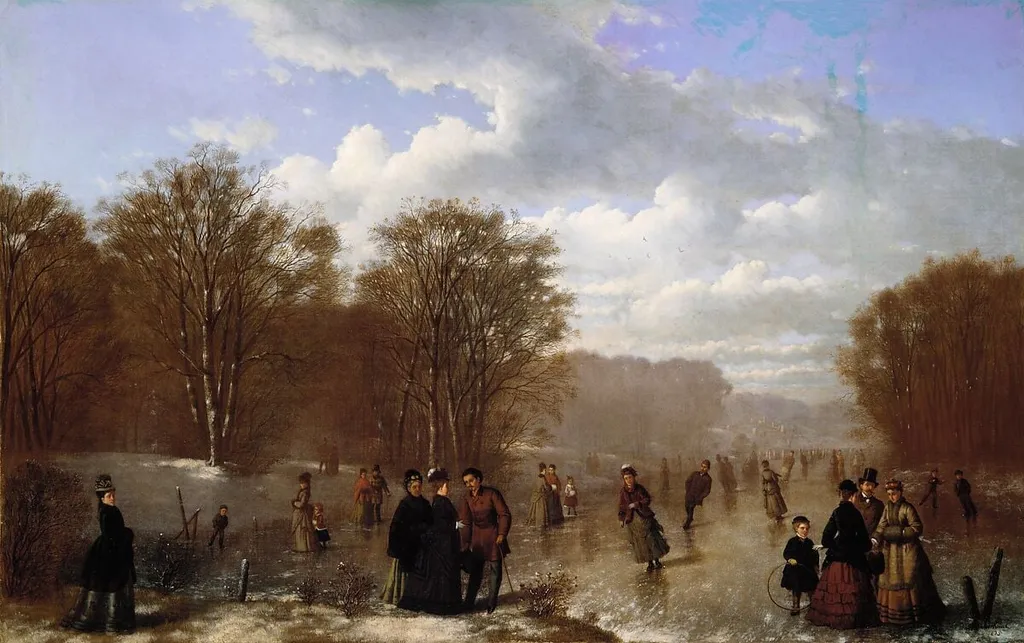
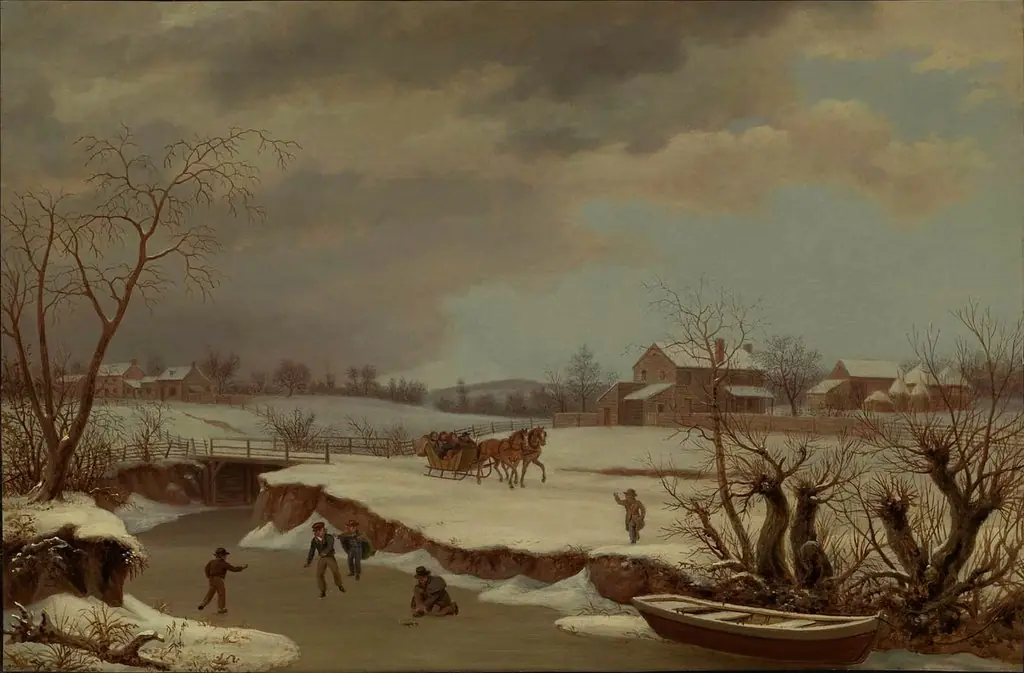
Skating on the Wissahickon is an oil painting by the American Impressionist artist Johan Mengels Culverhouse. It dates from 1875 and is held in the collection of the Metropolitan Museum of Art.
About this work
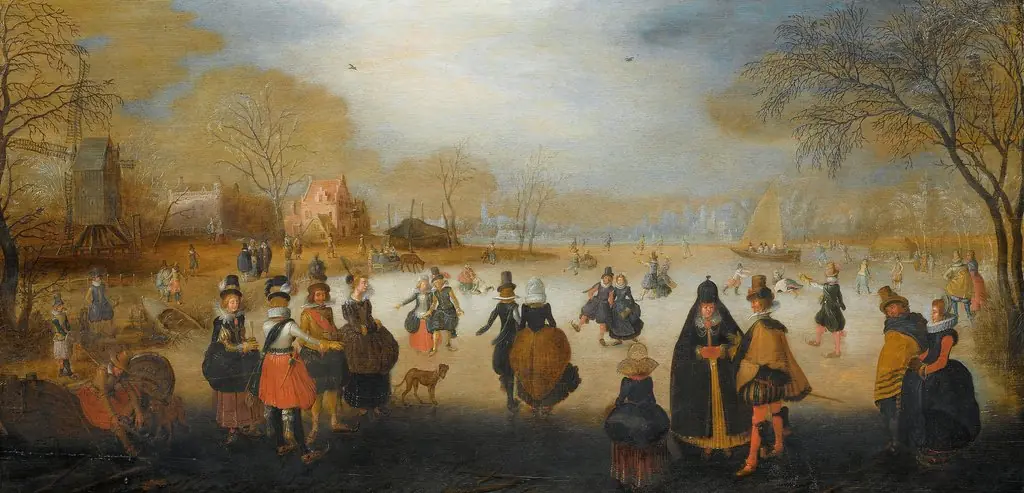
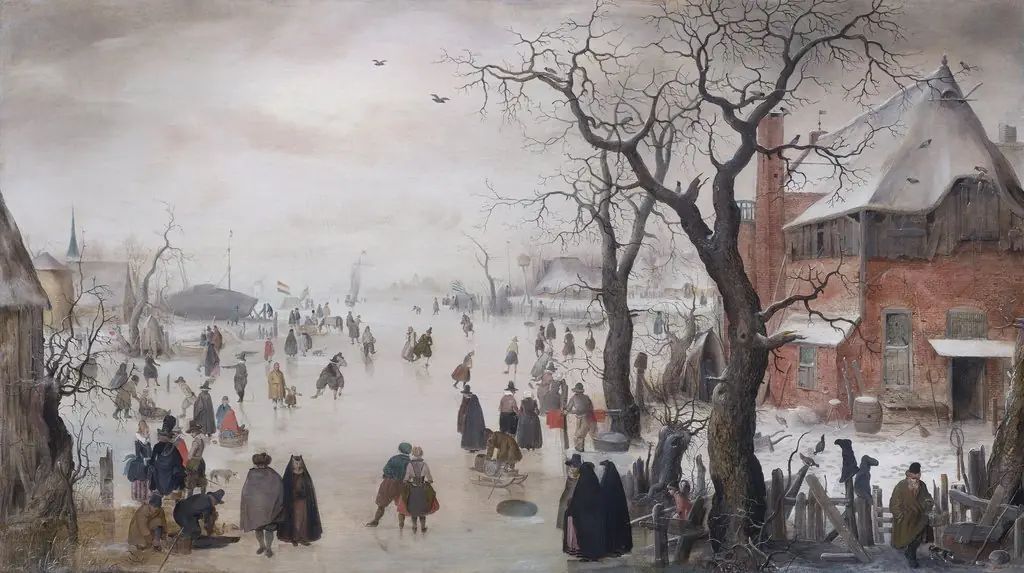
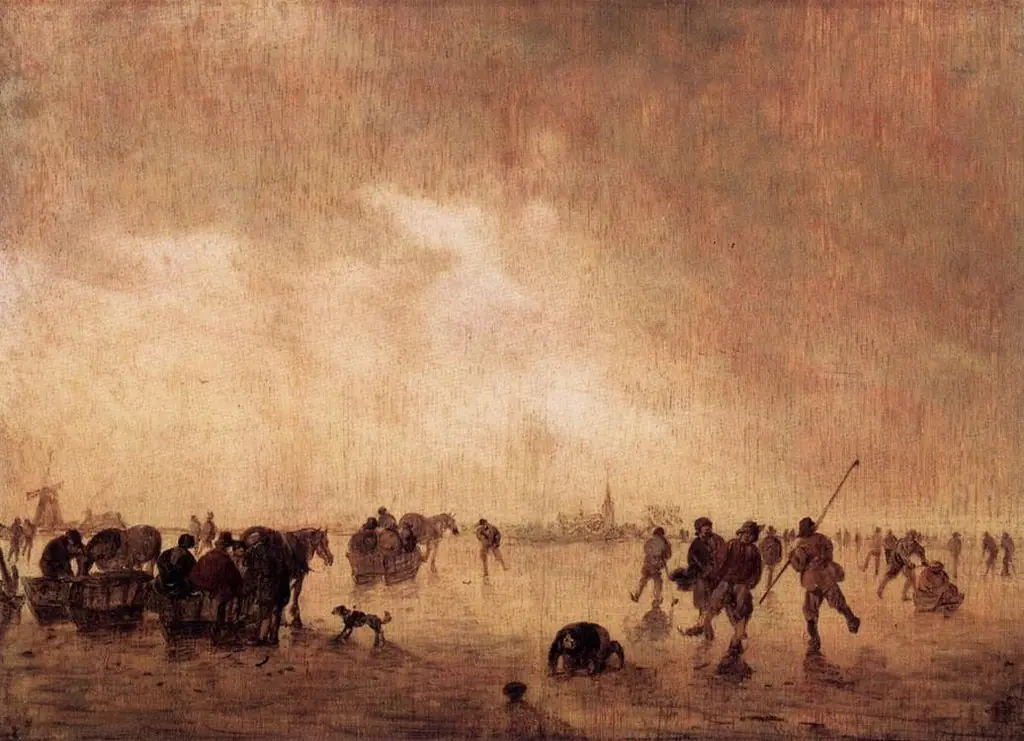
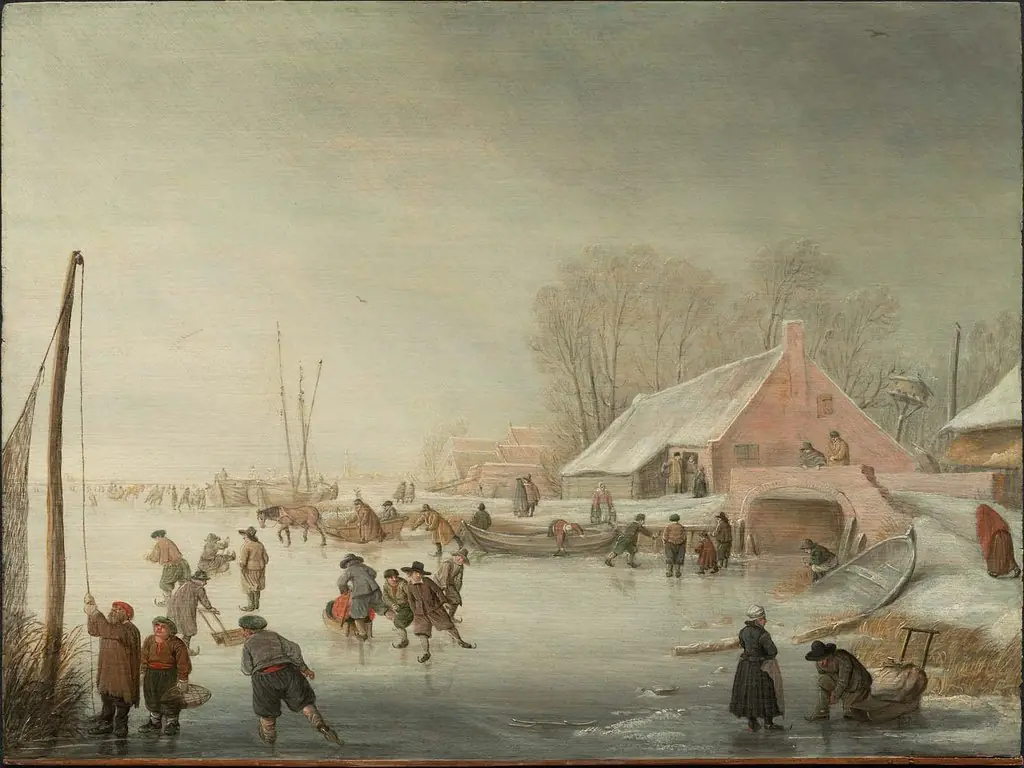
A snowy creek crowded with skaters: men in top hats, women in long dresses, children darting between them. Culverhouse painted it in 1875 near Philadelphia, where the Wissahickon Creek drew crowds and ice-skating was still a rare winter treat for city folk. The skaters look relaxed, almost like a party on ice.
Subject & Meaning
The presence of multiple generations skating together suggests a depiction of communal, family-oriented outdoor enjoyment rather than competitive sport.
Skating on the Wissahickon depicts a winter recreational scene in which figures gather on a frozen waterway surrounded by bare trees. The composition centers on the activity of ice skating, with men, women, and children shown participating in the pastime, situating the work within the broader 19th-century tradition of winter landscape and leisure imagery. The presence of multiple generations skating together suggests a depiction of communal, family-oriented outdoor enjoyment rather than competitive sport.
Set along the Wissahickon, a creek in Pennsylvania associated with popular 19th-century excursions, the scene evokes the era's enthusiasm for nature-based recreation close to urban centers. The combination of skaters and leafless trees reinforces a thematic focus on seasonal change and the social rituals of winter.
Technique & Style
Executed in 1875, Skating on the Wissahickon is an oil painting applied to a canvas support. The work measures 61 cm in height by 95.3 cm in width. Stylistically classified as a landscape, the composition features figures engaged in ice skating, specifically depicting men, women, and children within a natural setting characterized by trees.
The handling of the oil medium allows for the representation of these outdoor winter activities, aligning with the artist's focus on genre scenes within the American landscape tradition.
Legacy
The painting Skating on the Wissahickon, completed in 1875 by Johan Mengels Culverhouse, is housed in the Metropolitan Museum of Art and displayed in the American Wing, where it is categorized as a landscape genre work. Its composition shows a child, a man, a woman, a tree, and an ice-skating scene, reflecting everyday activities of the period. As a piece in the museum's collection, it contributes to the study of 19th-century American genre painting and to the institutional narrative of American artistic heritage.
Overview
Johan Mengels Culverhouse's Skating on the Wissahickon, painted in 1875, captures a lively winter scene along the frozen Wissahickon Creek near Philadelphia. The composition centers on a crowded ice surface where numerous figures engage in skating, set against a backdrop of snow-covered trees and a muted, overcast sky. Culverhouse renders the scene with meticulous attention to the social dynamics of the era, depicting men in formal top hats and women in long, heavy skirts navigating the ice alongside children and casual observers.
The artist employs a realistic style characteristic of mid-to-late 19th-century American landscape painting, utilizing a cool, restrained palette of whites, grays, and earth tones to convey the chill of the season while highlighting the vibrant activity of the skaters. This work reflects Culverhouse's focus on genre scenes within the American landscape tradition, documenting a specific recreational pastime enjoyed by Philadelphians during the winter months. Created during a period when the artist was actively producing works that celebrated local scenery and daily life, the painting serves as a historical record of 19th-century leisure activities in the Northeastern United States.
Context
Created in 1875, this artwork captures a specific moment in American social history when ice-skating offered a unique winter diversion. The setting is identified as the Wissahickon Creek, a well-known recreational area near Philadelphia. The artist, Culverhouse, chose a location popular for such activities, highlighting the creek's role as a gathering place for city residents seeking seasonal enjoyment.
Artist & collection

Artist
Johan Mengels Culverhouse (1820–1894) was an artist, born in Rotterdam.