Artwork
Pferde auf der Weide
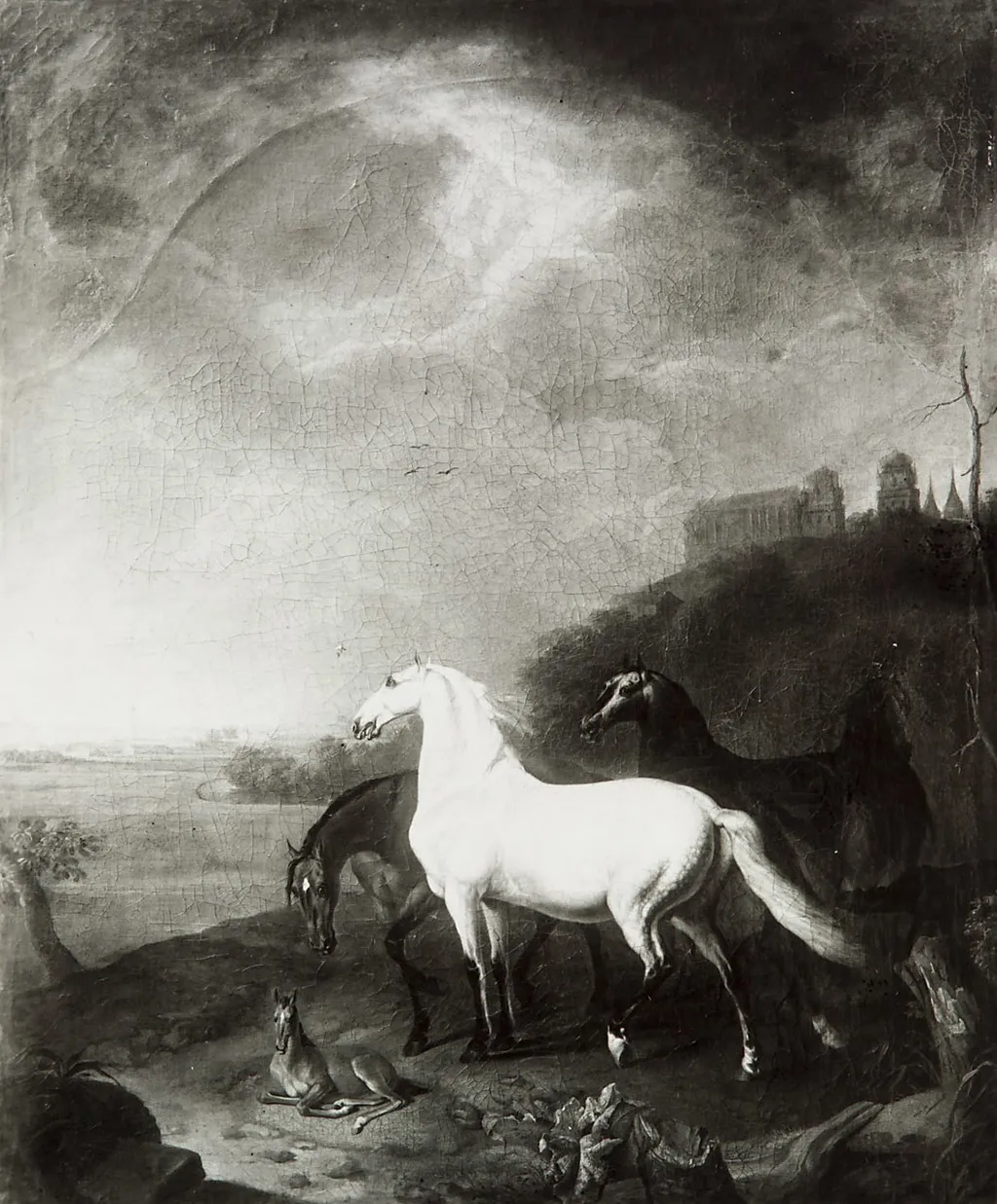
Pferde auf der Weide is an unspecified painting by Johann Georg de Hamilton. It dates from 1714 and is held in the collection of the Kunsthistorisches Museum.
About this work
Overview
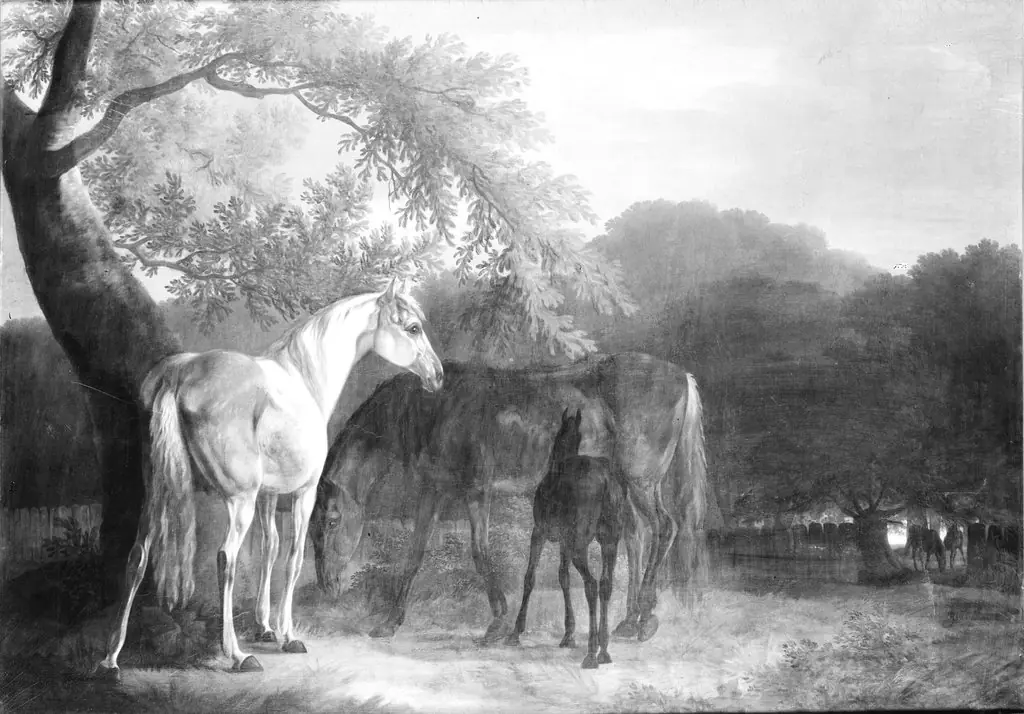
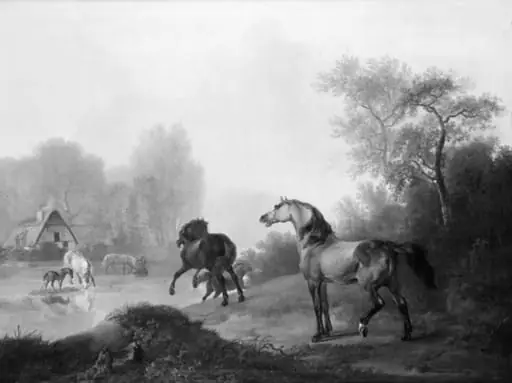
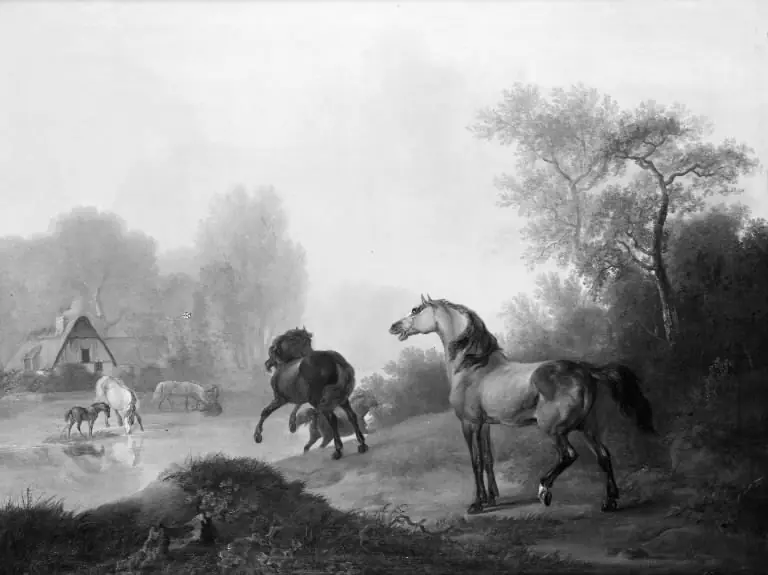
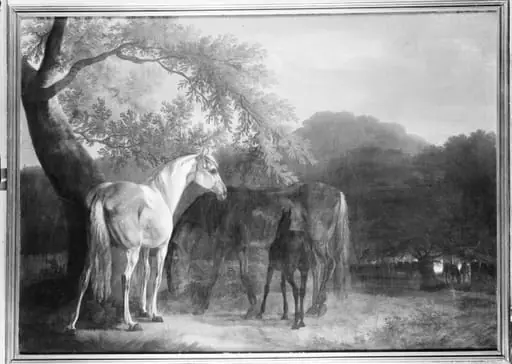
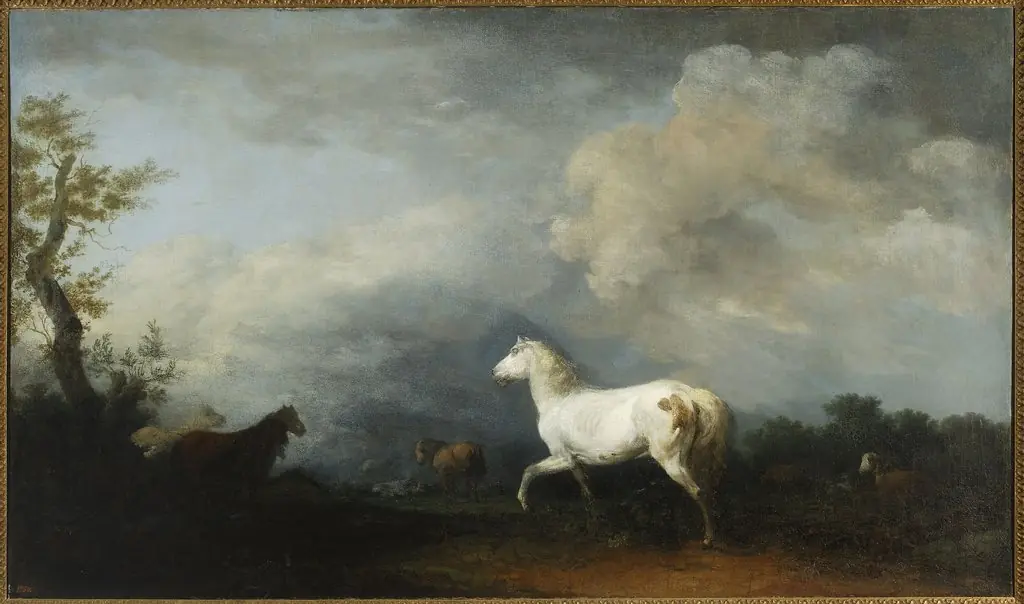
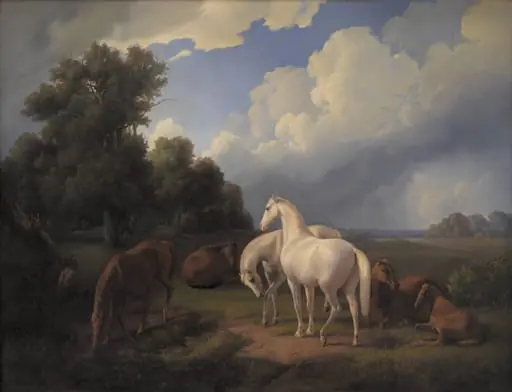
The composition centers on three horses positioned on a rocky outcropping: one white horse stands prominently alongside two dark brown companions.
Johann Georg de Hamilton's 'Pferde auf der Weide' (Horses on the Pasture), executed in 1714, is a characteristic example of the artist's equestrian genre scenes. The composition centers on three horses positioned on a rocky outcropping: one white horse stands prominently alongside two dark brown companions. A small dog sits attentively in the foreground, anchoring the lower plane of the image.
Behind the animals, a body of water stretches across the middle ground, leading the eye toward a distant hill crowned with buildings. Hamilton, a Dutch painter active in the German-speaking world, specialized in depictions of horses and hunting scenes, often blending detailed animal portraiture with atmospheric landscapes. This work reflects his skill in rendering equine anatomy and fur texture while integrating the subjects into a serene, pastoral setting.
The painting exemplifies the early 18th-century interest in naturalistic animal studies within a landscape context, showcasing Hamilton's ability to balance the dignity of the animals with the tranquility of their environment.
Subject & Meaning
The painting juxtaposes the calm vigilance of the animals with a broader landscape, inviting viewers to contemplate the relationship between domesticated creatures and their environment. The white horse occupies the foreground, drawing attention to its alert posture, while the two brown horses follow, suggesting a hierarchy or narrative progression. The dog’s upward gaze adds a note of curiosity, hinting at an unseen stimulus beyond the frame.
Technique & Style
Executed in oil on canvas, Hamilton employs a restrained palette of earth tones punctuated by the luminous white of the lead horse. His handling of light creates a gentle chiaroscuro on the rocky outcrop, while the distant water and hills are rendered with softer, atmospheric brushwork. The composition balances detailed animal anatomy with a more impressionistic treatment of the surrounding landscape, characteristic of early Baroque genre painting.
History & Provenance
Created circa 1714, the work entered the Kunsthistorisches Museum’s holdings at an unspecified later date, where it remains on public display. Its provenance prior to museum acquisition is not extensively documented, but the painting’s survival in a major European collection underscores its historical value within Hamilton’s oeuvre and the broader tradition of equine portraiture.
Context
Hamilton, a member of a family of painters active in Central Europe, specialized in animal subjects, particularly horses, which were symbols of status and power in aristocratic circles of the time. This piece reflects the early 18th‑century fascination with pastoral idealism, aligning with contemporary tastes for scenes that combined naturalistic detail with a serene, almost narrative, ambience.
Artist & collection