Artwork
The Old Cremona
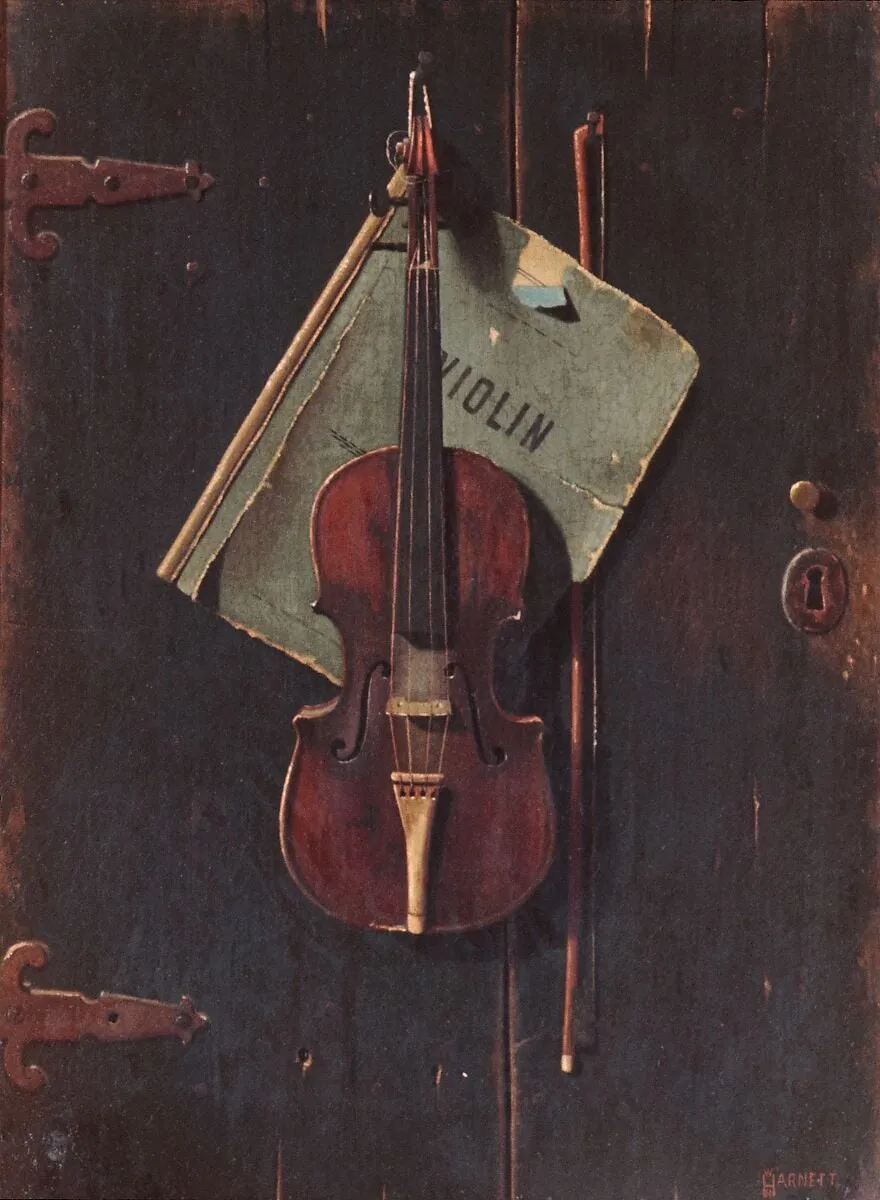
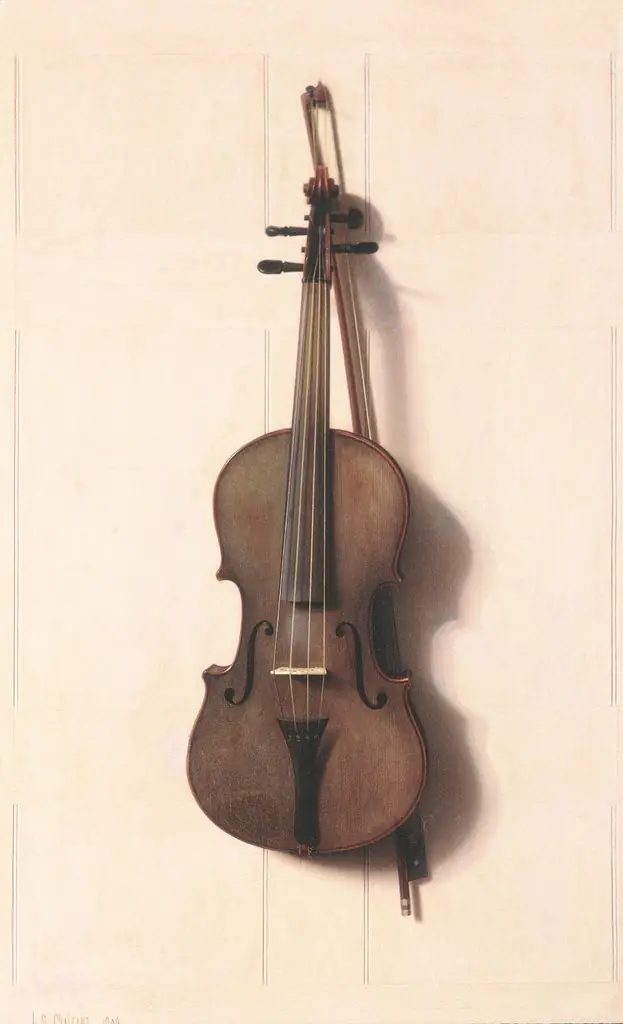
The Old Cremona is an oil painting by the American Impressionist artist John F. Peto. It dates from 1888 and is held in the collection of the Metropolitan Museum of Art. John F.
About this work
Subject & Meaning
Its presence suggests a quiet contemplation of domestic space and the subtle narratives embedded in ordinary objects, a theme recurrent in the artist’s work.
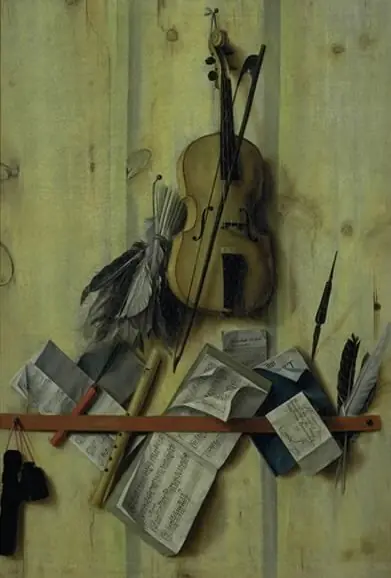
The painting centers on a single violin, rendered with meticulous attention to surface texture and light. As a still‑life object within an American interior, the violin functions as the primary visual subject, embodying the genre’s focus on everyday material culture. Its presence suggests a quiet contemplation of domestic space and the subtle narratives embedded in ordinary objects, a theme recurrent in the artist’s work.
The composition reflects the trompe‑l’oeil realism characteristic of late‑19th‑century American still‑life painting, where ordinary items are elevated to symbolic significance through careful rendering and arrangement.
Technique & Style
The Old Cremona is an oil painting executed on canvas, a still life by John F. Peto dated 1887. The work measures 40.6 cm in height by 30.5 cm in width and depicts a violin. It is classified within The American Wing and held by the Metropolitan Museum of Art.
History & Provenance
The Old Cremona is an oil‑on‑canvas still life painted by John F. Peto in 1887. The work measures 40.6 cm in height and 30.5 cm in width and shows a violin. It is classified within The American Wing and is part of the Metropolitan Museum of Art’s collection, where it has been since its acquisition.
The painting’s creation history is tied to Peto’s realist practice, and its dating is confirmed by contemporary records. Its provenance traces from the artist’s studio to the museum’s custody, reflecting a straightforward ownership chain under the museum’s stewardship.
Overview
John F. Peto’s oil on canvas, The Old Cremona, dates to circa 1888. The painting presents a solitary violin affixed to a plain wooden wall, its strings slack and its surface coated with a fine layer of dust. The work exemplifies Peto’s dedication to trompe‑l’œil, a technique that seeks to deceive the viewer into perceiving painted objects as three‑dimensional reality.
Context
The painting emerged during the late nineteenth‑century American fascination with realism and the visual trickery of trompe‑l’œil. While European Impressionism emphasized fleeting light, American practitioners like Peto combined that sensibility with a meticulous, almost photographic attention to ordinary objects.

Artist & collection

Artist
John Frederick Peto (May 21, 1854 – November 23, 1907) was an American trompe-l'œil ("fool the eye") painter who was long forgotten until his paintings were rediscovered along with those of fellow trompe-l'œil artist William Harnett.