Artwork
October in the Marshes
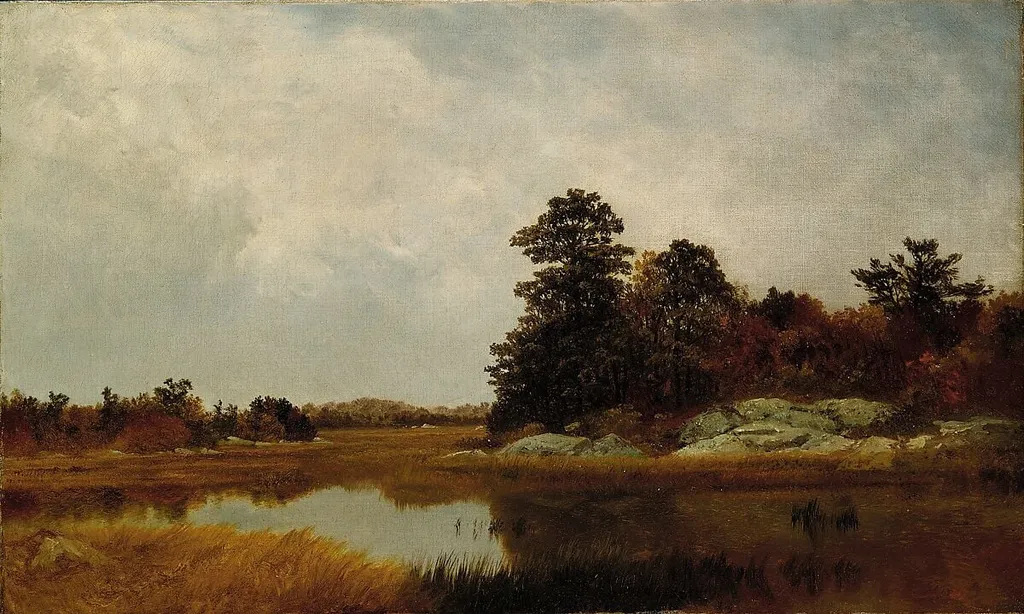
October in the Marshes is an oil painting by the Barbizon school artist John Frederick Kensett. It dates from 1872 and is held in the collection of the Metropolitan Museum of Art.
About this work
A quiet marsh in late fall: golden reeds, a few bare trees, and a wide pale sky. Kensett painted this in 1872, the last year of his life. The brushwork is almost invisible, thin layers of paint that keep the light soft and the scene still, like a breath held before winter.
Subject & Meaning
By foregrounding natural detail over narrative, the work invites viewers to consider the intrinsic value of untouched terrain.
The painting October in the Marshes depicts a quiet, mist-filled wetland dominated by leafless trees and a subdued sky, a composition that emphasizes the atmospheric qualities of the landscape. Kensett's rendering, characterized by delicate tonal modulation and careful observation of light, aligns with the American Barbizon school's focus on truthful representation of nature rather than idealized scenery. The presence of solitary trunks and reflective water surfaces functions symbolically, suggesting both the transience of seasonal change and the contemplative stillness of the American environment.
By foregrounding natural detail over narrative, the work invites viewers to consider the intrinsic value of untouched terrain.
Technique & Style
The work was executed in oil on canvas, a support typical of Kensett's mature practice and of the American Barbizon school to which it belongs. The paint is applied with smooth, atmospheric brushwork that emphasizes subtle gradations of light across the marshy terrain and the solitary tree that dominates the composition. The canvas is stretched and primed in the conventional manner, allowing the artist to achieve the delicate tonal harmonies evident in the finished piece.
History & Provenance
John Frederick Kensett painted October in the Marshes in 1872, an oil on canvas work measuring 47 x 77.5 cm that exemplifies the American Barbizon school's approach to landscape. Following its creation, the artwork entered the collection of the Metropolitan Museum of Art, where it has remained, classified within the American Wing's landscape holdings. No records indicate a specific commission or prior private ownership.
Overview
John Frederick Kensett's October in the Marshes is an oil on canvas painting depicting a tranquil, late-autumn landscape. The composition features golden reeds, sparse trees, and an expansive, light-filled sky, evoking a sense of quietude. This work, created in the final year of the artist's life, captures the serene atmosphere of a marshland as it transitions towards winter, characterized by a soft, diffused light.
Context
The serene aesthetic of October in the Marshes aligns with certain sensibilities found within the American Barbizon school. This movement, influenced by its French counterpart, favored intimate, often melancholic landscapes that emphasized atmospheric effects and a sense of quiet observation over dramatic grandeur. Kensett's work shares this appreciation for understated natural beauty and contemplative moods.
Artist & collection

Artist
John Frederick Kensett was an American landscape painter and engraver born in Cheshire, Connecticut.







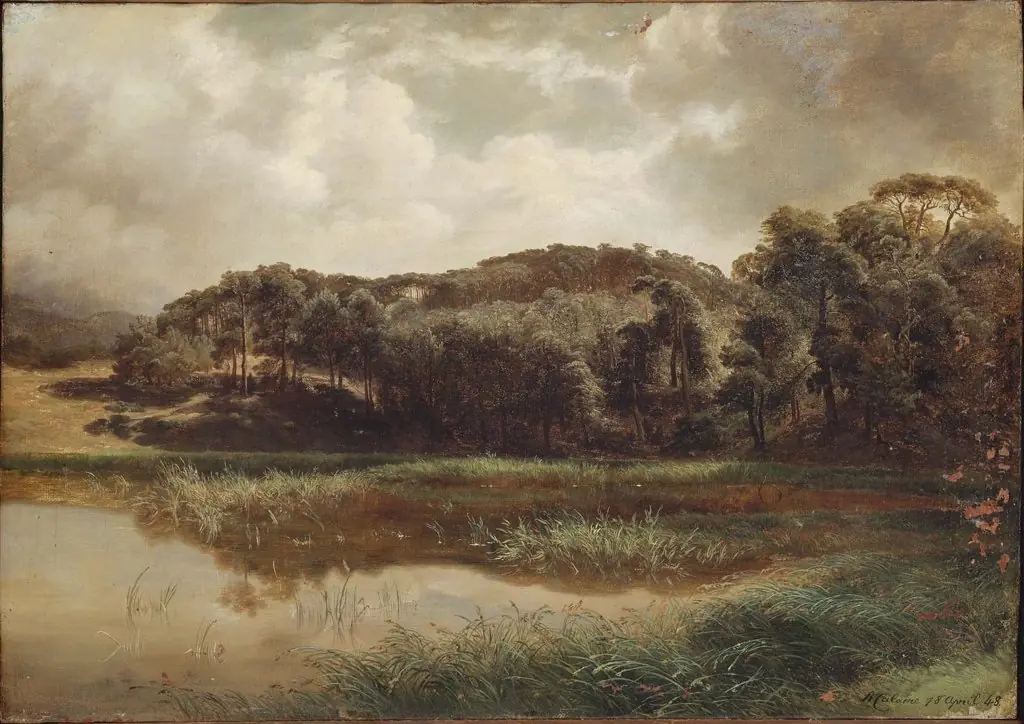 Lake at the Edge of a Forest
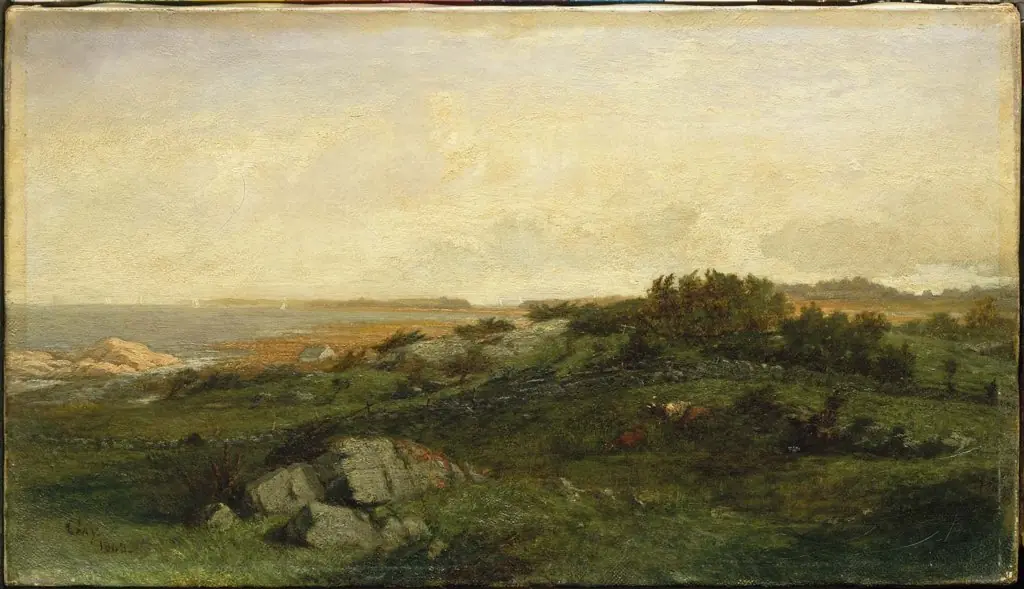 By the Sea
 Landscape near the Forest Nordskoven, Jægerspris, Zealand
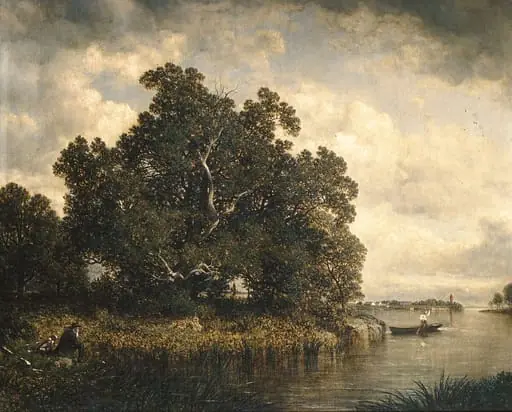 Bayside, New Rochelle, New York
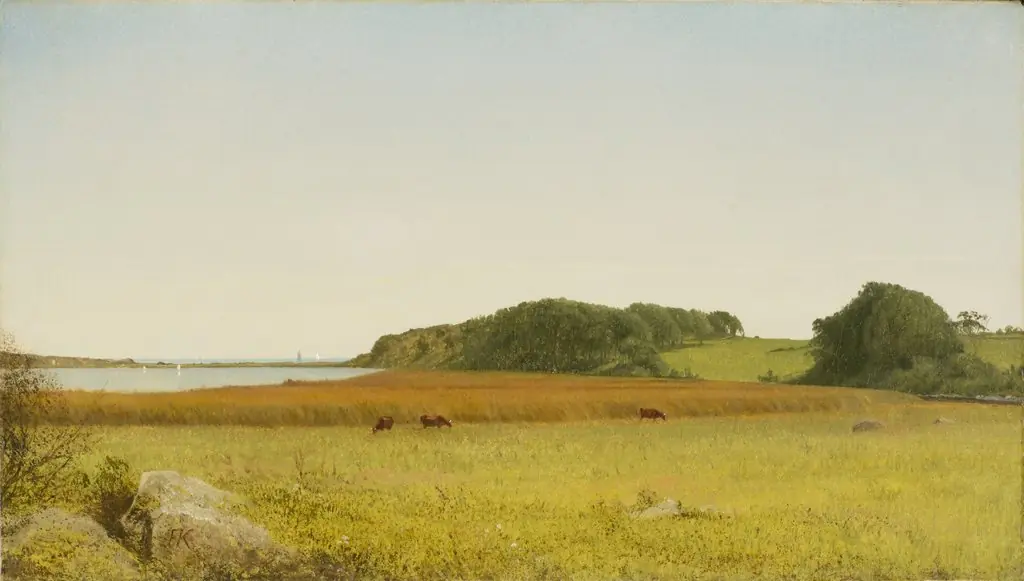 Almy's Pond, Newport
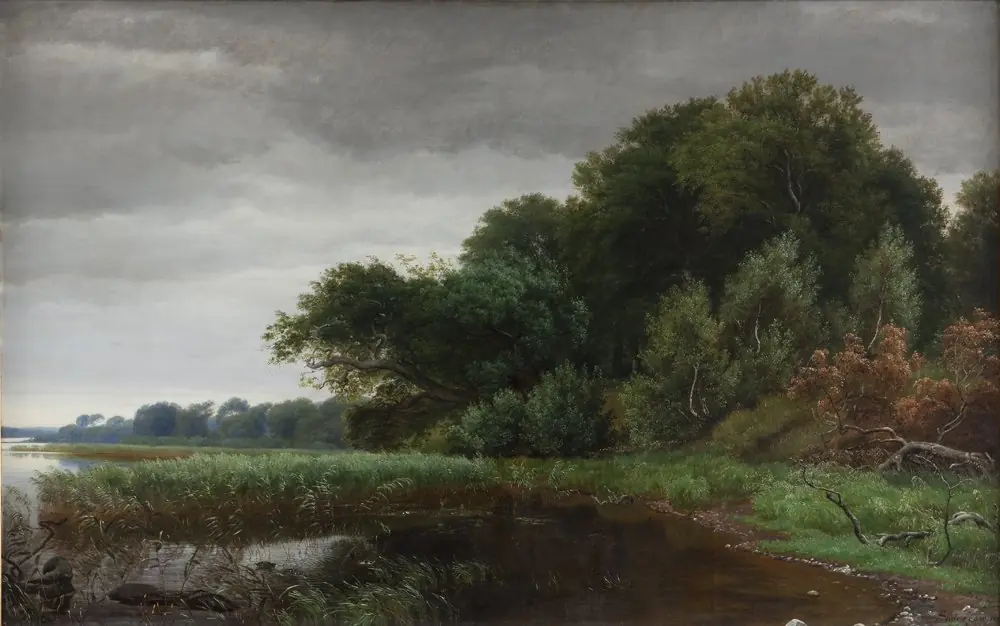 Clearing weather after a rain shower at Gurre Lake
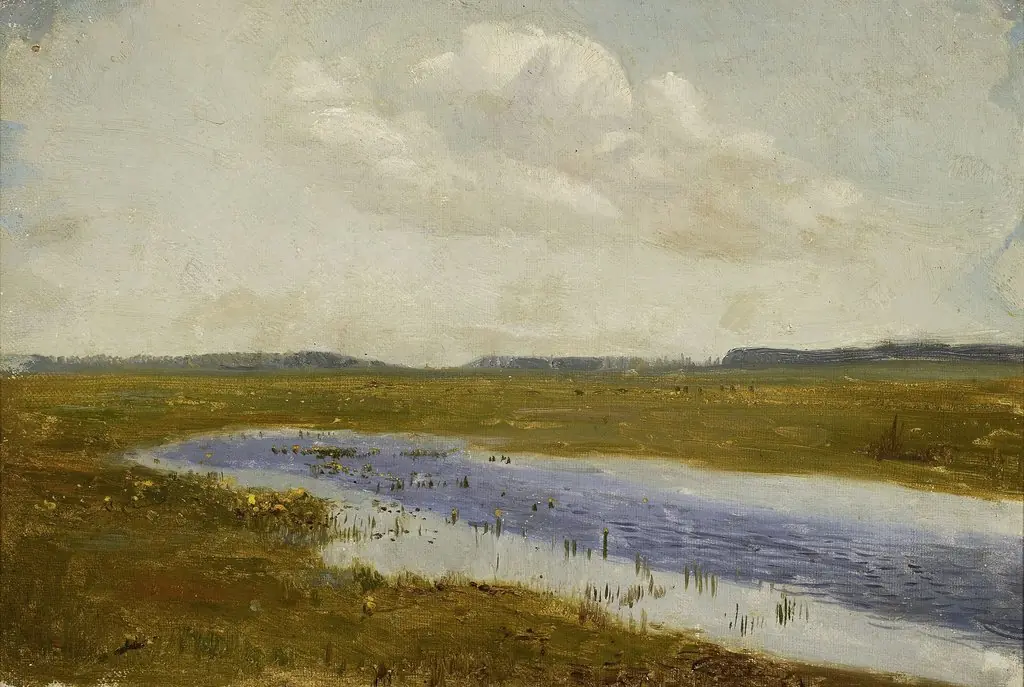 Meadow with cowslips, sketch
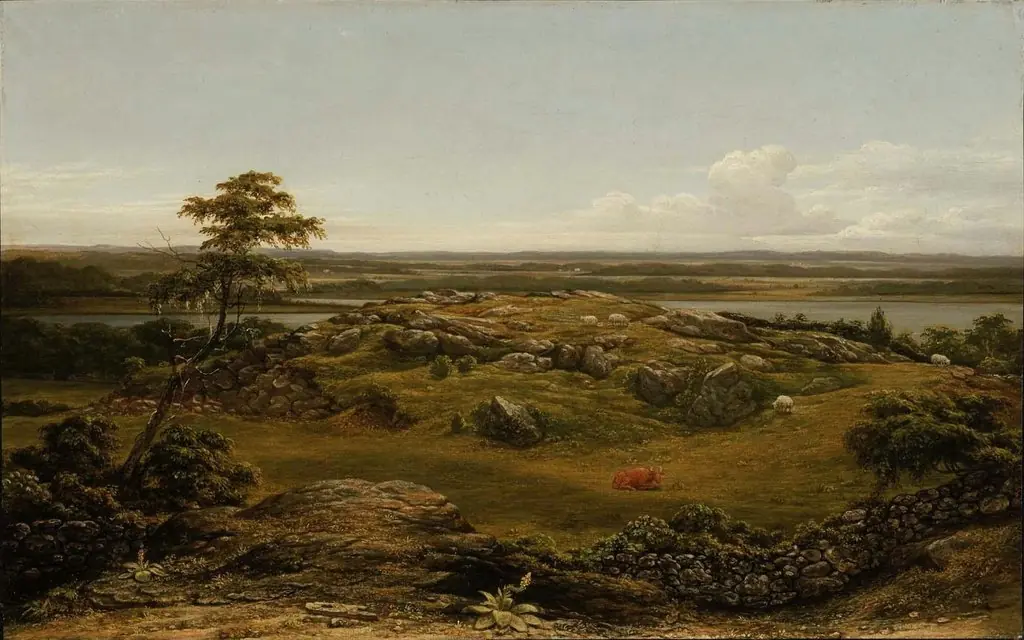 Rocks in New England
 Pădure
 Path Near the Pond of Vipers, Fontainebleau Forest
 Opklarende vejr efter en regnbyge ved Gurre Sø
- Salt Meadow in October