Artwork
Lake George
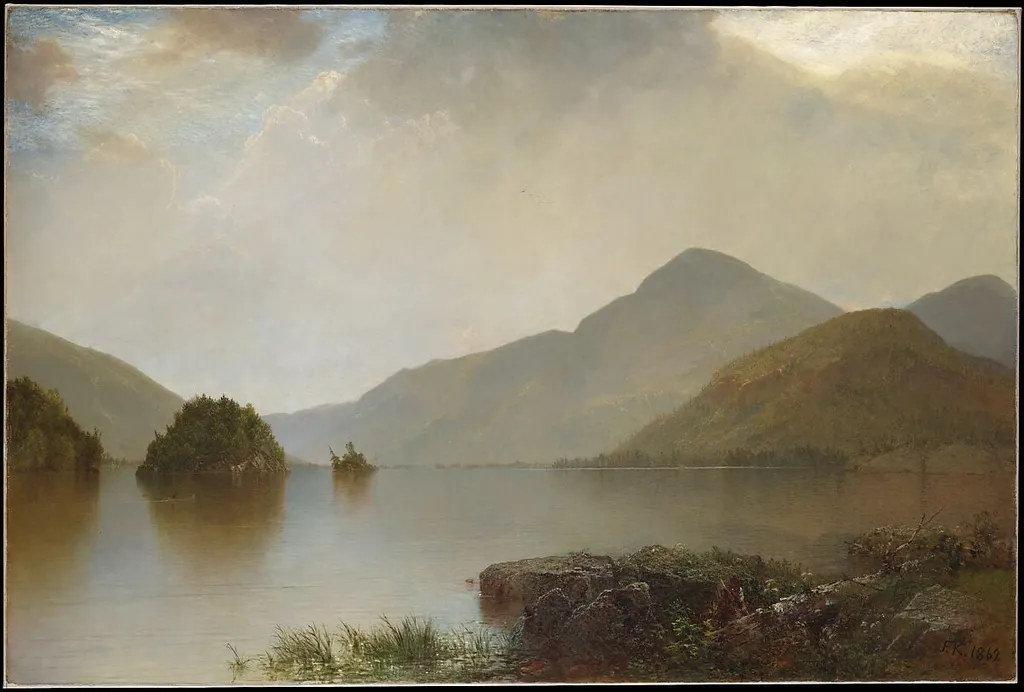
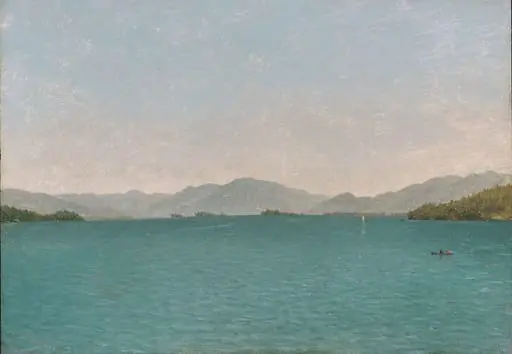
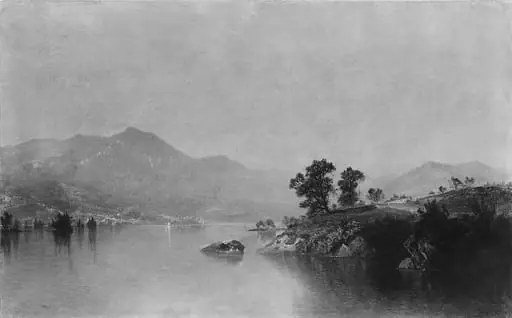
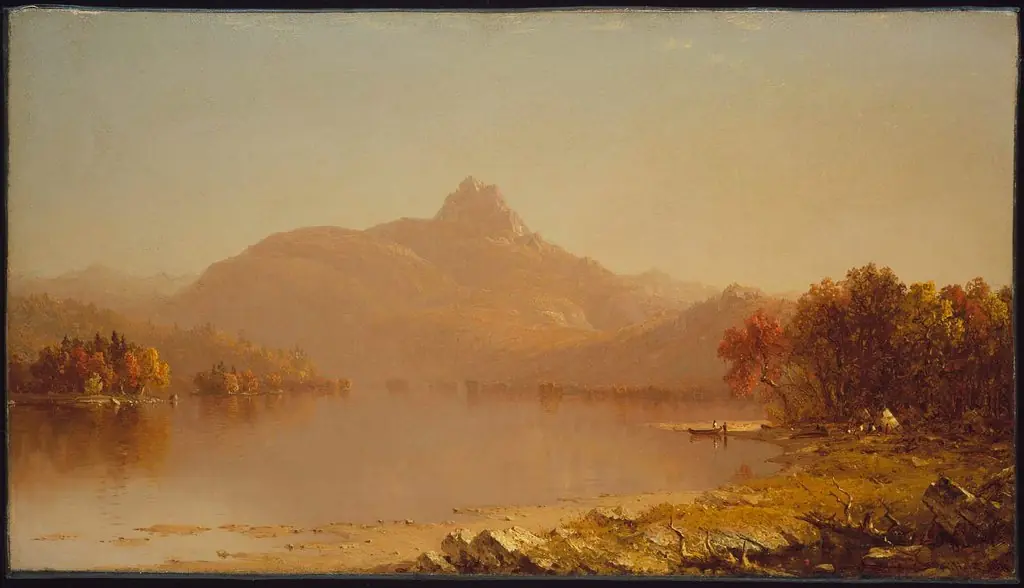
Lake George is an oil painting by the Hudson River School artist John Frederick Kensett. It dates from 1869 and is held in the collection of the Metropolitan Museum of Art.
About this work
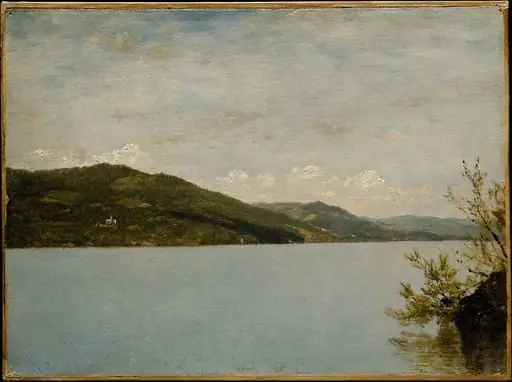
From Homer Point on Lake George's western shore, John Frederick Kensett looked northeast toward Black Mountain and painted his largest treatment of the subject. Completed in 1869, the canvas stretches more than five feet wide, yet he pared it to a limited palette and spare composition, favoring crystalline water and distance over the area's growing development. The Met acquired it in 1914.
Technique & Style
The surface shows smooth, refined brushwork consistent with Kensett’s meticulous naturalism, though no specific condition reports are available.
John Frederick Kensett executed Lake George in oil on canvas, a medium and support typical of Hudson River School landscapes. The painting measures 112 by 168 cm, making it the largest and most ambitious of his numerous treatments of the site. Stylistically, it exemplifies Kensett’s mature Luminist approach, characterized by a serene, atmospheric clarity and a precise handling of light and reflection on still water.
Kensett took significant compositional liberties, foreshortening distances, omitting some islands, and merging others into the mainland to create a balanced, idealized vista. The viewpoint, taken from Crown Island looking northeast toward the Narrows, anchors the scene, but the artist’s selective rearrangement of topography prioritizes a harmonious, contemplative effect over literal accuracy. The surface shows smooth, refined brushwork consistent with Kensett’s meticulous naturalism, though no specific condition reports are available.
History & Provenance
John Frederick Kensett created Lake George in 1869, the largest and most accomplished of his many treatments of the Adirondack lake. His viewpoint was likely from Crown Island near Bolton Landing, though he compressed distances and omitted some islands. The painting was acquired by Morris K. Jesup in 1869 and remained in his ownership until his death in 1908; it then passed to his widow, Maria DeWitt Jesup, also in 1908.
It later entered the collection of the Metropolitan Museum of Art, where it is housed today. Kensett first visited Lake George in 1853 and made numerous studies, but no specific commission for this work is recorded.
The painting is held in the collection of the Metropolitan Museum of Art, New York, where it is on display in Gallery 761. Its provenance traces to Morris K. Jesup (1869–1908), after which it passed to his widow, Maria DeWitt Jesup (1908). No accession number is recorded in the available sources, and no specific exhibition history is documented for this version.
Context
Kensett, a member of the Hudson River School, evolved into American Luminism, a movement emphasizing tranquility and meticulous atmospheric effects. His Lake George (1869) is widely considered his finest and most accomplished treatment of the subject, exemplifying his mature style. Contemporary critic Henry Theodore Tuckerman in 1867 praised Kensett's exacting detail, comparing his technique to that of Flemish old masters.
The painting reflects Luminist ideals, calm waters, luminous sky, and precise rendering. Kensett's repeated depictions of Lake George, a favorite subject among Hudson River School artists such as Thomas Cole and Asher Durand, situate this work within a broader tradition of American landscape painting. Today, the work is viewed as a key example of Kensett's Luminist phase and a highlight of the Metropolitan Museum's collection, illustrating the shift from Romantic sublimity to serene contemplation.
Legacy
This 1869 version is consistently identified as Kensett's largest and most accomplished treatment of Lake George, exemplifying his mature Luminist style within the Hudson River School tradition. Acquired by Morris K. Jesup in the year of its completion, the painting entered the collection of the Metropolitan Museum of Art and remains on permanent view in Gallery 761, ensuring its enduring role as a landmark of American landscape painting.
Overview
John Frederick Kensett's Lake George, completed in 1869, is a significant oil on canvas painting depicting the serene landscape of upstate New York. This large-scale work captures a specific vista across Lake George from Homer Point, looking towards Black Mountain. It represents Kensett's most expansive artistic engagement with this particular subject, showcasing his characteristic approach to natural scenery and light. The painting is held in the collection of the Metropolitan Museum of Art.
Subject & Meaning
The canvas presents a panoramic view of Lake George, observed from its western shore at Homer Point, with Black Mountain visible in the distance to the northeast. Kensett deliberately chose to distill the scene, omitting signs of the region's increasing commercialization. Instead, he focused on the pristine qualities of the Adirondack lake, emphasizing the clarity of the water and the expansive, atmospheric depth of the distant landscape, creating an idealized natural vista.
Artist & collection

Artist
John Frederick Kensett was an American landscape painter and engraver born in Cheshire, Connecticut.