Artwork
An October Day in the White Mountains
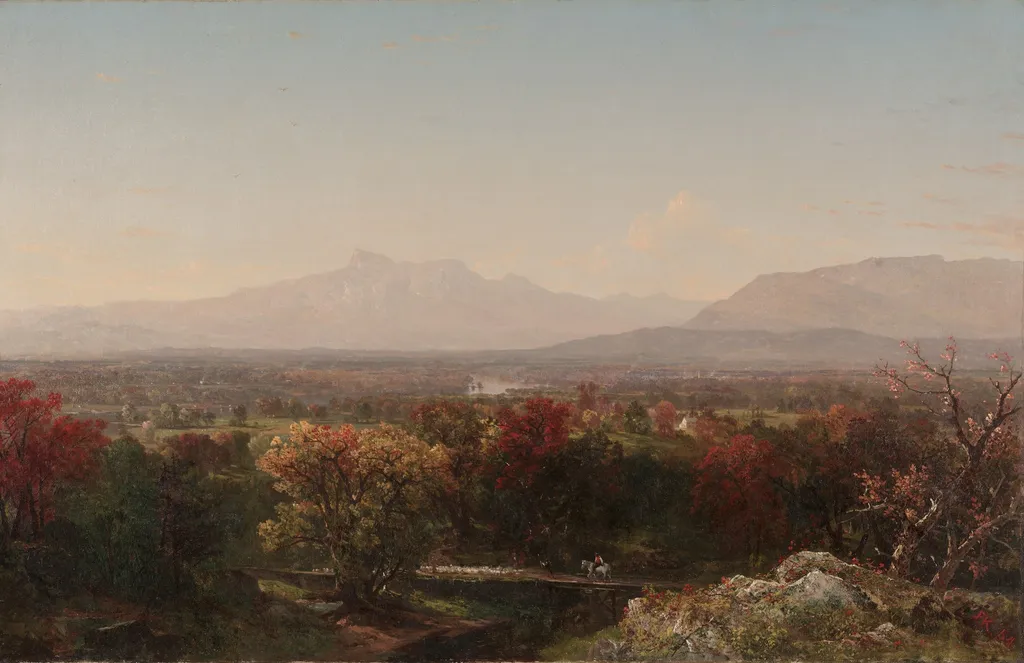
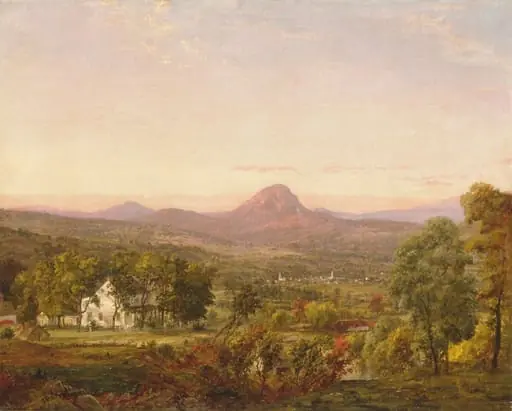
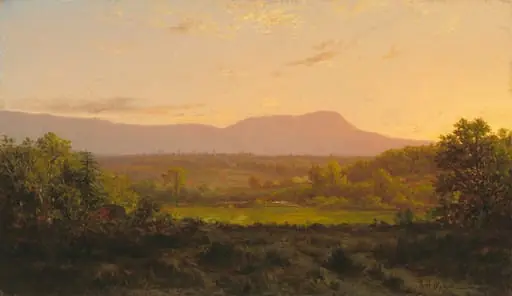
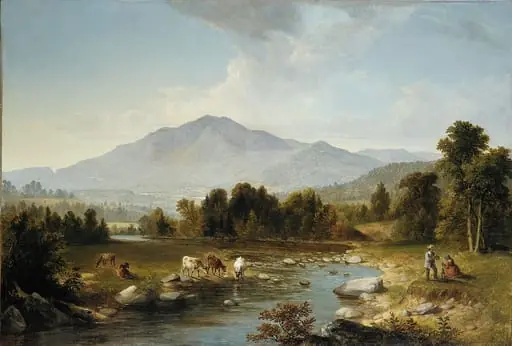
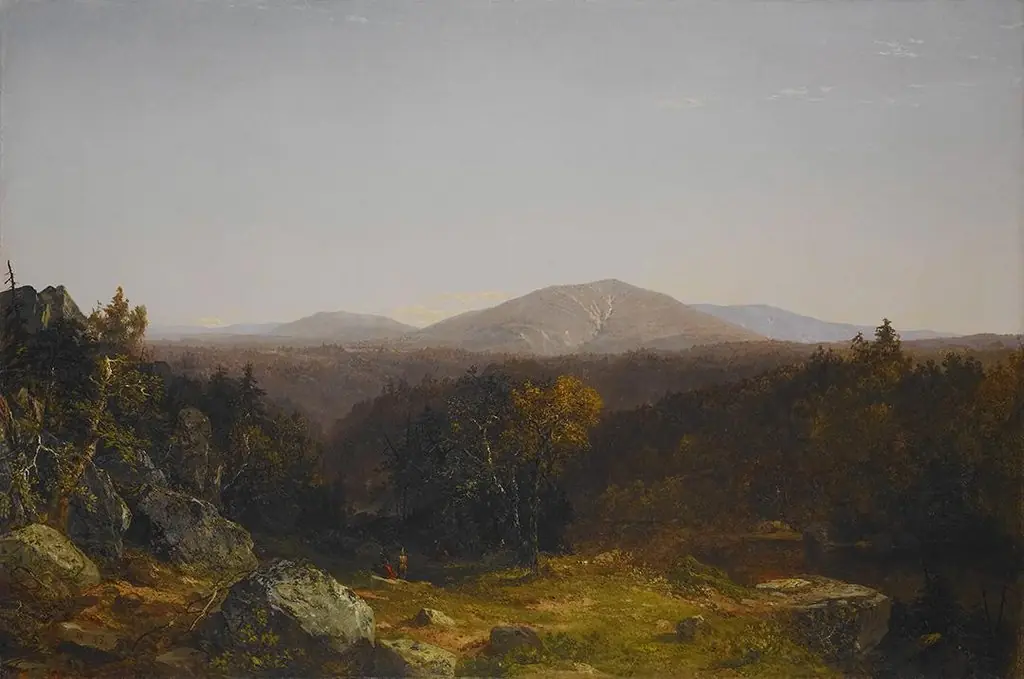
An October Day in the White Mountains is an oil painting by the Hudson River School artist John Frederick Kensett. It dates from 1854 and is held in the collection of the Cleveland Museum of Art.
About this work
Subject & Meaning
As a work of the landscape genre, the piece presents a direct visual record of this specific American mountain region during the autumn season.
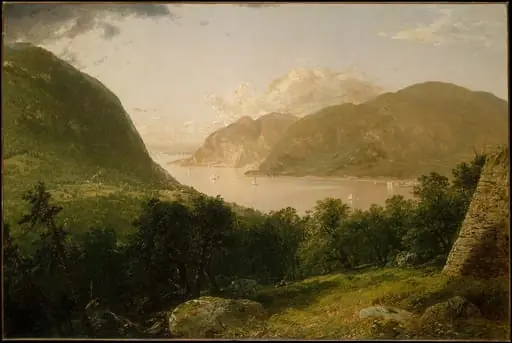
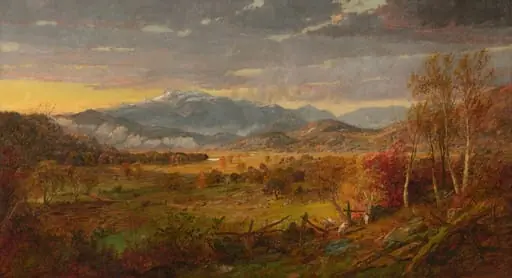
John Frederick Kensett's 1854 oil painting, An October Day in the White Mountains, depicts a landscape scene situated within the White Mountains of the United States. The composition focuses on natural elements, specifically featuring mountains and trees rendered in the artist's characteristic style. As a work of the landscape genre, the piece presents a direct visual record of this specific American mountain region during the autumn season.
The subject matter is defined by these geographical and botanical features, capturing the physical reality of the terrain without explicit narrative or allegorical figures. The work serves as a representation of the American wilderness, emphasizing the grandeur and specific topography of the White Mountains as observed by the artist in the mid-19th century.
History & Provenance
The painting was created by John Frederick Kensett in 1854, as indicated by its internal documentation and Wikidata entry. It entered the collection of the Cleveland Museum of Art in 1967 as accession number 1967.5. No documented commission or preparatory history has been recorded in the available sources.
The painting is held by the Cleveland Museum of Art, accessioned as 1967.5. It was included in the museum’s 2004 exhibition "American Impressionism and Realism: The Painting of Modern Life, 1865–1915," where it was displayed under the title An October Day in the White Mountains.
Overview
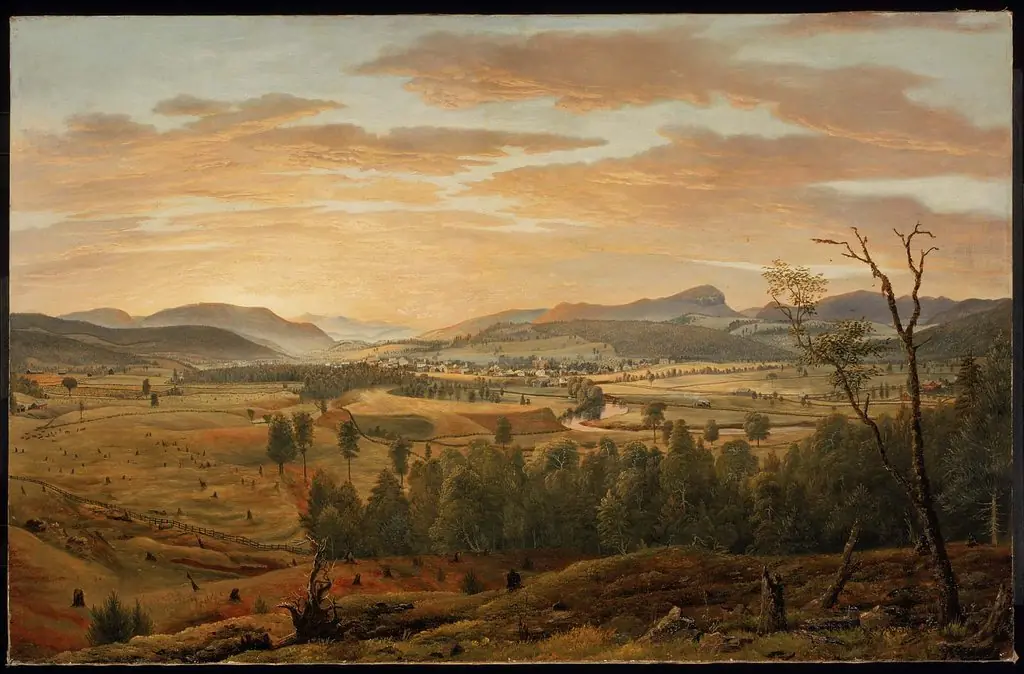
Painted in 1854, An October Day in the White Mountains is a definitive example of John Frederick Kensett's mature style within the Hudson River School. The composition presents a panoramic view of a New England valley, characterized by the artist's signature clarity of light and precise atmospheric perspective. In the foreground, a winding path leads the eye through a grove of deciduous trees displaying the vibrant reds and oranges of autumn foliage.
A solitary rider on horseback traverses this path, providing a sense of scale against the vast, rolling hills and distant mountain ranges that anchor the background. The sky is rendered with soft, pale clouds, allowing a warm, late-afternoon light to illuminate the scene uniformly. Kensett, known for his transition from detailed realism to a more luminist approach, utilizes this work to capture the serene grandeur of the American landscape.
The painting reflects the mid-19th-century cultural fascination with the wilderness as a source of spiritual renewal and national identity. Its balanced structure and meticulous attention to the effects of light on the autumnal terrain exemplify the movement's idealization of nature's tranquility.
Technique & Style
The artist employed oil paint with a technique involving multiple thin layers, a method known as glazing. This approach allowed for the creation of subtle gradations in light and color across the canvas. The vibrant autumnal leaves transition smoothly into the more subdued tones of the distant hills, achieving a soft, luminous quality that enhances the atmospheric depiction of the late afternoon light.
Own this work as a print
Artist & collection

Artist
John Frederick Kensett was an American landscape painter and engraver born in Cheshire, Connecticut.