Artwork
Summer Day on Conesus Lake
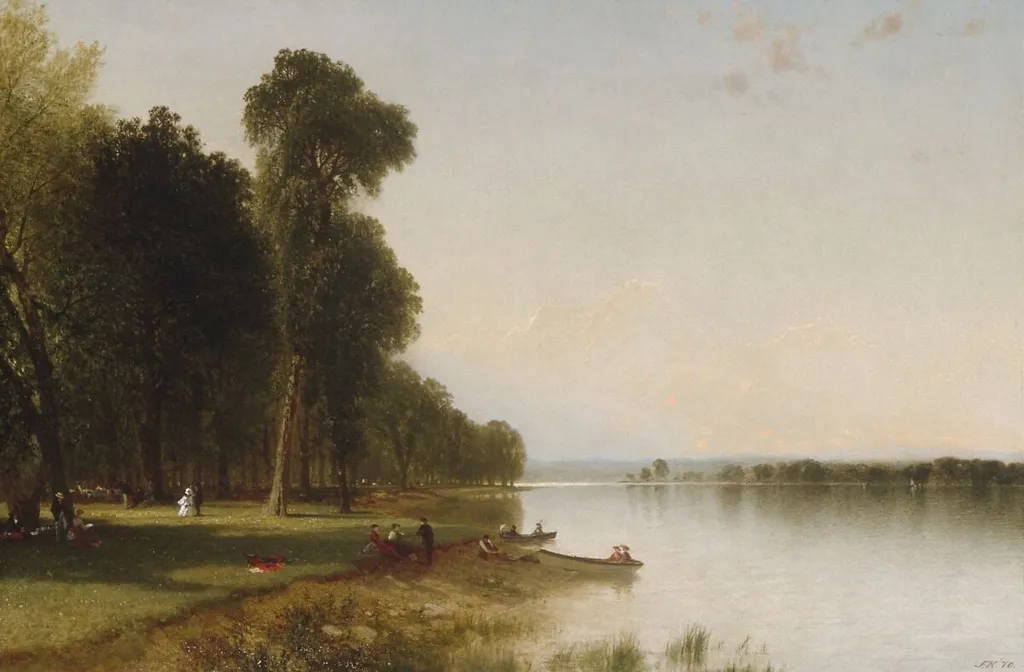
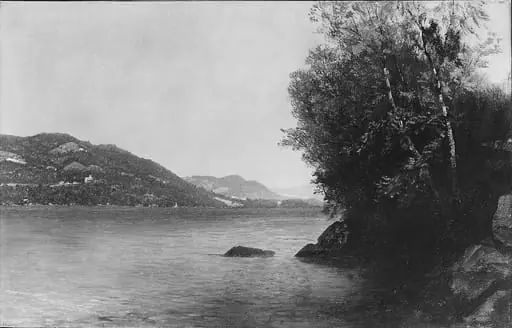
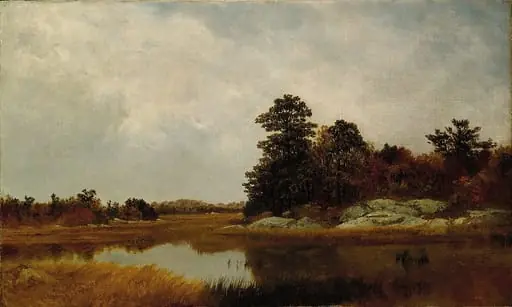
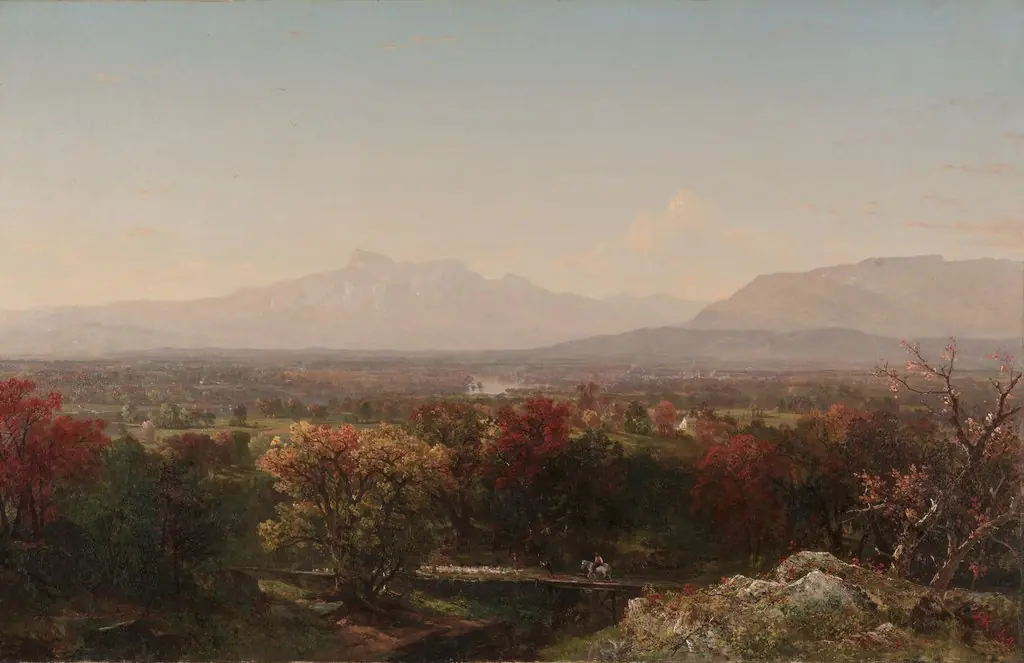
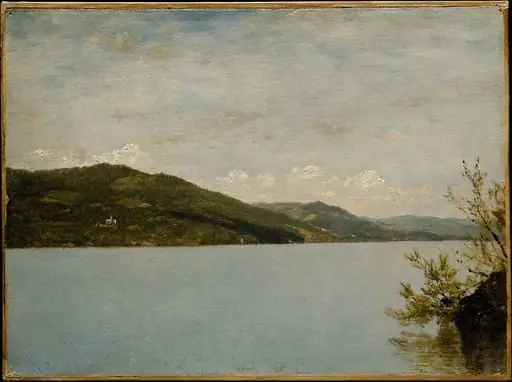
Summer Day on Conesus Lake is an oil painting by the Hudson River School artist John Frederick Kensett. It dates from 1870 and is held in the collection of the Metropolitan Museum of Art.
About this work
History & Provenance
It entered the collection of the Metropolitan Museum of Art, where it is currently housed and displayed within The American Wing.
Summer Day on Conesus Lake is an oil-on-canvas landscape painting created by John Frederick Kensett in 1870. The work measures 61.3 centimeters in height and 92.4 centimeters in width. It entered the collection of the Metropolitan Museum of Art, where it is currently housed and displayed within The American Wing.
The painting depicts a lake scene featuring trees and a boat. While the specific commission details or the precise chain of ownership prior to its acquisition by the museum are not detailed in the available records, the work is firmly dated to the year of Kensett's death, 1870. The piece remains a significant example of the artist's late landscape style within the museum's holdings.
Legacy
Summer Day on Conesus Lake (1870) by John Frederick Kensett is part of The American Wing’s collection at the Metropolitan Museum of Art, a placement noted in its catalog records. Its inclusion has reinforced the painting’s status as a representative example of 19th‑century American luminist landscape, shaping scholarly narratives about the genre’s development. The work’s depiction of a tranquil lake scene with a boat and surrounding trees has been cited in studies of Kensett’s influence on later American artists who pursued atmospheric effects.
Exhibition histories within the museum and subsequent retrospectives have further cemented its reputation as a key piece in the narrative of American landscape painting.
Overview
Summer Day on Conesus Lake (1870) is an oil on canvas landscape by John Frederick Kensett, a leading figure of the second generation of the Hudson River School. Executed during the final years of the artist's life, the work depicts the calm waters of Conesus Lake in New York under a vast, pale blue sky. The composition features a serene shoreline where trees lean slightly, suggesting a gentle breeze, while small boats drift near the water's edge.
Kensett employs his characteristic luminist style, utilizing fine, almost invisible brushwork to render the subtle interplay of light and atmosphere. The surface appears smooth and still, yet close inspection reveals the meticulous technique used to capture the shimmering quality of the water and the soft diffusion of sunlight. This painting exemplifies Kensett's mature period, where he moved away from the dramatic grandeur of earlier Hudson River School works toward a more intimate, meditative focus on the quiet beauty of the American landscape.
The work reflects his lifelong dedication to capturing specific locales with a sense of timeless tranquility and precise observation of natural light.
Subject & Meaning
This painting captures a specific location, Conesus Lake, which held particular significance for Kensett during his final years. He returned to this setting repeatedly, exploring its subtle variations in light and atmosphere. The artist's focus on the almost motionless water and the gentle elements of nature evokes a sense of peaceful contemplation, inviting viewers to engage with the quiet beauty of the American landscape.
Technique & Style
Kensett employed a meticulous approach to render the scene's delicate qualities. While the lake appears largely still, close examination reveals subtle, small brushstrokes that articulate the play of light across the water's surface. This technique creates a luminous, almost shimmering effect, contributing to the painting's immersive quality.
The careful depiction of natural elements encourages a sense of presence, as if one could experience the gentle sounds of the lapping waves.

Artist & collection

Artist
John Frederick Kensett was an American landscape painter and engraver born in Cheshire, Connecticut.