Artwork
Arques-la-Bataille
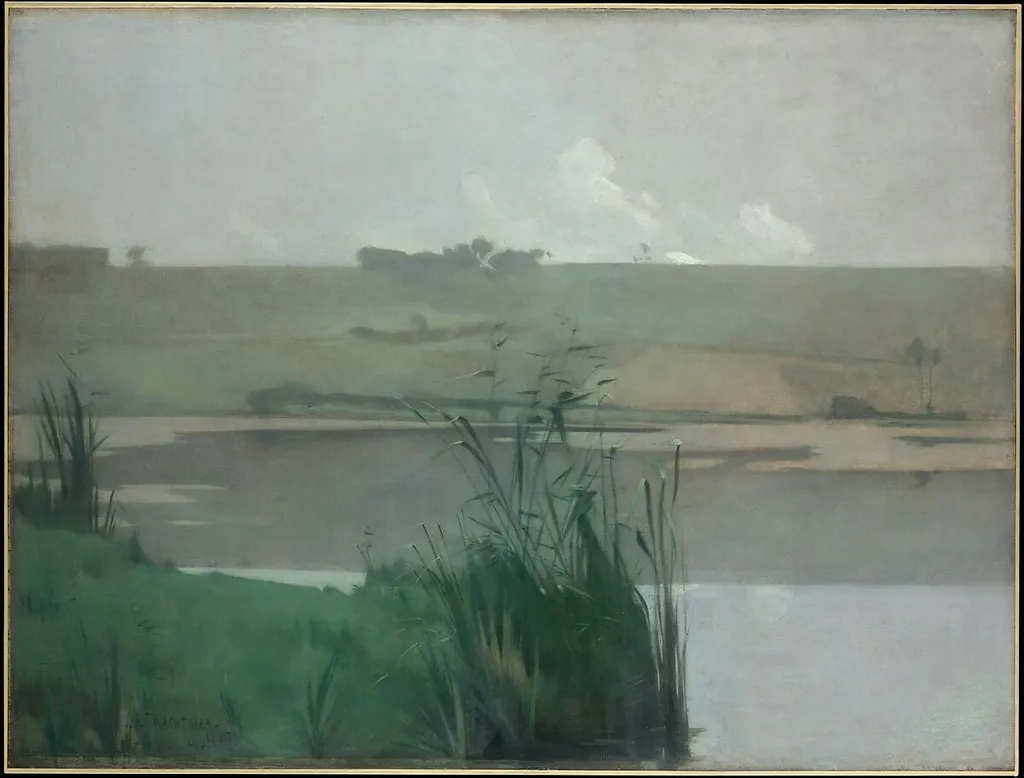
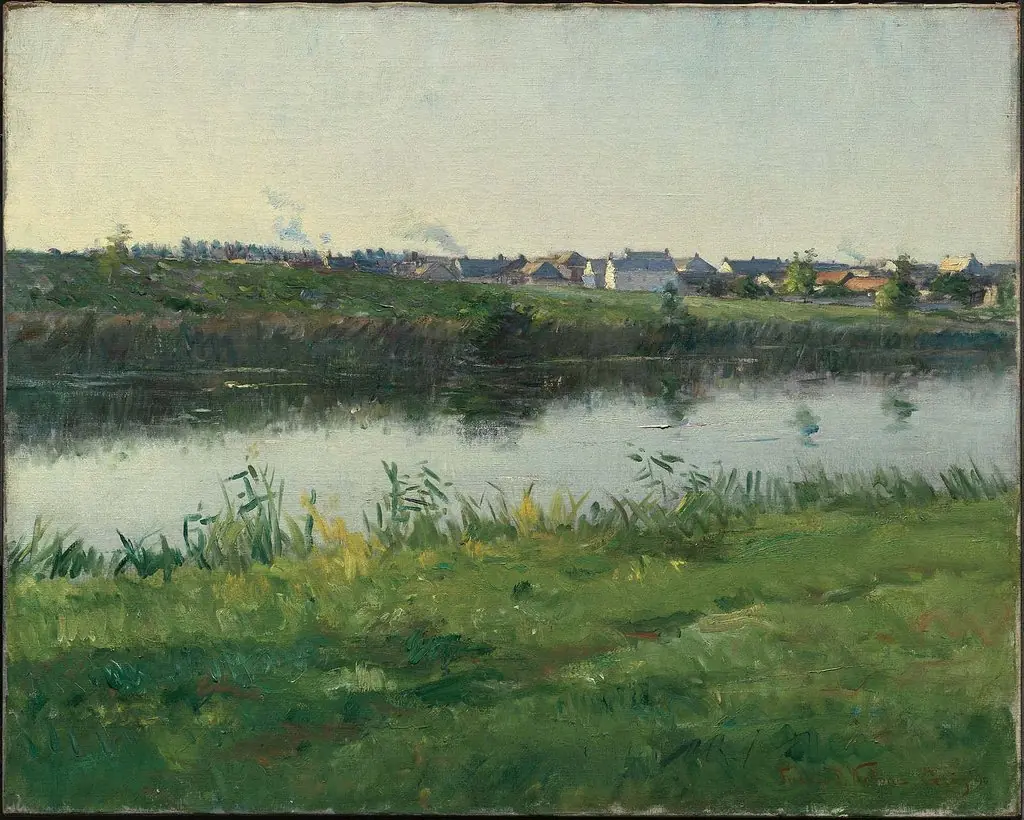
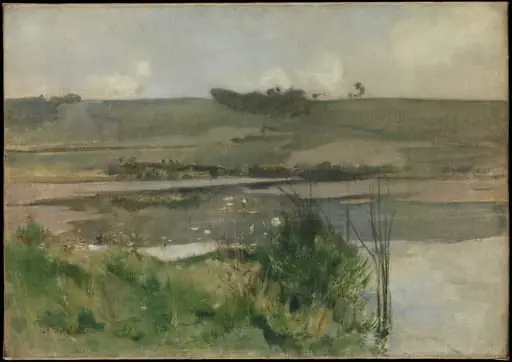
Arques-la-Bataille is an oil painting by the American Impressionist artist John Henry Twachtman. It dates from 1885 and is held in the collection of the Metropolitan Museum of Art.
About this work
Technique & Style
Arques-la-Bataille is executed in oil on canvas, a medium well suited to the loose, atmospheric handling associated with American Impressionism.
Arques-la-Bataille is executed in oil on canvas, a medium well suited to the loose, atmospheric handling associated with American Impressionism. The painting measures 152.4 by 200.3 centimeters, a broad horizontal format that accommodates a wide riverscape view. Its classification within the American Wing reflects its place within the broader tradition of late nineteenth-century American landscape painting, while the Impressionist movement designation points to the visible, broken brushwork and emphasis on natural light characteristic of Twachtman's mature style.
History & Provenance
Arques-la-Bataille was painted by John Henry Twachtman in 1885 as an oil on canvas landscape that portrays a river. The work belongs to the American Impressionist movement and is catalogued in The American Wing of the Metropolitan Museum of Art, where it has been part of the museum’s collection since acquisition. Its dimensions measure 152.4 cm in height and 200.3 cm in width.
The painting’s creation history reflects Twachtman’s mature style, and its provenance traces from the artist’s studio to the Metropolitan Museum of Art, which now holds it in its permanent collection.
Overview
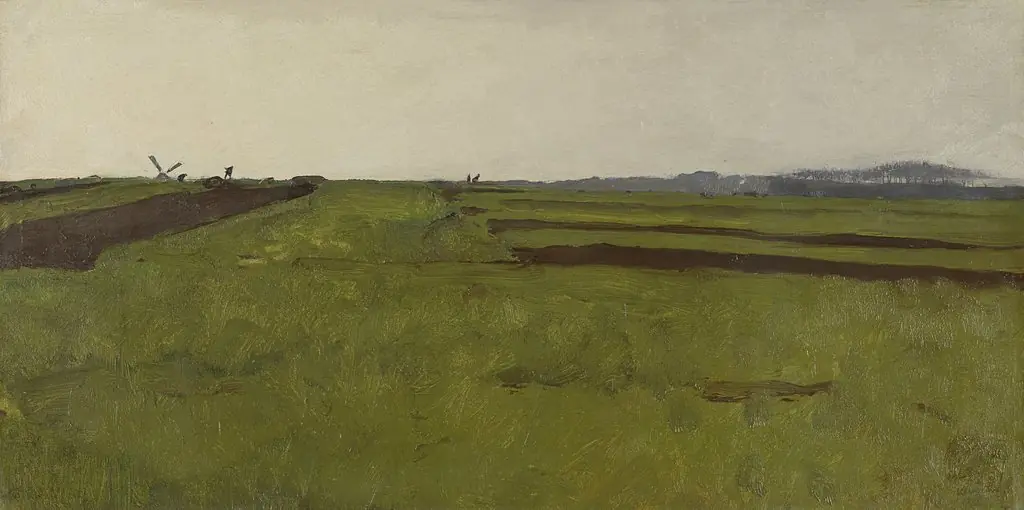
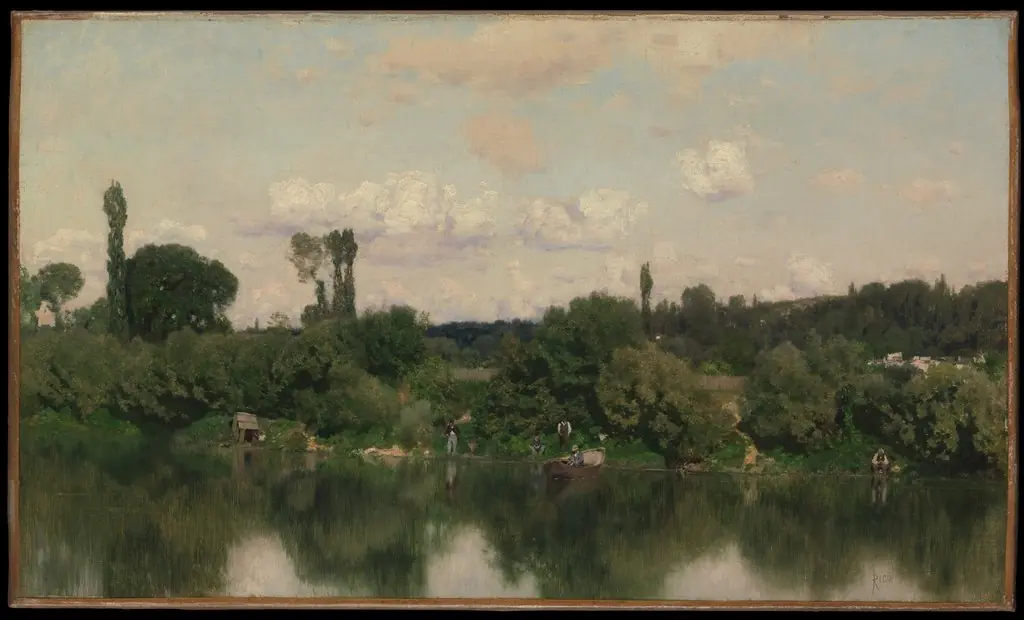
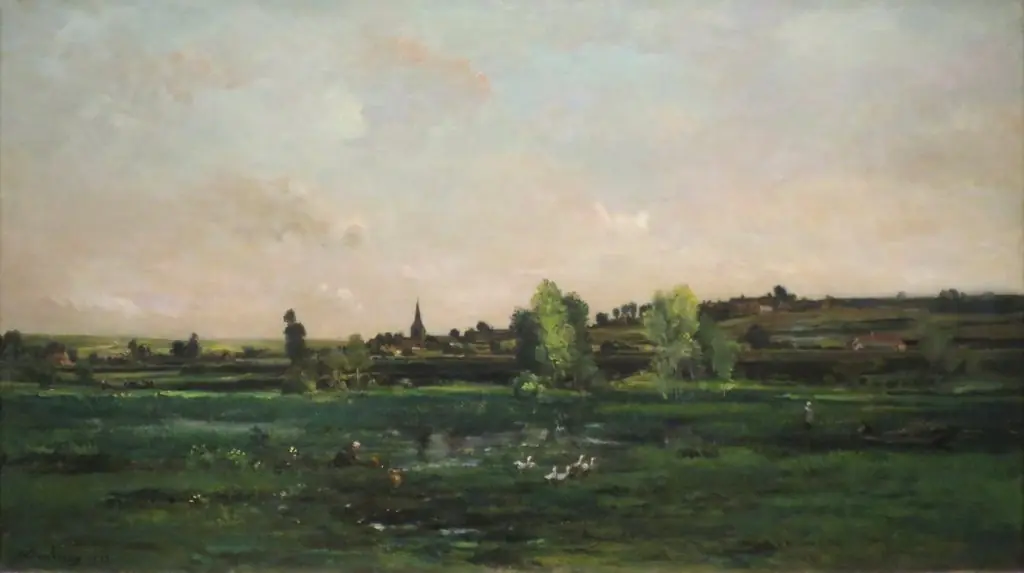
Painted in 1885, Arques-la-Bataille is a landscape by American Impressionist John Henry Twachtman created during his studies in France. The work depicts a serene river winding through soft green hills beneath a pale, expansive sky. Twachtman deliberately excluded the village and the historic ruined castle associated with the location, focusing instead on the atmospheric interplay of light and color.
The composition is defined by a loose, painterly technique where brushstrokes are visible and colors blend softly, avoiding sharp delineation. The application of oil paint is often thick and textured, creating a tactile surface that enhances the sense of natural tranquility. This piece exemplifies Twachtman's early engagement with French Impressionism, marking a shift from his earlier tonalist tendencies toward a brighter palette and a more immediate observation of nature.
It reflects his interest in capturing the ephemeral effects of the French countryside rather than documenting specific architectural or historical details, establishing a foundation for his later, more abstracted landscapes.
Subject & Meaning
This landscape depicts the area around Arques-la-Bataille in France, yet Twachtman deliberately excluded the local village and its well-known ruined castle. His artistic intention was not to create a topographical record but to evoke a particular emotional resonance and the fleeting quality of light. The composition emphasizes the quiet flow of the river and the gentle contours of the land, inviting contemplation of nature's subtle beauty.
Artist & collection
Artist
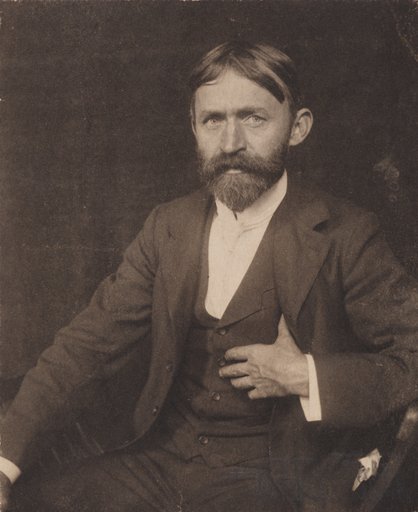
John Henry Twachtman was an American painter best known for his impressionist landscapes, though his painting style varied widely through his career.