Artwork
Memorial to Mary Long
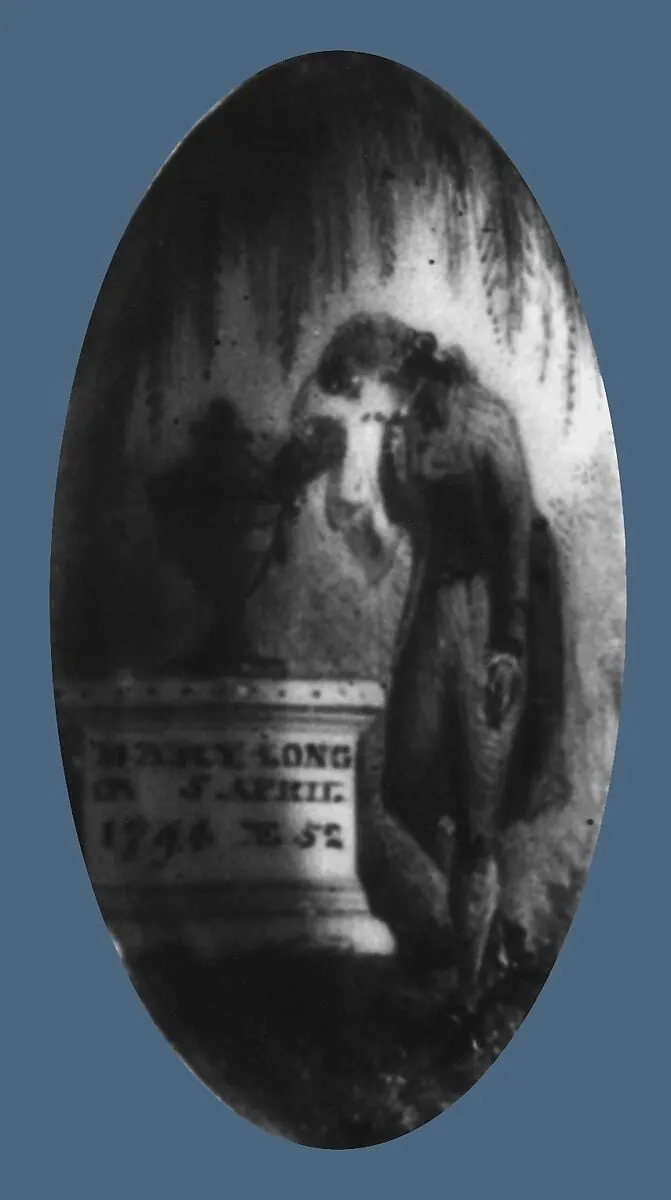
Memorial to Mary Long is a watercolor painting by the Romanticist artist John Ramage. It dates from 1794 and is held in the collection of the Metropolitan Museum of Art.
About this work
Subject & Meaning
The locket format itself carries symbolic weight, as such containers were traditionally worn close to the body, implying enduring emotional attachment.
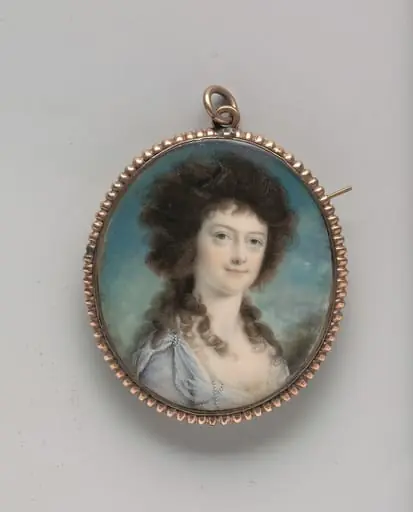
The Memorial to Mary Long depicts a woman in mourning, embodying the emotion of sadness. As a memorial portrait painted in 1794, the miniature functions as a commemorative object honoring the deceased Mary Long. The genre of portraiture here serves not merely to record likeness but to preserve memory and express grief.
The use of watercolor on ivory, set within a gold marquise locket, transforms the image into a portable, intimate keepsake, suggesting private remembrance and personal devotion. The locket format itself carries symbolic weight, as such containers were traditionally worn close to the body, implying enduring emotional attachment. The depiction of sadness as a central subject reflects the broader 18th-century practice of memorial imagery, where visual conventions of grief allowed the living to maintain connection with the dead.
Technique & Style
The work is a miniature portrait executed in watercolor on a thin ivory support that is set within a gold marquise‑shaped locket, a format typical of early American jewelry miniatures. Measuring roughly 3.1 cm in height and 1.9 cm in width, the piece was created in 1794 and belongs to the portrait genre in The American Wing collection at the Metropolitan Museum of Art. Ramage renders the sitter with a subdued expression of sadness, using delicate washes to model facial features and subtle tonal shifts that emphasize the intimate scale. The gold setting provides a reflective border that enhances the luminous quality of the watercolor surface.
History & Provenance
The Memorial to Mary Long was created in 1794 by John Ramage. The watercolor-on-ivory portrait, set in a gold marquise locket, is held in the collection of the Metropolitan Museum of Art, where it is classified under The American Wing. No further details regarding its commission, prior ownership, or acquisition by the museum are provided in the available sources.
The miniature is held by The Metropolitan Museum of Art, New York.
It is recorded with accession number 97.34.1.
The work has not been listed among the Museum’s recent exhibitions, and no exhibition history prior to its acquisition is documented in the cited sources.
Overview
John Ramage's Memorial to Mary Long, created in 1794, is a watercolor on ivory miniature encased in a gold marquise locket. This intimate artwork serves as a mourning piece, intended to be held privately rather than displayed. It portrays a woman in a somber pose, reflecting the personal grief associated with such keepsakes. The small scale and precious materials emphasize its role as a cherished, personal memento.
Context
John Ramage, an Irish American artist, was also known as a skilled goldsmith and a former military officer. He specialized in portrait miniatures, a popular art form for personal keepsakes during his era. Notably, Ramage holds the distinction of being the first artist to paint George Washington following his presidential inauguration, highlighting his prominence within the artistic circles of the late 18th century.
Artist & collection

Artist
John Ramage (1748 – 24 October 1802) was an Irish American artist, goldsmith, patroller, and second lieutenant.

 Alice Montgomery (1850-1917)
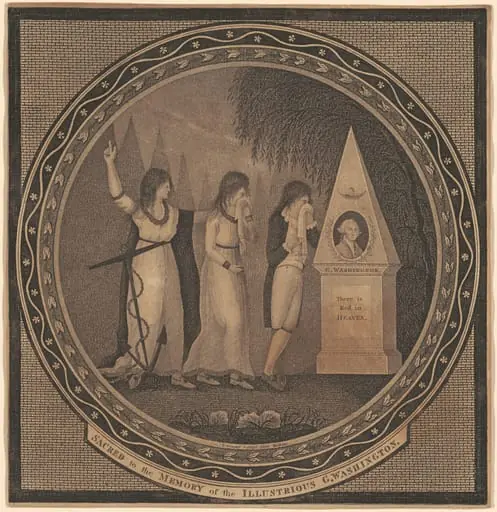 Sacred to the Memory of the Illustrious George Washington
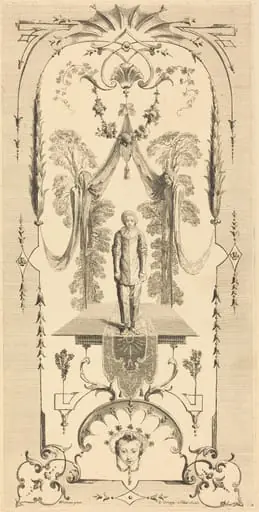 Gilles
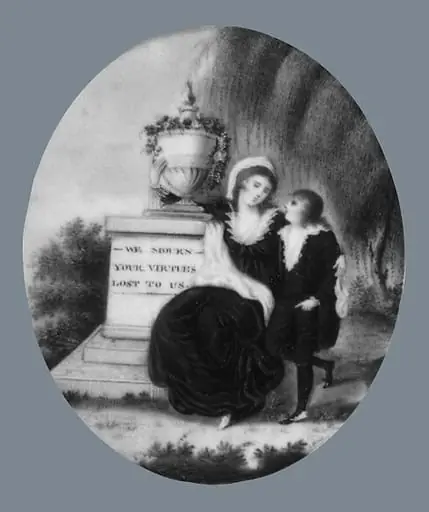 Memorial to Peter Philip Walter
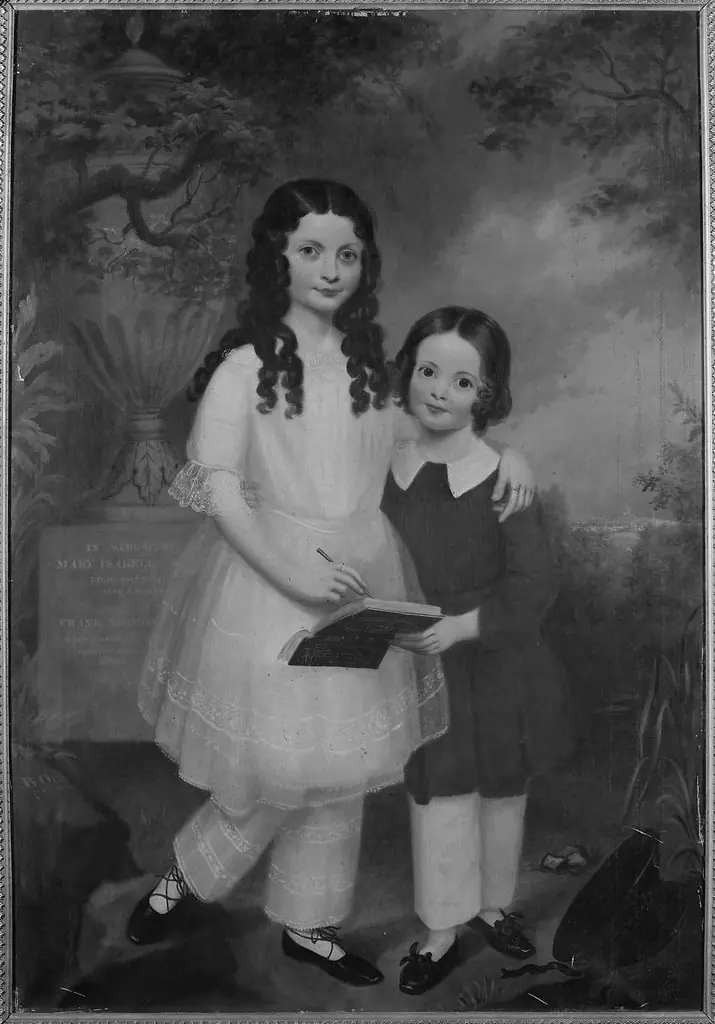 Virginia A. and George Simmons
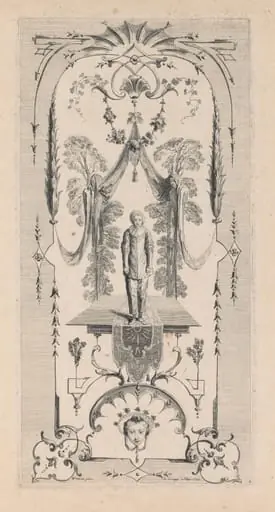 Pierrot, Arabesque
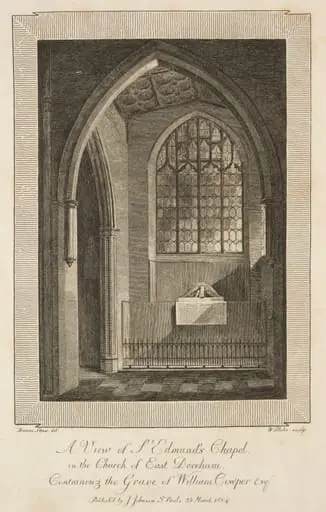 View of St. Edmund's Chapel in the Church of East Dereham, containing the Grave of William Cowper Esquire
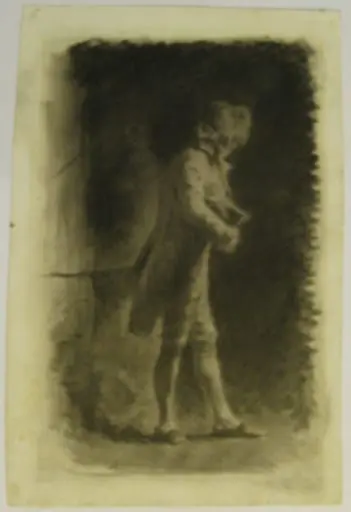 Bărbat costumat (Personaj din sec. XVIII)
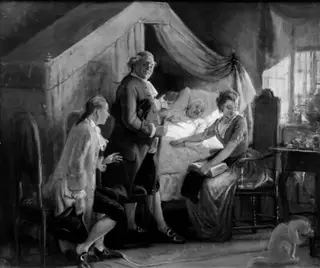 En trolovelse ved sygesengen