Artwork
William Few
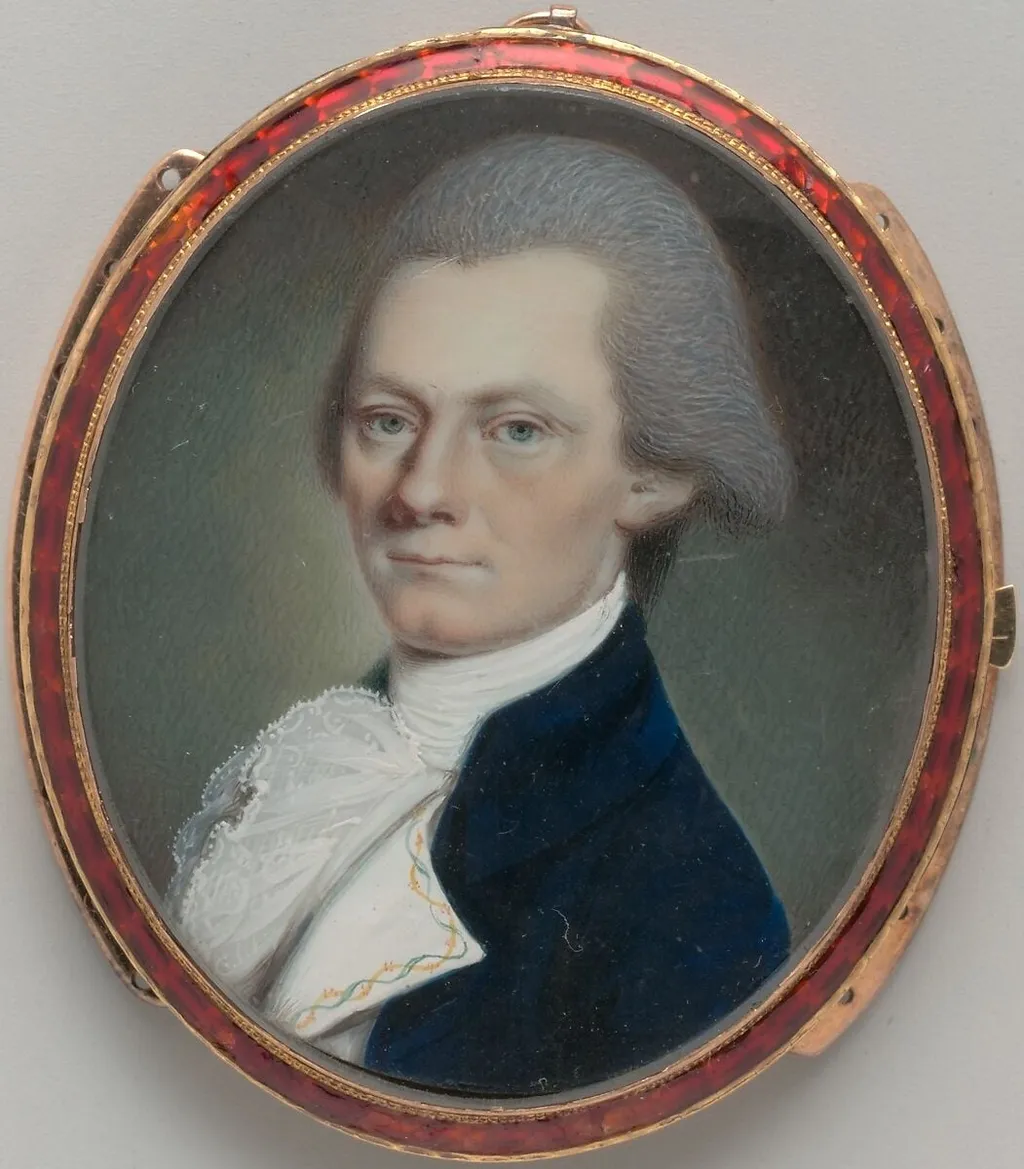
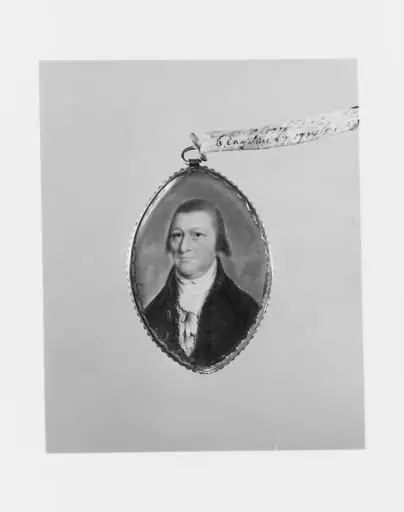
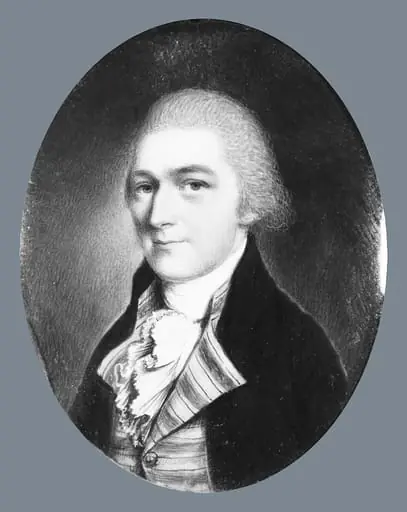
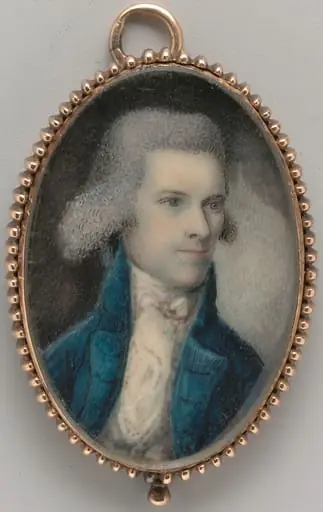
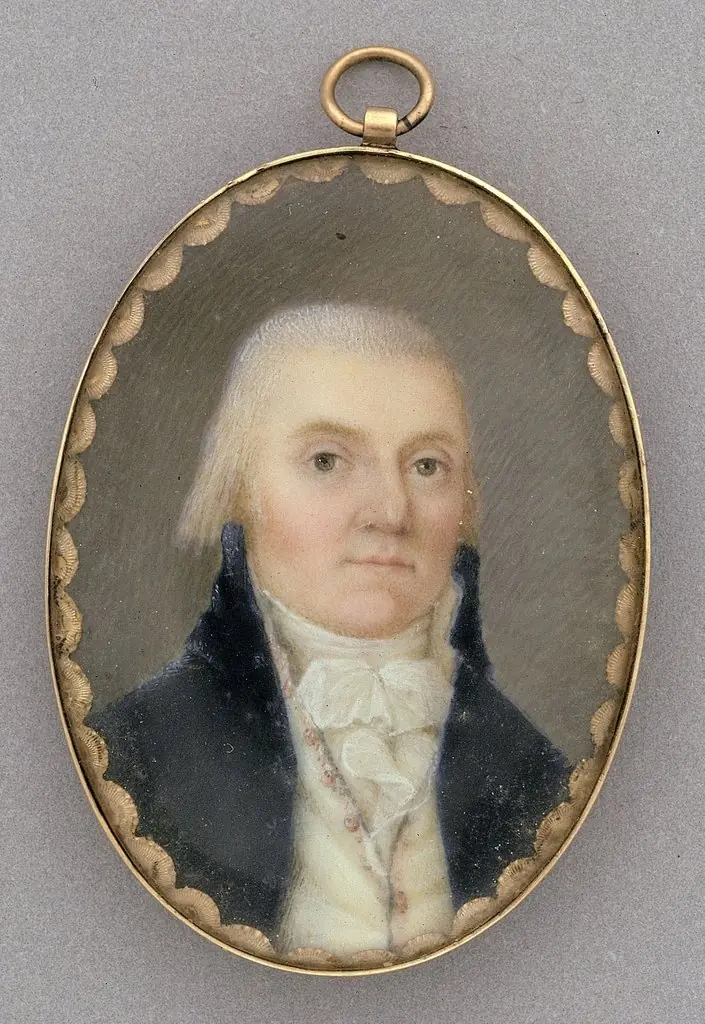
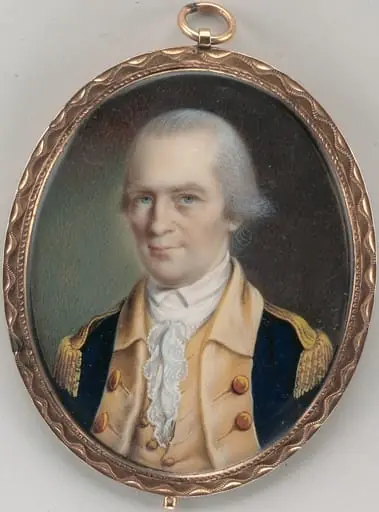
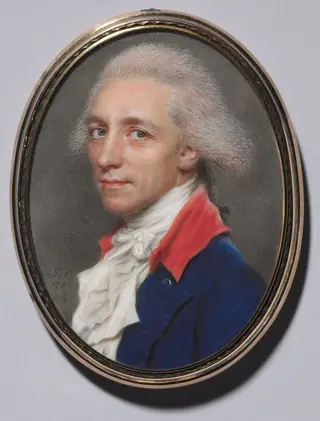
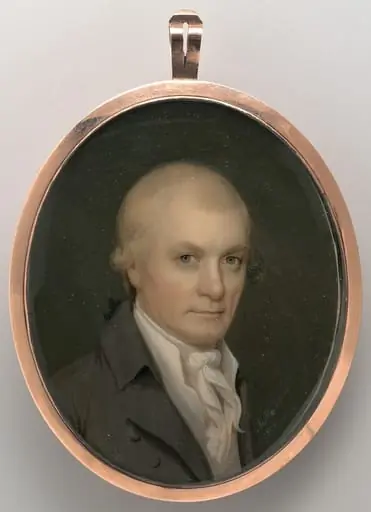
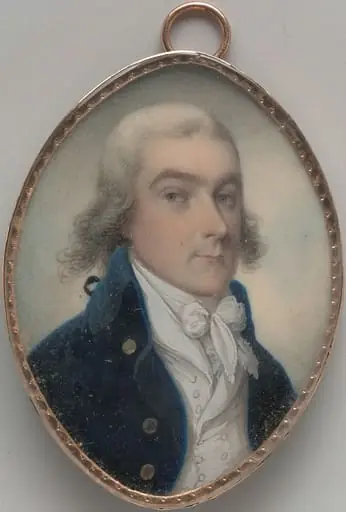
William Few is a watercolor painting by the Romanticist artist John Ramage. It dates from 1787 and is held in the collection of the Metropolitan Museum of Art.
About this work
Subject & Meaning
The composition focuses entirely on the individual, establishing his identity as the central and sole subject of the image.
The work depicts William Few, a historical figure presented as a man in a formal portrait. Created by the artist John Ramage in 1787, the piece functions as a straightforward representation of its subject without additional allegorical or narrative elements. As a portrait genre work, its primary meaning lies in the documentation and commemoration of Few himself, serving as a visual record of his appearance during the late eighteenth century.
The composition focuses entirely on the individual, establishing his identity as the central and sole subject of the image. This straightforward iconography reflects the conventions of portraiture from the period, prioritizing the accurate likeness and status of the sitter over complex symbolic storytelling.
Technique & Style
Executed in 1787 by John Ramage, this portrait of William Few utilizes watercolor applied to an ivory support. The work is characterized by its miniature scale, measuring approximately 5.6 by 4.6 cm. As a painted portrait, the piece demonstrates the artist's engagement with the specific medium of ivory, which was a prevalent support for miniatures during this period. The composition focuses on the depiction of the male subject, William Few, adhering to the conventions of portraiture within the American Wing's collection classification.
The technical approach combines the translucency of watercolor with the luminous quality of the ivory base to render the likeness.
History & Provenance
The watercolor-on-ivory portrait of William Few was created by John Ramage in 1787. The work entered the collection of the Metropolitan Museum of Art, where it is classified within The American Wing as a portrait genre piece. No further information regarding commission, prior ownership, or chain of custody is documented in the available sources.
Overview
John Ramage's watercolor on ivory depicts William Few, a prominent figure from the American Revolutionary era and a signer of the U.S. Constitution. Created around 1787, this small-scale portrait exemplifies Ramage's expertise in miniature painting. The work presents Few in a dark coat and white cravat, his gaze directed forward, with a soft illumination highlighting his features.
Context
John Ramage, an Irish-born artist, established himself in America as a sought-after miniature painter for New York's affluent society during the 1780s. Beyond his artistic practice, Ramage also worked as a goldsmith and served in the military, indicating a diverse professional life. He holds the distinction of being the first artist to paint George Washington following his presidential inauguration.
Artist & collection

Artist
John Ramage (1748 – 24 October 1802) was an Irish American artist, goldsmith, patroller, and second lieutenant.