Artwork
Mrs. Francis Brinley and Her Son Francis
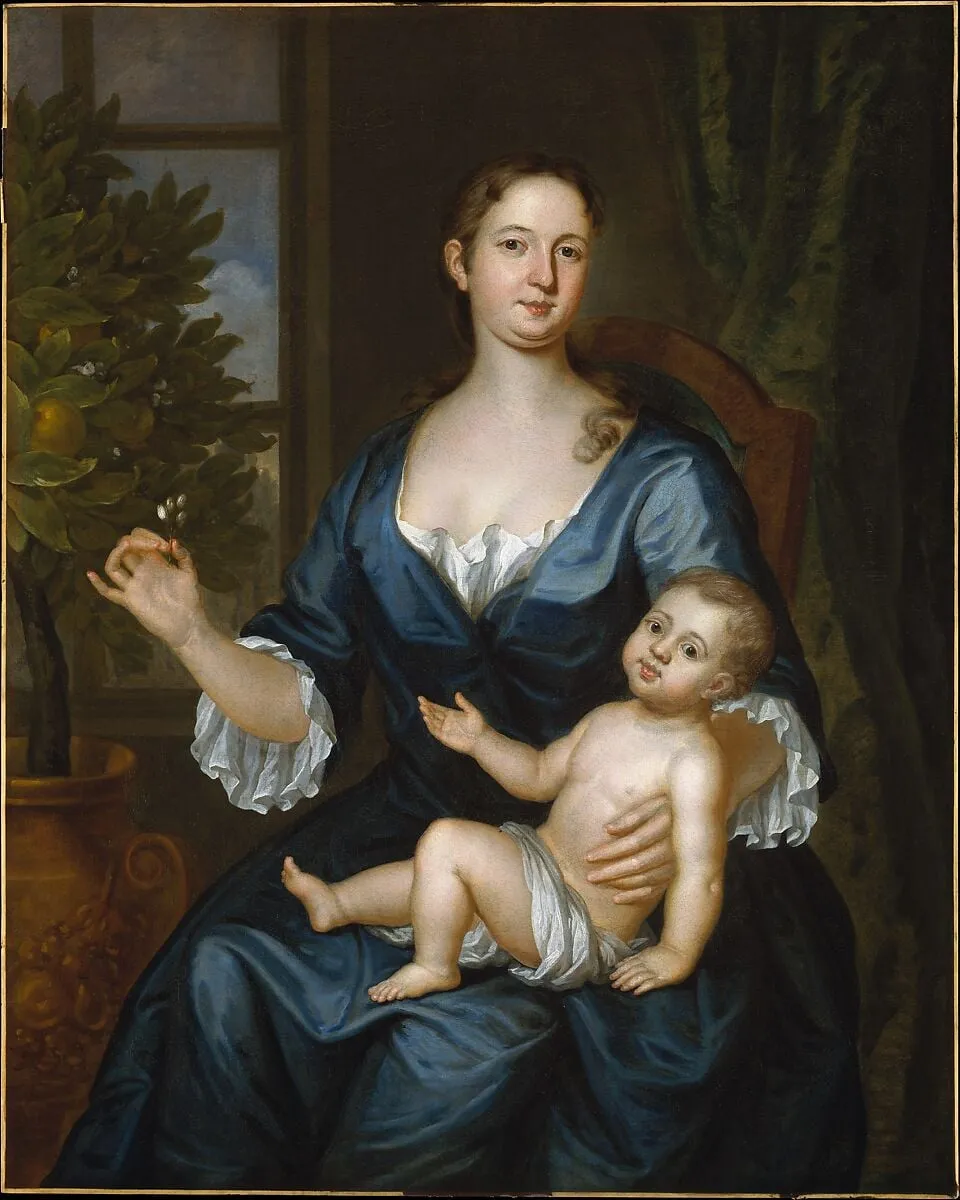
Mrs. Francis Brinley and Her Son Francis is an oil painting by the Baroque artist John Smibert. It dates from 1729 and is held in the collection of the Metropolitan Museum of Art.
About this work
Deborah Lyde Brinley sits in 1729 with her infant son Francis on her lap, a sprig of orange blossoms in hand, before a rare fruit-bearing orange tree that signaled her family's wealth to colonial Boston. John Smibert painted it that May as a companion to a portrait of her husband. The Met acquired both in 1962 through the Rogers Fund.
Overview
Commissioned by one of colonial Boston's prominent families, the painting serves as a declaration of their social standing and affluence.
This 1729 oil portrait by Scottish-born artist John Smibert presents Deborah Lyde Brinley, then thirty-one, with her infant son Francis. Commissioned by one of colonial Boston's prominent families, the painting serves as a declaration of their social standing and affluence. It is conceived as a companion piece to a portrait of her husband, Francis Brinley, with both works collectively illustrating the family's esteemed position within New England society.
Subject & Meaning
Deborah Brinley is depicted holding a sprig of orange blossoms, a motif that art historians connect to an eighteenth-century print by Sir Peter Lely. The white blossoms traditionally signify marriage and purity, while the fruit emphasizes fertility and her recent transition to motherhood. Behind her, a rare, fruit-laden orange tree further underscores the family's wealth, as such exotic plants were a costly luxury in colonial New England.
Technique & Style
Executed in oil on canvas, the portrait measures fifty by thirty-nine and a quarter inches, a significant scale chosen to reflect the sitter's elevated social status. Smibert's meticulous rendering captures the details of Mrs. Brinley's attire and the symbolic elements within the composition. The substantial format and careful execution align with the conventions of formal portraiture favored by the colonial elite to assert their presence and importance.
Context
Deborah Lyde Brinley's lineage, through her grandfather Judge Nathaniel Byfield, positioned her among Boston's social elite, a status further solidified by her 1718 marriage to Francis Brinley. The family resided in Datchet House, an elaborate Roxbury estate offering expansive views of Boston. This portrait, alongside its pendant depicting Mr. Brinley against a landscape of their property, collectively articulates the family's social standing and their connection to the burgeoning colonial city.
History & Provenance
John Smibert recorded the commission for this portrait in his notebook in May 1729, indicating its creation for the prominent Brinley family. The painting remained in private hands for centuries, reflecting its significance as a family heirloom. In 1962, The Metropolitan Museum of Art acquired this work, along with its companion portrait of Francis Brinley, through the generosity of the Rogers Fund, integrating them into its collection of American art.
Artist & collection

Artist
John Smibert (24 March 1688 – 2 April 1751) was a Scottish-born painter who specialised in portrait painting and was the first academically trained artist to work in British America.






 Mother and Child
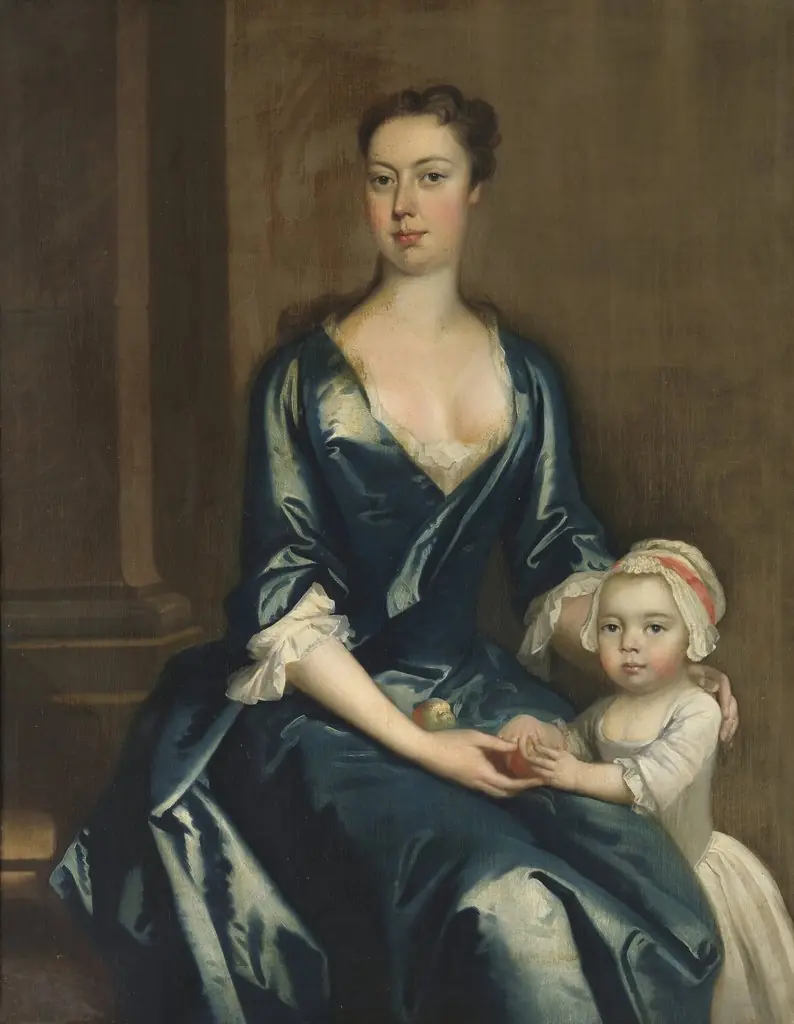 Portrait of a Lady with her daughter
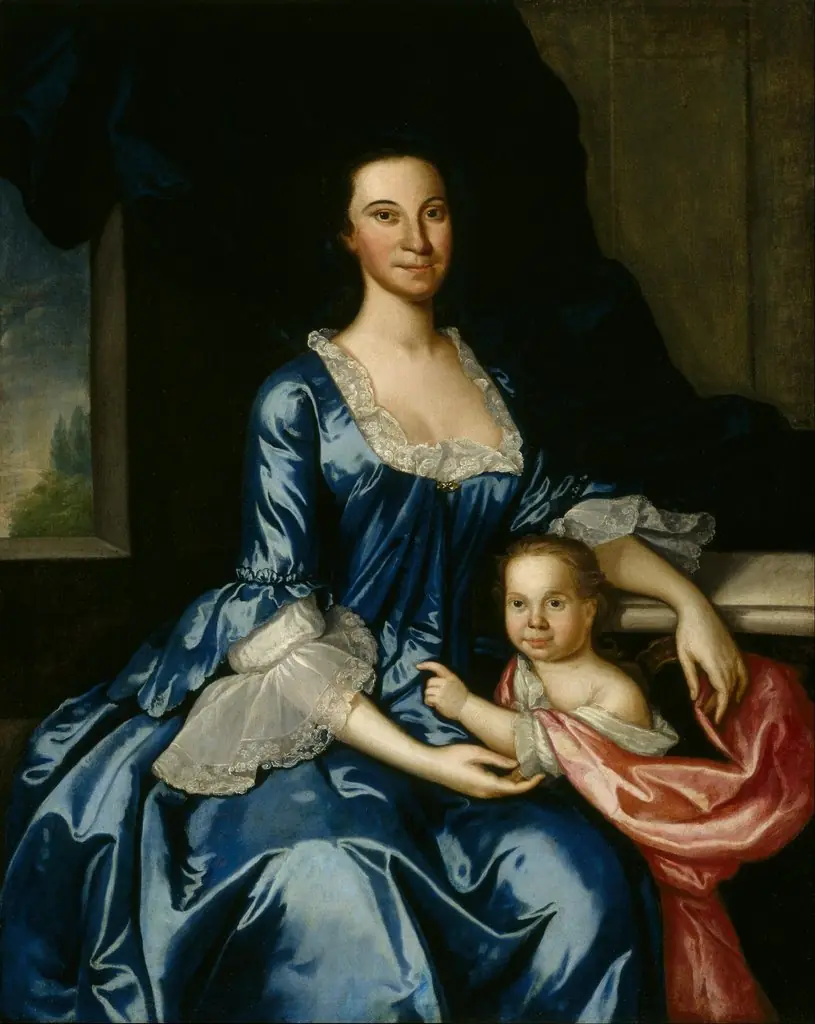 Portrait of Mrs. Matthew Tilghman (Anna Lloyd, 1724–1794) and Her Daughter, Anna Maria (1755–1843)
 Duchess of Lennox and Richmond (1622–1685) with her lady’s maid, the dwarf, Anne Shepherd
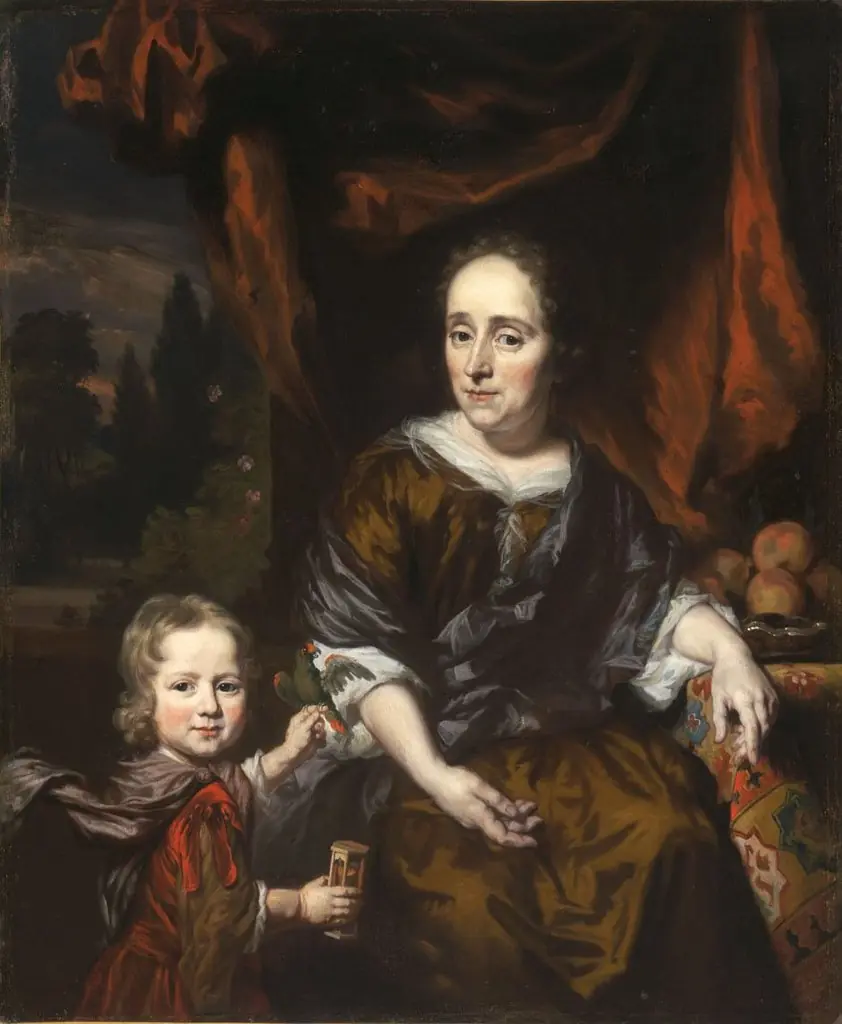 Portrait of a Woman and a Child
 Sarah Carver and Her Daughter, Sarah
 Margaret Wynne (1722 -)
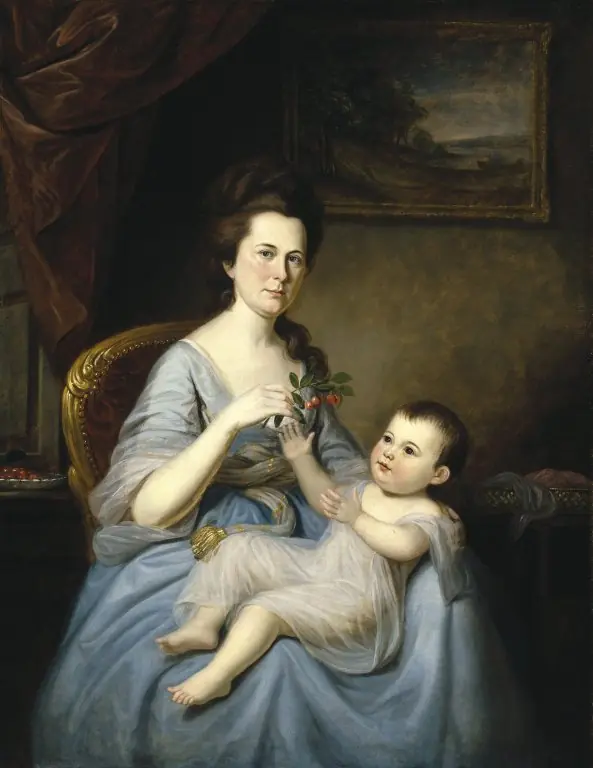 Mrs. David Forman and Child
 Mamă și copil
 Queen Henrietta Maria with Sir Jeffrey Hudson
 Caritas
- Mrs. Jacob Hurd and Child