Artwork
Queen Henrietta Maria with Sir Jeffrey Hudson
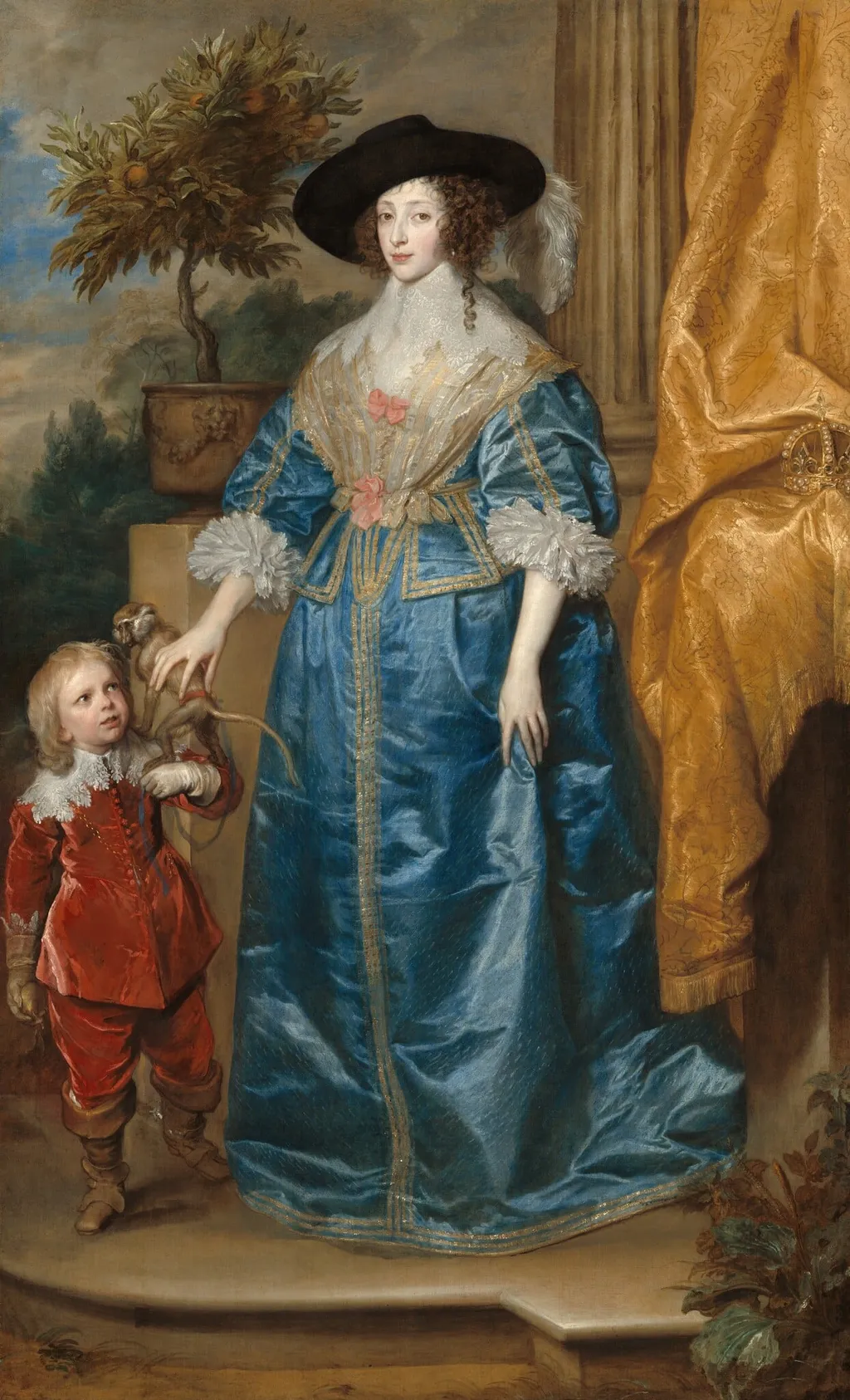
Queen Henrietta Maria with Sir Jeffrey Hudson is an oil painting by the Baroque artist Anthony van Dyck. It dates from 1633 and is held in the collection of the National Gallery of Art.
About this work
Subject & Meaning
The queen, about twenty-four years old, wears a blue hunting dress and a large black hat with a white plume.
The painting depicts Queen Henrietta Maria of France, wife of Charles I, standing beside her court dwarf Sir Jeffrey Hudson, who holds a monkey upon which the queen rests her hand. The queen, about twenty-four years old, wears a blue hunting dress and a large black hat with a white plume. A crown rests on a golden curtain at left, symbolizing royal authority.
Behind her, an orange tree in bloom, brought from her native France, alludes to purity and chastity. The monkey, an exotic pet, reflects the queen's taste for foreign curiosities and courtly amusements. Hudson, aged about fourteen, had been given to the queen as a gift from the Duke of Buckingham. The portrait thus asserts her regal status while celebrating her refined, cosmopolitan interests.
History & Provenance
Anthony van Dyck painted this portrait of Queen Henrietta Maria with Sir Jeffrey Hudson in 1633. The earliest recorded owner is Thomas Newport, 1st Baron Torrington (c. 1655–1719), who possessed the work before 1716. It then passed by inheritance through a chain of family members: Anne, Lady Torrington; Mary, Countess of Bradford; Diana, Countess of Mountrath; Caroline, Baroness Milton; George Damer, 2nd Earl of Dorchester; Caroline Damer; John Dawson, 2nd Earl of Portarlington; and Henry John Reuben Dawson-Damer, 3rd Earl of Portarlington.
In 1881, it was exchanged to Thomas George Baring, 1st Earl of Northbrook, and later inherited by his son. The painting was sold in March 1927 to Duveen Brothers and eventually acquired by the Samuel H. Kress Foundation before entering the National Gallery of Art in Washington, D.C..
The painting is held at the National Gallery of Art in Washington, D.C., as part of the Samuel H. Kress Collection. It was acquired by the Kress Foundation from M. Knoedler & Co. after passing through the Duveen Brothers gallery and the collection of William Randolph Hearst.
Overview
Painted in 1633 by Anthony van Dyck, this oil on canvas portrait depicts Queen Henrietta Maria standing alongside her court dwarf, Sir Jeffrey Hudson. The composition places the Queen in a voluminous, ruffled gown, holding a fan, while Hudson stands beside her in fine attire, emphasizing their contrasting scales within the Baroque aesthetic. A small monkey perches on a chair behind them, a common symbol of courtly exoticism and status in 17th-century portraiture.
The work captures Hudson at the height of his fame as the 'Queen's dwarf' and 'Lord Minimus,' celebrated for his extreme yet well-proportioned smallness. Van Dyck, the leading portraitist of the English court, rendered the figures with his characteristic elegance and psychological presence, solidifying the image of the royal couple's unique entourage. This painting serves as a historical document of the Stuart court's fascination with curiosities and the specific social dynamics surrounding Hudson, who would later fight for the Royalists, endure enslavement in North Africa, and return to England.
The artwork remains a significant example of Van Dyck's ability to integrate eccentric court figures into the grand tradition of royal portraiture.
Context
The presence of the monkey in the portrait offers insight into the customs of 17th-century European courts. Royal households frequently maintained collections of unusual animals, which functioned as symbols of power and global reach. Such exotic creatures were often acquired through trade and exploration, signifying the monarch's influence and access to distant lands.
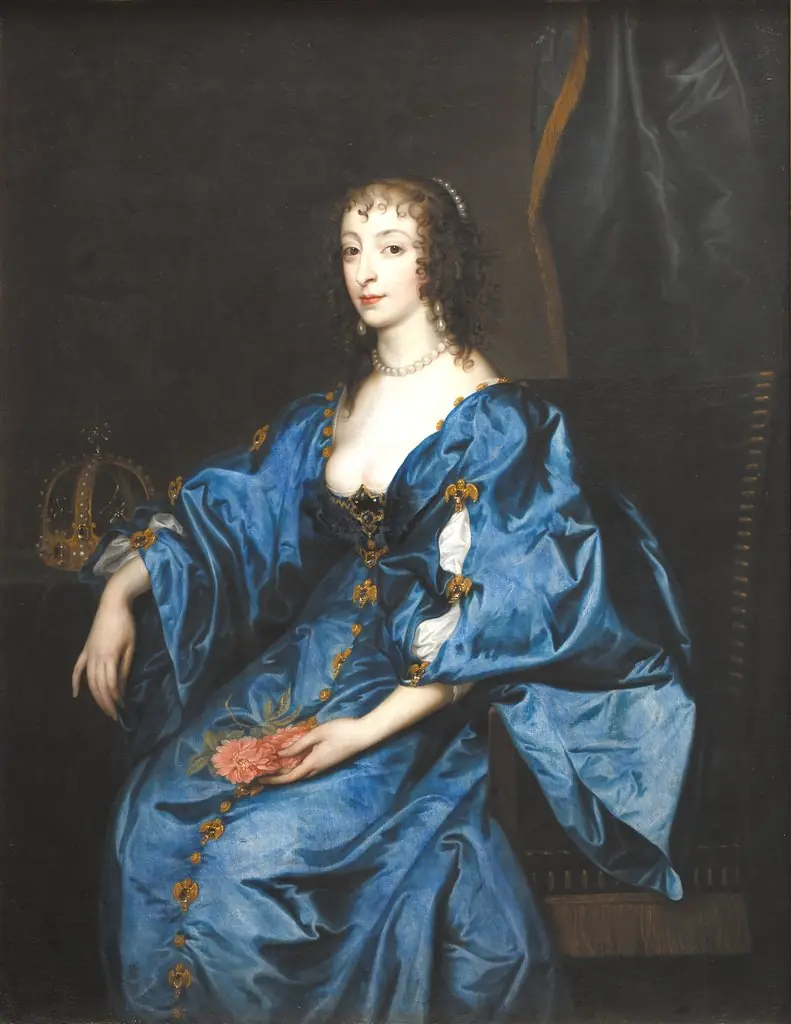
Own this work as a print
Artist & collection
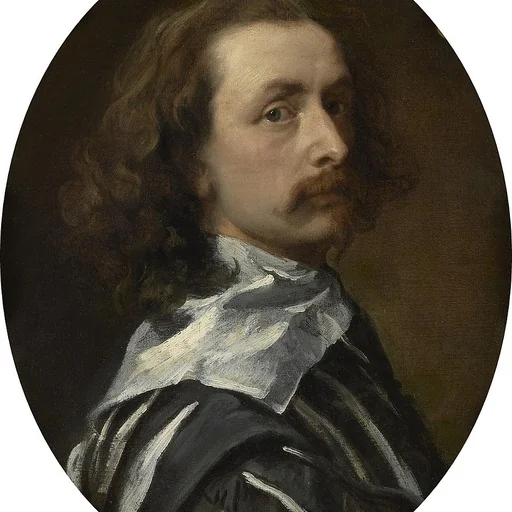
Artist
Sir Anthony van Dyck (; Dutch: Antoon van Dijck; 22 March 1599 – 9 December 1641) was a Flemish Baroque artist, who became the leading court painter in England after success in the Spanish Netherlands and Italy.

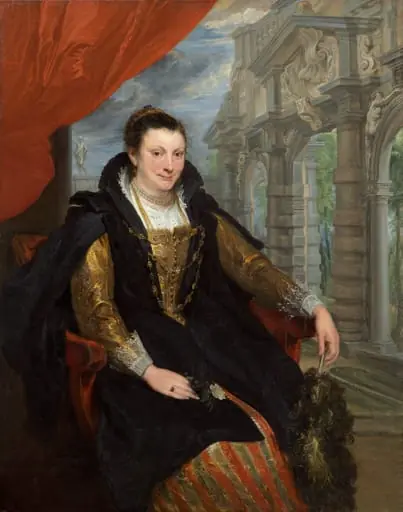
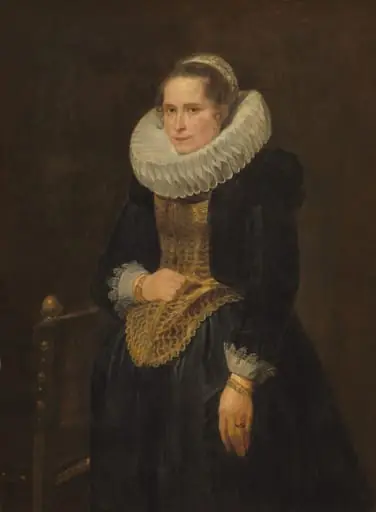
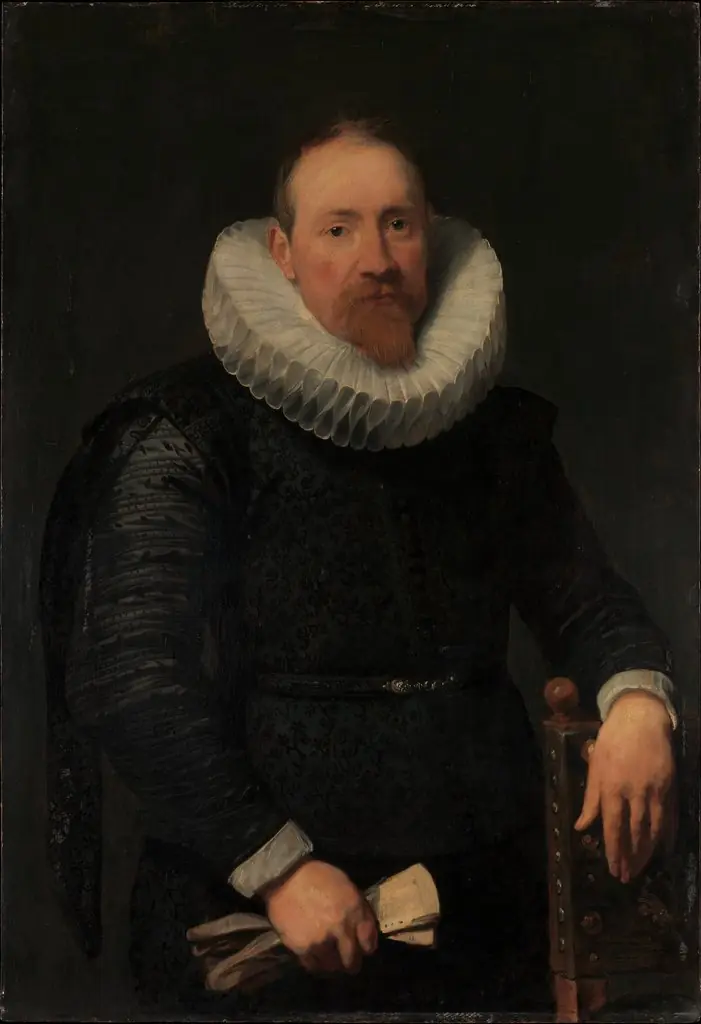
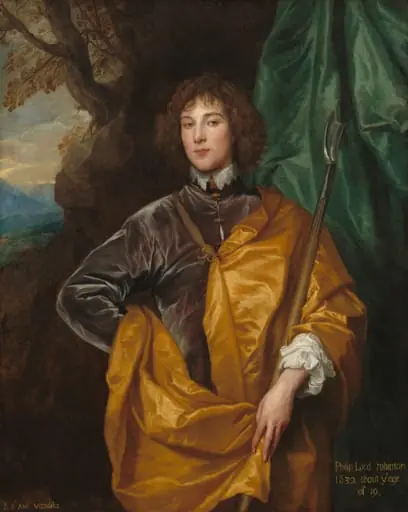
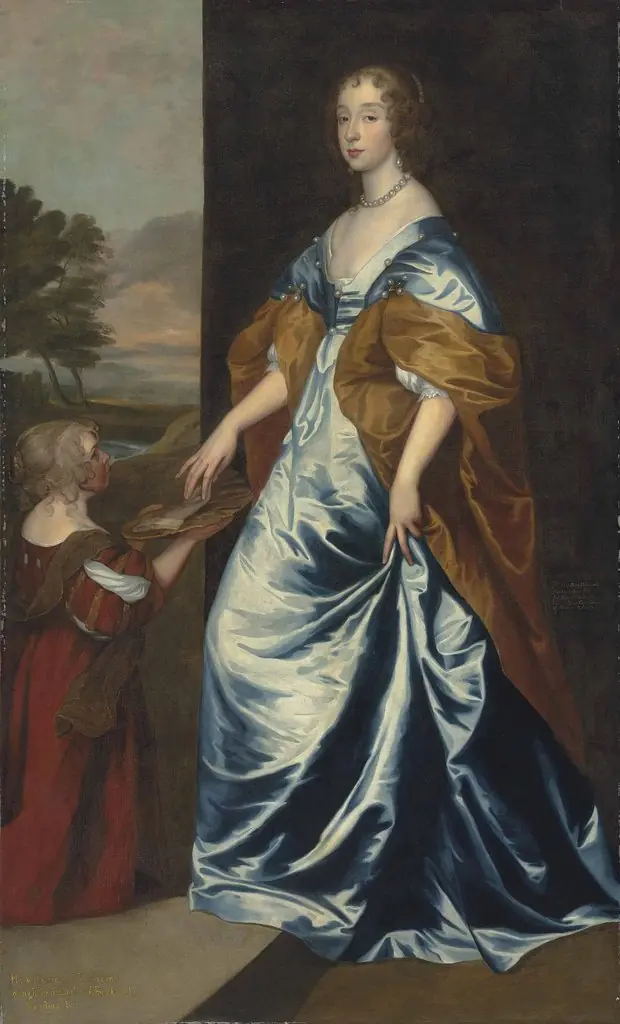 Duchess of Lennox and Richmond (1622–1685) with her lady’s maid, the dwarf, Anne Shepherd
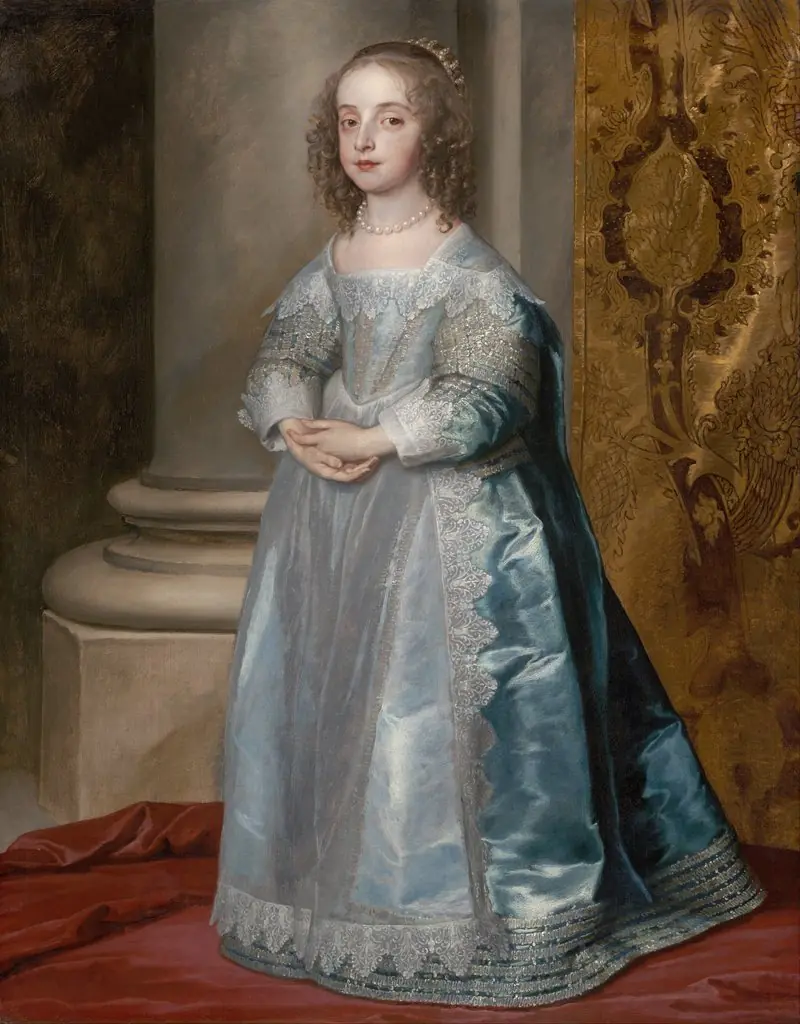 Princess Mary, Daughter of Charles I
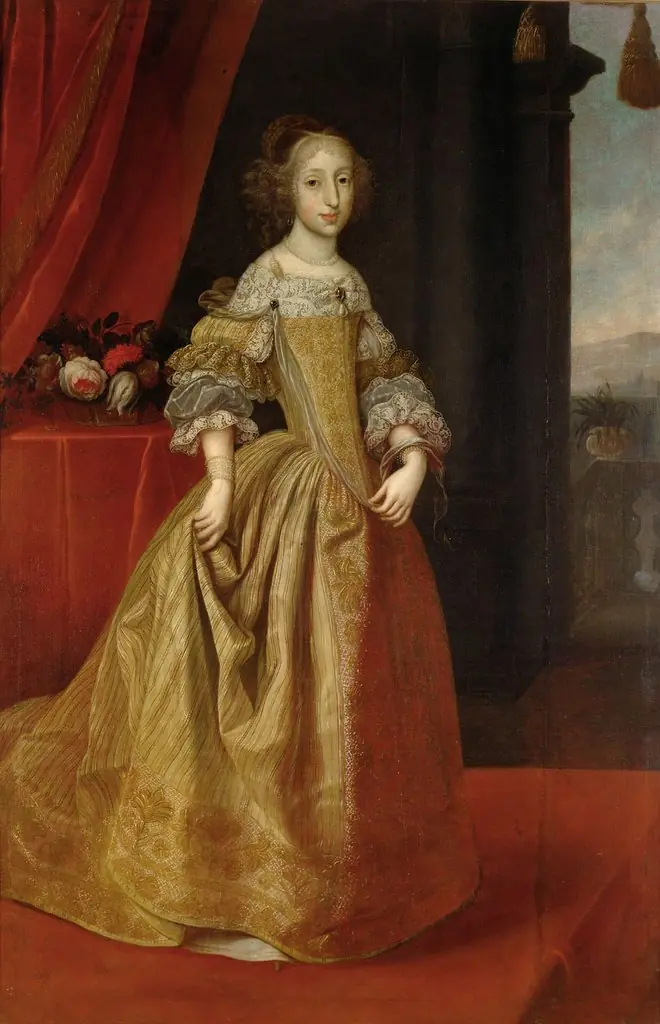 Portrait of Eleanor Maria Josepha of Austria.
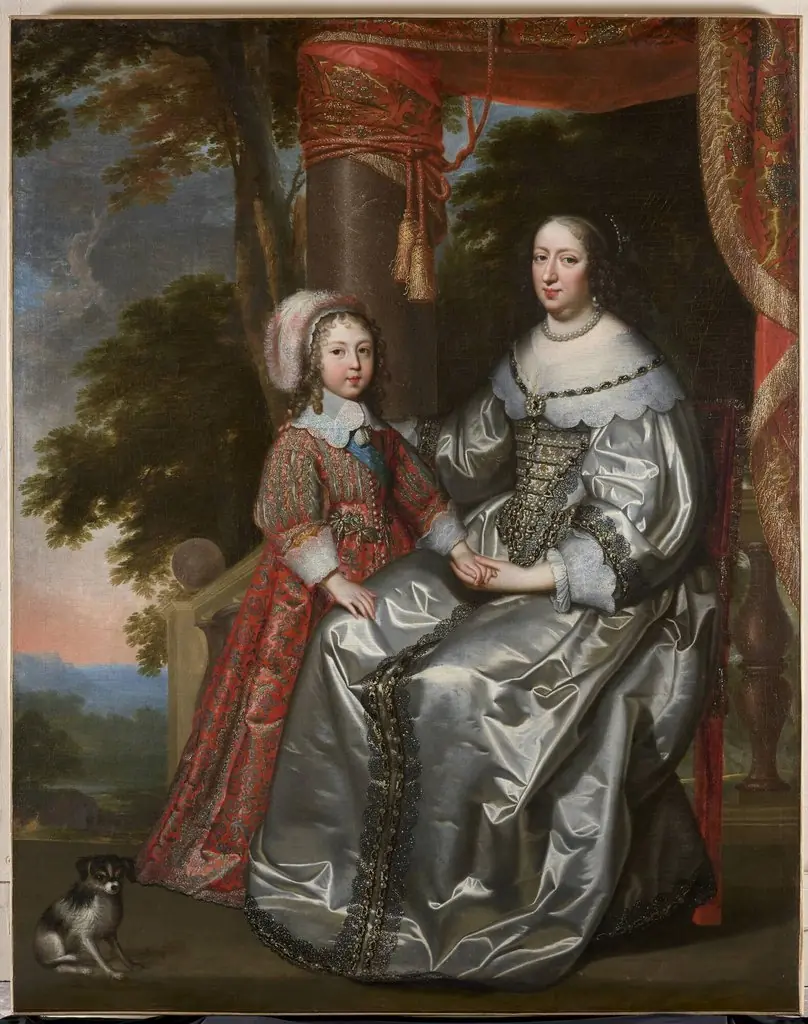 Anne d'Autriche, régente de France, en deuil blanc, et son fils Louis XIV, en robe rouge
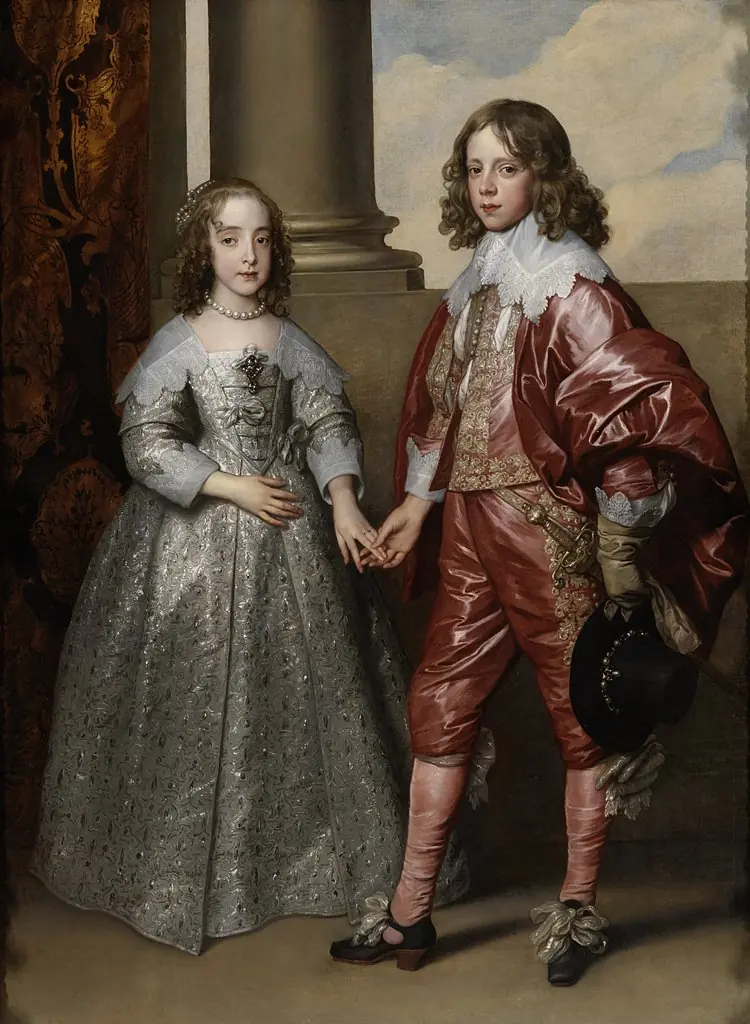
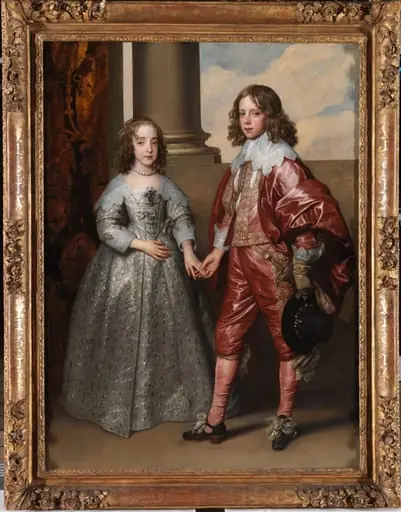 Maria Stuart en Willem II
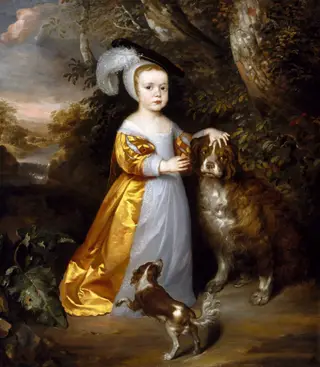 Esmé Stuart, 5th Duke of Lennox and 2nd Duke of Richmond (1649-1660)
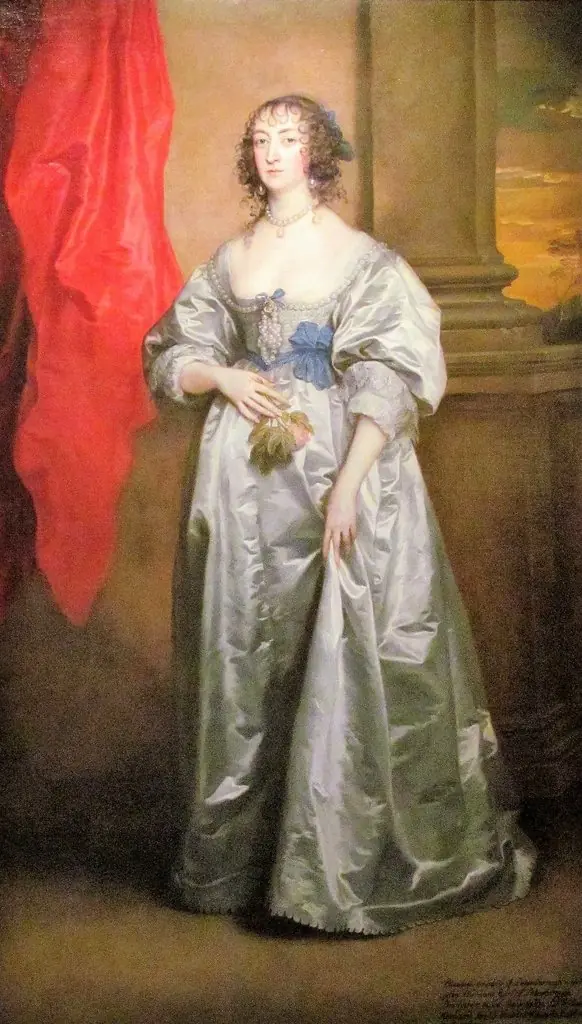 Portrait of Elizabeth Howard, 1st Countess of Peterborough
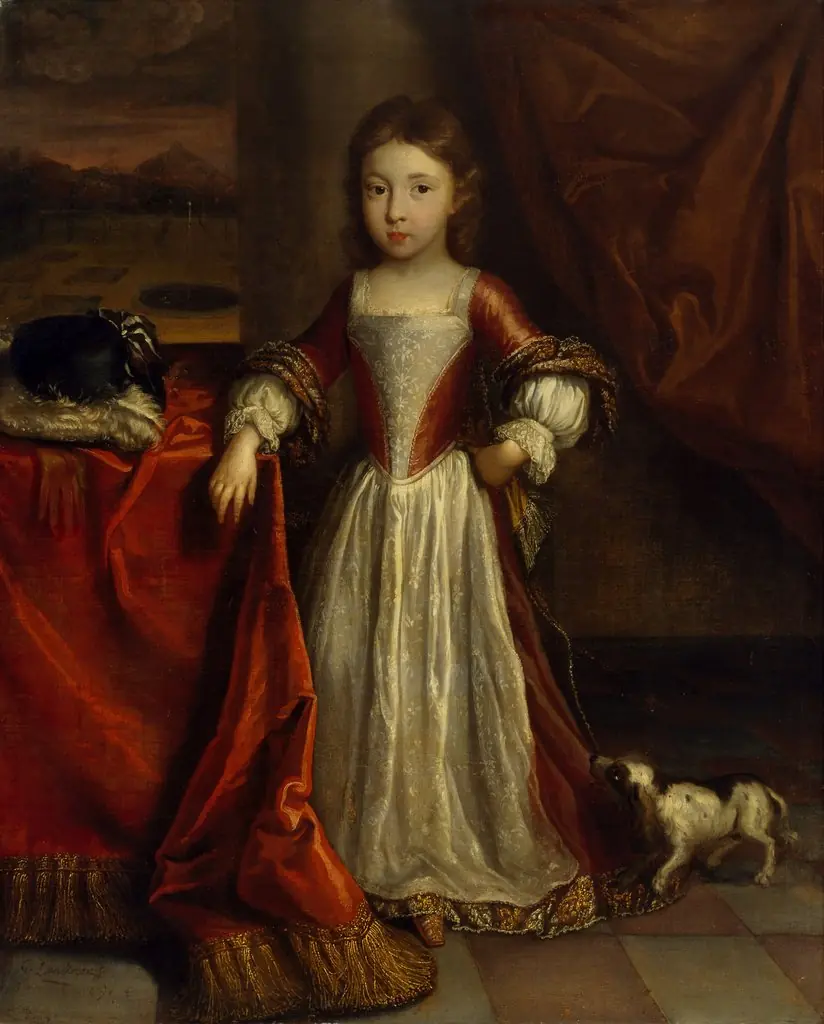 Portrait of a Young Boy
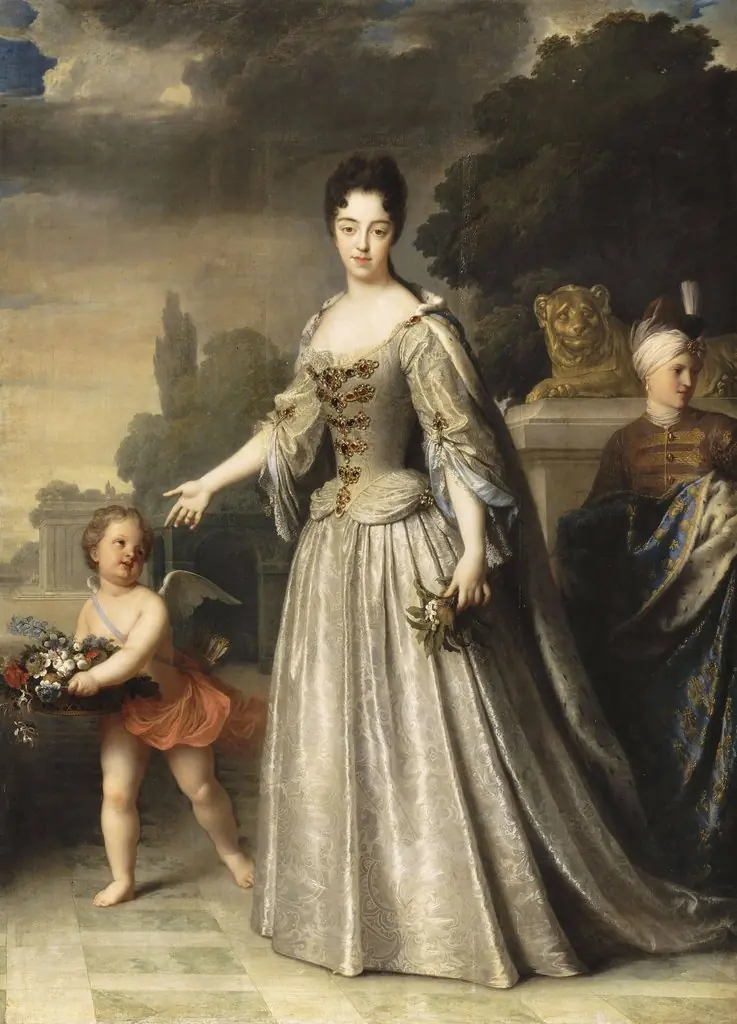 Portrait of Marie Adélaïde of Savoy, Duchess of Burgundy
 Portrait of Lady Catherine and Lady Charlotte Talbot
- Queen Henrietta Maria of England