Artwork
"I am half sick of shadows" said the Lady of Shalott
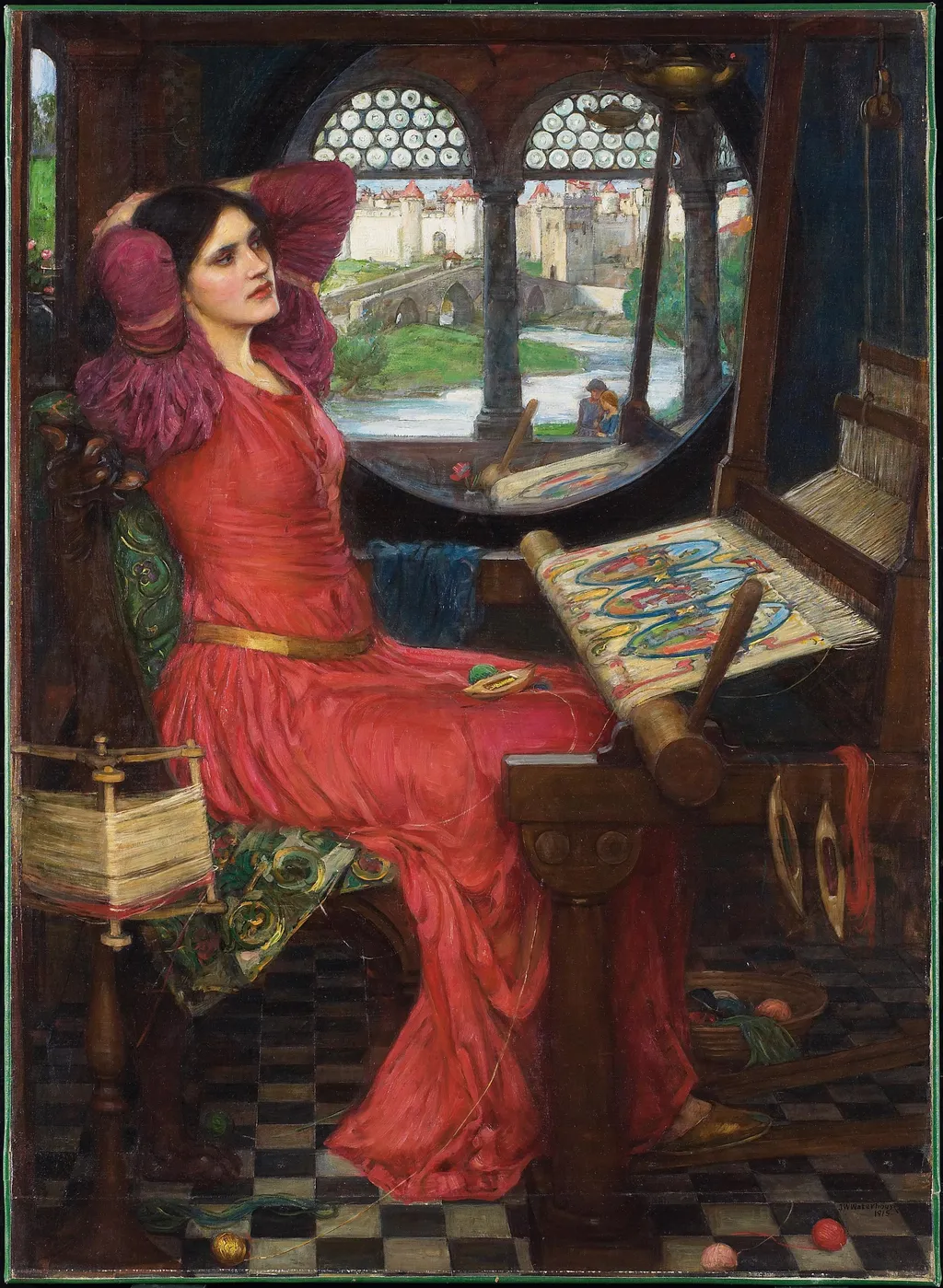
"I am half sick of shadows" said the Lady of Shalott is an oil painting by the Pre-Raphaelite artist John William Waterhouse. It dates from 1916 and is held in the collection of the Art Gallery of Ontario.
About this work
Overview
' It is the third of Waterhouse’s paintings to interpret the poem, focusing on the Lady’s quiet solitude before her fateful decision to leave her tower.
Painted in 1915 by John William Waterhouse, this oil on canvas work illustrates a moment from Alfred, Lord Tennyson’s poem 'The Lady of Shalott.' It is the third of Waterhouse’s paintings to interpret the poem, focusing on the Lady’s quiet solitude before her fateful decision to leave her tower. The scene captures her mid-weaving, suspended in thought, as she gazes beyond her confined space toward the world reflected in a mirror.
Subject & Meaning
The Lady of Shalott, bound by a mysterious curse to weave without looking directly at the outside world, is shown in a moment of weary contemplation. Her raised hands and distant gaze suggest inner turmoil. The mirror reflects Camelot’s bridge and figures, possibly lovers, hinting at the allure of life beyond her isolation.
A single poppy in the reflection alludes to sleep, death, or escape, while the boat-like shuttles foreshadow her impending journey downriver.
Technique & Style
Waterhouse employs rich, muted tones within the interior, contrasting with the vivid hues visible in the mirror’s reflection. The composition guides the eye through the loom’s geometry and tiled floor toward the window’s framed view. Romanesque arches and detailed textures in fabric and wood ground the scene in realism, while the soft lighting enhances the dreamlike quality of the reflection, blurring the boundary between reality and illusion.
History & Provenance
Completed in 1915, the painting was exhibited shortly after its completion and entered the collection of the Tate Gallery in 1916. It followed Waterhouse’s earlier interpretations of the same subject from 1888 and 1894, each depicting a different stage of the Lady’s story. This version stands as his most psychologically nuanced portrayal, emphasizing internal conflict over dramatic action.
Context
Waterhouse’s interest in literary themes, particularly Arthurian legend and Victorian poetry, aligned with broader cultural fascination with medievalism and tragic female figures. The Lady of Shalott embodied ideals of purity, isolation, and doomed beauty. Her story resonated in an era preoccupied with gender roles and the tension between societal constraint and personal desire.
Legacy
The painting remains one of Waterhouse’s most referenced works in discussions of Pre-Raphaelite narrative art. Its quiet intensity and symbolic detail have influenced later depictions of female introspection in visual culture. Though less overtly dramatic than his earlier versions, this painting endures for its subtle emotional depth and the haunting ambiguity of its moment before catastrophe.
Own this work as a print
Artist & collection

Artist
John William Waterhouse (baptised 6 April 1849 – 10 February 1917) was an English painter known for working first in the Academic style and for then embracing the Pre-Raphaelite Brotherhood's style and subject matter.