Artwork
Mariana
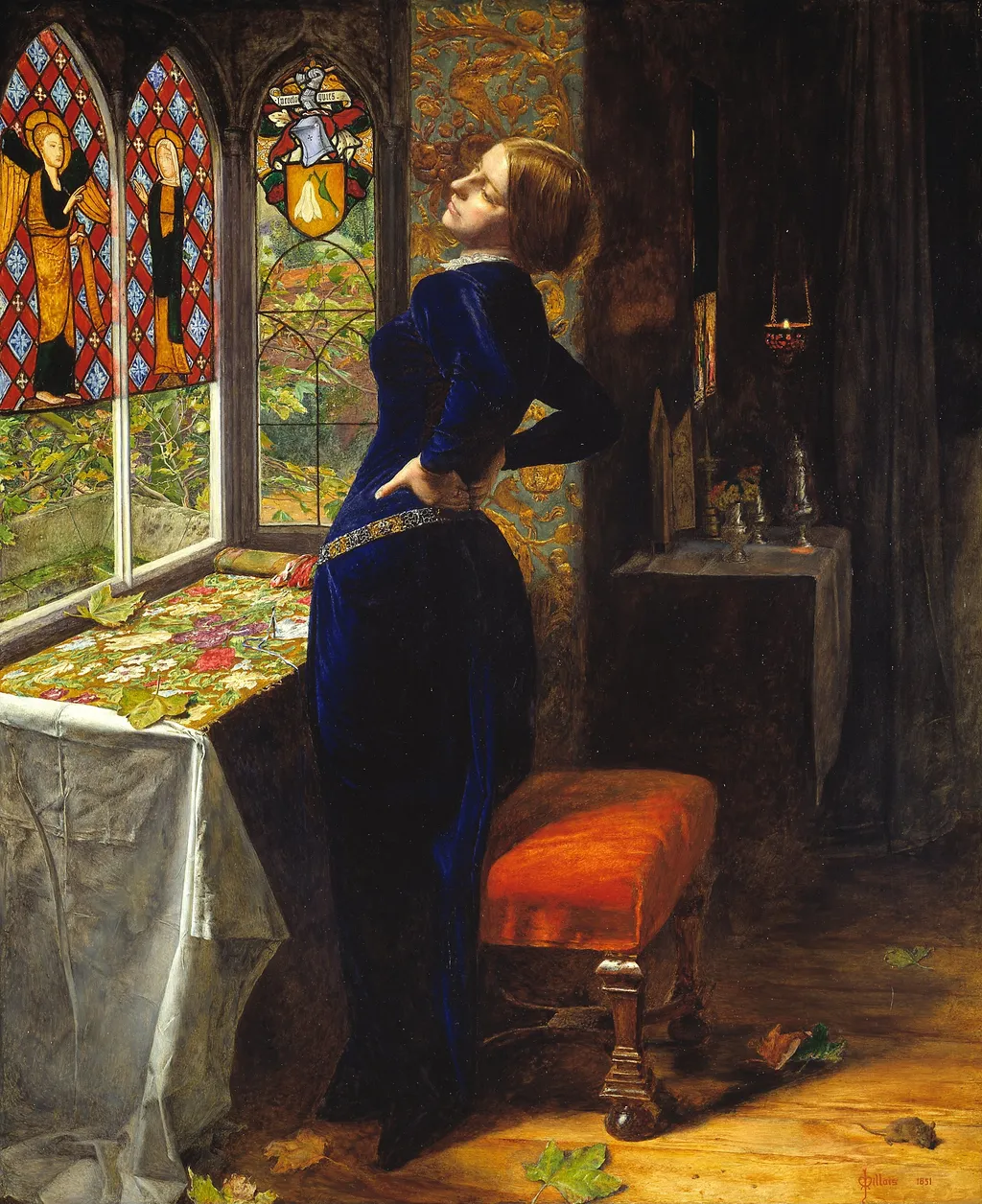
Mariana is an oil painting by the Pre-Raphaelite artist John Everett Millais. It dates from 1851 and is held in the collection of the Tate.
About this work
Here’s a rewrite that meets all the constraints: This painting shows Mariana, a character from Shakespeare’s Measure for Measure.
Here’s a rewrite that meets all the constraints:
This painting shows Mariana, a character from Shakespeare’s Measure for Measure. John Everett Millais made it in 1851 using oil on wood. It’s a quiet scene with a single figure waiting alone.
The artist based Mariana on Tennyson’s 1830 poem about her. She waits in a place called the Moated Grange, full of stillness and small details.
Check out another work by Millais next.
Subject & Meaning
The painting depicts Mariana, a character from Shakespeare's Measure for Measure and Alfred Tennyson's 1830 poem, waiting in isolation after her fiancé Angelo rejected her due to a lost dowry. Millais captures her psychological state through specific iconography: autumn leaves scattered on the floor and embroidery signify the passage of time, while her arched back and the needle thrust violently into her work suggest physical weariness and repressed frustration.
Religious symbolism deepens the narrative of unfulfilled longing. A stained-glass window depicting the Annunciation, based on a design from Merton College, Oxford, contrasts the Virgin Mary's divine fulfillment with Mariana's earthly despair. Above this, an invented coat of arms featuring a snowdrop and the Latin motto "In coelo quies" ("In Heaven there is rest") alludes to St. Agnes' Eve and reflects the character's wish for death.
A small mouse, drawn directly from Tennyson's text, further anchors the scene in the poem's atmosphere of solitary decay.
Technique & Style
Executed in 1851, this work is an oil painting on a mahogany panel primed with a white ground. Technical analysis suggests the artist may have employed a wet-on-wet technique over a second ground, utilizing graphite underdrawing. The application of paint varies significantly; thin layers enhance the reflective quality of the white base in certain areas, while others feature thick impasto.
The figure's blue velvet dress was rendered using a mixture of Prussian blue and ultramarine pigments. Measuring approximately 49.5 cm by 59.7 cm, the composition exemplifies Pre-Raphaelite precision through its hyper-realistic detailing and vibrant, contrasting colors. Every element, from the autumnal leaves scattered on the floorboards to the specific heraldry in the stained glass, is painted with meticulous attention to create a legible narrative.
History & Provenance
Painted in 1851 by John Everett Millais, Mariana was first exhibited at the Royal Academy that year with lines from Tennyson’s 1830 poem. The work depicts Mariana’s solitary life after her fiancé Angelo abandoned her following the loss of her dowry at sea, a scene drawn from Shakespeare’s Measure for Measure.
It was acquired by the Tate in 1999 through HM Government’s acceptance in lieu of tax, and is now accessioned as T07553 at Tate Britain.
Mariana is held by Tate Britain under accession number T07553. The work entered the collection through acceptance by HM Government in lieu of tax and allocation to the Tate Gallery in 1999. It was first shown at the Royal Academy in 1851 and has been part of Tate Britain's displays since 1999. Exhibition records confirm its presence in Tate Britain exhibitions from 1999 onward.
Context
Mariana was first shown at the Royal Academy in 1851, shortly after John Everett Millais had been celebrated for his Christ in the House of His Parents and just as John Ruskin began to champion the Pre-Raphaelite Brotherhood as a new school of British art. The work was displayed with lines from Alfred Tennyson’s 1830 poem “Mariana”, linking the painting directly to Shakespeare’s Measure for Measure and to the poet’s recent appointment as Poet Laureate. Critics such as Ruskin praised the technical precision, vivid colour and narrative density of the piece, while later scholarship has emphasized its role as a visual companion to Holman Hunt’s Claudio and Isabella and as a catalyst for Elizabeth Gaskell’s novel Ruth.
Millais’s depiction of Mariana draws on the Pre‑Raphaelite interest in medieval symbolism, literary illustration and meticulous naturalism, situating the work within the movement’s broader aim of renewing British painting through narrative fidelity and moral storytelling.
Legacy
Millais's Mariana has been regarded as an example of the artist's "precision, attention to detail, and stellar ability as a colorist" within his Pre-Raphaelite period. The painting directly inspired Elizabeth Gaskell's 1853 novel Ruth, with Tennyson's Mariana and Gaskell's protagonist sharing a sensitivity to surrounding sounds and a habit of gazing from windows as an image of domestic confinement, both portrayed as weary women.
The work entered the national collection when it was accepted by HM Government in lieu of tax and allocated to the Tate Gallery in 1999, where it remains on view at Tate Britain. It has been cited in subsequent scholarship on the Pre-Raphaelites, including Leslie Parris's 1984 exhibition catalogue for the Tate Gallery and Elisabeth Prettejohn's 2000 study The Art of the Pre-Raphaelites, both of which reproduce the painting.
Overview
John Everett Millais created the work titled Mariana in 1851. Executed on a mahogany wood panel, the painting presents a solitary figure in a muted interior, emphasizing stillness and introspection. The piece has been part of the Tate Britain collection since 1999, where it remains on display as a representative example of Millais’s early output.
Own this work as a print
Artist & collection
Artist
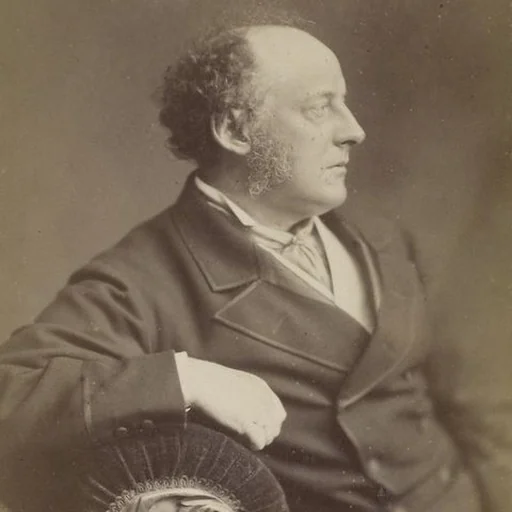
Sir John Everett Millais, 1st Baronet ( MIL-ay; 8 June 1829 – 13 August 1896) was an English painter and illustrator who was one of the founders of the Pre-Raphaelite Brotherhood.

 Studied in the Pre-Raphaelites course