Artwork
King Cophetua and the Beggar Maid
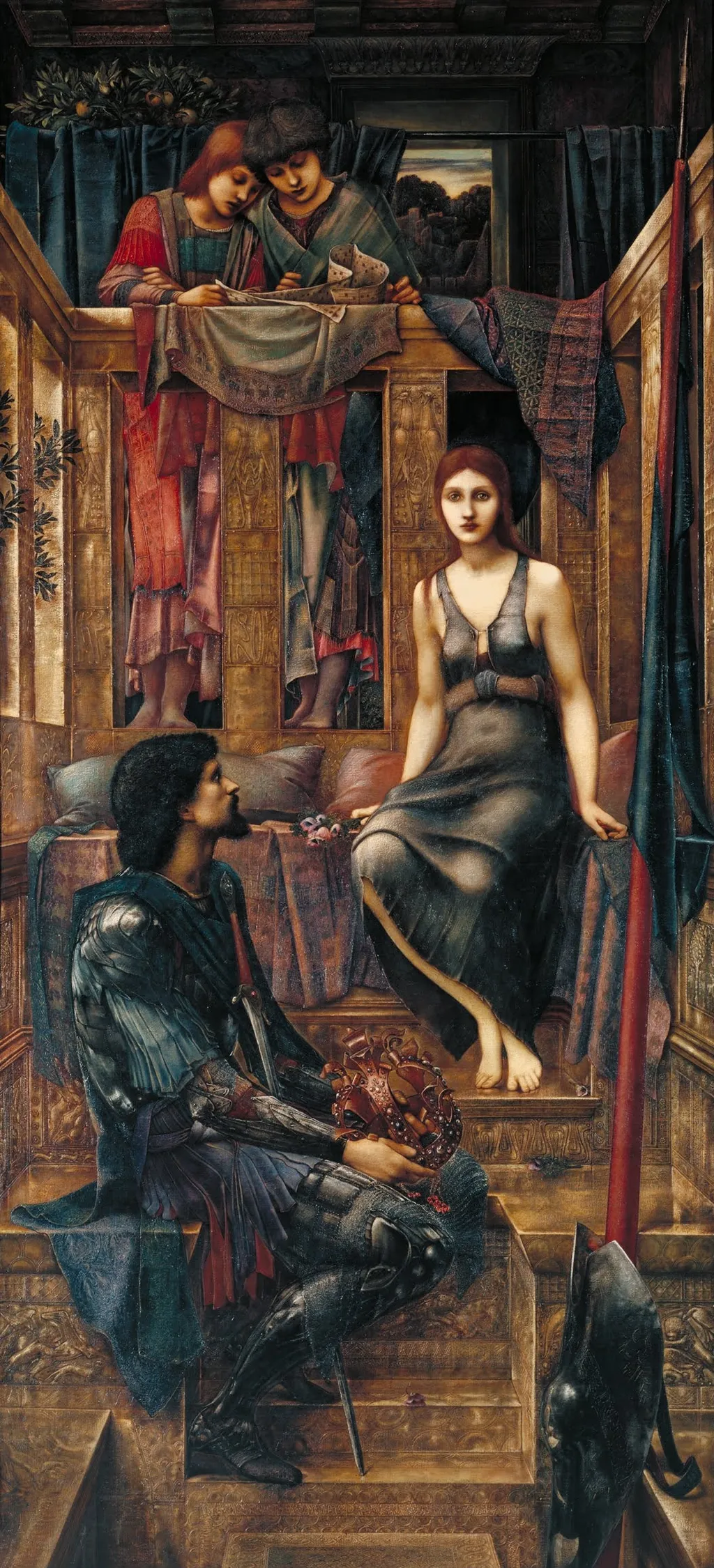
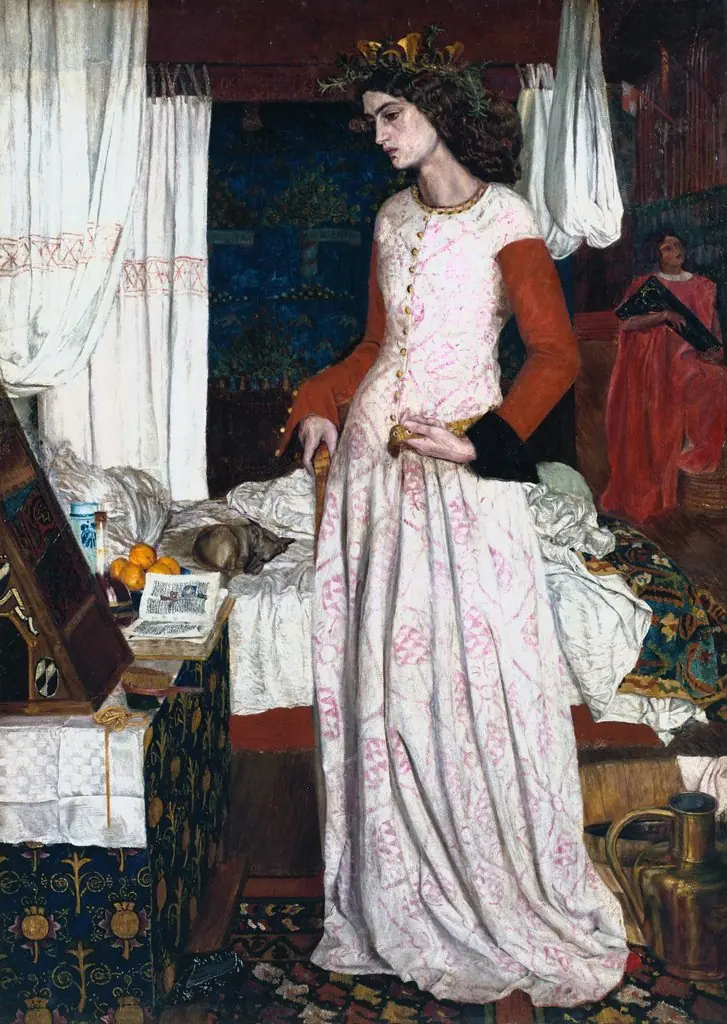
King Cophetua and the Beggar Maid is an oil painting by the Pre-Raphaelite artist Edward Burne-Jones. It dates from 1892 and is held in the collection of the National Gallery.
About this work
Overview
The work portrays a medieval king seated on a stone staircase, his armor rendered in fine detail, while a modestly dressed beggar‑maid stands above him.
Edward Burne‑Jones completed the oil painting King Cophetua and the Beggar Maid in 1884. The work portrays a medieval king seated on a stone staircase, his armor rendered in fine detail, while a modestly dressed beggar‑maid stands above him. The composition is set against a stone wall with a window and balcony, creating a quiet, contemplative scene that focuses on the encounter between the two figures.
Subject & Meaning
The image draws on the legend of King Cophetua, a ruler who falls instantly in love with a beggar‑maid named Penelophon. The narrative, popularized in an Elizabethan ballad and later in poems by Bishop Thomas Percy and Alfred, Lord Tennyson, explores themes of sudden attraction, the reversal of social hierarchy, and the triumph of simple beauty over royal authority.
Technique & Style
Burne‑Jones employed a careful chiaroscuro to model the figures, allowing the light to fall on the king’s armor and the maid’s soft folds, thereby enhancing depth. The composition shows the influence of Andrea Mantegna’s Madonna della Vittoria, especially in the placement of the figures and the architectural backdrop. Preliminary studies, including a gouache and a full‑scale cartoon in bodycolour and chalk, reveal the artist’s evolving approach to lighting and spatial arrangement.
History & Provenance
The subject first appeared in Burne‑Jones’s earlier oil from 1861‑62, now housed in the Tate Gallery. After revisiting the theme in the mid‑1870s, he began the final version in 1881 and completed it in April 1884. The painting was shown at the Grosvenor Gallery that year and quickly became his most celebrated work of the decade.
Context
The painting reflects the Pre‑Raphaelite fascination with medieval romance and moral allegory, aligning with contemporary Victorian interests in chivalry and the moral power of love. By juxtaposing regal splendor with humble poverty, Burne‑Jones engages with broader cultural debates about class, virtue, and the transformative potential of beauty.
Artist & collection
Artist
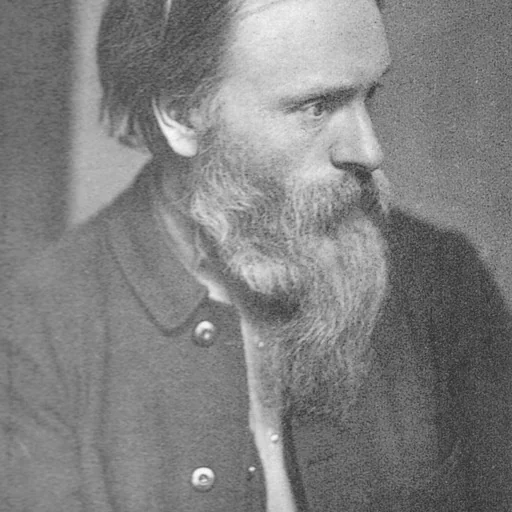
Sir Edward Coley Burne-Jones, 1st Baronet (; 28 August 1833 – 17 June 1898) was an English painter and designer associated with the Pre-Raphaelite Brotherhood's style and subject matter.