Artwork
Mrs. George P. Burne
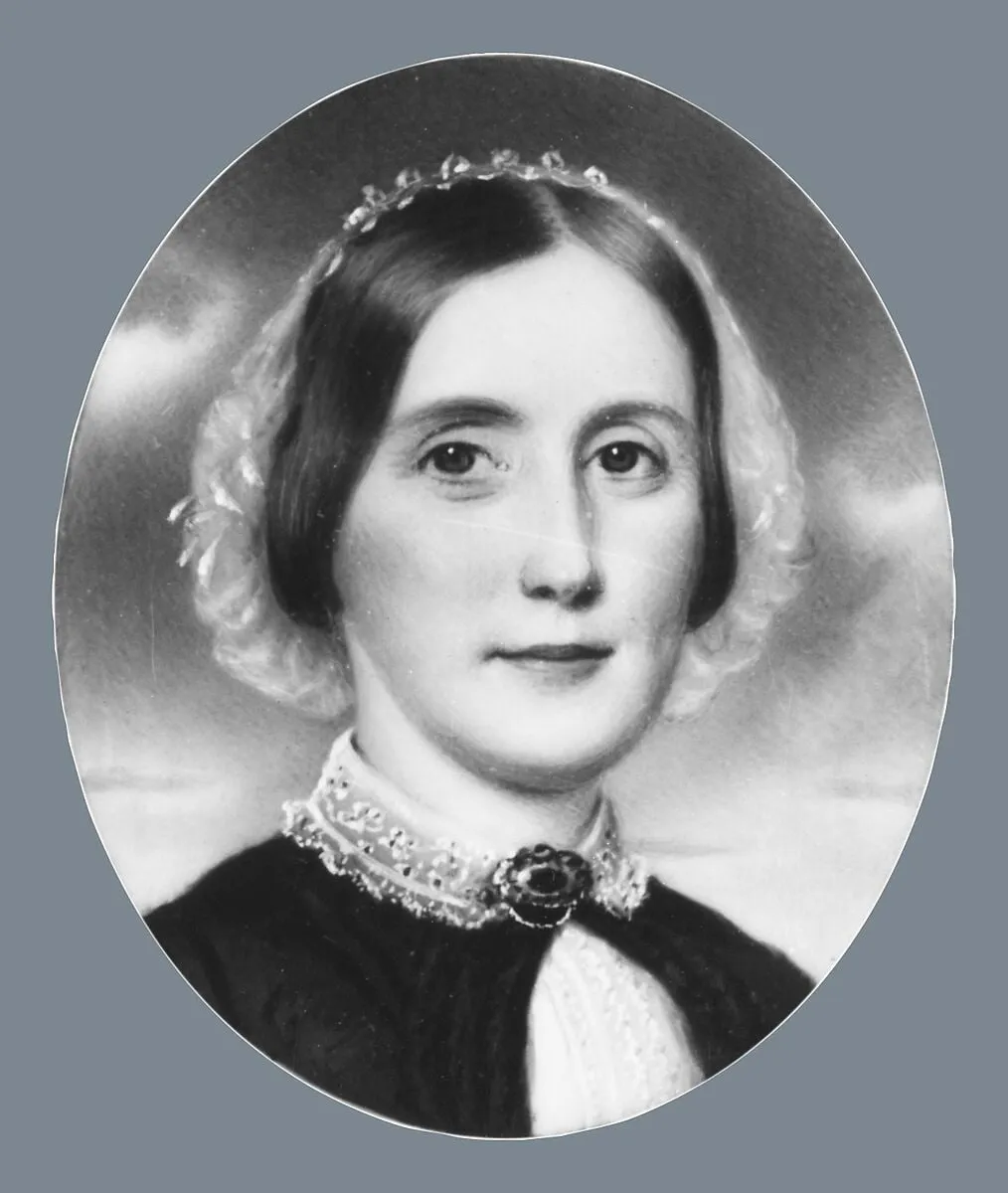
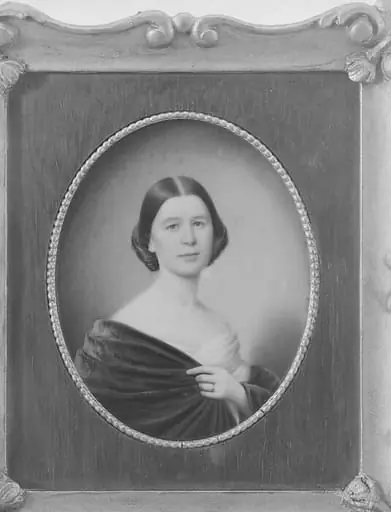
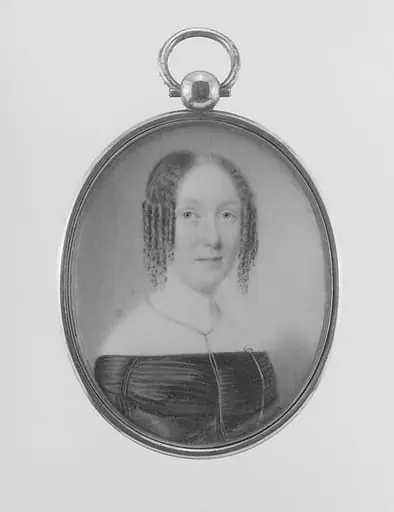
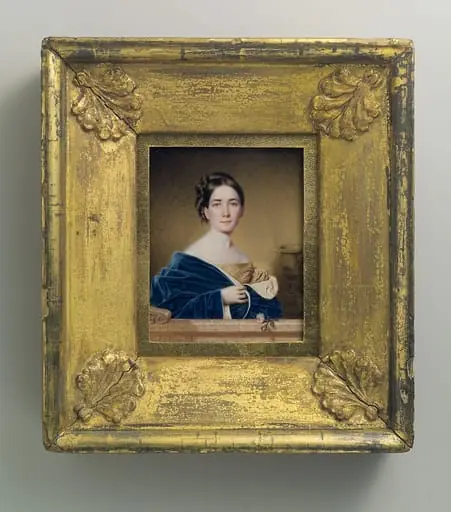
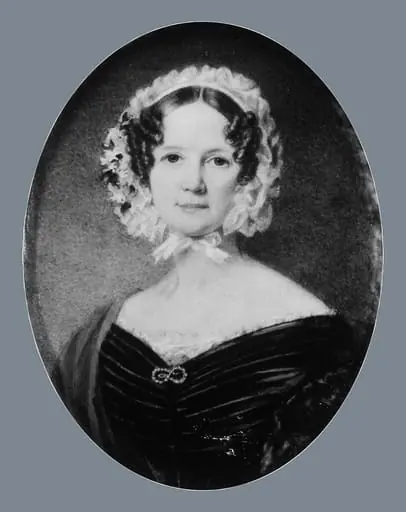
Mrs. George P. Burne is a watercolor painting by the American Folk Art artist John Wood Dodge. It dates from 1852 and is held in the collection of the Metropolitan Museum of Art.
- Accession no.
- 46.14
- Credit line
- Rogers Fund, 1946
About this work
Technique & Style
The formal qualities rely on the luminosity inherent to the ivory backing, which enhances the translucency of the watercolor pigments.
Executed in 1852, this portrait by John Wood Dodge utilizes watercolor applied to an ivory support. The work is characterized by its miniature scale, measuring approximately 6.2 by 4.9 cm. As a portrait of a woman, the piece exemplifies the specific handling required for watercolor on ivory, a medium demanding precision due to the non-absorbent nature of the surface. The classification within the American Wing underscores its significance as an example of nineteenth-century American portraiture.
The formal qualities rely on the luminosity inherent to the ivory backing, which enhances the translucency of the watercolor pigments.
History & Provenance
John Wood Dodge executed the watercolor portrait of Mrs. George P. Burne on ivory in 1852, as a miniature painting measuring approximately 6.2 by 4.9 cm. While the specific circumstances of the commission or the initial ownership by the Burne family are not detailed in the available records, the artwork was eventually acquired by the Metropolitan Museum of Art. It resides within the museum's American Wing collection, where it is classified as a portrait of a woman. The available sources do not provide an explicit accession or inventory number, and no exhibition record is documented.
Legacy
Mrs. George P. Burne, a watercolor on ivory portrait painted by John Wood Dodge in 1852, is documented in the Metropolitan Museum of Art's collection and classified within the museum's American Wing. Its presence in a premier institution has facilitated ongoing scholarly examination of mid-nineteenth-century American portraiture and the visual representation of women. The work's dimensions of 6.2 by 4.9 cm and its attribution to Dodge are recorded in cataloguing data, ensuring its continued relevance in studies of early American art.
Overview
John Wood Dodge created this watercolor portrait, titled Mrs. George P. Burne, in 1852. Executed on a small piece of ivory, the artwork presents a woman gazing directly forward, her hands gently clasped in her lap. Its intimate scale, easily held in one's hand, suggests a personal object, distinct from the larger canvases common in mid-19th century portraiture.
Subject & Meaning
The portrait centers on Mrs. George P. Burne, whose direct gaze engages the viewer. Her posture, with hands folded in her lap, conveys a sense of composure and quiet dignity. The artist's focus on her face and upper body, rendered with delicate precision, emphasizes her individual presence within the small format.
Context
In an era when oil on canvas dominated portraiture, Mrs. George P. Burne stands out due to its medium and scale. While larger oil paintings often served public display, this watercolor on ivory offers a more private and personal aesthetic. Its delicate execution and intimate size evoke a sense of quiet reflection, distinguishing it from the grander statements of contemporary art.
Artist & collection