Artwork
Edward S. Dodge
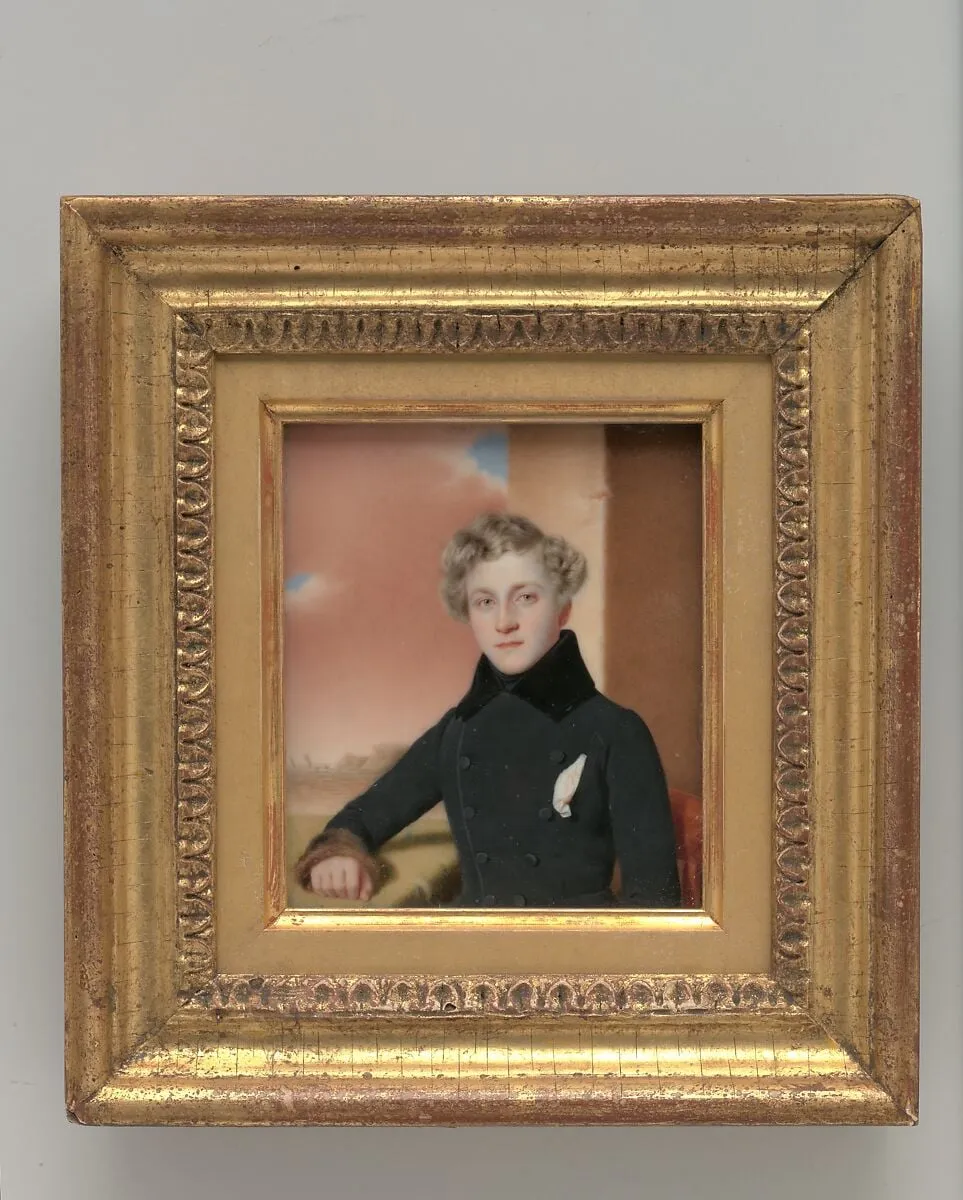
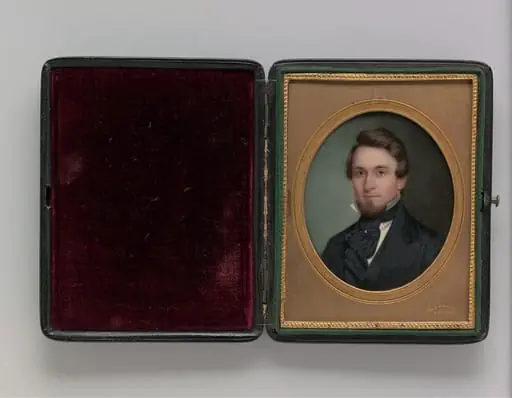
Edward S. Dodge is a watercolor painting by the American Folk Art artist John Wood Dodge. It dates from 1835 and is held in the collection of the Metropolitan Museum of Art.
About this work
Technique & Style
As a piece classified within the American Wing genre of portraiture, the composition focuses strictly on the depiction of the male subject.
Executed in 1835, this portrait of Edward S. Dodge utilizes watercolor applied to an ivory support, a medium characteristic of miniature painting traditions. The work measures approximately 9.5 by 8.2 units, indicating a small-scale format intended for intimate viewing. As a piece classified within the American Wing genre of portraiture, the composition focuses strictly on the depiction of the male subject.
The selection of ivory as a ground suggests a smooth, luminous surface quality typical of the period's fine portraiture, allowing the watercolor pigments to achieve specific translucency and detail. The handling of the medium reflects the technical conventions of early nineteenth-century American miniaturists, prioritizing delicate brushwork suited to the non-absorbent nature of the ivory plate.
History & Provenance
The portrait of Edward S. Dodge was created by the artist John Wood Dodge in 1835. Executed as a watercolor on ivory, the work measures 9.5 by 8.2 units and is classified within the genre of portraiture. The piece currently resides in the collection of the Metropolitan Museum of Art, where it is housed in The American Wing.
While specific details regarding the original commission or the precise chain of ownership prior to its arrival at the museum are not detailed in the available records, the work's inception is firmly dated to the year 1835. The artwork depicts Edward S. Dodge, a man, and serves as a primary example of Dodge's portraiture from that period.
The portrait of Edward S. Dodge, executed by John Wood Dodge in 1835, is held in the collection of the Metropolitan Museum of Art. Classified within the museum's American Wing, the work is a watercolor on ivory measuring 9.5 inches in height and 8.2 inches in width. While the specific inventory or accession number is not detailed in the provided records, the artwork is cataloged as a portrait depicting the sitter, a man identified as Edward S. Dodge.
The piece remains part of the permanent holdings at the Metropolitan Museum of Art, where it is recognized as a significant example of the artist's portraiture from the mid-1830s.
Overview
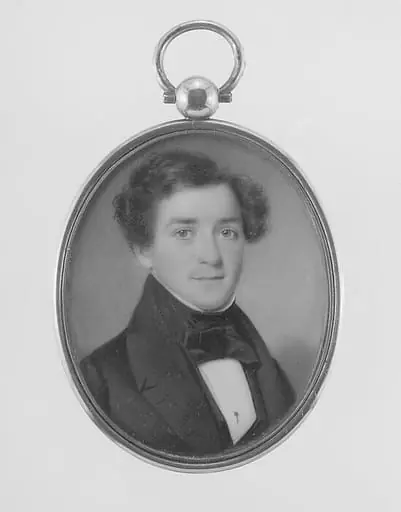
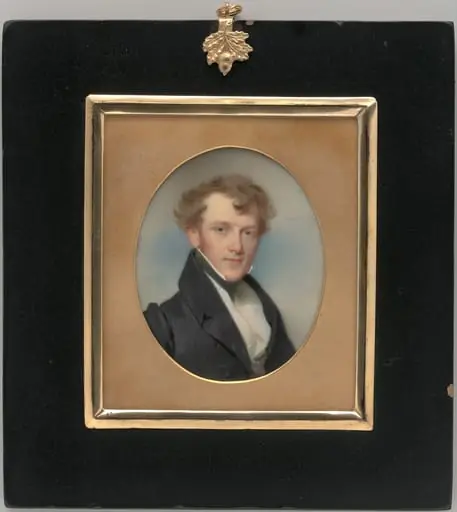
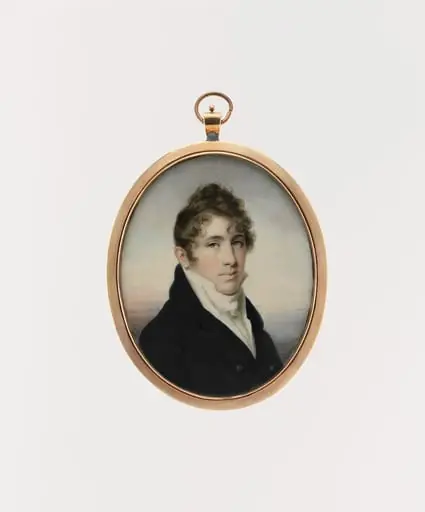
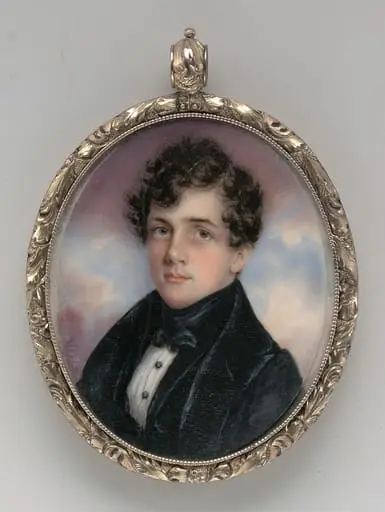
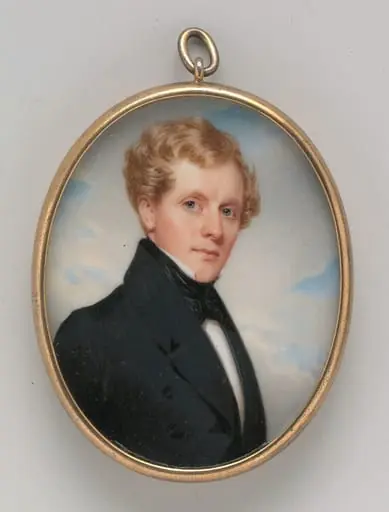
Created in 1835 by John Wood Dodge, this portrait depicts Edward S. Dodge as a young man in a dark coat, gazing directly at the viewer. Executed in watercolor on ivory, the work exemplifies the miniature painting tradition popular in 19th-century America. Dodge employs delicate glazing techniques to render the sitter's neatly combed hair and the soft, rosy tones of his cheeks, achieving a lifelike texture characteristic of the medium.
The composition features a plain, neutral background that eliminates distraction, focusing attention entirely on the subject's face and expression. As a portable object, this miniature was designed for personal possession, functioning similarly to a photograph before the widespread adoption of the medium. The piece reflects Dodge's skill during his active period as a portraitist, capturing the refined aesthetic and intimate scale typical of American miniatures from the antebellum era.
Subject & Meaning
The portrait features Edward S. Dodge, a young man whose dark coat contrasts with his fair complexion. His hair is meticulously styled, and a subtle flush of pink on his cheeks suggests vitality. The artist positioned him against an unadorned background, ensuring the viewer's attention remains focused on his composed expression and facial features. These intimate likenesses served as cherished personal keepsakes.
Context
Before the widespread advent of photography, miniature portraits like Edward S. Dodge fulfilled the role of personal photographs. These small, portable artworks provided a means for individuals to keep images of loved ones close at hand. Their popularity stemmed from their ability to capture a likeness with artistic skill, serving as significant personal and sentimental objects during the late 18th and early 19th centuries.
Artist & collection