Artwork
Mrs. Annie C. Hyde
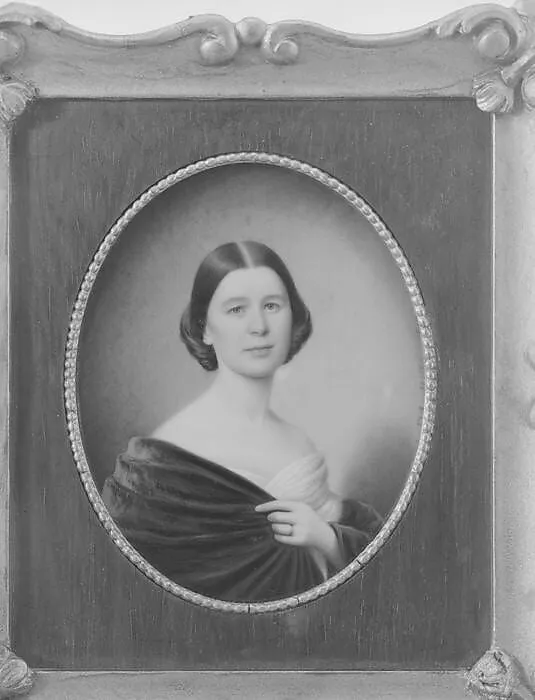
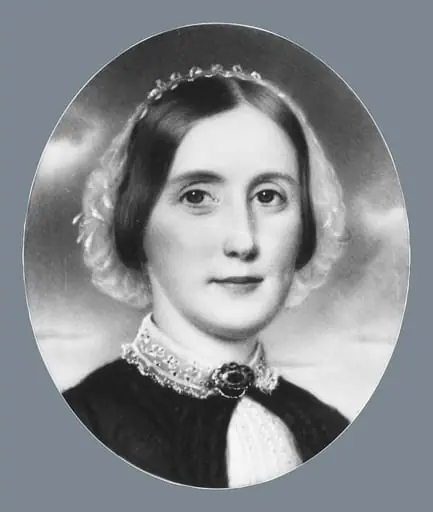
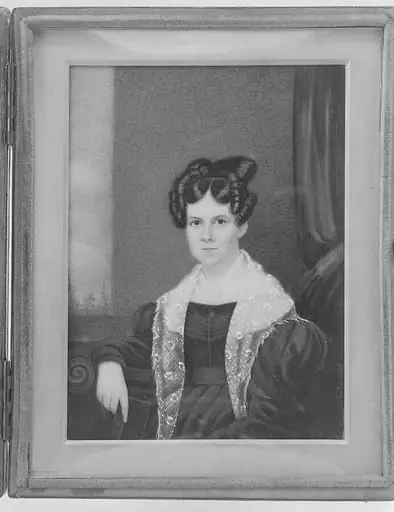
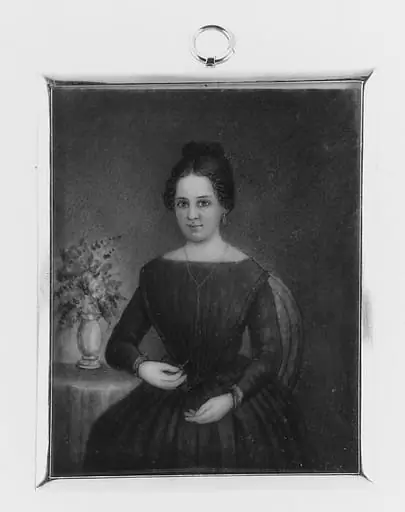
Mrs. Annie C. Hyde is a watercolor painting by the American Folk Art artist John Wood Dodge. It dates from 1863 and is held in the collection of the Metropolitan Museum of Art.
- Accession no.
- 2006.235.52
- Credit line
- Gift of Gloria Manney, 2006
About this work
Technique & Style
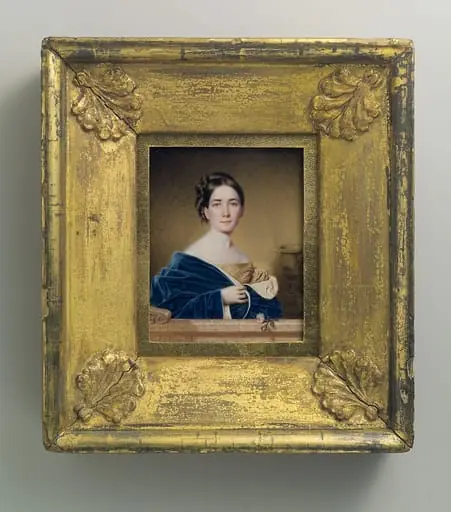
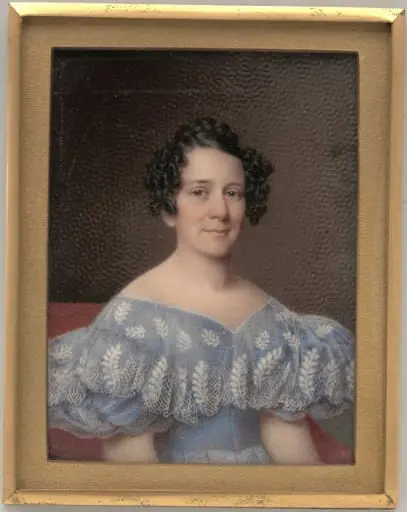
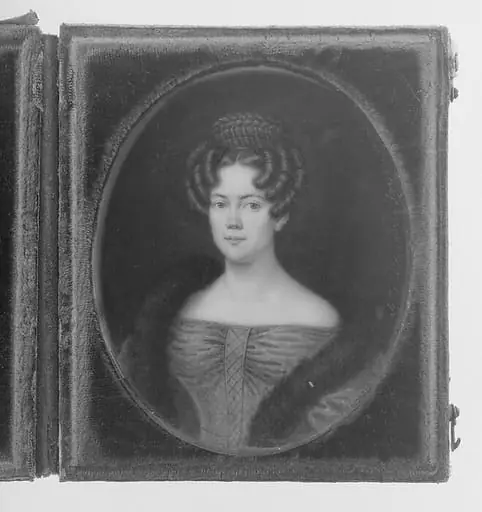
Executed in the portrait genre, the piece portrays a woman with a restrained composition that emphasizes facial detail through delicate washes of color.
The work, titled Mrs. Annie C. Hyde, is a watercolor painted on an ivory support and dated 1863. Its dimensions measure roughly 9.2 × 7.3 cm, placing it within the modest scale typical of portrait miniatures of the period. Executed in the portrait genre, the piece portrays a woman with a restrained composition that emphasizes facial detail through delicate washes of color.
As part of The American Wing's collection at the Metropolitan Museum of Art, it reflects mid-nineteenth-century portrait conventions, combining realistic rendering with the luminous quality characteristic of watercolor on ivory.
History & Provenance
The portrait is held by The Metropolitan Museum of Art in New York, where it is catalogued as accession 2011.54. It was exhibited at the museum in 2012 as part of the installation "American Wing Reinstallation, The Tisch Galleries, Gallery 802."
Overview
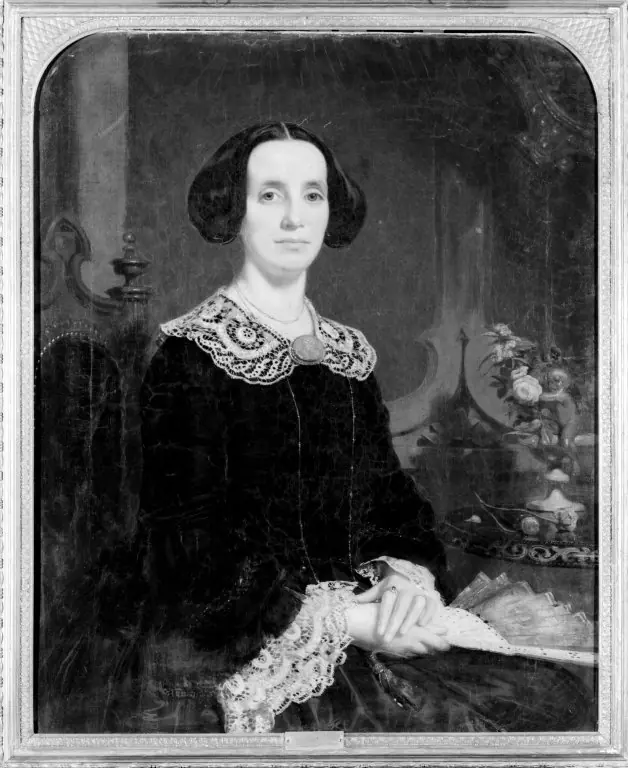
John Wood Dodge created this watercolor portrait of Mrs. Annie C. Hyde in 1863. Rendered on a small ivory support, this delicate work depicts a woman in a dark dress with lace, her hands clasped. Her expression is composed and serious against a simple, shadowed background. Such miniature portraits were commonly cherished as personal mementos before the widespread advent of photography.
Subject & Meaning
The portrait presents Mrs. Annie C. Hyde with a calm, serious demeanor, her pale complexion and dark attire contrasting with the subtle background. Her neatly folded hands suggest a sense of composure. These intimate miniature portraits often served as personal keepsakes, allowing individuals to carry the likenesses of loved ones, reflecting their sentimental value in a pre-photographic era.
Context
Miniature portraits like Mrs. Annie C. Hyde were a prevalent art form in the nineteenth century, particularly before photography became widely accessible. These small, portable images served as cherished personal objects, often carried by individuals as mementos of family members or loved ones. Their intimate scale and delicate execution made them suitable for private contemplation and sentimental display.
Artist & collection