Artwork
Moutainous landscape with four riders and two beggars
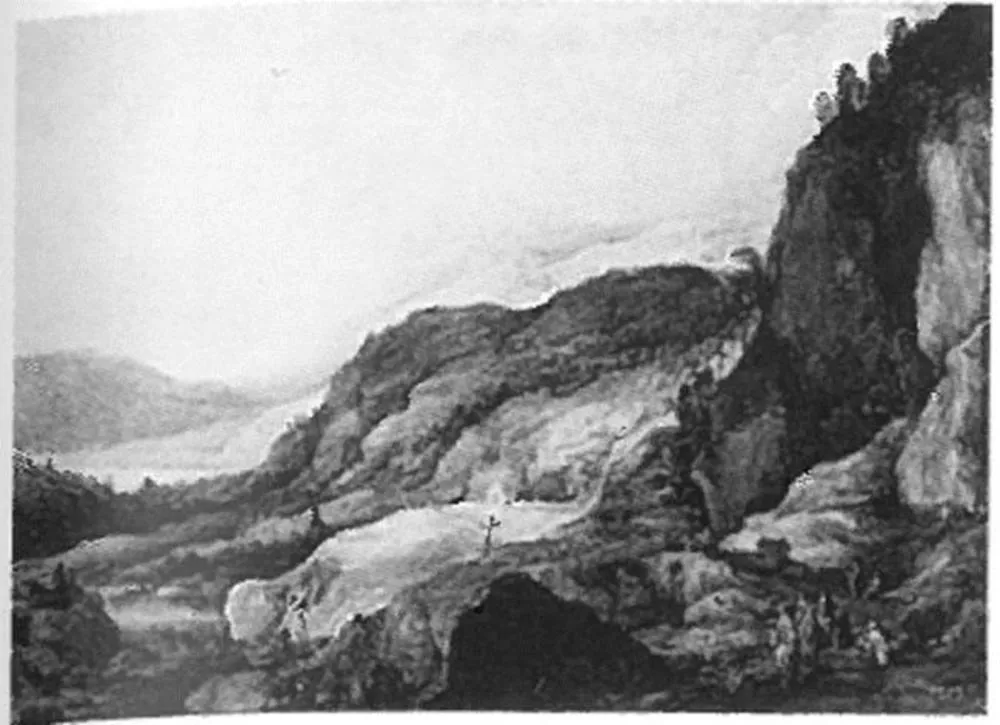
Moutainous landscape with four riders and two beggars is an oil painting by the Late Mannerist artist Joos de Momper the Younger. It dates from 1600 and is held in the collection of the Staatliche Kunstsammlungen Dresden.
About this work
Overview
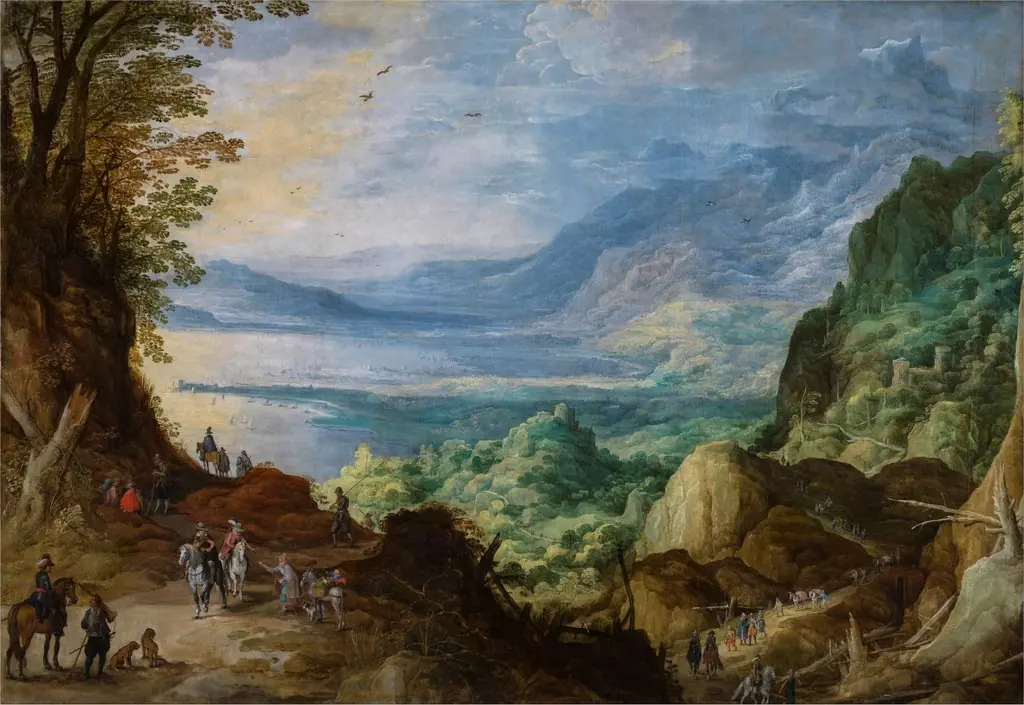
Created around 1600, this oil painting by Joos de Momper the Younger portrays a rugged, mountainous scene populated by four horsemen and two beggars.
Created around 1600, this oil painting by Joos de Momper the Younger portrays a rugged, mountainous scene populated by four horsemen and two beggars. The composition balances a group of dark‑clad riders moving leftward with two impoverished figures standing on the right, their gaze directed toward the travelers. A light, cloud‑filled sky hovers above a detailed terrain of peaks, trees, and rock formations.
Subject & Meaning
The work juxtaposes mobility and poverty: the mounted riders, likely representing travelers or hunters, advance through the landscape, while the stationary beggars embody the hardships of the remote environment. Their interaction, suggested by the beggars’ attentive stare, hints at themes of charity, social contrast, and the human presence within an untamed natural setting.
Technique & Style
Executed in oil on canvas, the painting displays the fine brushwork and layered coloration typical of late Mannerist landscape painting. De Momper employs a muted palette for the figures against a brighter, atmospheric sky, creating depth through overlapping mountain ridges and detailed foliage. The rendering reflects a shift toward greater naturalism while retaining the stylized compositional conventions of his era.
History & Provenance
Joos de Momper the Younger, a Flemish artist active in Antwerp at the turn of the 17th century, produced this piece during a period of evolving landscape art. The canvas entered the collection of the Gemäldegalerie Alte Meister, where it remains part of the museum’s holdings of Northern European Baroque and Mannerist works.
Context
The painting emerges from a transitional moment in Flemish art when artists like Pieter Brueghel the Elder influenced younger painters to integrate more realistic observation of nature. De Momper’s depiction of a dramatic, yet believable, mountainous terrain reflects this broader movement toward naturalistic landscape representation within the still‑dominant Mannerist aesthetic.
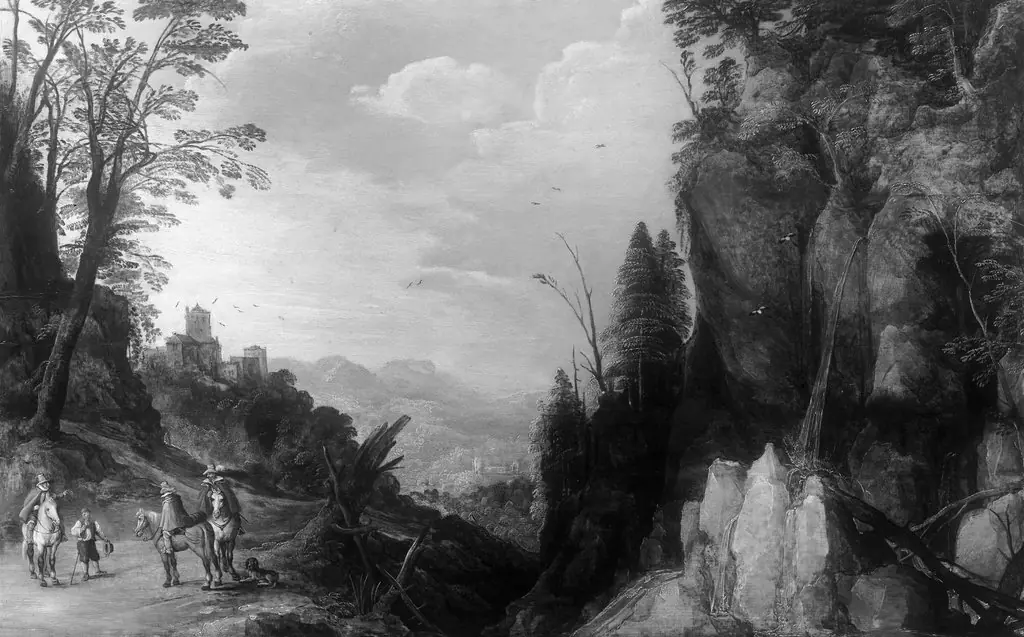
Artist & collection
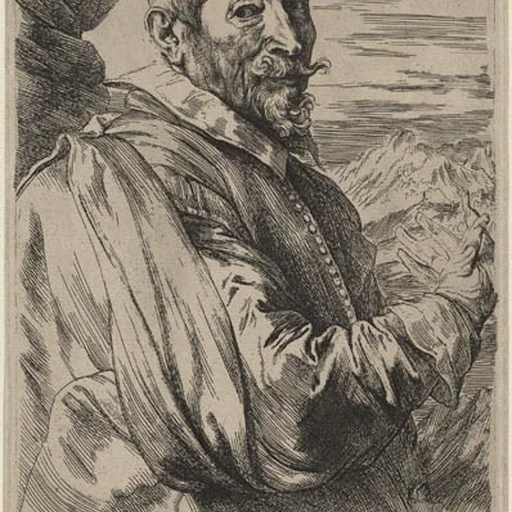
Artist
Joos de Momper the Younger or Joost de Momper the Younger (c. 1564 – 5 February 1635) was a Flemish landscape painter active in Antwerp between the late 16th century and the early 17th century. Brueghel's influence is…

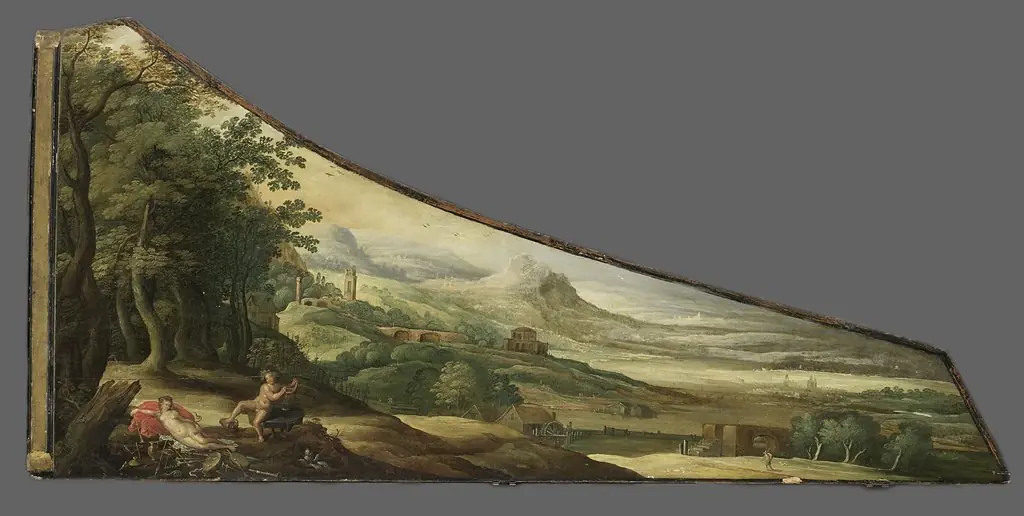
 Mountainous landscape with valley and rainbow
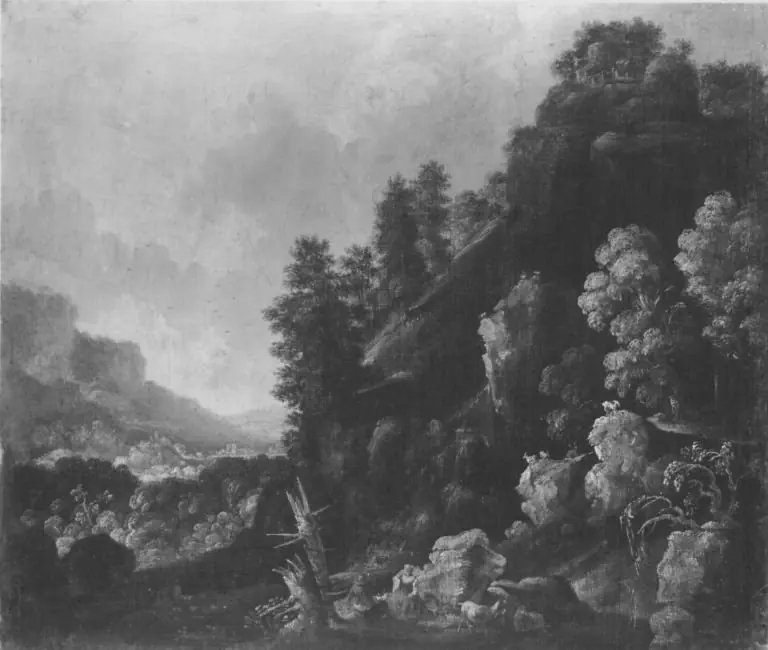 Wildnislandschaft mit Wasserfall
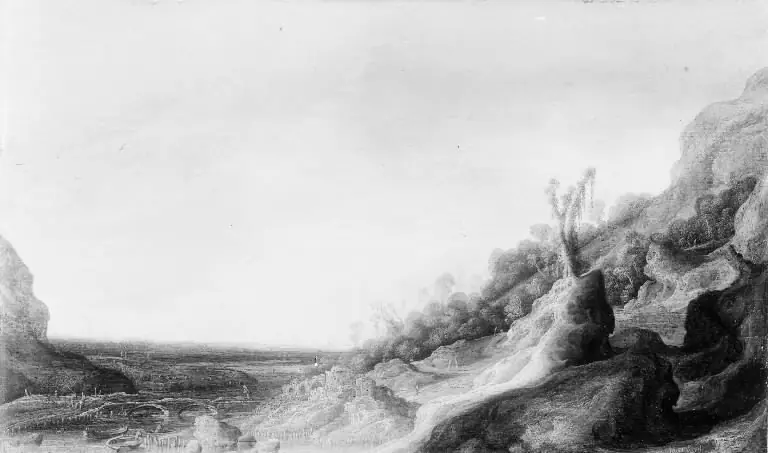 Mountain Scenery with a View of a River and the Sea
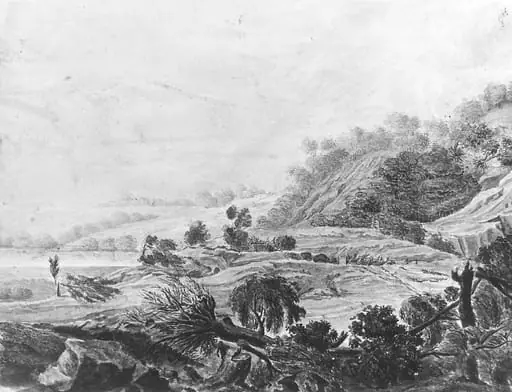 After the Tornado
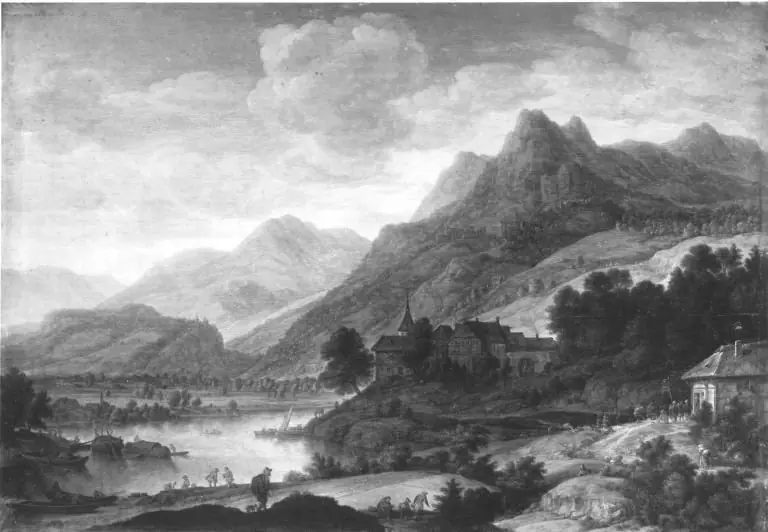 River landscape
 Mountain landscape
 Gebirgslandschaft
 Abendlandschaft (zugeschrieben)
 Mountain Landscape with Woodcutters
 Hügellandschaft
 Landschaft
- Mountain landscape with three riders