Artwork
Joris Vezeleer
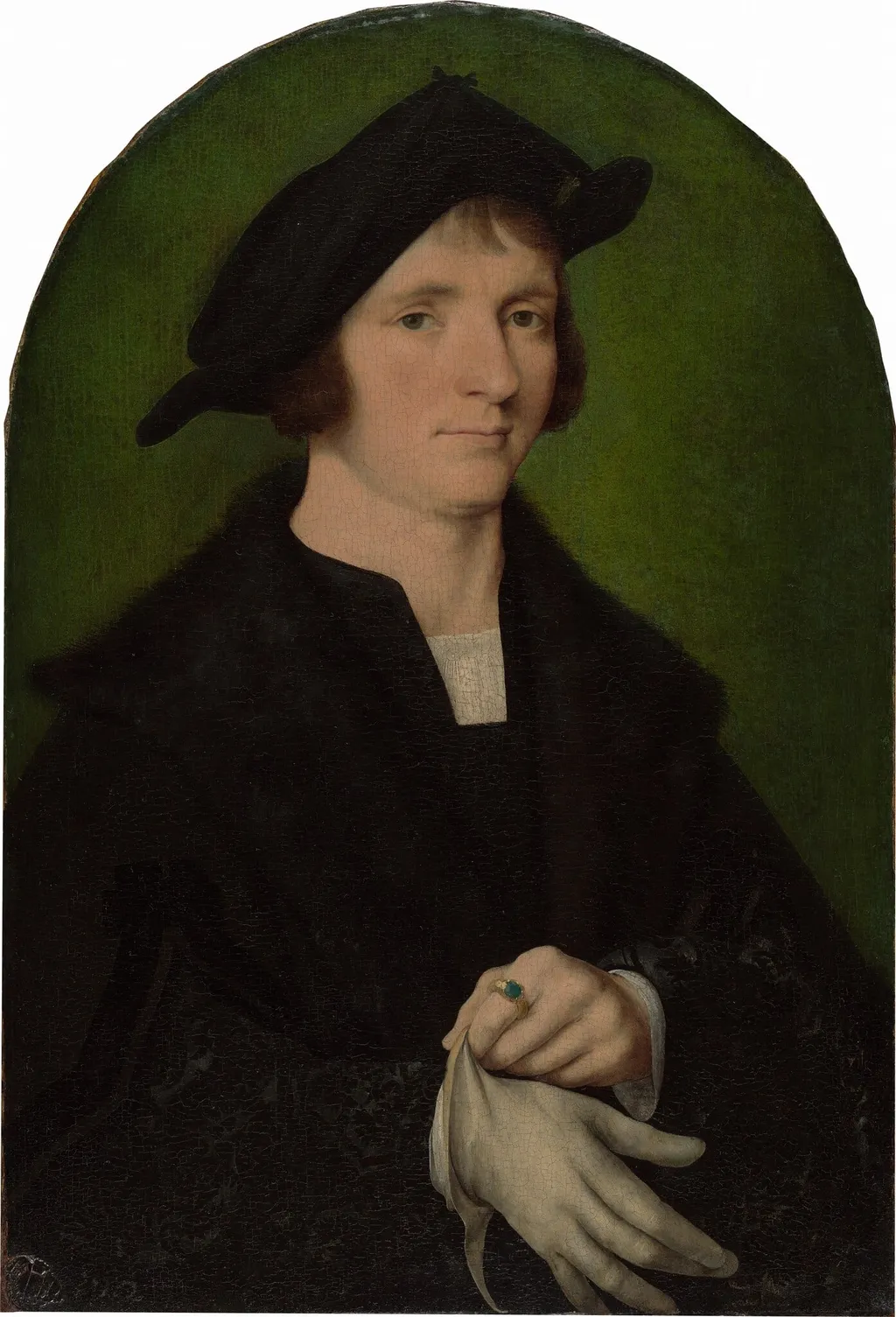
Joris Vezeleer is an oil painting by the Northern Renaissance artist Joos van Cleve. It dates from 1518 and is held in the collection of the National Gallery of Art.
About this work
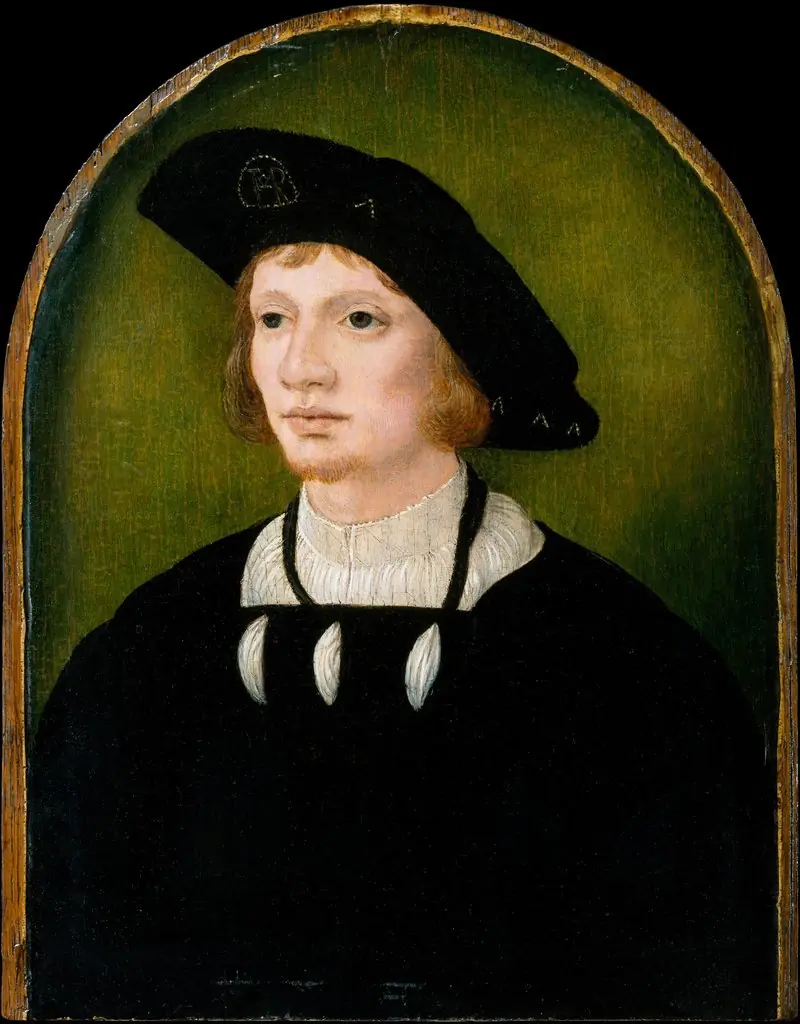
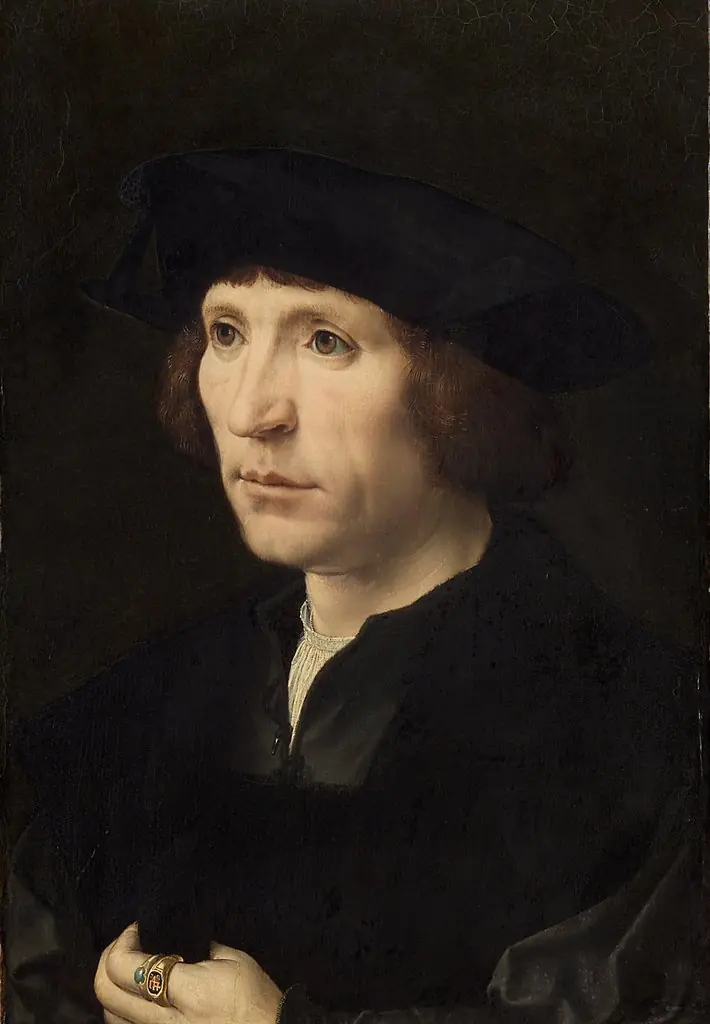
A man wearing a hat and a ring, painted in oil on panel around 1518. Joos van Cleve was likely early in his career here; the way light falls across the face shows him working out how to build depth and volume.
Subject & Meaning
An inscription associated with the pair notes their fifty-two-year union; given Vezeleer's death in 1570, the marriage likely began around 1518.
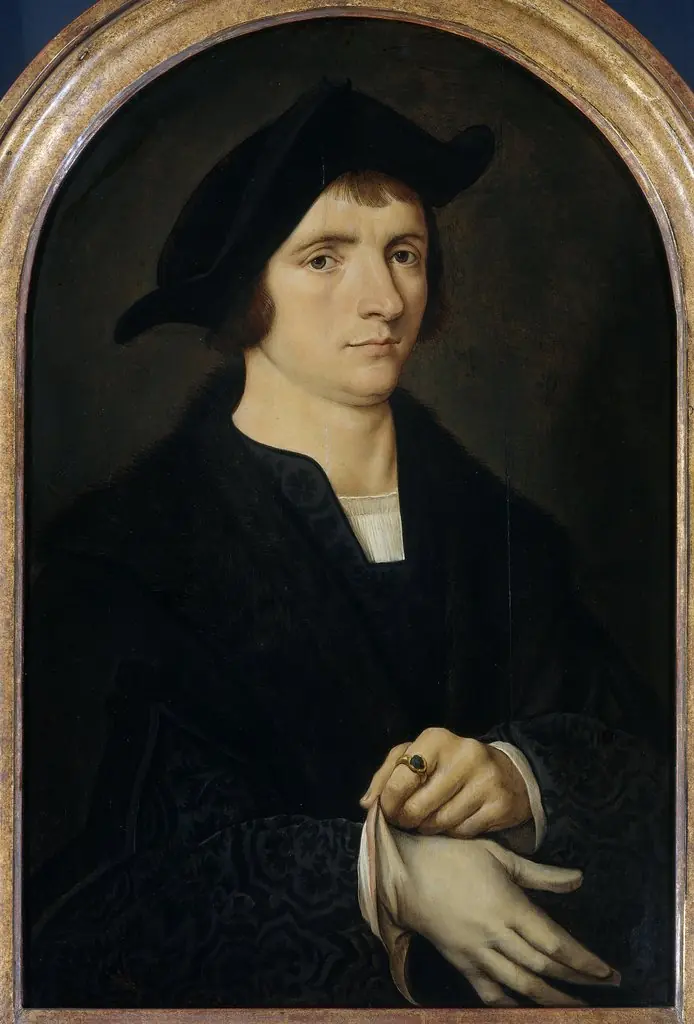
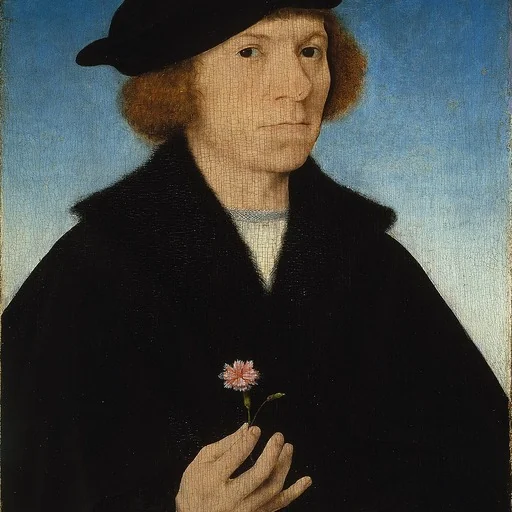
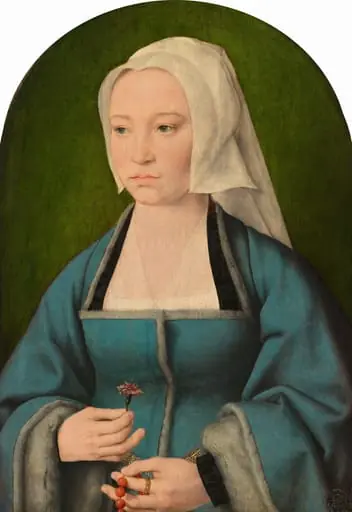
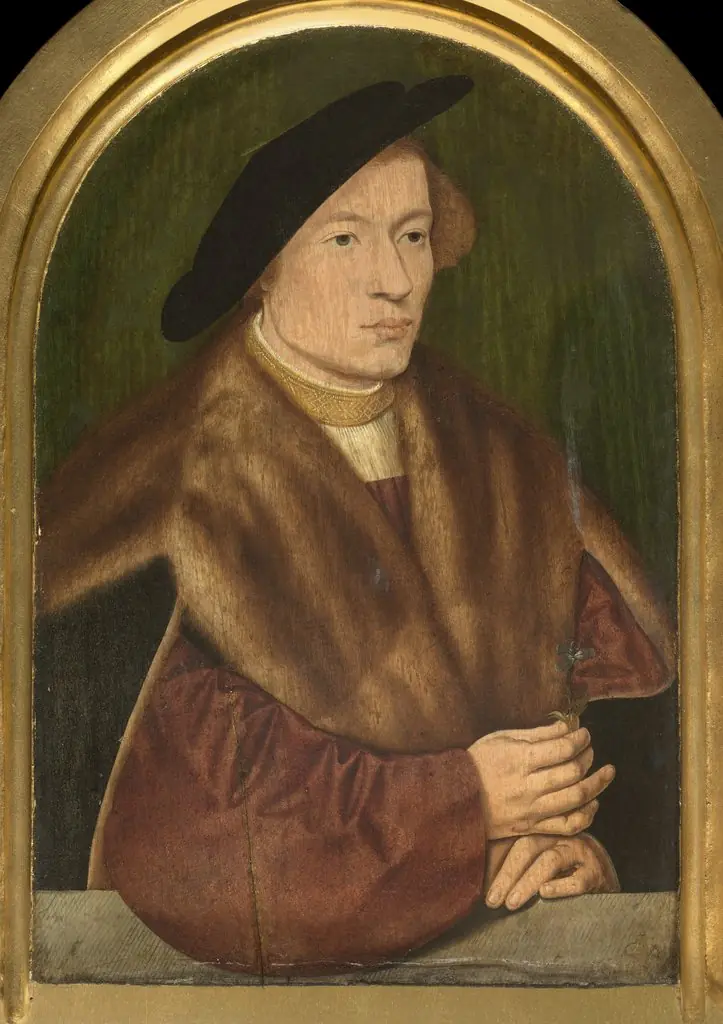
Painted in 1518, this portrait depicts Joris Vezeleer wearing a hat and a ring. The work functions as a commemorative piece, likely commissioned to mark Vezeleer's betrothal or marriage to Margaretha Boghe. This interpretation is supported by the pendant portrait of Boghe, in which she holds a pink, a flower traditionally symbolizing engagement or conjugal fidelity.
An inscription associated with the pair notes their fifty-two-year union; given Vezeleer's death in 1570, the marriage likely began around 1518. At that time, the sitter would have been approximately twenty-five years old, an age consistent with his youthful appearance in the painting. Together, the paired images represent the establishment of their marital bond.
Technique & Style
The portrait of Joris Vezeleer is executed in oil on a wooden panel, a support typical of Netherlandish painting in the early sixteenth century, and measures roughly 58 × 40 cm. The work belongs to the portrait genre and displays the sitter in conventional Renaissance attire, including a hat and a ring that denote his recent betrothal or marriage. The oil medium allows fine modeling of facial features and subtle handling of light, while the panel’s smooth surface supports the delicate brushwork evident in the rendering of texture and detail. These formal qualities reflect the stylistic conventions of Joos van Cleve’s workshop in Antwerp circa 1518.
History & Provenance
Painted in 1518 by Joos van Cleve, the portrait of Joris Vezeleer was likely commissioned to mark the sitter's betrothal or marriage to Margaretha Boghe, since an inscription indicates the couple were married for fifty-two years and Vezeleer died in 1570, placing the wedding around the date of the panel. The work probably descended to Vezeleer's widow, Margaretha Boghe, and may be identified with a portrait pair recorded in the 1574–1575 inventory of her estate. The painting is tentatively linked to Prince Karl Eusebius of Liechtenstein (1611–1684) and passed to Prince Johann Adam Andreas of Liechtenstein (1657–1712) as part of the Fideikomissgalerie in Vienna.
It subsequently descended through Prince Emanuel of Liechtenstein, Reigning Prince Josef Johann of Liechtenstein by 1722, and Prince Johann Nepomuk (1724–1748), remaining with the Princes of Liechtenstein. Prince Franz Josef II of Liechtenstein held it in Vienna and later Vaduz until 1939, after which it was sold in 1962 through Marianne Feilchenfeldt of Zurich to the National Gallery of Art.
The painting is held by the National Gallery of Art in Washington, D.C., which acquired it in 1962 through the dealer Marianne Feilchenfeldt in Zurich from the Princes of Liechtenstein. Its documented provenance traces back to the sitter Joris Vezeleer (d. 16 October 1570) of Antwerp, then probably to his widow Margaretha Boghe (d. perhaps 20 August 1574), and possibly to Prince Karl Eusebius of Liechtenstein (1611–1684). It subsequently passed through the Fideikomissgalerie in Vienna under Prince Johann Adam Andreas of Liechtenstein (1657–1712), his nephew Prince Emanuel of Liechtenstein (d. 1771), Reigning Prince Josef Johann of Liechtenstein (1690–1732), and the latter's son Prince Johann Nepomuk (1724–1748), remaining with the Princes of Liechtenstein until it was held by Prince Franz Josef II, in Vienna until 1939 and afterward in Vaduz. The work's recorded exhibition history includes the presentation "Francis I and the Art of the Netherlands."
Overview
Joris Vezeleer, an oil-on-panel painting from approximately 1518, is a portrait by Joos van Cleve. This work exemplifies the artist's engagement with both traditional Northern Netherlandish methods and emerging Renaissance aesthetics. As a prominent figure in Antwerp's artistic community, van Cleve was known for his diverse output, including religious scenes and commissions for notable sitters. This piece offers insight into his early career development.
Context
Joos van Cleve was a significant painter in Antwerp, a major artistic center, where he maintained a substantial workshop. His practice was characterized by a synthesis of established Early Netherlandish painting traditions with innovative Italian Renaissance influences. Active within the city's Guild of Saint Luke, he undertook commissions for both devotional subjects and portraits, including those for royal patrons, establishing his reputation during this period.
Own this work as a print
Artist & collection
Artist
Joos van Cleve (; also Joos van der Beke; c. 1485–1490 – 1540/1541) was a leading painter active in Antwerp from his arrival there around 1511 until his death in 1540 or 1541. Within Dutch and Flemish Renaissance…

![A Member of the de Hondecoeter Family [obverse]](https://artifactworldgallery.com/img/a-member-of-the-de-hondecoeter-family-obverse--56718cc2d35bf2df-w320.webp)