Artwork
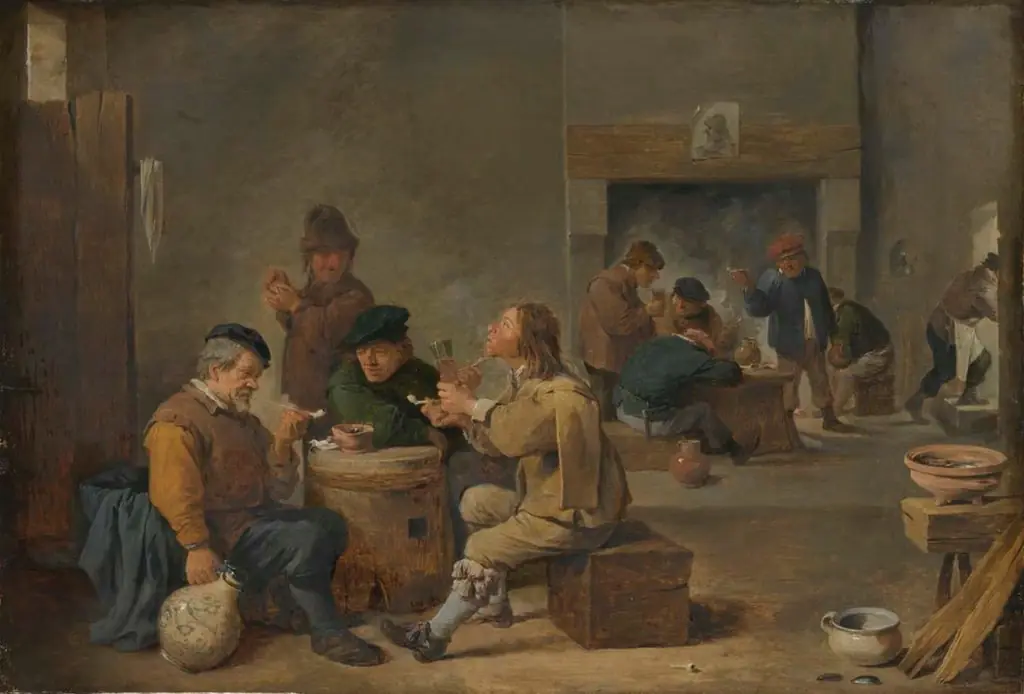
Smokers.
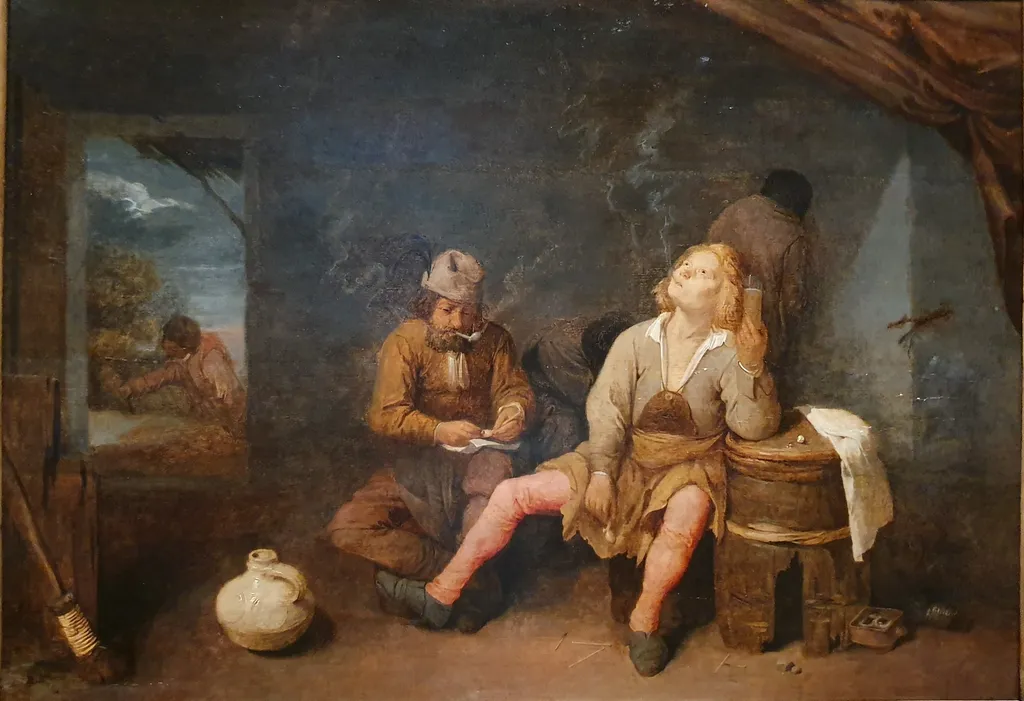
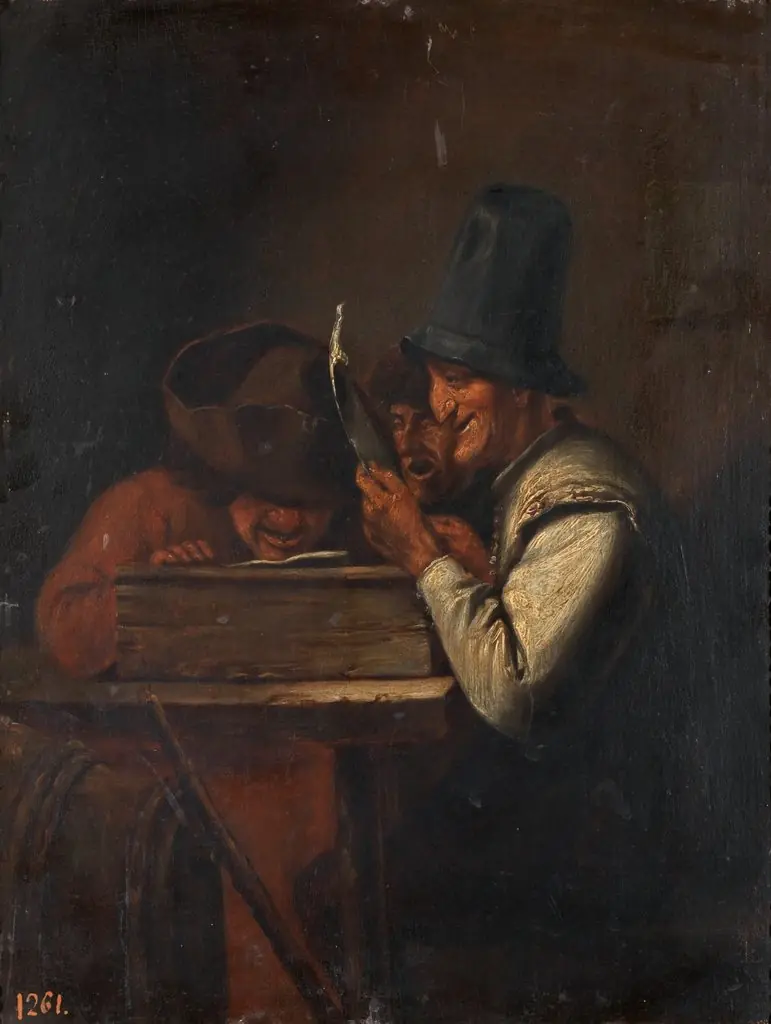
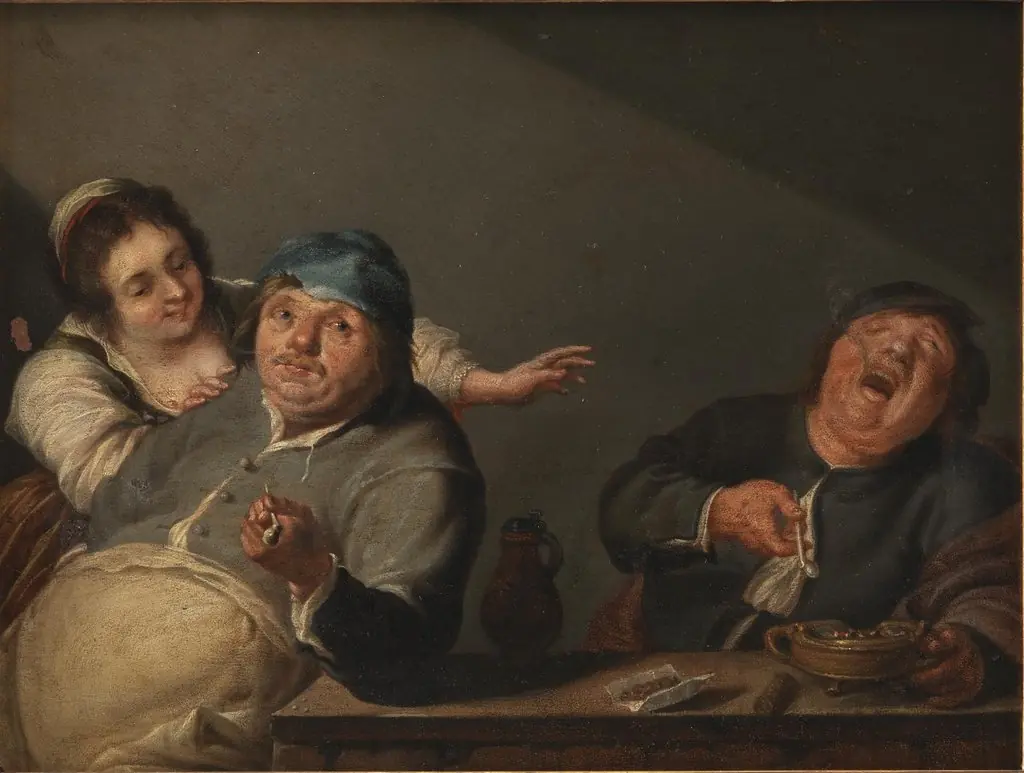
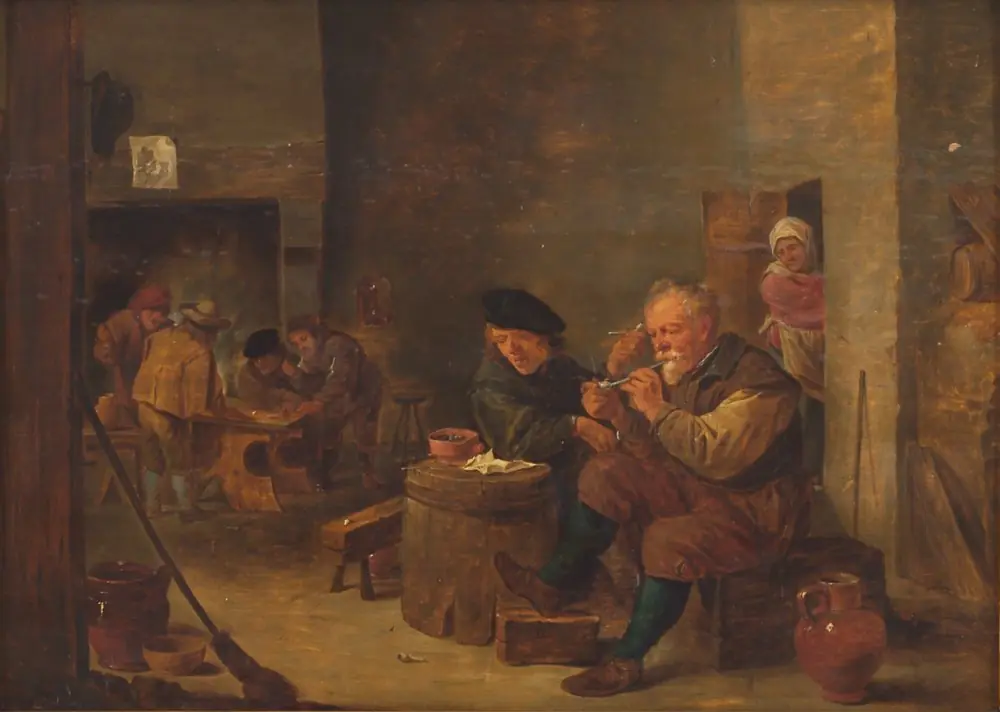
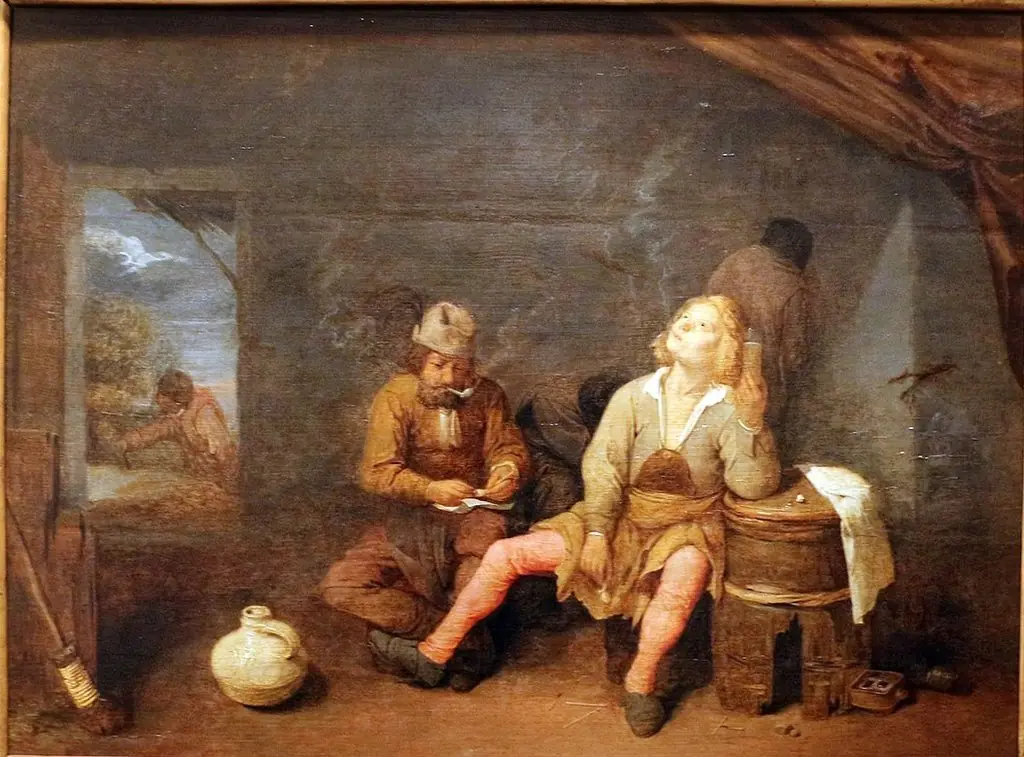
Smokers. is an oil painting by the Dutch Golden Age artist Joos van Craesbeeck. It dates from 1650 and is held in the collection of the National Museum of Ancient Art.
About this work
Overview
Joos van Craesbeeck painted Smokers circa 1650, capturing a quiet moment between two men in a modest interior. As a Flemish artist who began as a baker before turning to painting, he specialized in scenes of ordinary life, often set in taverns or domestic spaces. This work exemplifies his focus on unidealized human behavior, rendered with restrained emotion and attention to texture and light.
Subject & Meaning
The absence of narrative drama shifts focus to the psychological weight of routine.
The two figures, one holding a paper and the other gazing upward, are engaged in the solitary act of smoking, suggesting introspection rather than social interaction. Their postures and lack of overt expression imply a momentary pause in daily life, possibly reflecting the contemplative or weary state of working-class individuals. The absence of narrative drama shifts focus to the psychological weight of routine.
Technique & Style
Van Craesbeeck employed oil paint to build subtle tonal gradations, using a muted palette of browns, grays, and ochres to evoke the dim interior. Light enters sparingly through a small window, casting soft shadows that define the figures’ forms without dramatic contrast. Brushwork is deliberate but unobtrusive, emphasizing texture in fabric, skin, and pipe surfaces over fine detail.
History & Provenance
The painting has been held by the National Museum of Ancient Art in Lisbon since at least the 19th century. Its presence there reflects broader 19th-century European efforts to collect and preserve Northern Renaissance and Baroque genre works. While its earlier ownership is undocumented, its survival and attribution to van Craesbeeck are supported by stylistic analysis and archival records of his known oeuvre.
Context
Created during the Dutch Golden Age, Smokers aligns with a broader trend of genre painting that elevated everyday scenes into subjects worthy of artistic attention. Unlike grand historical or religious works, van Craesbeeck’s focus on common people, often smokers, drinkers, or laborers, reflected a growing interest in human behavior outside aristocratic circles, influenced by Protestant values and urban realism.
Legacy
Van Craesbeeck’s work, including Smokers, contributed to the recognition of low-life genre painting as a legitimate artistic pursuit. Though less celebrated than contemporaries like Rembrandt, his quiet, psychologically nuanced depictions of ordinary moments influenced later realist traditions. The painting remains a quiet testament to the dignity found in unremarkable hours of daily life.
Own this work as a print
Artist & collection
Artist
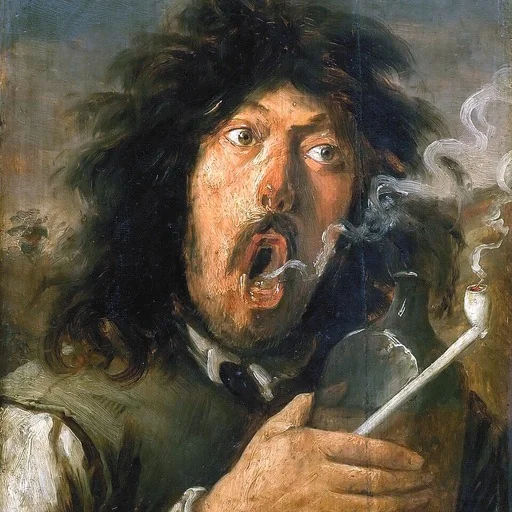
Joos van Craesbeeck (c. 1605/06 – c. 1660) was a Flemish baker and a painter who played an important role in the development of Flemish genre painting in the mid-17th century through his tavern scenes and dissolute…