Open full image Pin
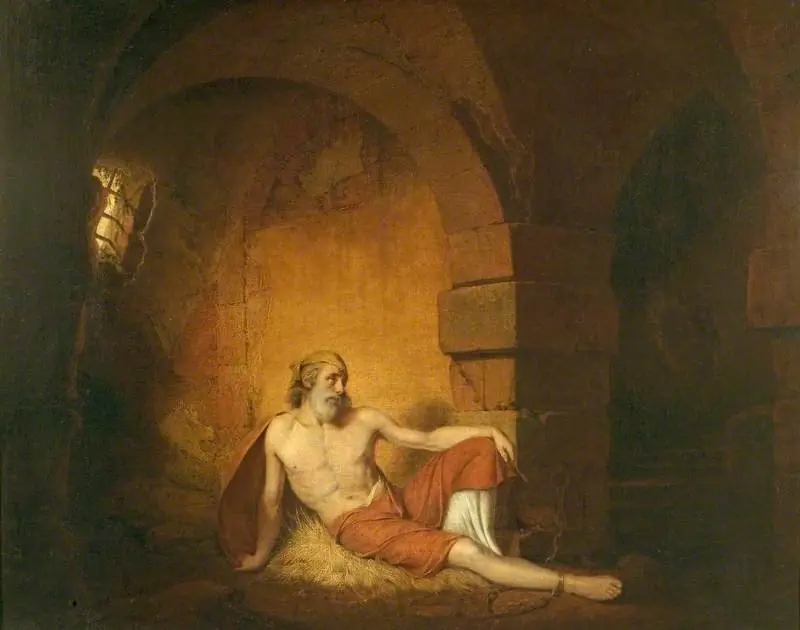
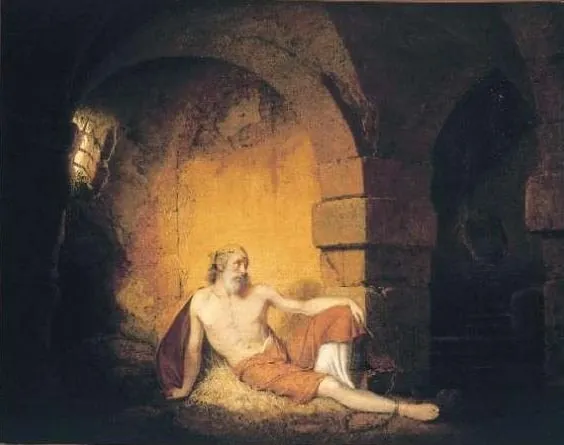
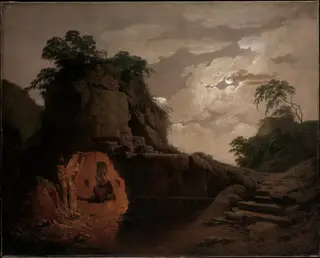
The Captive, by Joseph Wright of Derby, unspecified, 1774

Dominant colour

Overview

The Captive is a 1774 unspecified by Joseph Wright of Derby, a Rococo painting work, held at Derby Museum and Art Gallery.

Who painted this?
Joseph Wright of Derby
When & what style?
1774 · Rococo painting
Where can I see it?
Derby Museum and Art Gallery

About this work

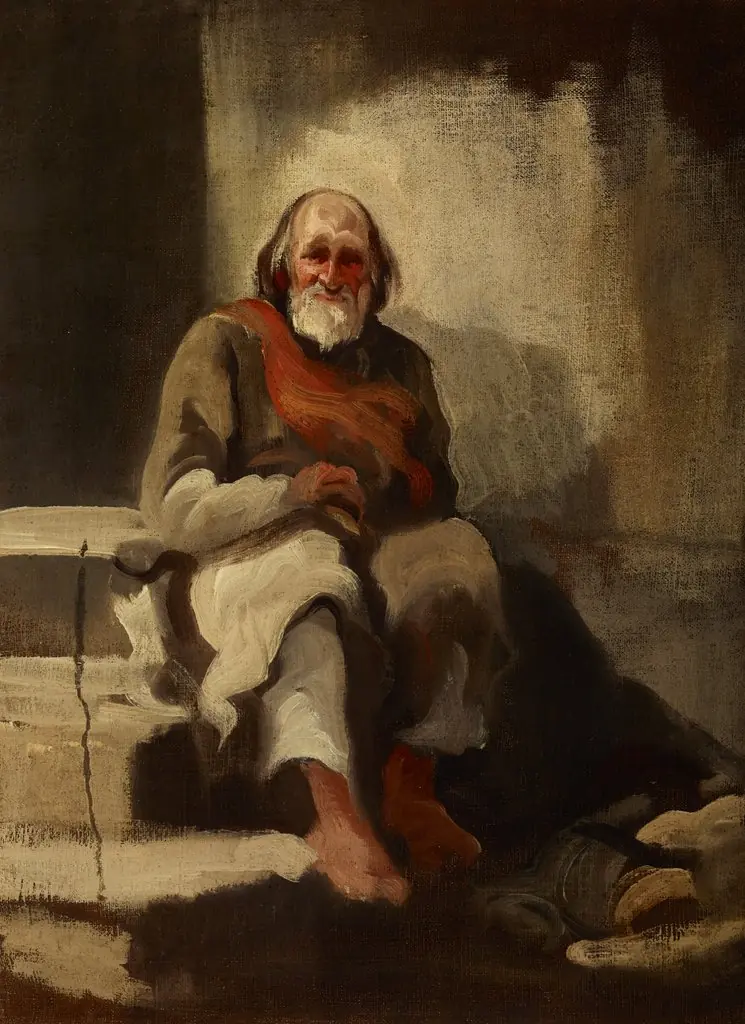
This painting depicts a man sitting in a dimly lit room, his body illuminated by a single light source. He is dressed in a red robe, with his left arm resting on his knee and his right arm extended outward. The room's walls are made of stone, with archways visible in the background. The man's facial expression is one of contemplation, with his eyes cast downward. The overall atmosphere of the painting is one of quiet reflection, with the use of chiaroscuro creating a sense of depth and dimensionality. The artist's use of light and shadow adds a sense of drama to the scene, drawing the viewer's eye to the figure in the center of the composition. To learn more about the artist's use of chiaroscuro, explore the technique further.

The story of this work

Overview

The Captive, from Sterne is a painting by Joseph Wright of Derby completed in 1774 and now in the National Gallery of Canada. Sterne's Captive, first exhibited by the artist in 1778, is a similar painting by Wright in the Derby Museum and Art Gallery. The latter painting resulted in a rare engraving, as its purchaser commissioned a print run of only twenty copies before the copper printing plate was destroyed. In 2012, Derby Museum commissioned another Captive painting from Emma Tooth.

Source: wikipedia, available under CC BY-SA 4.0.

Description

Both paintings show the despair of a traveller who finds himself abandoned in a foreign jail. The Captive title is based on the section of the same name in Laurence Sterne's A Sentimental Journey Through France and Italy (1768). In the episode in question, the hero of the story, Yorick, imagines that he is imprisoned in the Bastille because he has lost his passport. Yorick is later released because his name is taken to indicate that he is an important person, because he is a court jester: Yorick is a jester in Shakespeare's play Hamlet. The journey takes place in 1762, when Britain was at war…

Source: wikipedia, available under CC BY-SA 4.0.

History

The pose of the model in Wright's first painting is the same as that used by Michelangelo when painting The Creation of Adam on the ceiling of the Sistine Chapel. And the first captive painting was made by Wright while in Rome in 1774. After its completion he had to import it back into Britain; Llewellyn Jewitt records that he nearly imported it free of tax but a late objection obliged him to pay import tax. The debate focused on whether the sitter was Roman and it was argued that the sitter should have been better dressed. The first painting was made into a stipple engraving by Thomas Ryder…

Read the full account in the museum source.

Source: wikipedia, available under CC BY-SA 4.0.

About the artist

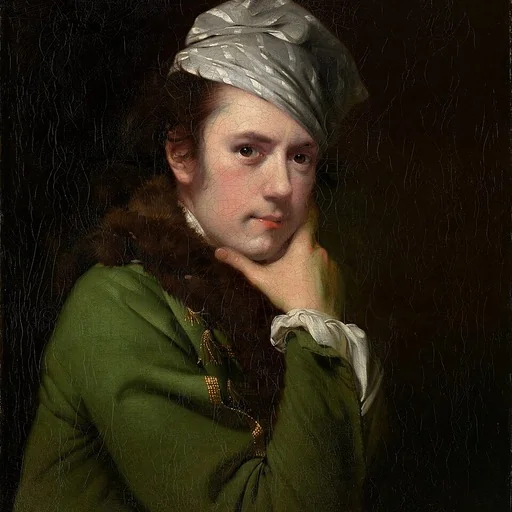
Portrait of Joseph Wright of Derby
Artist

Joseph Wright of Derby

Joseph Wright (3 September 1734 – 29 August 1797), styled Joseph Wright of Derby, was an English painter who specialised in portrait painting and landscape art.

See the richer artist page

More by Joseph Wright of Derby

Artifact World Gallery — 100,000 artworks Get the app