Artwork
The Ladies Waldegrave
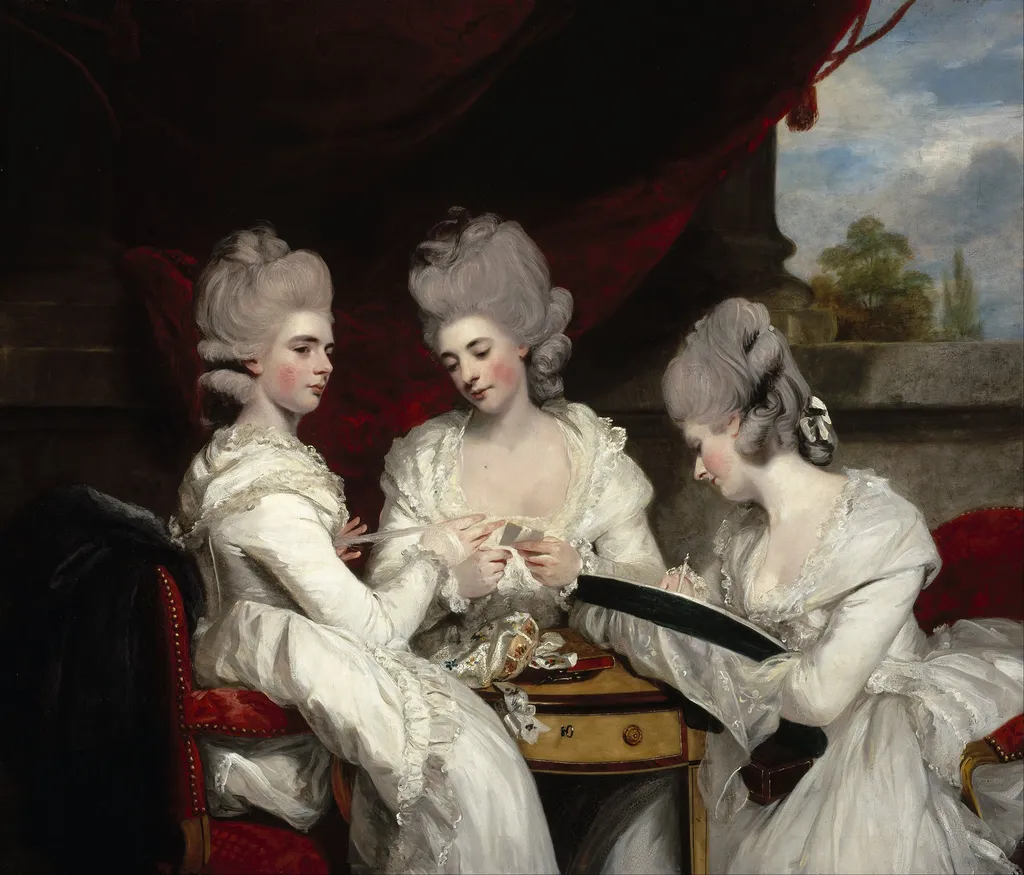
The Ladies Waldegrave is an oil painting by the Rococo painting artist Joshua Reynolds. It dates from 1790 and is held in the collection of the National Galleries Scotland.
About this work
This painting shows three sisters standing together. It’s a group portrait by Joshua Reynolds from 1780. The sisters were daughters of an earl and a countess.
Their mother paid for this work in 1779. She hoped it would help find husbands for her unmarried daughters. It was shown at a big art show in London in 1781.
Look up the Scottish National Gallery next.
Overview
3 centimeters, the painting depicts the three daughters of James Waldegrave, 2nd Earl Waldegrave, and Maria Walpole.
The Ladies Waldegrave is a group portrait painted by Sir Joshua Reynolds in oil on canvas between 1780 and 1781. Measuring 143 by 168.3 centimeters, the painting depicts the three daughters of James Waldegrave, 2nd Earl Waldegrave, and Maria Walpole. Currently held by the Scottish National Gallery in Edinburgh under accession number NG 2171, the work stands as a prime example of the eighteenth-century conversation piece, blending informal domestic activity with classical elegance. The painting was exhibited at the Royal Academy in 1781 and remains celebrated for its sophisticated composition and the nuanced interplay of its subjects' gestures.
Subject & Meaning
The painting portrays the three unmarried Waldegrave sisters engaged in collaborative needlework. From left to right, Charlotte Maria holds a skein of silk, Elizabeth Laura winds the thread onto a card, and Anna Horatia works on silk lace stretched across a tambour frame. While the women's white muslin gowns and graceful poses invite comparison to the Three Graces, the composition deliberately subverts classical convention, as the sisters are seated and industrious rather than dancing. Scholars have alternatively proposed that the women's coordinated labor aligns them with the Moirai, or Fates, where Elizabeth acts as Clothot spinning the thread, Charlotte as Lachesis measuring it, and Anna, rather than cutting the thread as Atropos, creates bridal lace. This iconographic depth transforms the portrait from a mere marriage advertisement into a statement of the sisters' agency over their own destinies.
Technique & Style
Reynolds renders the scene with a smooth, refined brushwork on the faces and fabrics, contrasting with more visible texture in the background drapery and sky. The palette is dominated by whites, creams, deep reds, and muted browns. A strong light falls from the left, illuminating the figures and leaving the background in shadow. The sisters wear high-waisted white silk gowns with lace trim and powdered hair arranged in tall, curled styles. They sit closely in red upholstered chairs with gilt studs, forming a tight triangular grouping that directs the viewer's gaze inward toward their shared activity. A small embroidered bag and a book rest on the wooden table, anchoring the composition. Behind them, heavy dark red drapery with fringe hangs beside a stone column, opening to a cloudy sky and distant trees, lending a classical elegance to the enclosed space.
History & Provenance
Commissioned in 1780 by the sitters' mother, Maria Walpole, the portrait aimed to attract suitors for her unmarried daughters. The painting was exhibited at the Royal Academy Exhibition of 1781 at Somerset House. It subsequently entered the collection of the sisters' great-uncle, Horace Walpole, at his Strawberry Hill House. The Scottish National Gallery acquired the painting in 1952, purchasing it with the assistance of the Cowan Smith Bequest and the Art Fund. The work has a rich history of reproduction, including a highly celebrated 1781 mezzotint by Valentine Green that was published as the centerpiece of his Beauties of the Present Age series. In 2018, the Factum Foundation created a visually indistinguishable three-dimensional printed facsimile of the painting, which was placed on display at Strawberry Hill House as part of a project to restore the house to its 1790s appearance.
Context
At the time of the commission in 1780, Reynolds had recently been knighted by King George III and was serving as the first president of the Royal Academy. His high prestige guaranteed that commissioned works would be exhibited on the walls of the Royal Academy, frequented by the London upper class, thus ensuring the Waldegrave sisters the desired visibility among wealthy suitors. The commission proved successful, as all three sisters married within five years of the exhibition: Elizabeth married her cousin George Waldegrave in 1782, Charlotte married George FitzRoy, Duke of Grafton, in 1784, and Anna married Admiral Lord Hugh Seymour in 1785. While some scholars have dismissed the painting as a luxurious but insubstantial advertisement for suitors, others recognize Reynolds's bold iconographic choices, which elevated the genre of the group portrait by infusing it with complex classical allusions to the Fates.
Legacy
The painting's cultural afterlife extends well beyond its original exhibition. Valentine Green's 1781 mezzotint reproduction proved so popular that one version sold for 560 guineas, far exceeding the 300 guineas Horace Walpole paid Reynolds for the original canvas. This print took on its own exhibition value, demonstrating the early mechanical reproduction of art. In the nineteenth century, further mezzotint and engraving reproductions were produced, including works published by Henry Graves and Co. in the 1860s. In contemporary discourse, the painting has served as a focal point for philosophical debates regarding originality and facsimiles, specifically concerning the 2018 Factum Foundation copy at Strawberry Hill, which challenges traditional notions of ontological singularity while promoting new methods of public engagement with historic interiors.
Own this work as a print
Artist & collection
Artist
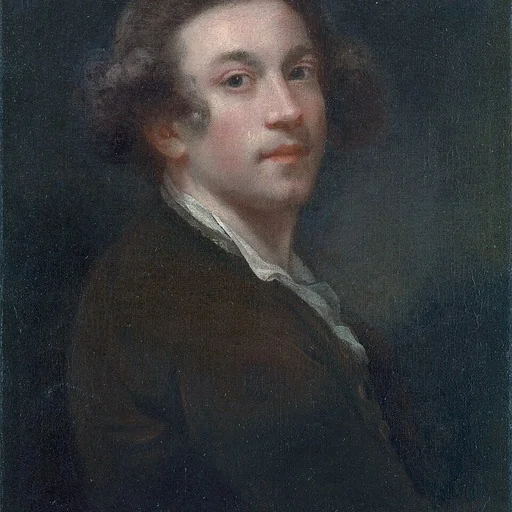
Sir Joshua Reynolds (16 July 1723 – 23 February 1792) was an English painter who specialised in portraits.

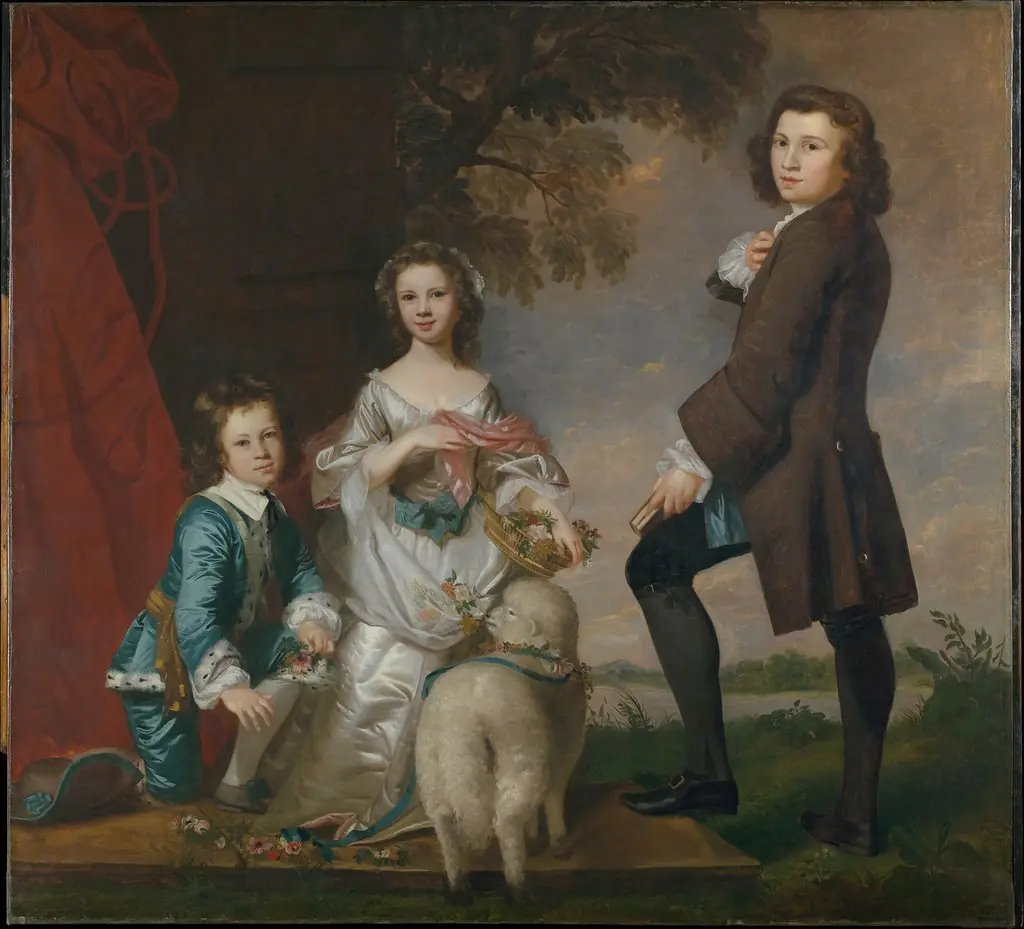
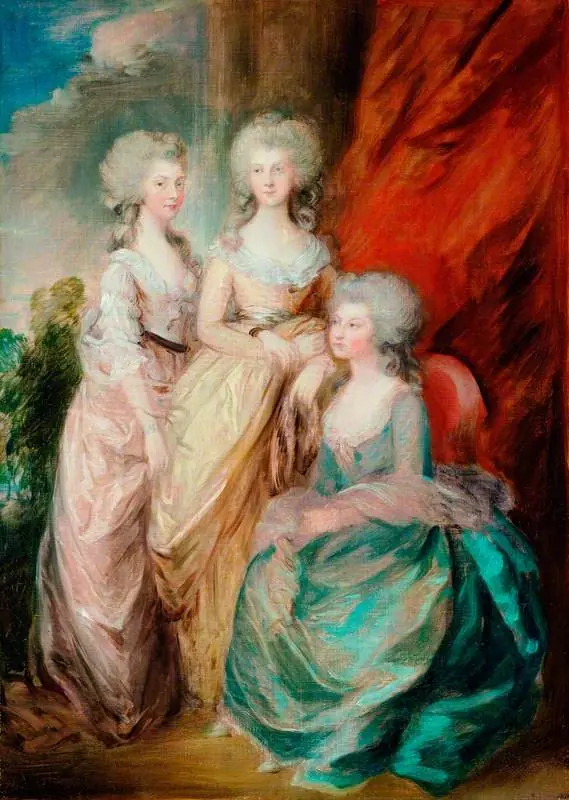 The Three Eldest Daughters of George III: Princesses Charlotte Augusta Matilda (1766–1828), Augusta Sophia (1768–1840), and Elizabeth (1770–1840) (after Thomas Gainsborough)
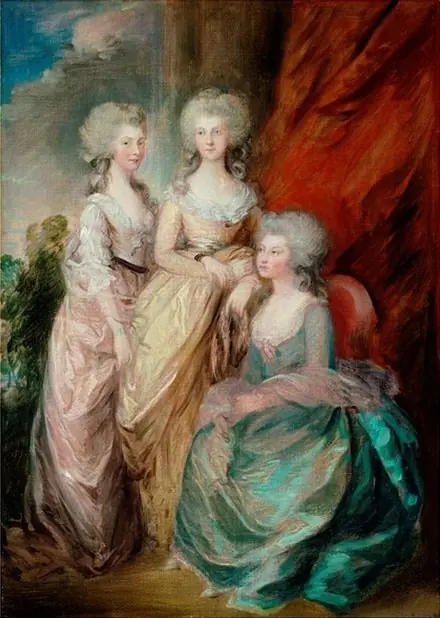 The Three Eldest Daughers of George III: Princesses Charlotte Augusta Matilda, Augusta Sophia, and Elizabeth
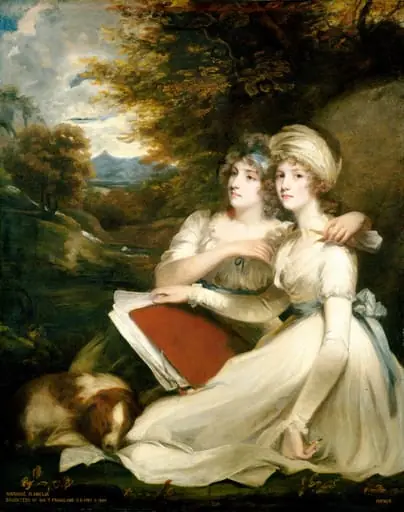 The Frankland Sisters
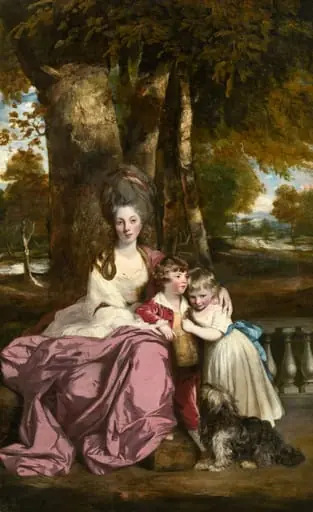 Lady Elizabeth Delmé and Her Children
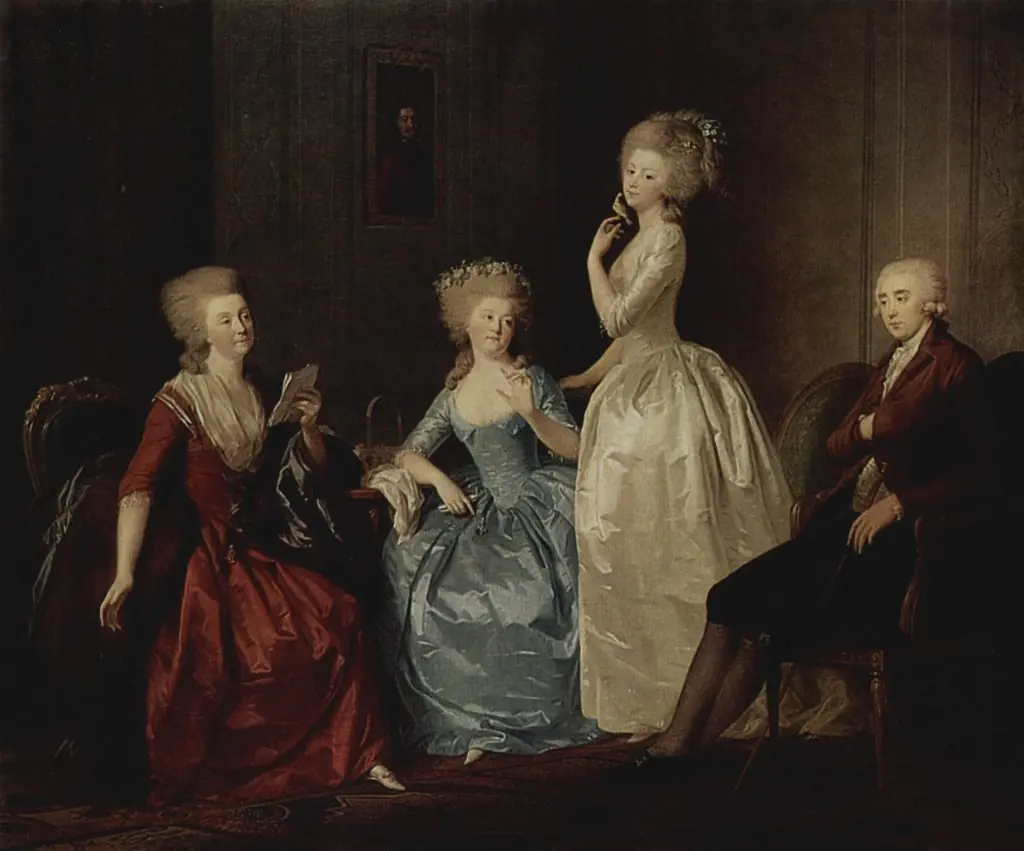 Portrait of the Saltykov Family
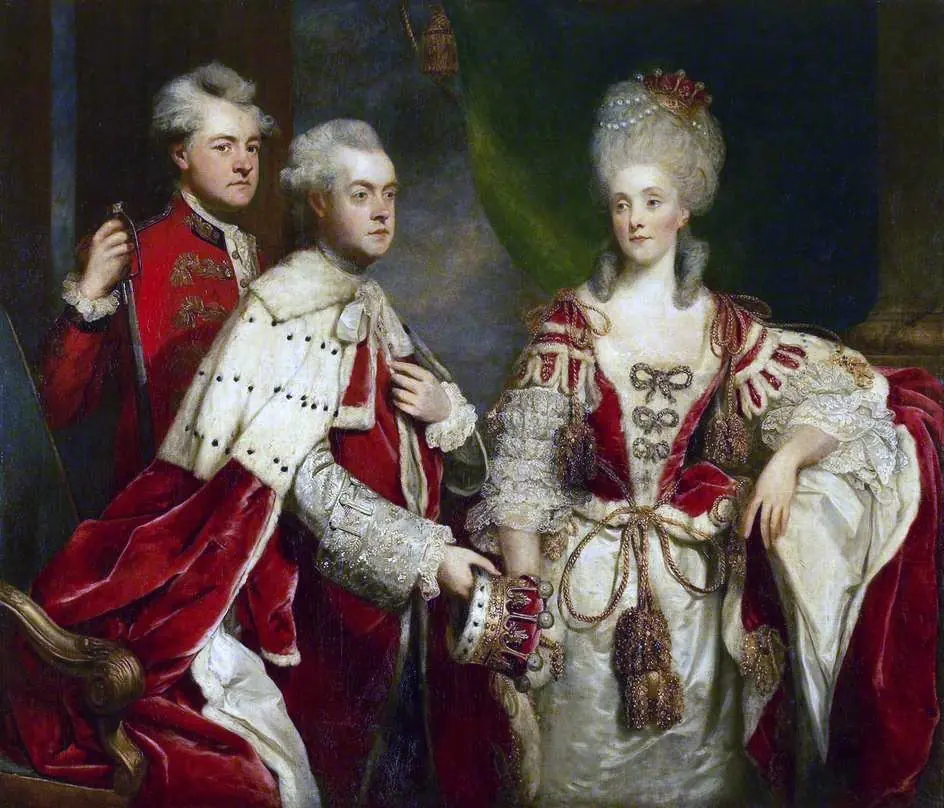 George, 2nd Earl Harcourt, his wife Elizabeth, and brother William
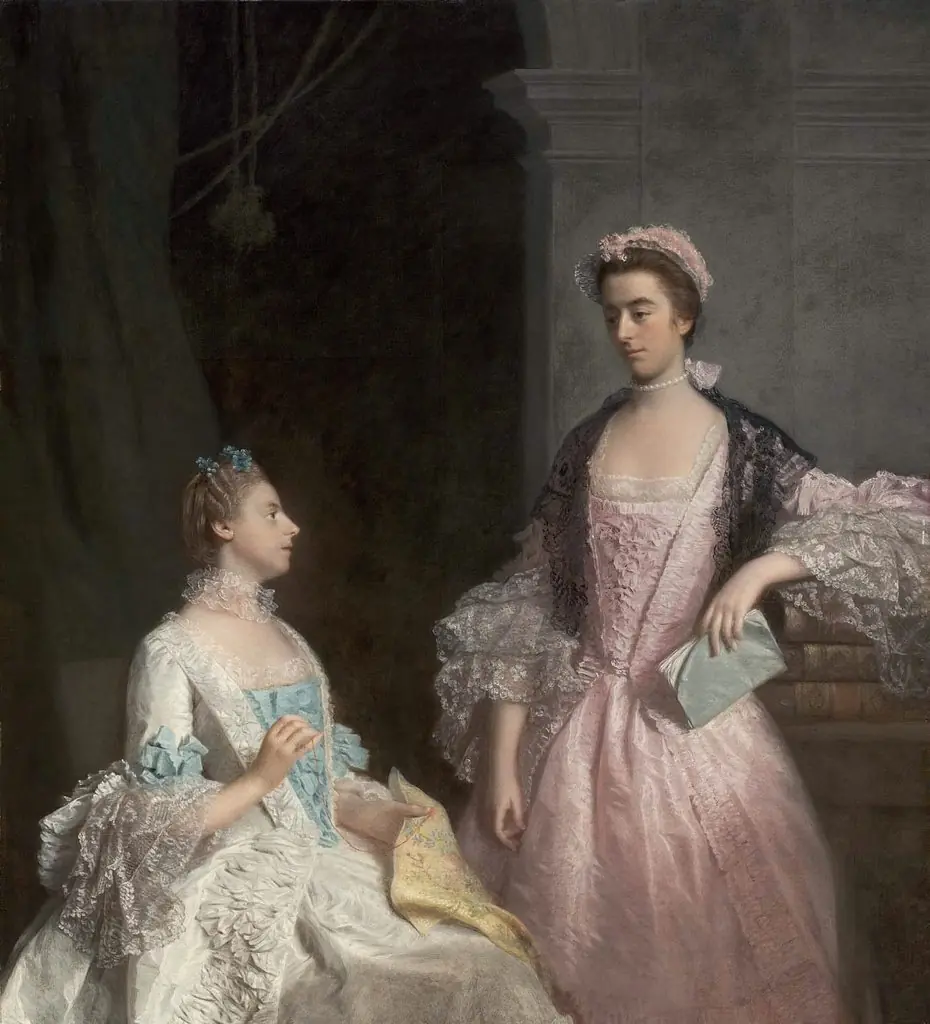 Portrait of Horace Walpole's Nieces: The Honorable Laura Keppel and Charlotte, Lady Huntingtower
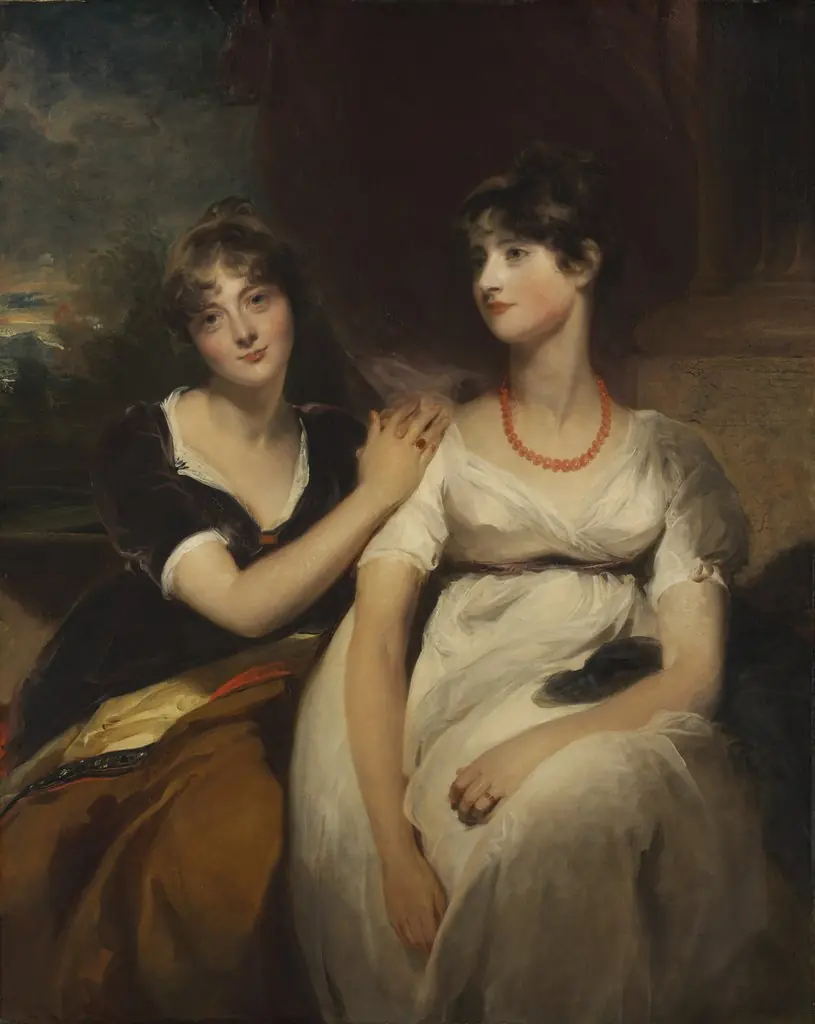 Portrait of Charlotte and Sarah Carteret-Hardy
 John Johnstone, Betty Johnstone, and Miss Wedderburn
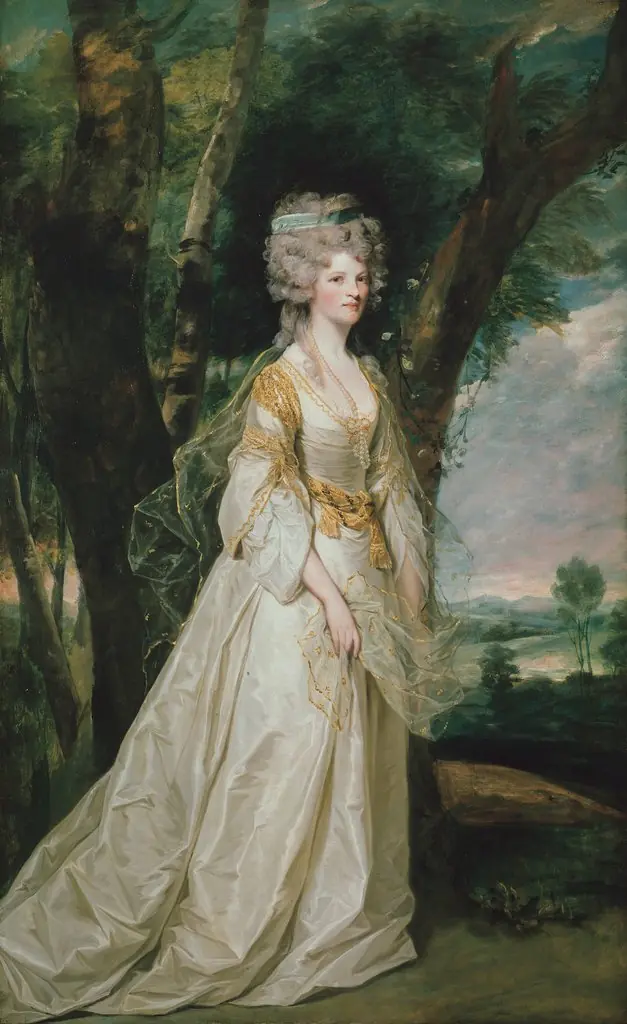 Lady Sunderlin
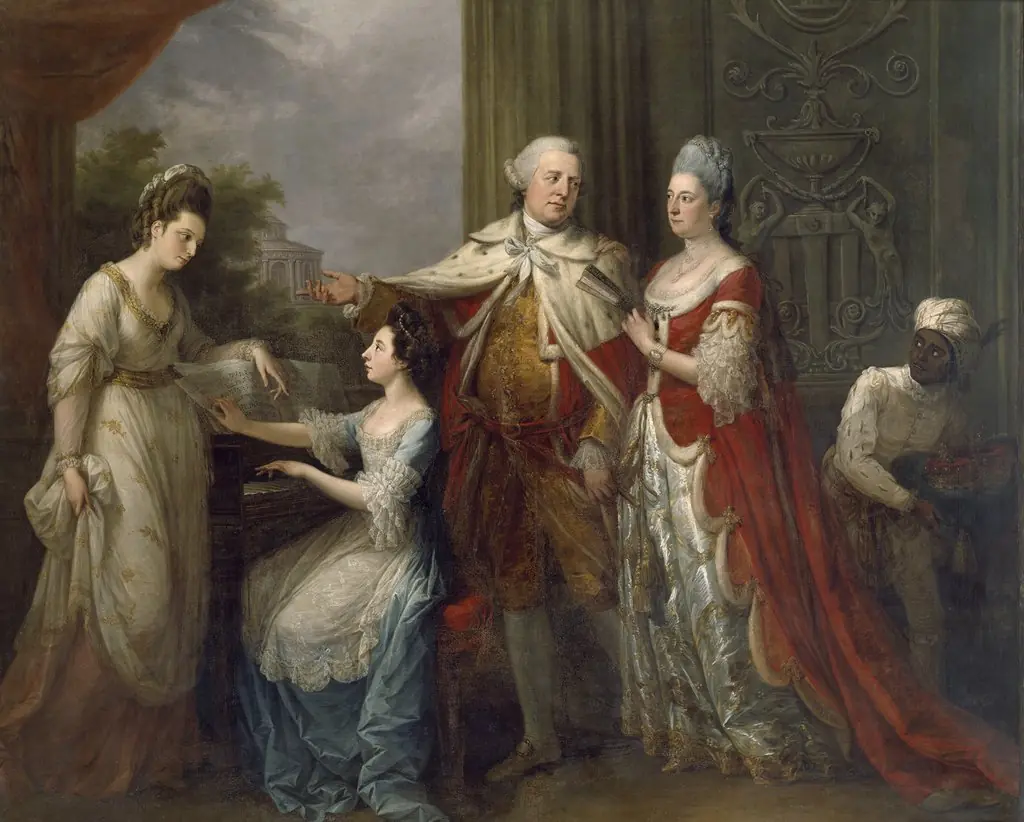 The Ely Family
- Lady Bampfylde