Artwork
The Agony in the Garden
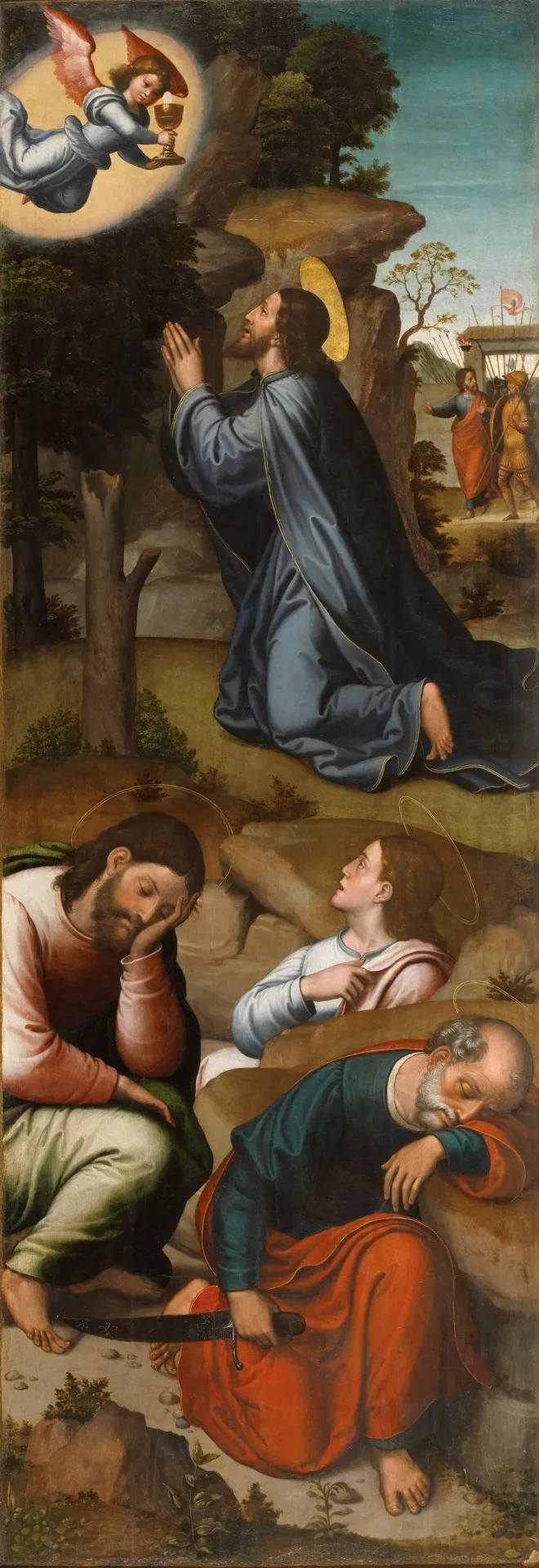
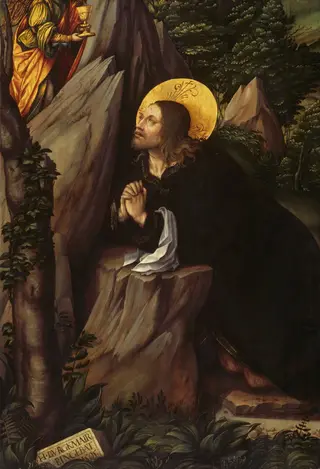
The Agony in the Garden is an oil painting by the Mannerist artist Juan Correa de Vivar. It dates from 1533 and is held in the collection of the Museo del Prado.
About this work
Subject & Meaning
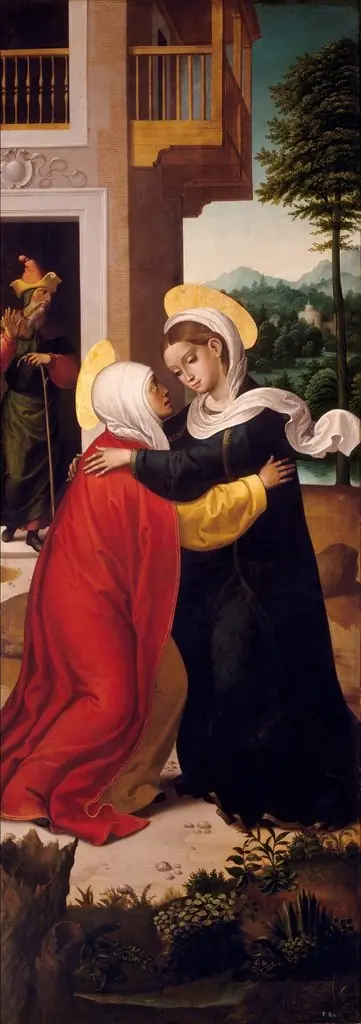
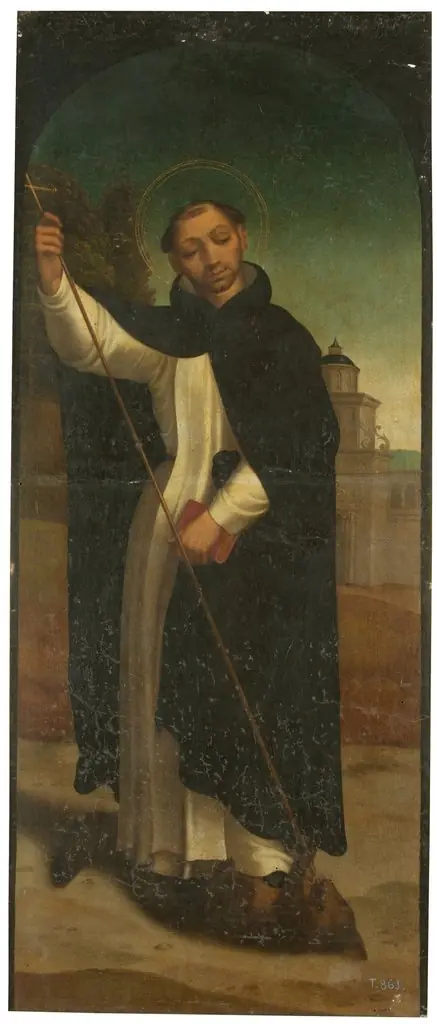
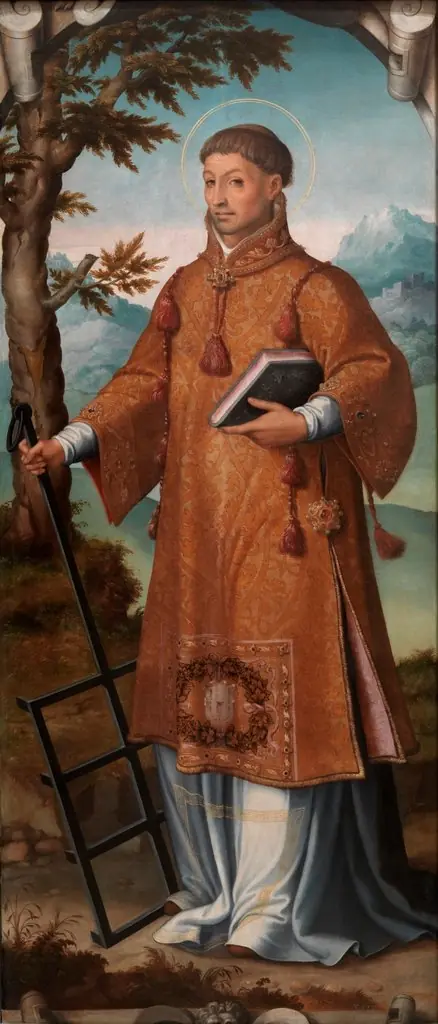
The painting depicts the Agony in the Garden, the New Testament episode in which Christ prays in Gethsemane on the eve of the Crucifixion, accepting the cup of suffering while the disciples sleep. As a religious work, it belongs to a long iconographic tradition in which the scene conveys themes of human vulnerability, divine obedience, and the approaching Passion. The narrow vertical panel originally formed part of the Nativity retable of the Hieronymite monastery of Guisando in Ávila, where it was placed on the exterior of a wing-shaped door, paired on related panels with the Visitation, Saint Jerome Penitent, and the Presentation of Jesus in the Temple.
Its placement on the retable's outer door meant the image of Christ's anguish served as a threshold subject for viewers approaching the ensemble, while prophets such as David, Isaiah, Jeremiah, and Habakkuk flanked the retable, linking the scene to messianic prophecy.
Technique & Style
The landscape is minimal, with a dark ground and muted earth tones, heightening the dramatic focus on the protagonist’s gesture and expression.
The painting is executed in oil on panel, with dimensions of 219 × 78 cm.
Its handling reflects the early sixteenth-century Castilian tradition, characterized by sharply delineated forms and a restrained palette typical of Juan de Borgoña’s circle. The composition compresses the scene into a narrow vertical format, emphasizing the solitary figure of Christ kneeling in prayer while an angel presents the cup of suffering. The landscape is minimal, with a dark ground and muted earth tones, heightening the dramatic focus on the protagonist’s gesture and expression.
History & Provenance
The panel was painted between 1533 and 1535 as part of the predella of the Nativity altarpiece in the Jeronymite monastery of Guisando (Ávila).
It was first recorded in 1773 by Ponz, who described it as one of the doors of the altarpiece depicting scenes from the Life of Christ, including The Visitation, Saint Jerome in Penitence, and The Presentation of Jesus in the Temple, alongside The Agony in the Garden on the exterior. The work was removed from its architectural setting after the Spanish disentailment, and the dispersed panels lost their original context. The surviving fragment was later transferred to the Museo del Prado in Madrid.
The work is held in the Museo del Prado, Madrid, accessioned as oil on panel, 219 × 78 cm.
It formed part of the Nativity altarpiece in the cloister of the Jeronymite monastery of Guisando (Ávila), first recorded by Antonio Ponz in 1773. After the Spanish disentailment, the altarpiece was dismantled and dispersed, severing the original ensemble and obscuring its attribution for a time.
Context
Painted between 1533 and 1535, Juan Correa de Vivar's The Agony in the Garden is situated within the stylistic orbit of Juan de Borgoña, a connection that helped scholars date the work following its rediscovery. Originally forming the exterior door of a retable for the Hieronymite monastery of Guisando in Ávila, the panel was later detached and dispersed during the Spanish disentailment, leading to a temporary loss of its attribution. The Spanish antiquarian Antonio Ponz first documented the piece in 1773, though its creator remained unidentified for a time.
Some early hypotheses linked the work to Correa's later activities at the monastery of Santa María de Valdeiglesias, but current scholarship relies on Ponz's description and stylistic analysis to confirm its origin and early 16th-century execution.
Overview
Juan Correa de Vivar’s 1533 oil on canvas, titled The Agony in the Garden, is part of the collection at Madrid’s Museo del Prado. The work portrays the biblical episode of Christ’s prayer in Gethsemane, rendered in a restrained palette of earth tones that emphasize the solemn atmosphere of the scene.
Artist & collection