Artwork
Saint Lawrence
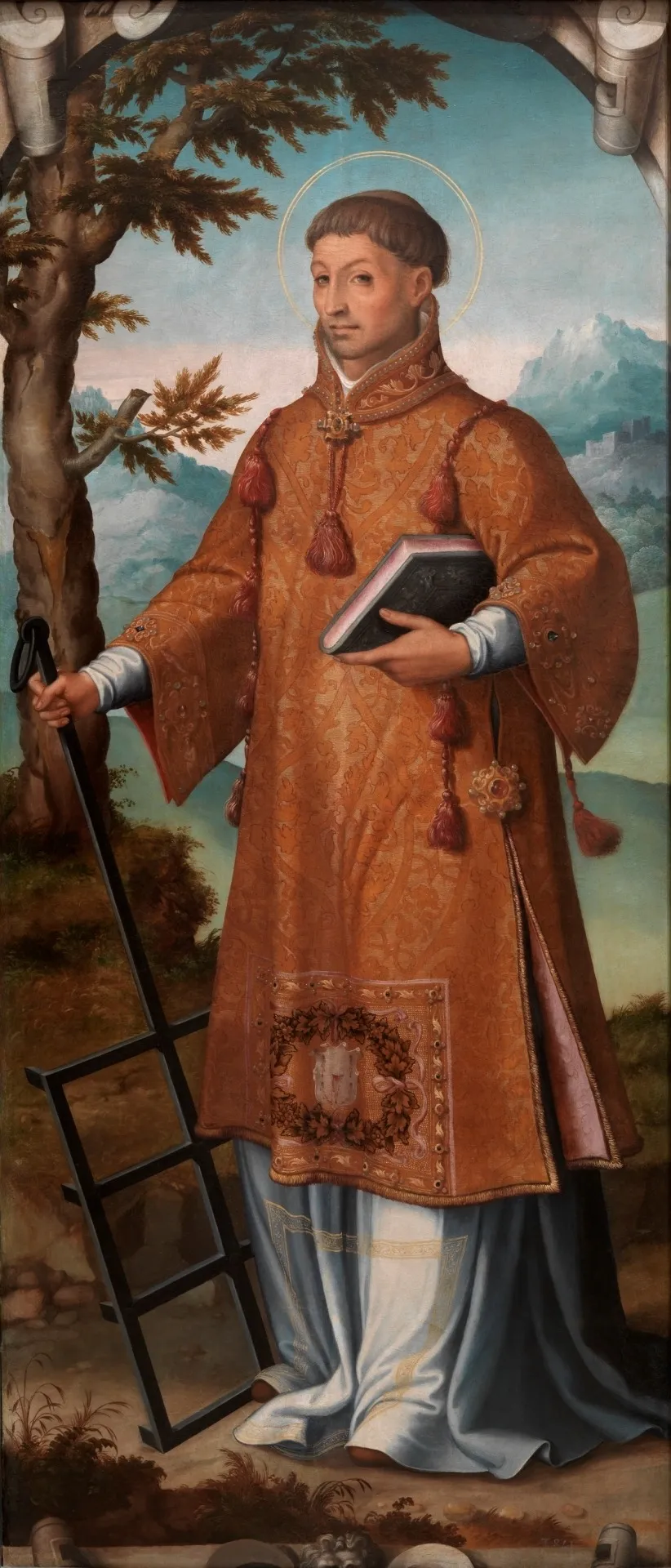
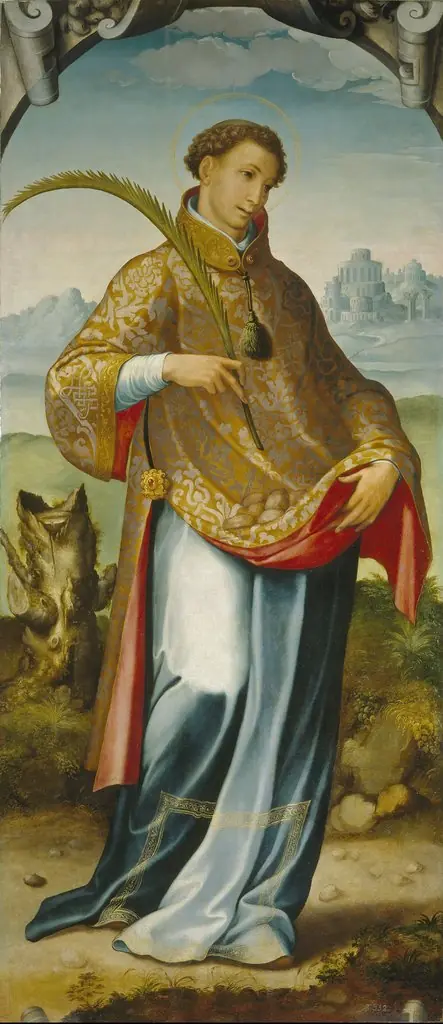
Saint Lawrence is an oil painting by the Mannerist artist Juan Correa de Vivar. It dates from 1559 and is held in the collection of the Museo del Prado.
About this work
Subject & Meaning
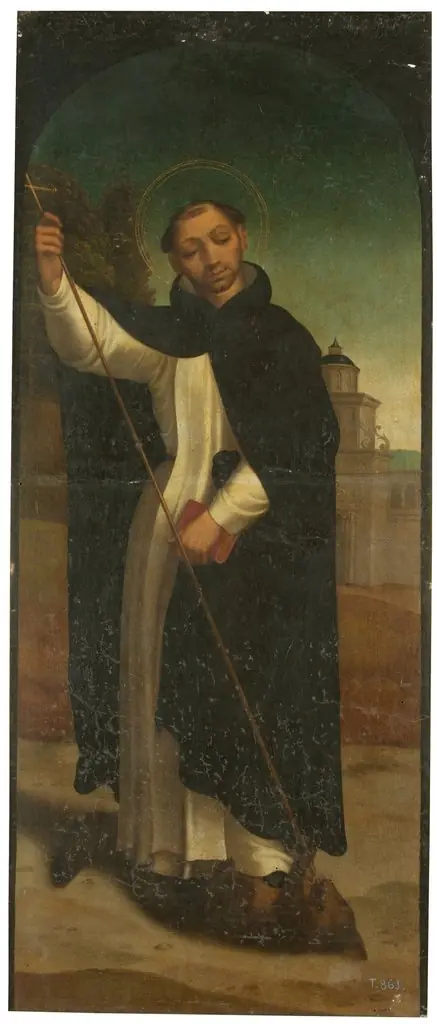
The painting depicts Saint Lawrence, also known as Lawrence of Rome, a central figure in Christian hagiography.
The painting depicts Saint Lawrence, also known as Lawrence of Rome, a central figure in Christian hagiography. As a work of religious art, the composition includes the saint alongside a coat of arms, which likely signifies a specific ecclesiastical or familial patronage associated with the piece. The inclusion of heraldic imagery alongside the martyr suggests the work served a commemorative or devotional function, linking the saint's legacy to the identity of the commissioning entity.
Created in 1559, the piece utilizes these iconographic elements to convey the sanctity of the subject while anchoring the spiritual narrative within a specific historical and social context.
Technique & Style
Created in 1559, the painting Saint Lawrence / Saint Hilary by Juan Correa de Vivar is executed in oil paint on a panel support. The work measures 181 cm in height and 78 cm in width. Stylistically, it belongs to the genre of religious art and depicts Saint Lawrence of Rome alongside a coat of arms. The piece is currently held in the collection of the Museo del Prado.
History & Provenance
Juan Correa de Vivar painted Saint Lawrence / Saint Hilary in 1559 as an oil on panel work portraying the saint Lawrence of Rome with his characteristic coat of arms. The painting entered the collection of the Museo del Prado and was later associated with the Museo de la Trinidad, establishing a provenance linked to these institutional holdings. Its creation is documented in contemporary records from 1559, and it remains classified within the religious art genre, reflecting the artistic conventions of the period.
The work’s dimensions measure 181 centimeters in height by 78 centimeters in width, confirming its scale within the corpus of Spanish Renaissance paintings.
The painting is housed in the Museo del Prado in Madrid. It is catalogued under the museum's inventory as part of the collection of the Museo del Prado and was created in 1559. The work has been included in exhibitions focused on Spanish Renaissance art at the Prado, highlighting religious subjects from that period.
Overview
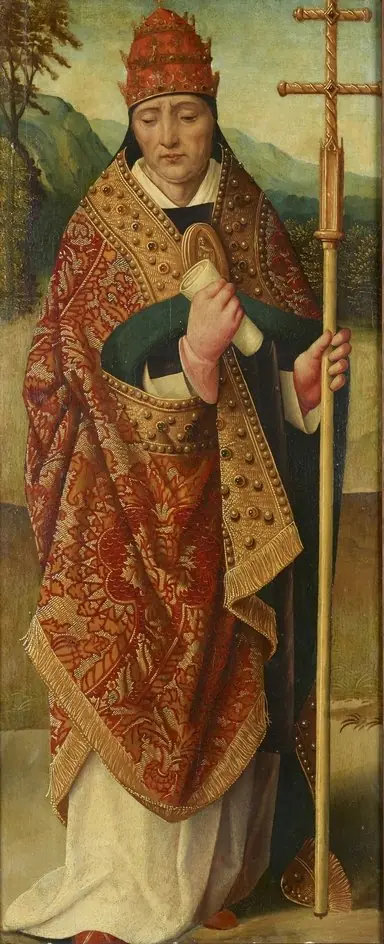
Juan Correa de Vivar’s oil on canvas, dated 1559, presents a solitary saint in a contemplative pose. The figure is rendered in a brown robe edged with gold, holding a book and a staff, while a golden halo crowns his head. A modest coat of arms is embroidered on the robe’s pocket. The work belongs to the collection of the Museo del Prado.
Context
Created during the Spanish Renaissance, the work reflects the period’s emphasis on clear devotional imagery and the integration of personal heraldry. Correa de Vivar, active in Toledo, blended Italianate chiaroscuro with local iconographic conventions, catering to both ecclesiastical and lay audiences seeking visual reinforcement of saintly virtues.
Artist & collection