Artwork
The Visitation
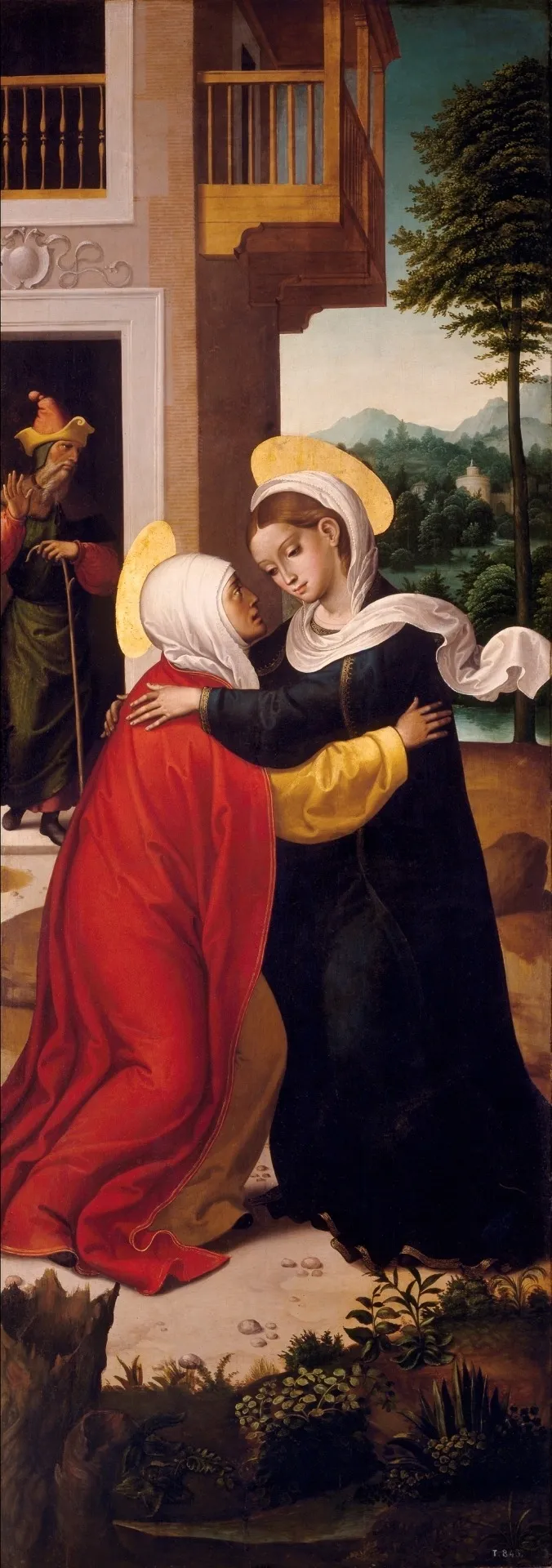
The Visitation is an oil painting by the Mannerist artist Juan Correa de Vivar. It dates from 1533 and is held in the collection of the Museo del Prado.
About this work
Subject & Meaning
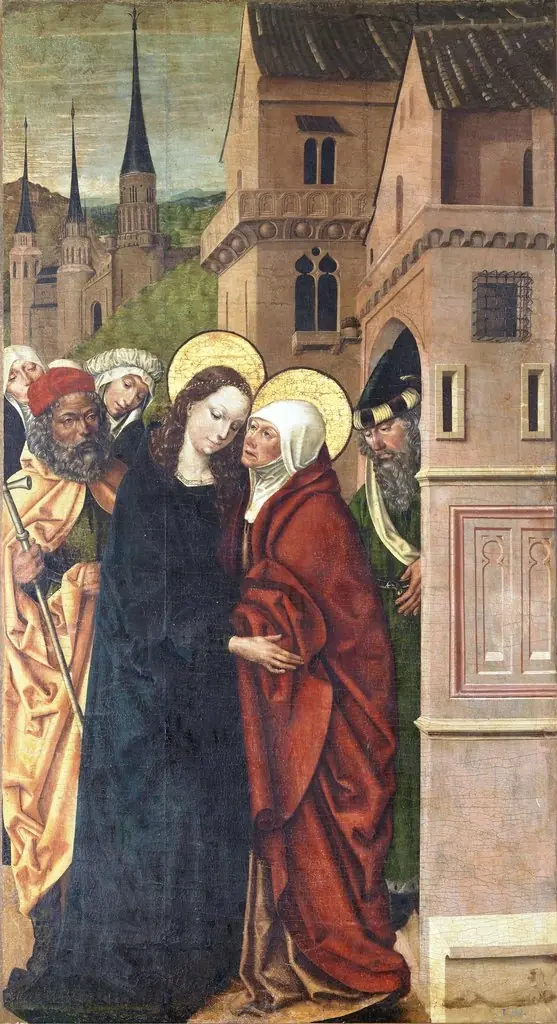
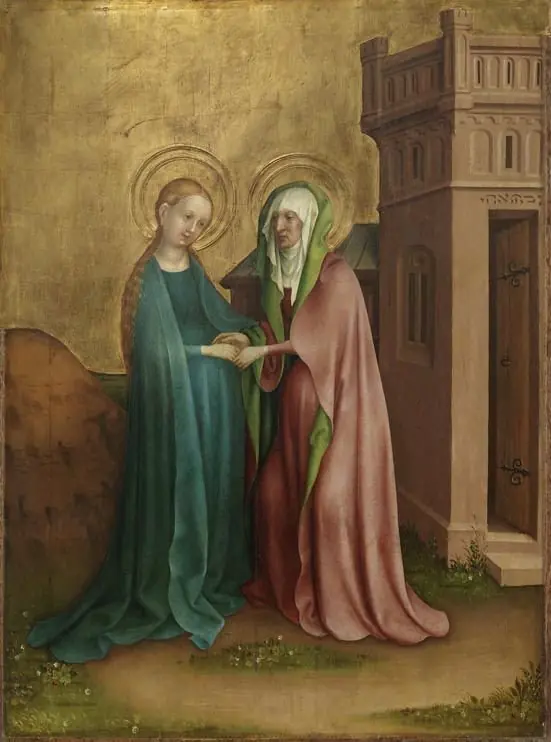
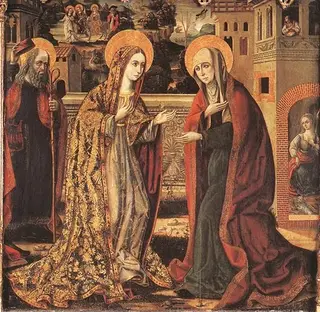
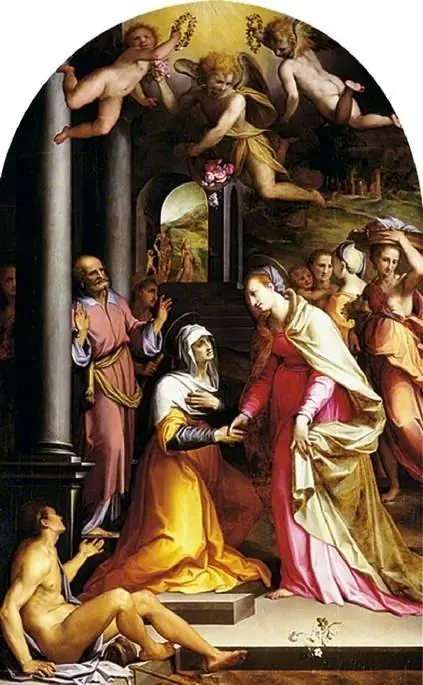
Juan Correa de Vivar's 1533 oil painting depicts the Visitation, a religious scene from the New Testament where the Virgin Mary visits her cousin Elizabeth.
Juan Correa de Vivar's 1533 oil painting depicts the Visitation, a religious scene from the New Testament where the Virgin Mary visits her cousin Elizabeth. While the primary narrative focuses on this biblical encounter, the work incorporates unusual iconographic elements for this specific subject, most notably the inclusion of a skull within the composition. This juxtaposition of the life-affirming meeting between the two pregnant women with a symbol of death suggests a layered theological meaning, likely alluding to the future sacrifices of Christ or the concept of memento mori.
The presence of such a symbol transforms a standard genre scene into a more complex meditation on life, death, and redemption.
Technique & Style
The Visitation by Juan Correa de Vivar, dated 1533, is executed in oil paint on a panel support. The work measures 218 cm in height and 77 cm in width. As a religious painting, it depicts the biblical scene of the Visitation alongside a skull, a common memento mori element in devotional art of the period. The piece remains part of the collection at the Museo del Prado.
History & Provenance
The painting was created in 1533 by Juan Correa de Vivar, who signed and dated the work as recorded in its documentation. It was originally commissioned for the convent of the Monastery of the Holy Trinity in Toledo, where it remained in the collection of the Museo de la Trinidad before being transferred to the Museo del Prado, where it is currently housed. The work measures 218 cm in height and 77 cm in width, and is executed in oil paint on panel, depicting the biblical scene of the Visitation.
The work is held in the Museo del Prado, where it is catalogued under the inventory number P00968. It has been displayed in the museum's permanent collection galleries and featured in the exhibition "Spanish Golden Age Paintings" held at the Prado in 2015.
Overview
Juan Correa de Vivar’s oil on canvas, dated 1533, portrays the biblical episode of the Visitation. The composition is set in an open courtyard where two women embrace, while an elderly figure observes from a distance. Architectural elements such as arched doorways and a balcony frame the scene, and a landscape of trees and hills recedes beyond.
Context
The work reflects the Spanish Renaissance’s synthesis of religious narrative and humanist concern for individual emotion. By situating the Visitation in a recognizable courtyard rather than an idealized setting, Correa de Vivar aligns the sacred event with everyday experience, a trend common among Iberian painters of the period.
Artist & collection