Artwork
The Virgin of Carmen and the Souls of Purgatory with St. Joseph and the Prophet Elijah
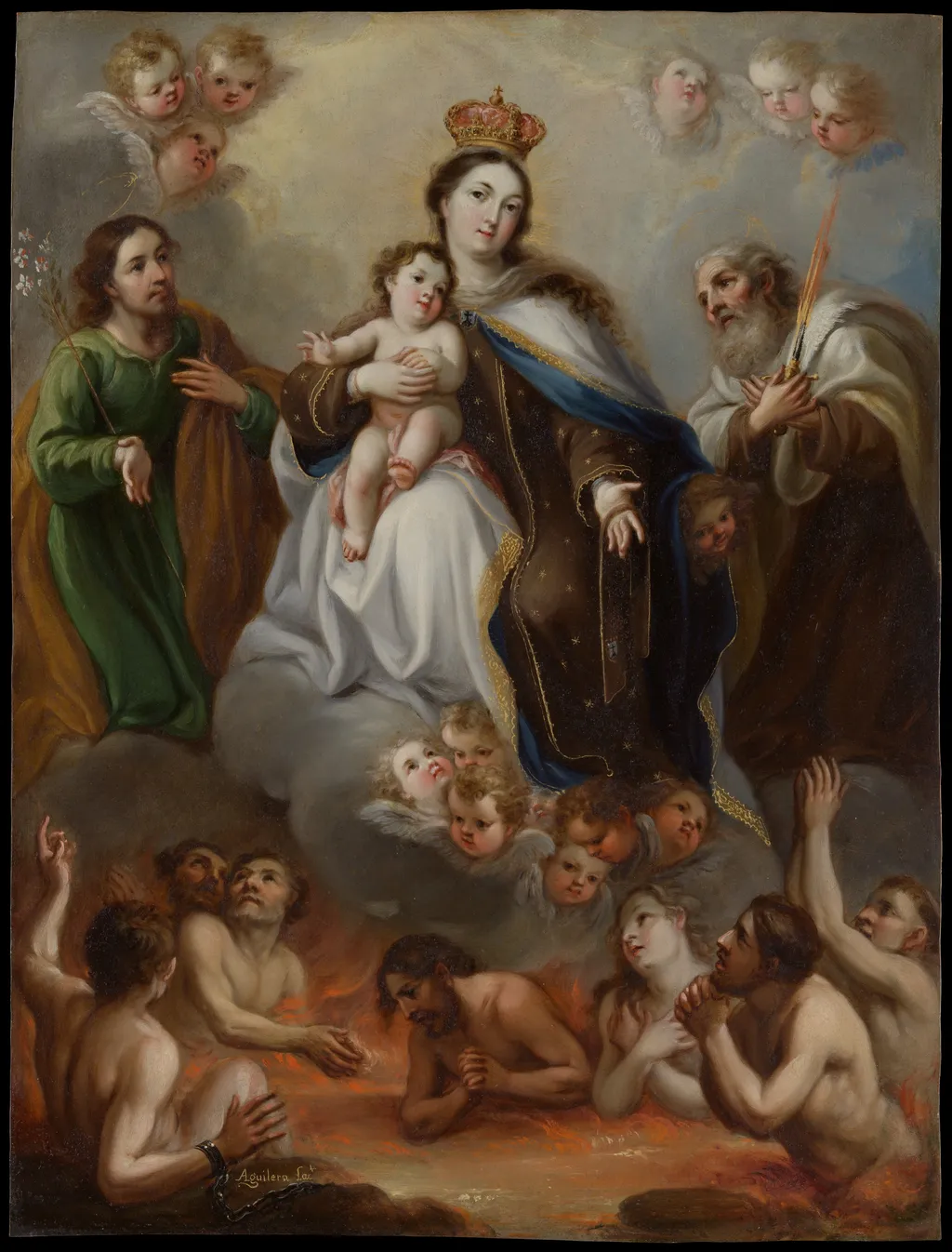
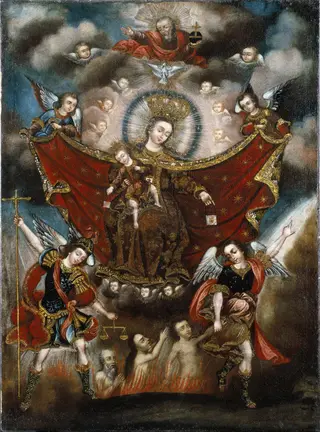
The Virgin of Carmen and the Souls of Purgatory with St. Joseph and the Prophet Elijah is an unspecified painting by the Spanish Baroque Tenebrist artist Juan Francisco de Aguilera. It dates from 1720 and is held in the collection of the Metropolitan Museum of Art. This painting depicts a central scene of divine intercession, featuring the Virgin of Carmen holding the Christ Child.
About this work
Subject & Meaning
The iconography reflects Catholic devotion to the Virgin's protective role over the faithful and the departed.
The painting depicts the Virgin of Carmen interceding for the souls of Purgatory, flanked by St. Joseph and the Prophet Elijah. As a work of religious art created in 1720 in Mexico, the composition centers on the Virgin Mary and the infant Jesus Christ, who are accompanied by male figures identified as saints or prophets. The iconography reflects Catholic devotion to the Virgin's protective role over the faithful and the departed.
The inclusion of specific saints alongside the central Marian figures illustrates a theological narrative of intercession, where holy figures advocate for souls undergoing purification. The visual arrangement emphasizes the relationship between the divine, the saints, and the suffering souls, characteristic of religious paintings from this period and region.
History & Provenance
The work titled The Virgin of Carmen and the Souls of Purgatory with St. Joseph and the Prophet Elijah was created by Juan Francisco de Aguilera in Mexico in 1720, as recorded in its production details. Its iconography combines Marian devotion with representations of purgatorial souls, St. Joseph, and the prophet Elijah, reflecting 18th‑century Mexican religious art. The painting entered the collection of the Metropolitan Museum of Art, where it remains on public view, marking its modern provenance. No earlier ownership records are documented in the available sources.
The painting The Virgin of Carmen and the Souls of Purgatory with St. Joseph and the Prophet Elijah, executed by Juan Francisco de Aguilera in 1720 in Mexico, is part of the collection of the Metropolitan Museum of Art in New York. It is catalogued under the museum’s standard accession framework, though the specific inventory number is not disclosed in the cited records. The work has not been listed in any documented exhibitions within the supplied documentation.
Overview
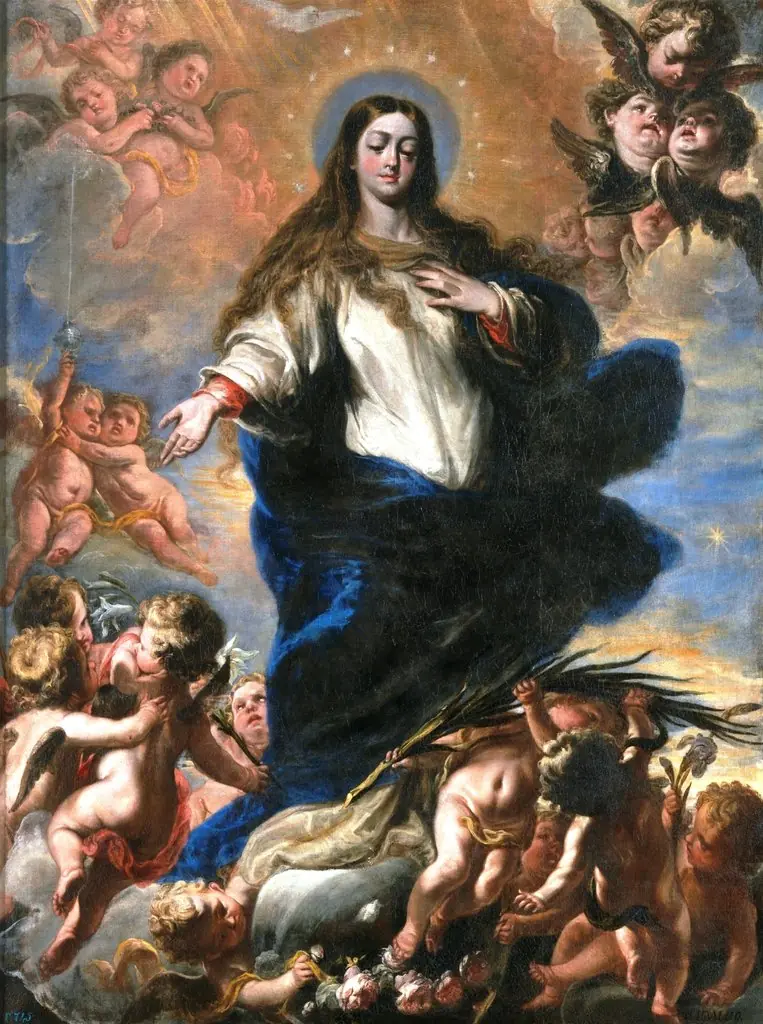
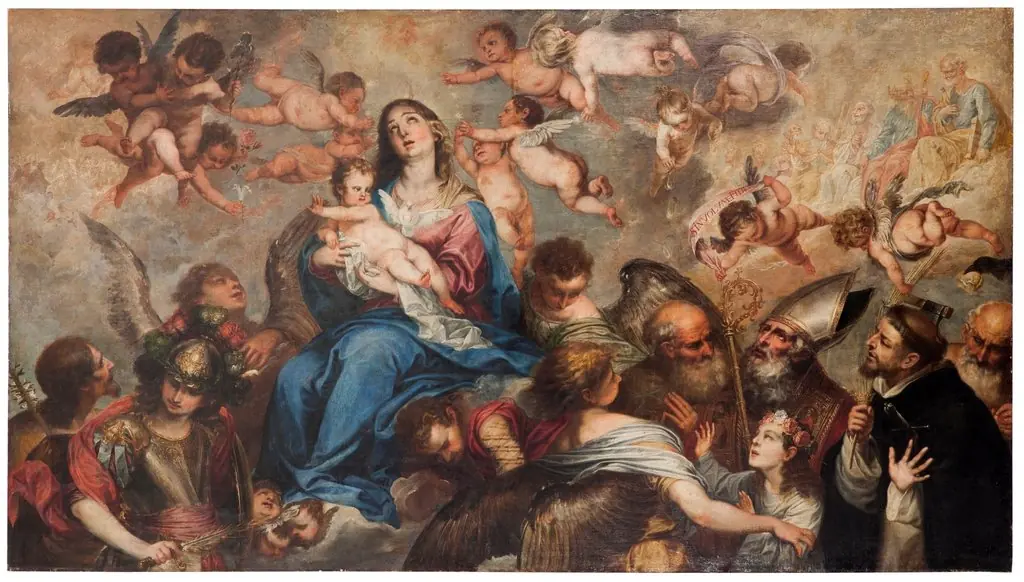
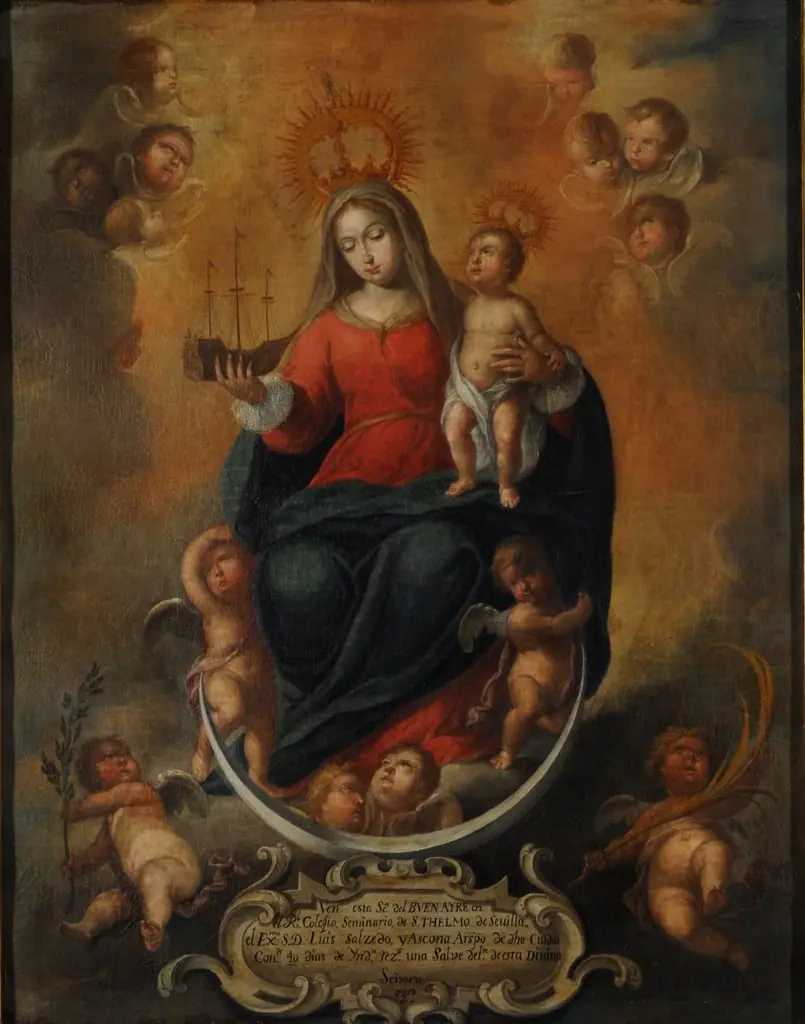
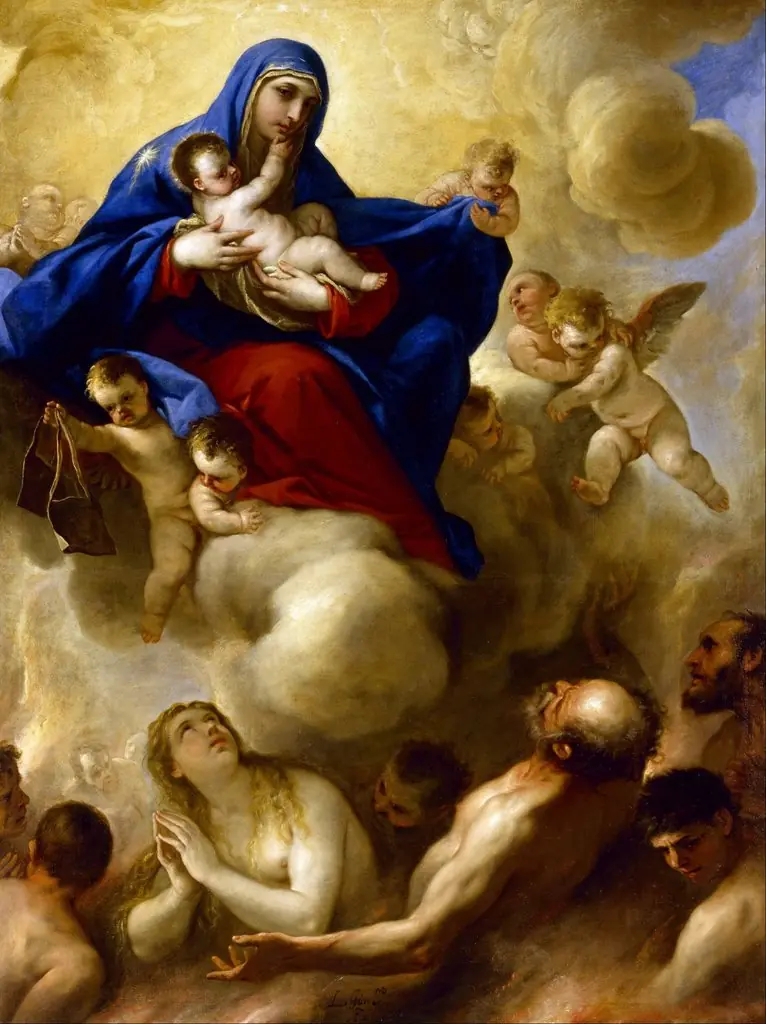
This painting depicts a central scene of divine intercession, featuring the Virgin of Carmen holding the Christ Child. She is flanked by St. Joseph and the Prophet Elijah, while a host of angels surrounds her. Below, souls in Purgatory reach upwards, seeking salvation.
The artwork is a devotional piece illustrating a key tenet of Catholic belief regarding the role of the Virgin Mary in aiding the departed.
Technique & Style
The composition divides the canvas into distinct realms: a luminous heavenly sphere above and a darker, more earthly or purgatorial space below. Angels populate the upper register, some playing musical instruments, contributing to the celestial atmosphere. The artist employs chiaroscuro, using strong contrasts of light and shadow to model figures and create dramatic depth, particularly evident in the struggling forms of the souls below and the radiant glow surrounding the Virgin.
Own this work as a print
Artist & collection
Artist
Juan Francisco de Aguilera was a painter active in New Spain in the early 18th century.