Artwork
Saint Teresa of Ávila Interceding for Souls in Purgatory
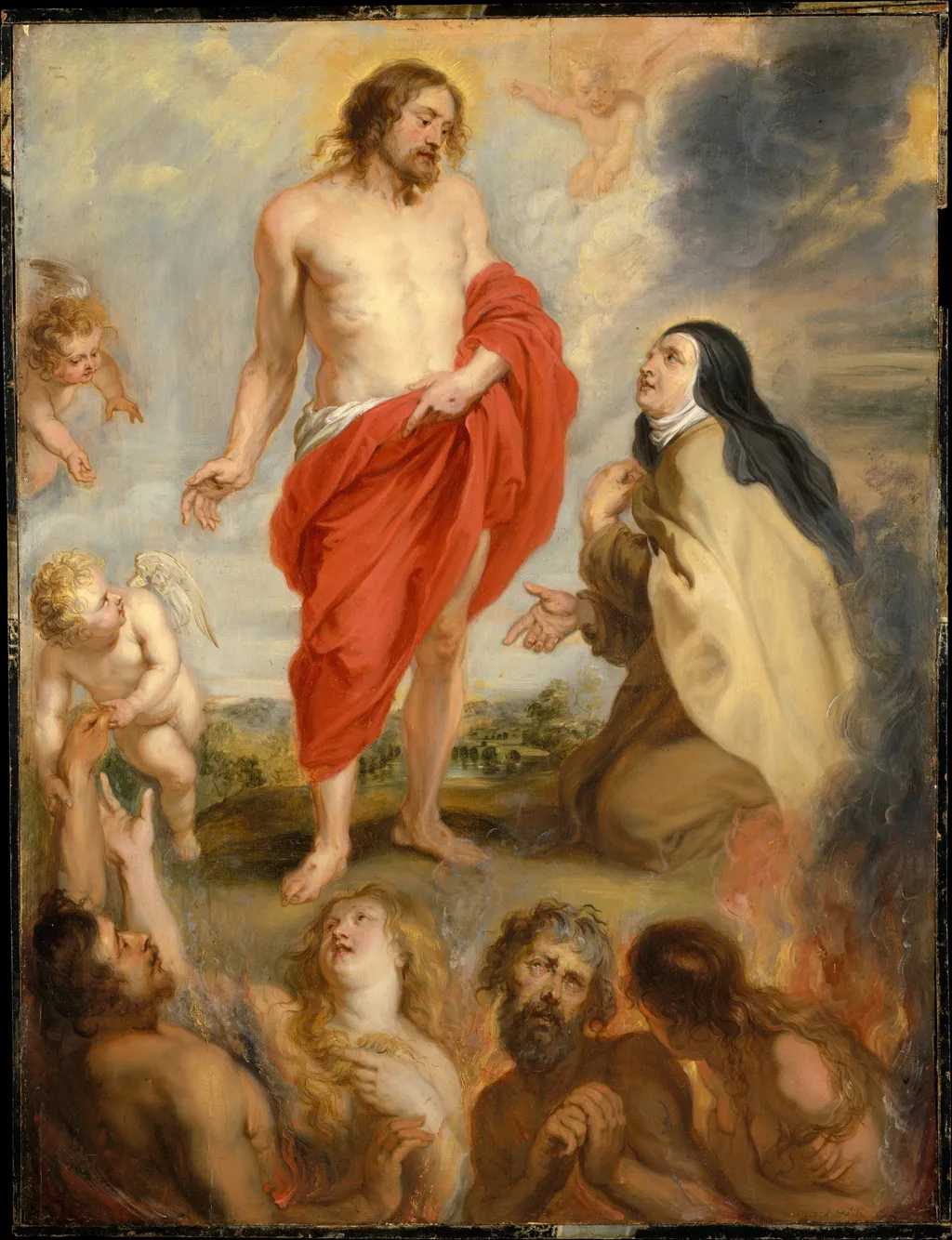
Saint Teresa of Ávila Interceding for Souls in Purgatory is an oil painting. It dates from 1700 and is held in the collection of the Metropolitan Museum of Art.
About this work
Kneeling before Christ with hands outstretched, Saint Teresa of Ávila pleads for the souls in Purgatory in this oil-on-wood panel from the workshop of Peter Paul Rubens. The Met's reduced seventeenth-century version follows Rubens's altarpiece for the Discalced Carmelites in Antwerp, drawn from Teresa's Book of the Foundations. It entered the collection in 1917 as a gift from J. Pierpont Morgan.
Subject & Meaning
The painting depicts Saint Teresa of Ávila interceding for souls in purgatory, a subject rooted in Catholic doctrine and Counter-Reformation spirituality.
The painting depicts Saint Teresa of Ávila interceding for souls in purgatory, a subject rooted in Catholic doctrine and Counter-Reformation spirituality. Its iconography includes Christ, angels, and the nobleman Bernardino de Mendoza among the souls awaiting purification. The composition emphasizes Teresa's role as a mystical intercessor bridging the earthly and purgatorial realms.
Classified as religious art, the work underscores the power of intercessory prayer and divine mercy, themes typical of Baroque devotional imagery.
Technique & Style
The painting is executed in oil on a wooden panel measuring 64.1 by 48.9 cm. It presents a multi-figure religious scene in which Teresa of Ávila intercedes amid depictions of purgatory, souls, angels, and Christ. The handling reflects the workshop tradition of Peter Paul Rubens, emphasizing dramatic lighting and emotional intensity.
History & Provenance
Catalogued as a work of the workshop of Peter Paul Rubens and dated 1700, well after the master's death in 1640, the panel later passed through the collection of J. Pierpont Morgan and entered the Metropolitan Museum of Art as part of his bequest. No record of the specific commission survives.
Overview
This oil-on-wood panel, titled Saint Teresa of Ávila Interceding for Souls in Purgatory, is a smaller-scale rendition produced in the workshop of Peter Paul Rubens. It replicates a larger altarpiece Rubens created between 1630 and 1633 for the Discalced Carmelite church in Antwerp. The Metropolitan Museum of Art acquired this 64.1 by 48.9 centimeter painting in 1917 through a gift from J. Pierpont Morgan. It depicts Saint Teresa's vision of souls in Purgatory, a theme central to Carmelite devotion.
Context
The original altarpiece, from which this panel derives, was commissioned for a chapel within the Church of the Discalced Carmelites in Antwerp. Its patronage came from Felipa Mendes, a prominent figure in Antwerp's Portuguese merchant community. The choice of subject, Saint Teresa's intercession for souls in Purgatory, directly aligned with the Carmelite order's spiritual mission and devotional practices, emphasizing their role in aiding the salvation of the departed.
Legacy
The original altarpiece's composition gained wider recognition through an engraving by Schelte à Bolswert. This print included a Latin inscription that explicitly identified Bernardino de Mendoza, further clarifying the narrative for a broader audience. The circulation of this engraving played a crucial role in disseminating Rubens's design and the devotional theme of Saint Teresa's intercession across various Catholic regions, extending its influence beyond the Antwerp church.
Artist & collection

- The Lamentation
 The Lamentation
 Christ on the Cross with Saint Catherine of Siena, Saint Dominic and an Angel
 Lamentation of Christ
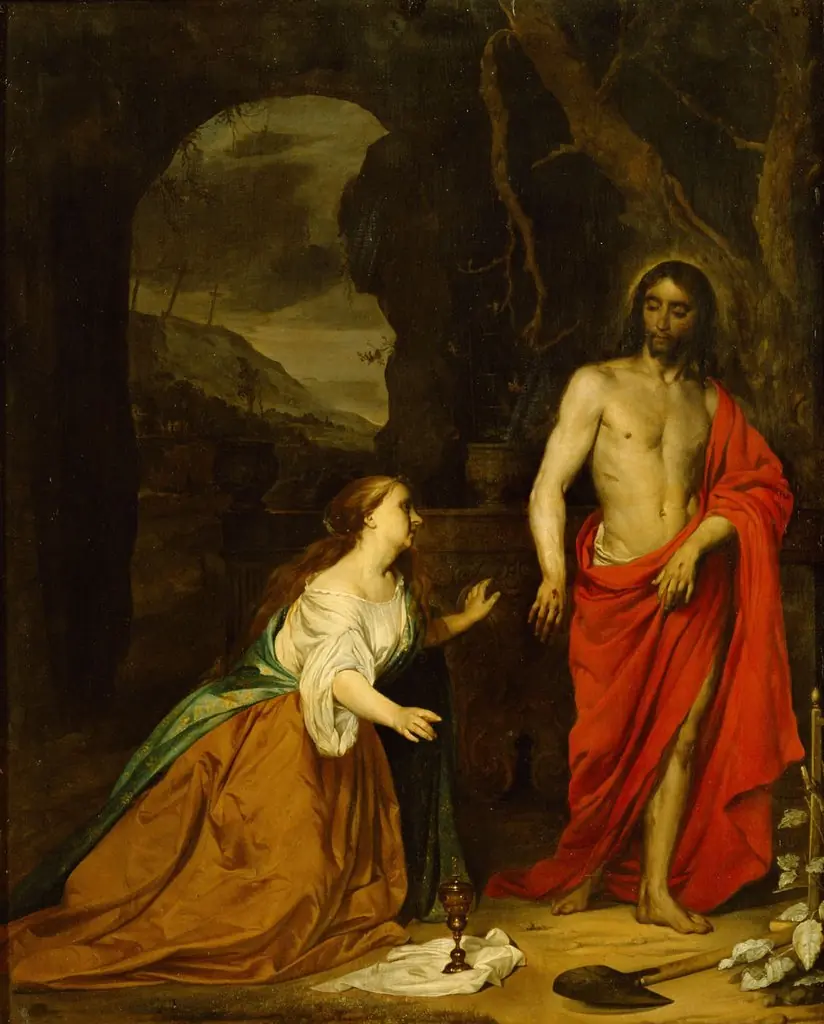 Noli me tangere
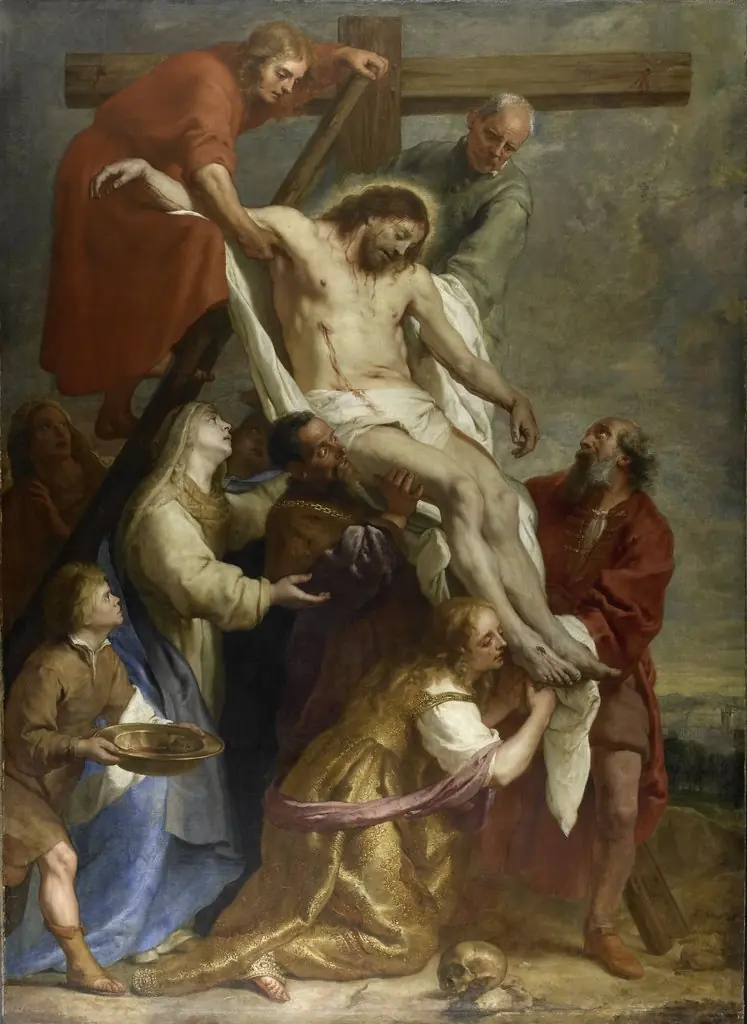 The descent from the cross
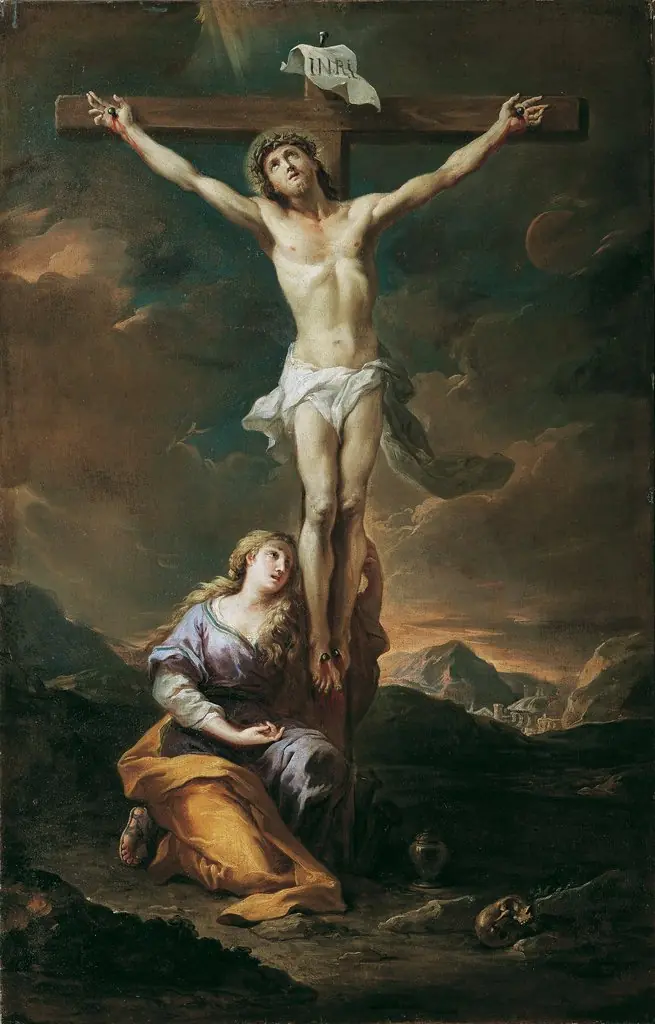 Crucifix with Mary Magdalene
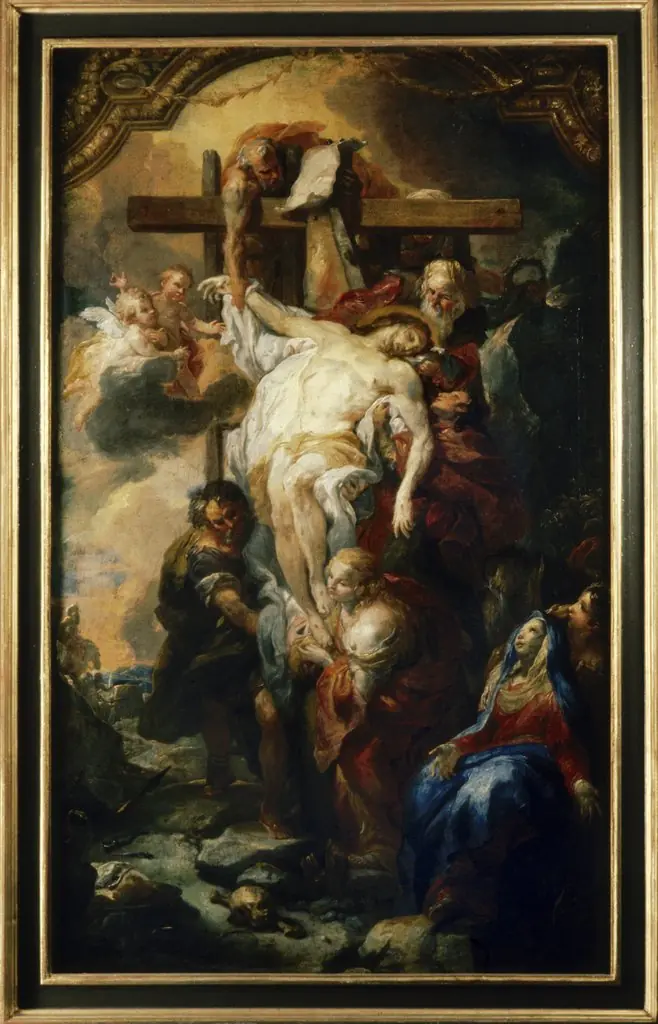 The Deposition from the Cross
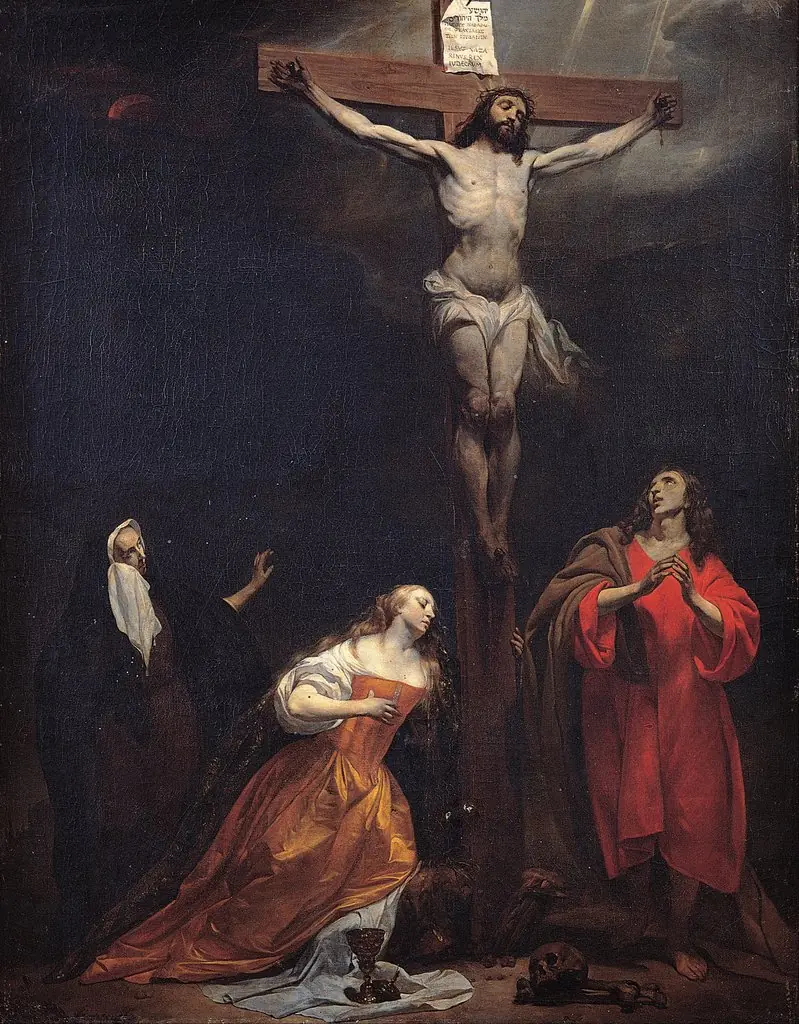 Christ on the Cross
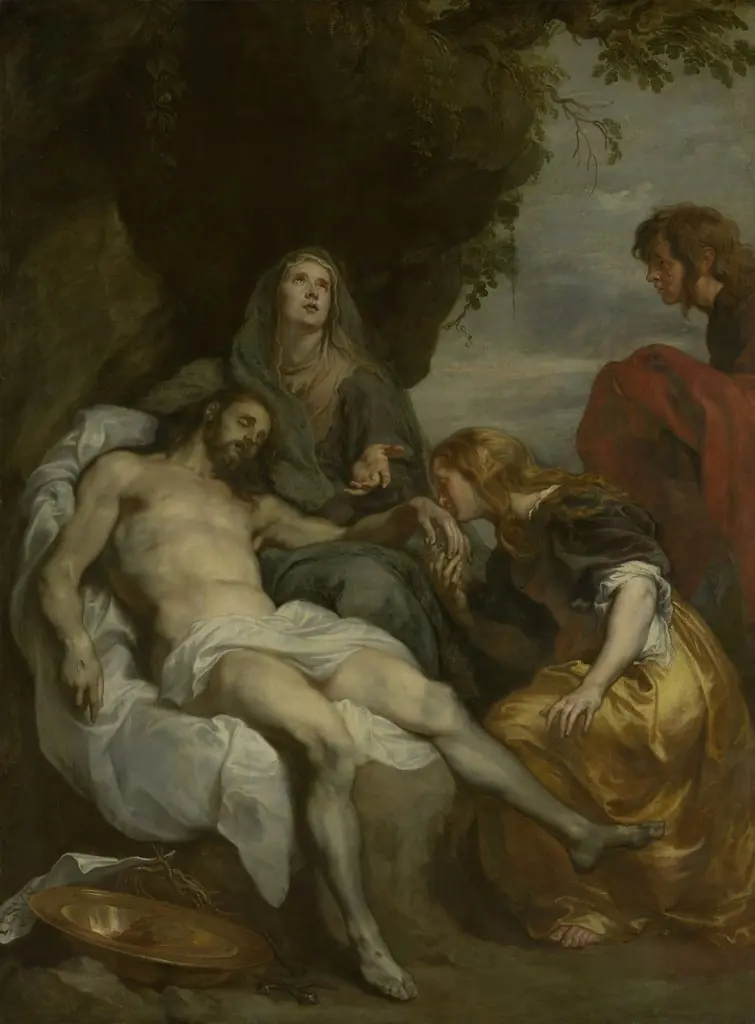 The Lamentation over the Dead Christ
 Christ Resurrected Reveals Himself to his Mother
 Christ Appearing to Mary Magdalen as a Gardener (Noli me Tangere)