Artwork
Portrait of Ferdinand II, Holy Roman Emperor (1578-1637)
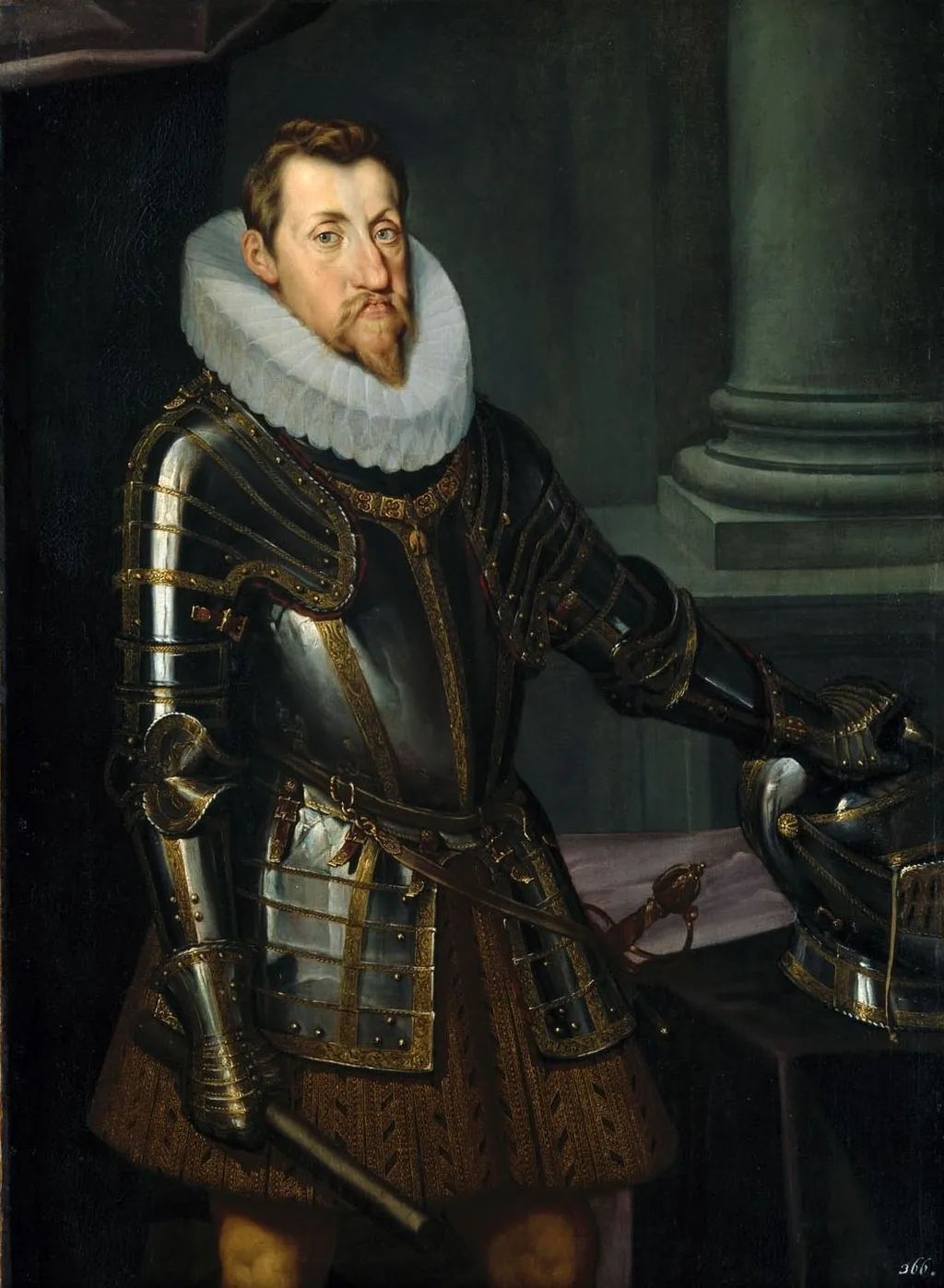
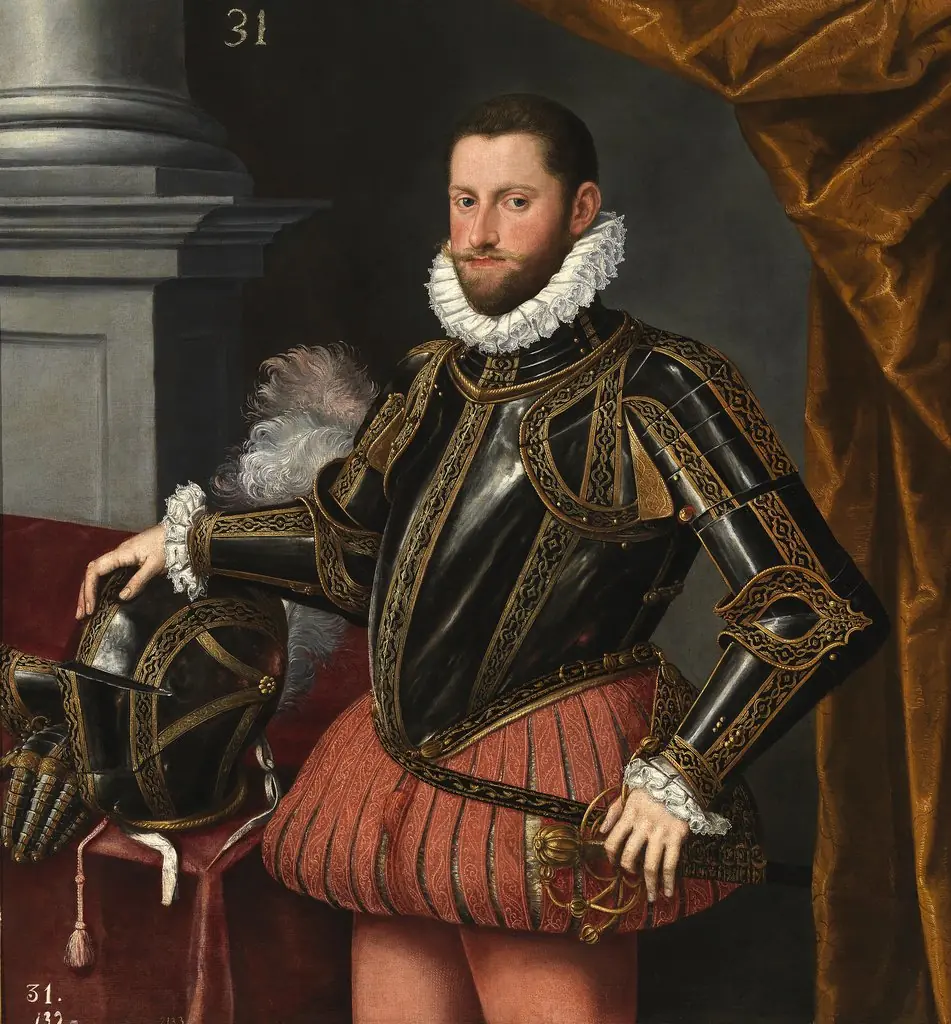
Portrait of Ferdinand II, Holy Roman Emperor (1578-1637) is an oil painting by the Early Baroque Italian artist Unknown. It dates from 1614 and is held in the collection of the Kunsthistorisches Museum. This oil painting depicts a man in ornate armor, standing against a dark background with a column to his right.
About this work
Subject & Meaning
The piece is currently held in the collection of the Kunsthistorisches Museum, where it functions as part of the institution's holdings of royal portraiture.
This 1614 oil painting on canvas depicts Ferdinand II, who served as Holy Roman Emperor. As a formal portrait, the work's primary function is the representation of the monarch's likeness and status. The image serves as a historical record of the ruler, capturing his appearance during his lifetime.
The piece is currently held in the collection of the Kunsthistorisches Museum, where it functions as part of the institution's holdings of royal portraiture.
Technique & Style
The portrait is executed in oil paint on canvas, a standard support for early seventeenth-century portraiture. It dates to 1614 and is classified as a painting in the portrait genre. The canvas measures 132 cm in height by 96 cm in width, giving it a vertical format suited to a half- or three-quarter-length depiction of the sitter.
No further details about handling, condition, or specific stylistic qualities are documented in the available sources.
History & Provenance
The portrait of Ferdinand II, Holy Roman Emperor was created in 1614 as an oil painting on canvas, commissioned to depict the emperor. It is currently housed in the Kunsthistorisches Museum, which holds the work in its collection. The artwork's creation history is tied to its commission, and it remains classified as a portrait within the museum's holdings.
Context
The portrait of Ferdinand II, Holy Roman Emperor, painted in 1614, exemplifies the formalized court portraiture characteristic of early 17th-century Central European art, where imperial imagery emphasized authority and lineage. Its execution in oil on canvas, measuring 132 by 96 centimeters, aligns with the technical standards of the period and the genre of state portraiture. The work's attribution to an anonymous hand within the Habsburg artistic milieu reflects broader patterns of workshop production and patronage in Vienna, situating it within the evolving trajectory of Baroque portraiture.
Overview
This oil painting depicts a man in ornate armor, standing against a dark background with a column to his right.
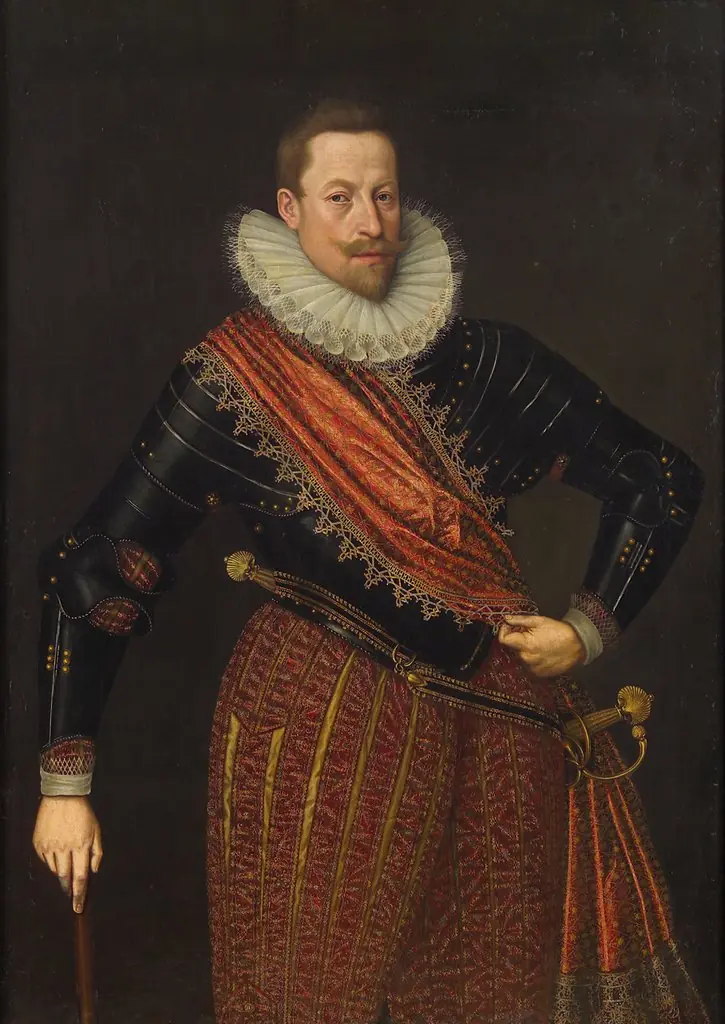
Artist & collection









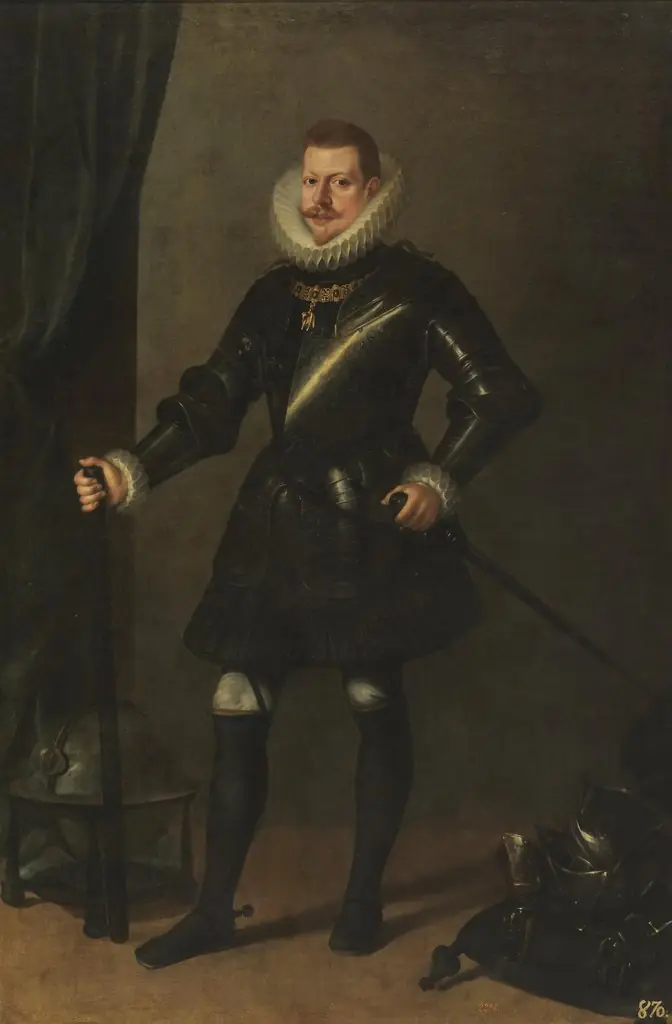 Philip III in Armour
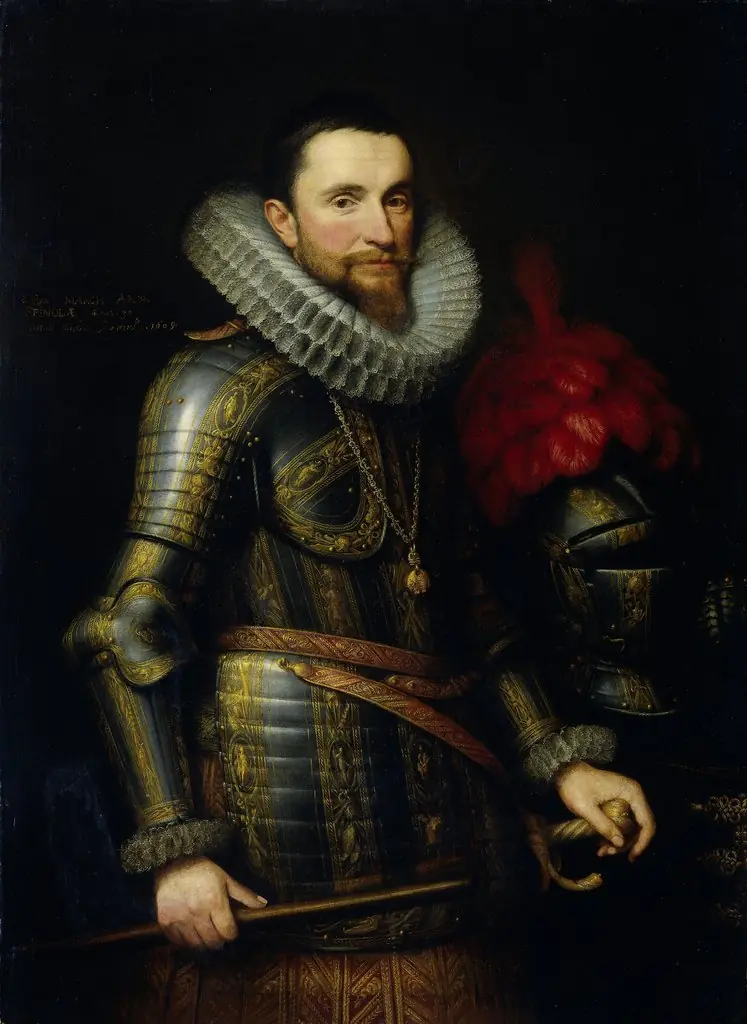 Portrait of Ambrogio Spinola (1569-1630)
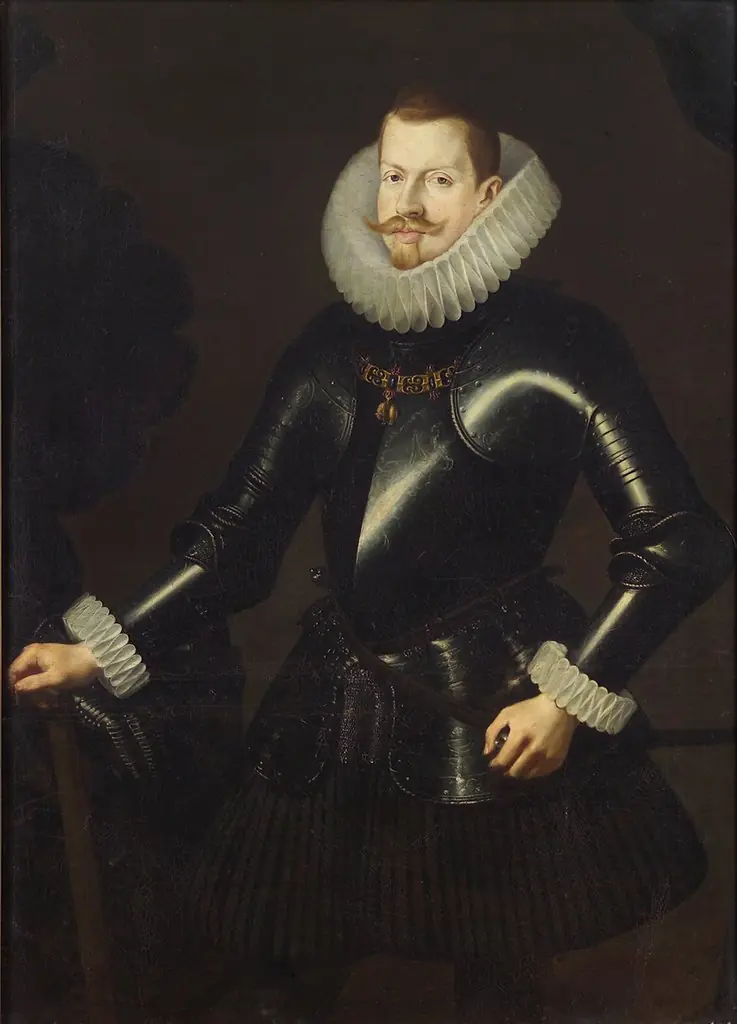 König Philipp III. von Spanien (1578-1621), Bildnis im Harnisch
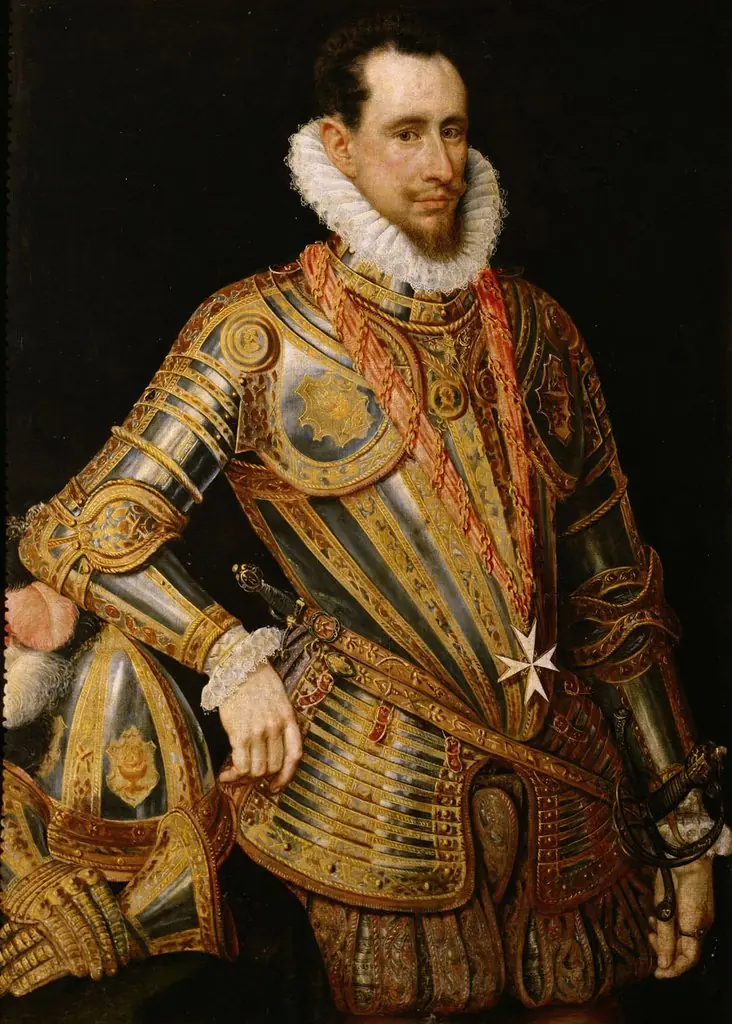 Bildnis eines Malteserritters
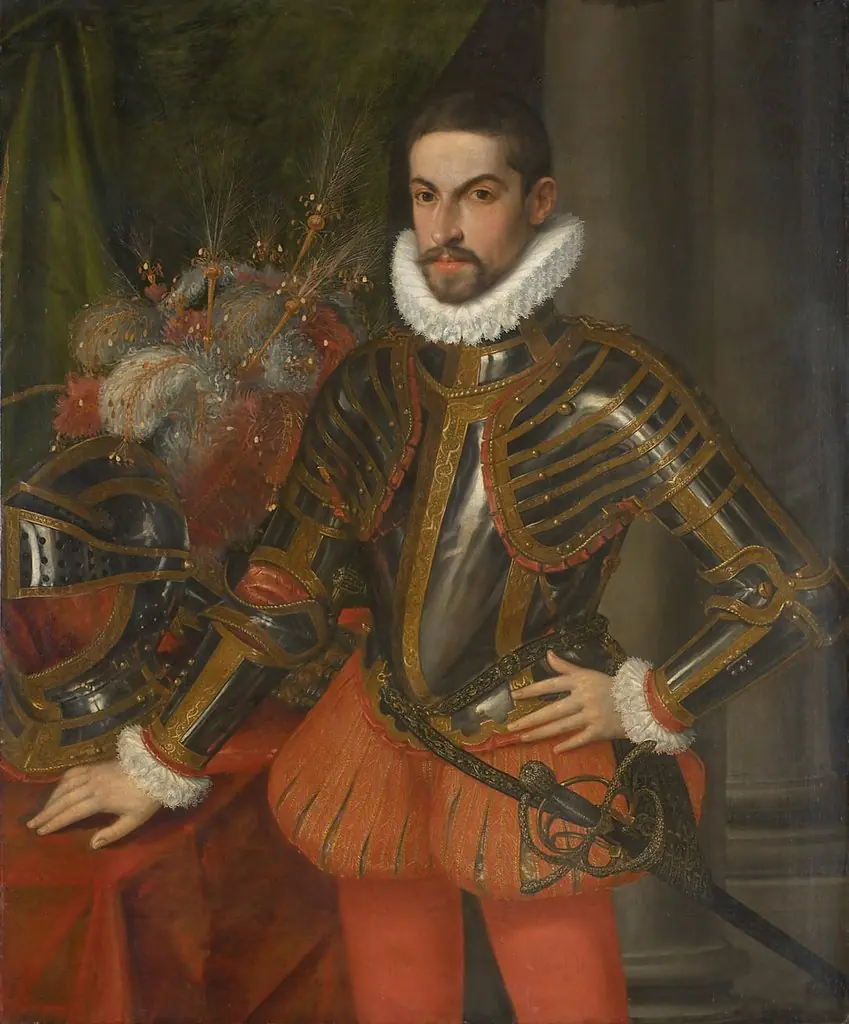 Erzherzog Maximilian III. (1558-1618) im Harnisch, Kniestück
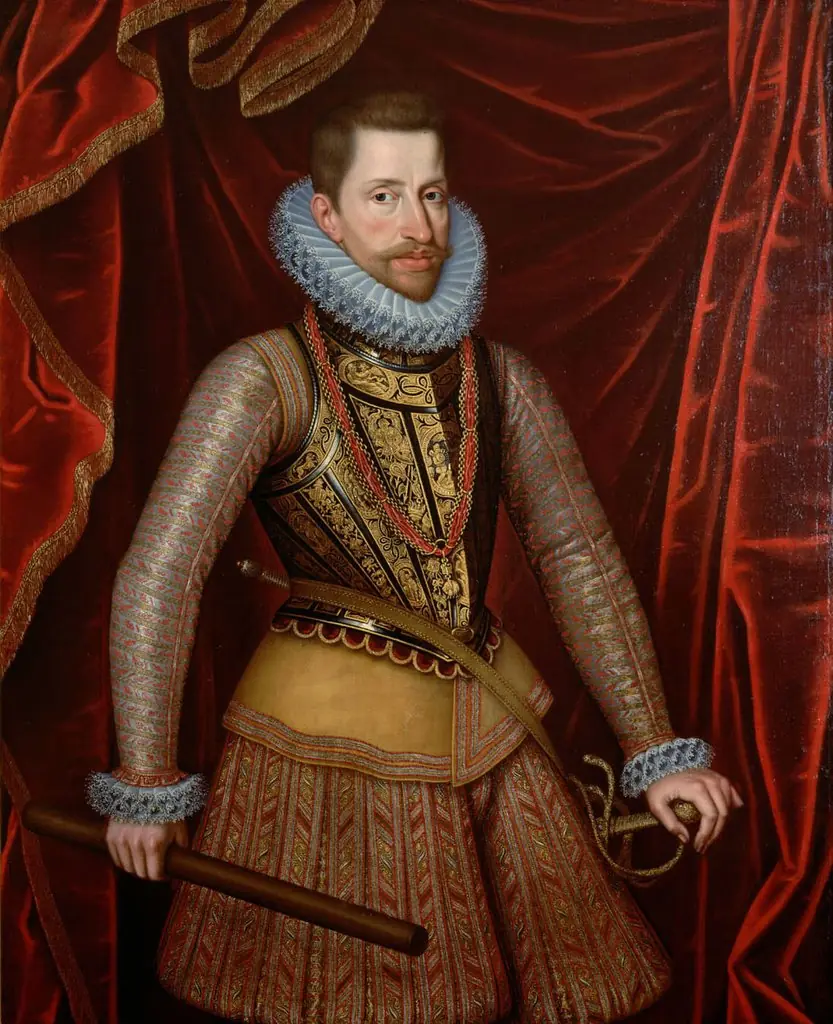 Portrait of Albrecht VII, Archduke of Austria (1559-1621)
 El archiduque Diego Ernesto de Austria
 Albert VII, Archduke of Austria
 Philip III
 Untitled