Artwork
Still life with Artichokes, Flowers and glass Vessels
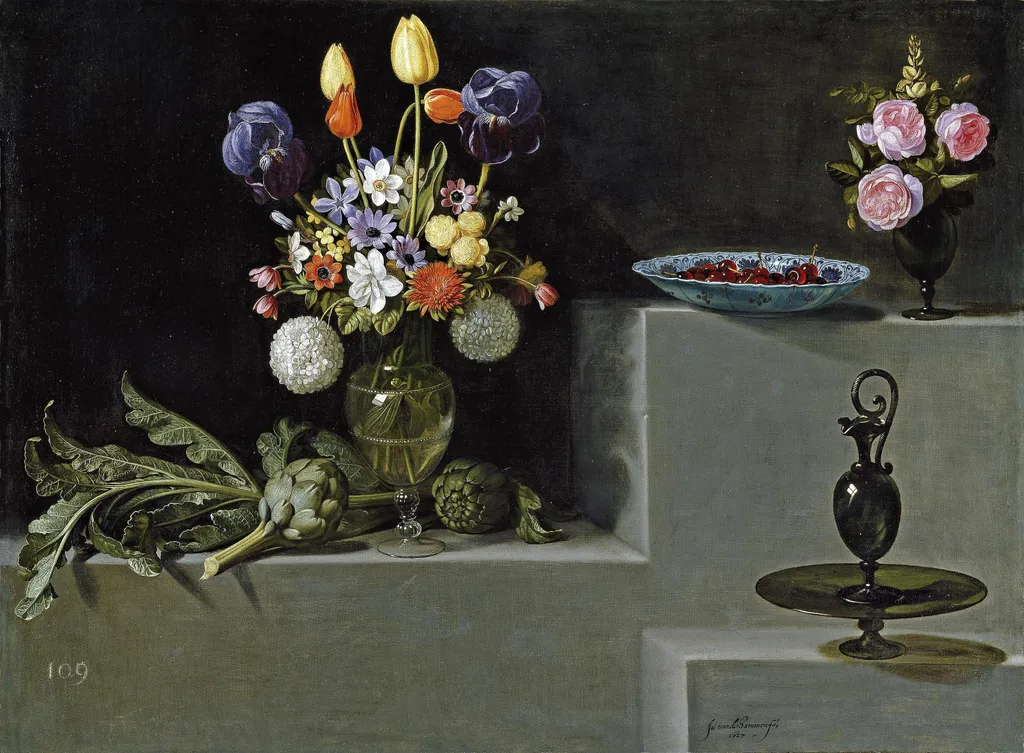
Still life with Artichokes, Flowers and glass Vessels is an oil painting by the Dutch Golden Age artist Juan van der Hamen. It dates from 1627 and is held in the collection of the Museo del Prado.
About this work
Subject & Meaning
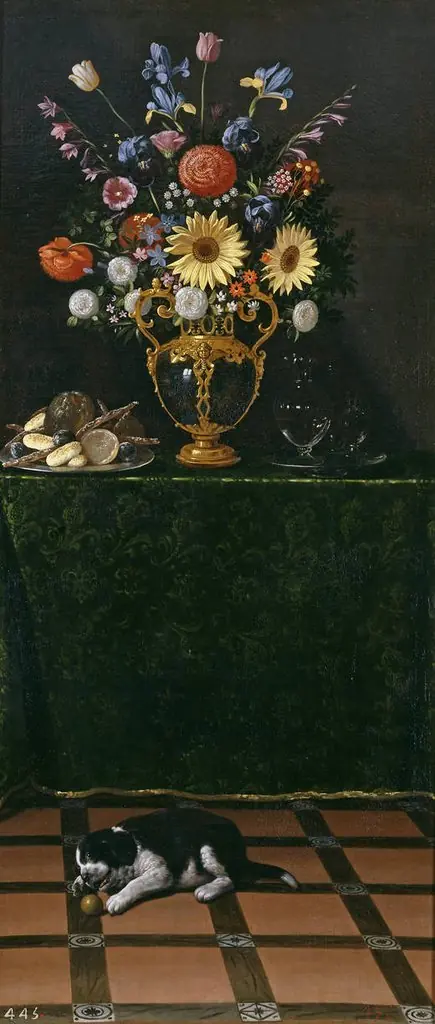
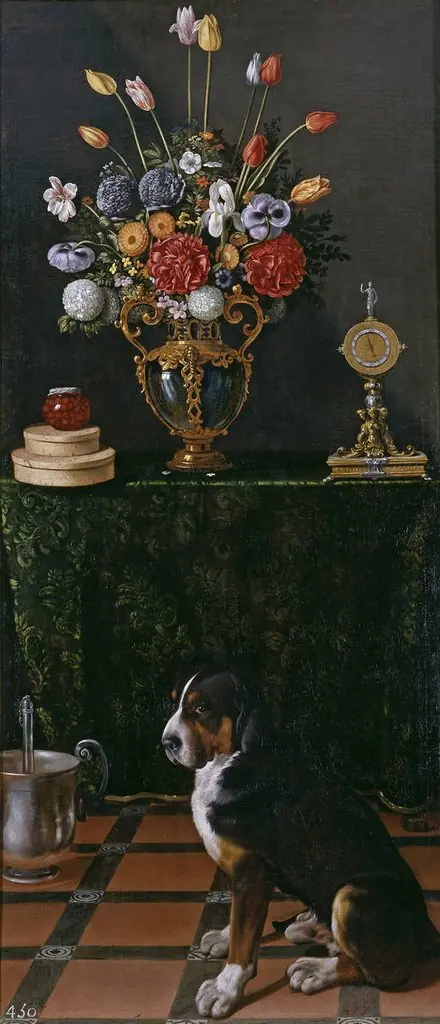
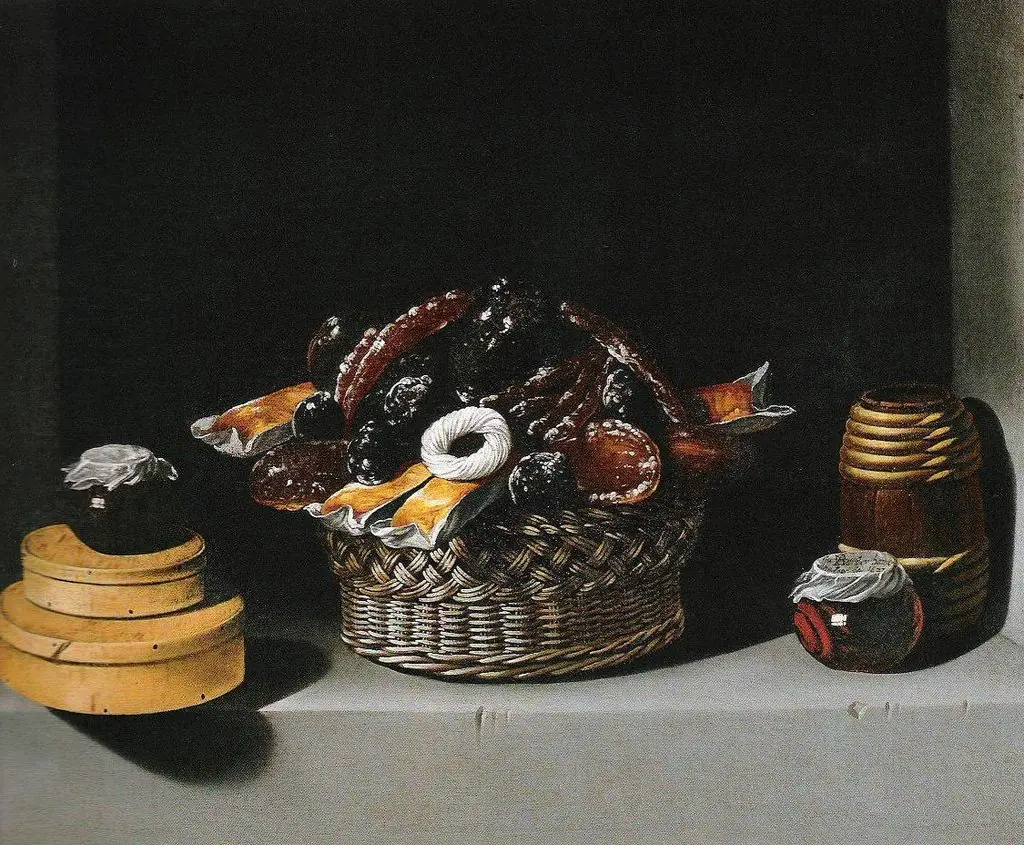
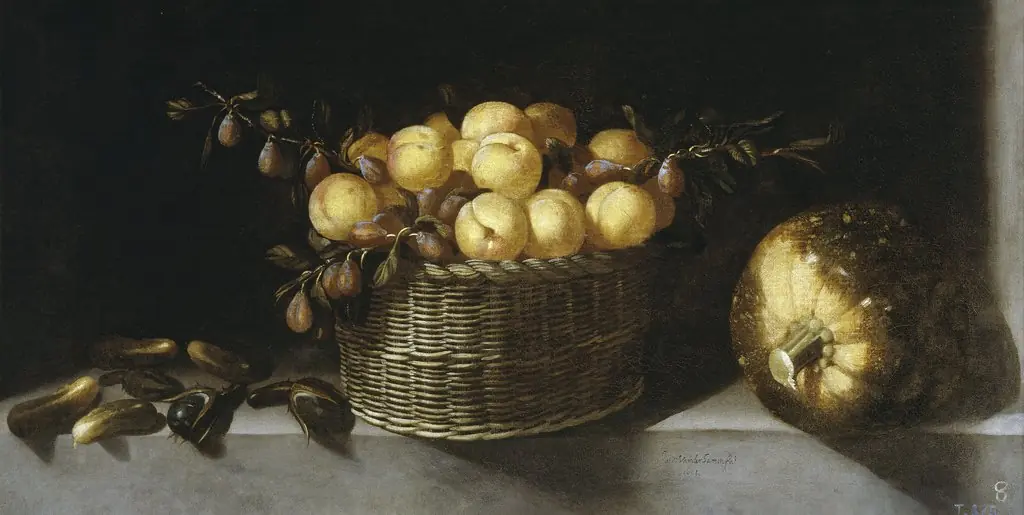
Still life with Artichokes, Flowers and Glass Vessels presents a precisely arranged display of natural and crafted objects on two stone shelves.
Still life with Artichokes, Flowers and Glass Vessels presents a precisely arranged display of natural and crafted objects on two stone shelves. A Venetian glass vase holding flowers shares the upper shelf with two artichokes and a Wanli porcelain dish of cherries, while a green glass cup and a green glass jug with a gilded rim occupy the lower shelf. The composition emphasizes the interplay of transparency and reflection: stems and petals are rendered legible through the glass, light filters through water, and studio windows are captured as highlights on the vessels’ surfaces.
The work aligns with van der Hamen’s mature still-life practice, where botanical accuracy and controlled elegance convey sensory plenitude. The inclusion of imported porcelain and Venetian glass signals the luxury goods circulating in early-seventeenth-century Madrid, while the artichokes and cherries, in season or preserved, evoke abundance and transience. The painting does not carry overt religious iconography, yet its meticulous realism and ordered beauty reflect contemporary tastes for ordered nature as a reflection of artful control and courtly refinement.
Technique & Style
Executed in oil on canvas, this 1627 still life demonstrates Juan van der Hamen's characteristic severe formal order and precise execution. The composition is structured around two levels of a stepped grey stone shelf, upon which the artist arranges artichokes, flowers, and glass vessels with meticulous attention to detail. Van der Hamen captures complex optical effects, rendering the stems and leaves of flowers visible through water-filled glass, alongside reflections of a studio window on the vessel surfaces.
The work highlights the artist's methodical approach, reusing specific floral models, such as a rose motif that appears in other contemporary pieces. The handling of light emphasizes the texture of the porcelain and the transparency of the green glass, integrating visual, olfactory, and gustatory sensations into a unified, monumental arrangement.
History & Provenance
The painting was created in 1627 by Juan van der Hamen, who signed and dated the canvas in the lower left corner as "Juº vander Hammen fat./ 1627". The work entered the collection of the Marqués de Leganés, as indicated by the inventory number 109 inscribed at the lower left, corresponding to that collector's holdings. It subsequently became part of the Museo del Prado's collection in Madrid, where it is catalogued as P007907 and held as an oil on canvas measuring 81 x 110 cm. The painting has been featured in the exhibition "Rembrandt-Velázquez."
No information is provided in the sources regarding an original commission or earlier provenance prior to the Marqués de Leganés.
Context
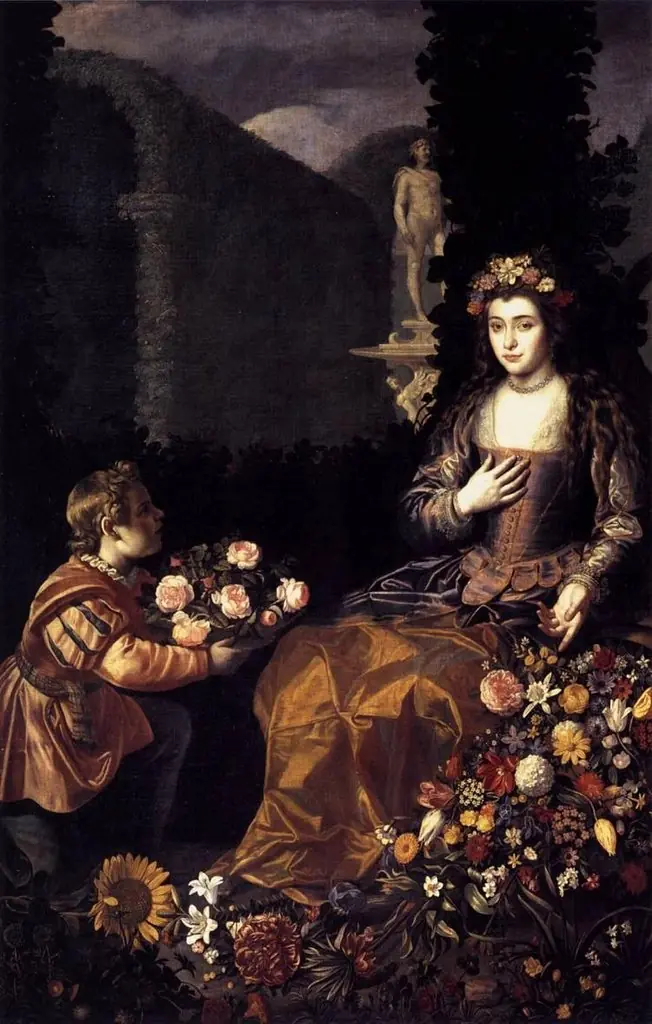
Juan van der Hamen, a second-generation Spaniard of Flemish descent, established himself as the premier still-life painter at the Madrid court during the early seventeenth century. His artistic approach is defined by a severe formal order and precise execution, characteristics that reveal the influence of Sánchez Cotán, whom he likely encountered in Granada between 1610 and 1616. This 1627 work exemplifies his methodical practice, where the artist carefully prepared models for repeated use across different compositions; for instance, a rose depicted here mirrors one found in his contemporaneous painting La ofrenda a Flora.
By treating humble vegetables like artichokes with the same meticulous care as flowers, van der Hamen created compositions that integrate multiple senses, securing his fame primarily through the still-life genre rather than his other artistic pursuits.
Overview
Created in 1627 by Juan van der Hamen, a prominent Spanish painter of early seventeenth‑century Madrid, this oil on canvas presents a meticulously arranged still life. The composition centers on a darkened tabletop that highlights a glass vase brimming with vivid tulips, pansies and white daisies, accompanied by a bowl of red cherries, a swan‑handled jug, and a leafy artichoke. The work resides in the Museo del Prado.
Own this work as a print
Artist & collection
Artist
Juan van der Hamen y (Gómez de) León (baptized 8 April 1596 – 28 March 1631) was a Spanish painter, a master of still life paintings, also called bodegones.