Artwork
Still Life with a Vase of Flowers and a Dog
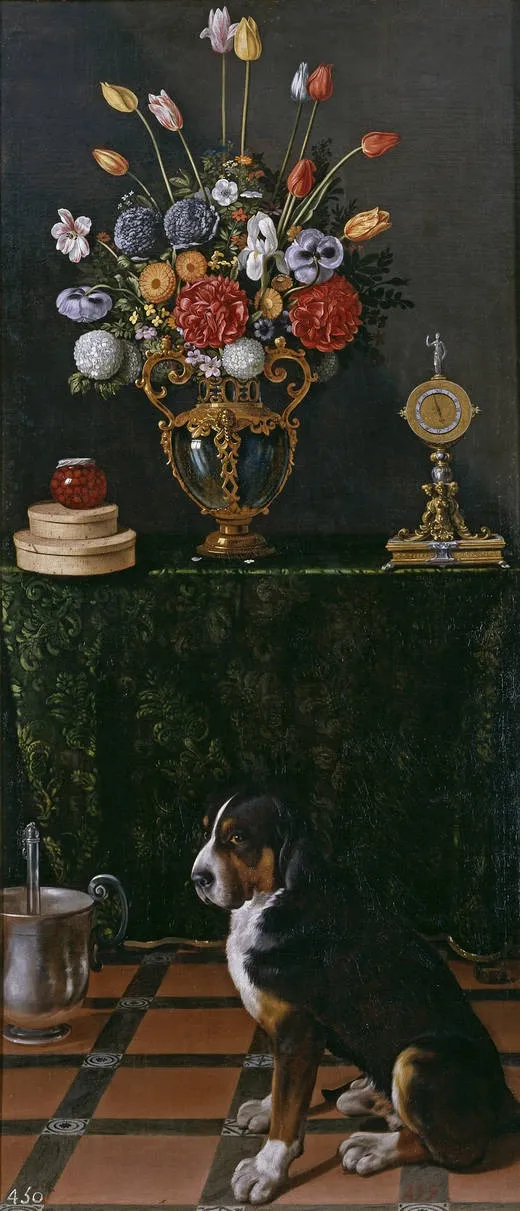
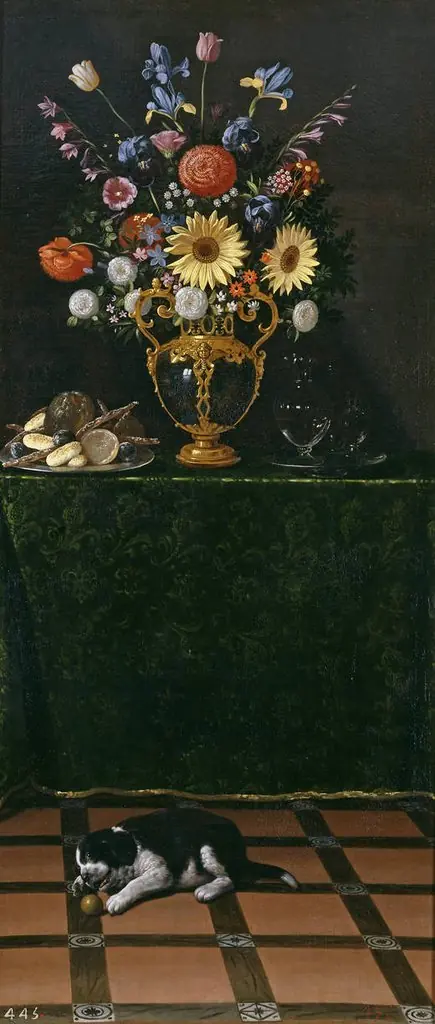
Still Life with a Vase of Flowers and a Dog is an oil painting by the Early Baroque Italian artist Juan van der Hamen. It dates from 1625 and is held in the collection of the Museo del Prado.
About this work
Subject & Meaning
This juxtaposition of fleeting natural beauty with the mechanical measurement of time defines the work's symbolic weight within the genre.
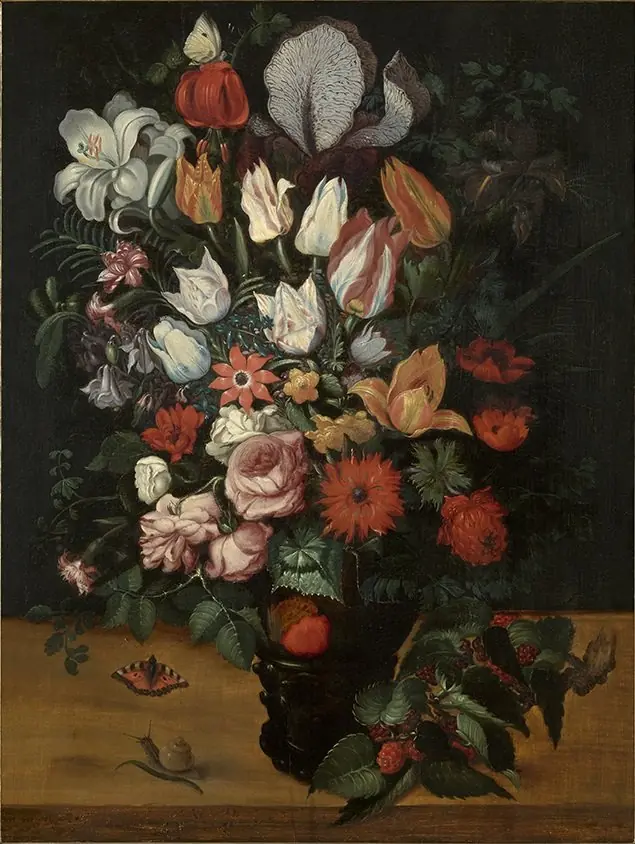
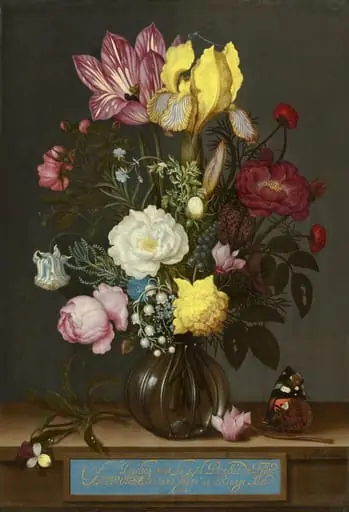
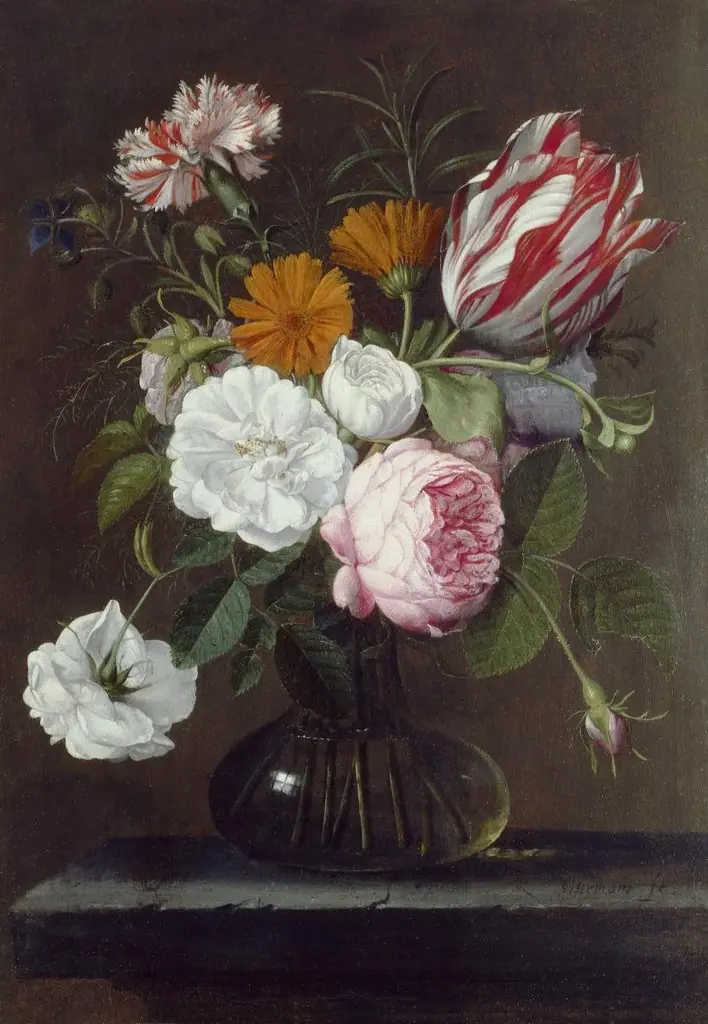
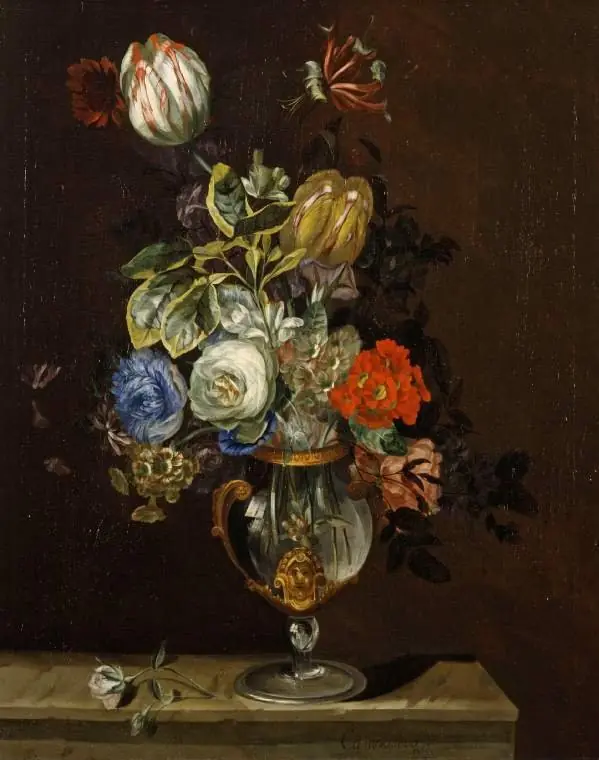
Juan van der Hamen's Still Life with a Vase of Flowers and a Dog presents a composition centered on a vase of flowers, a primary motif in Spanish Golden Age still life painting. While the title suggests the presence of a dog, the source material explicitly confirms the depiction of flowers and a clock. The inclusion of a timekeeping device alongside perishable blooms typically serves as a memento mori, reminding viewers of the passage of time and the inevitability of death.
This juxtaposition of fleeting natural beauty with the mechanical measurement of time defines the work's symbolic weight within the genre.
Technique & Style
Juan van der Hamen executed Still Life with a Vase of Flowers and a Dog using oil paint applied to a canvas support. The work is classified within the still life genre and is dated to 1625, with some records noting a completion date in 1627. The painting depicts specific elements including flowers and a clock, rendered in a style characteristic of the Spanish Golden Age. The physical dimensions of the canvas measure 228.5 cm in height and 100.5 cm in width.
History & Provenance
Juan van der Hamen created the oil-on-canvas painting Still Life with a Vase of Flowers and a Dog during the mid-1620s. While some records indicate an inception date of January 1, 1625, other cataloging assigns the work to the year 1627. The piece measures 228.5 cm in height and 100.5 cm in width.
It currently resides in the collection of the Museo del Prado in Madrid. The work has been featured in exhibitions dedicated to the Golden Age, including El Siglo de Oro. The Age of Velázquez.
Context
Juan van der Hamen y León's Still Life with a Vase of Flowers and a Dog (1625) exemplifies the refined naturalism and compositional balance prized in Spanish Baroque still life. Art historians note its meticulous rendering of textures and inclusion of symbolic objects like a clock, reflecting contemporary interests in transience and scientific observation. The work is situated within the broader context of 17th-century Spanish painting, where artists such as van der Hamen contributed to a flourishing tradition of tabletop depictions that blended decorative elegance with moralizing undertones.
Its placement in the Museo del Prado's collection and prior exhibition in El Siglo de Oro. The Age of Velázquez underscores its recognized significance within the narrative of Spanish Golden Age art.
Legacy
The painting's inclusion in the 2011 exhibition El Siglo de Oro. The Age of Velázquez highlighted its significance within Baroque Spanish art and contributed to renewed scholarly interest in van der Hamen's oeuvre. Its representation of everyday objects alongside symbolic items like a clock reflects compositional strategies later embraced by European still-life painters, influencing the development of vanitas themes in the 17th century.
The work's presence in the Museo del Prado's collection ensures continued public access and academic study, cementing its reputation as a key example of Spanish Golden Age still-life painting.
Overview
Juan van der Hamen’s 1625 oil painting presents a modest domestic tableau: a richly gilded vase brimming with multicoloured blossoms rests on a darkened table, flanked by a small round box and a brass clock. A black‑and‑white spaniel sits attentively before the arrangement, its head turned toward the left. The deep background intensifies the vivid hues of the flowers and the animal’s coat, creating a balanced, refined still life.
Artist & collection
Artist
Juan van der Hamen y (Gómez de) León (baptized 8 April 1596 – 28 March 1631) was a Spanish painter, a master of still life paintings, also called bodegones.