Artwork
An Offering to Flora
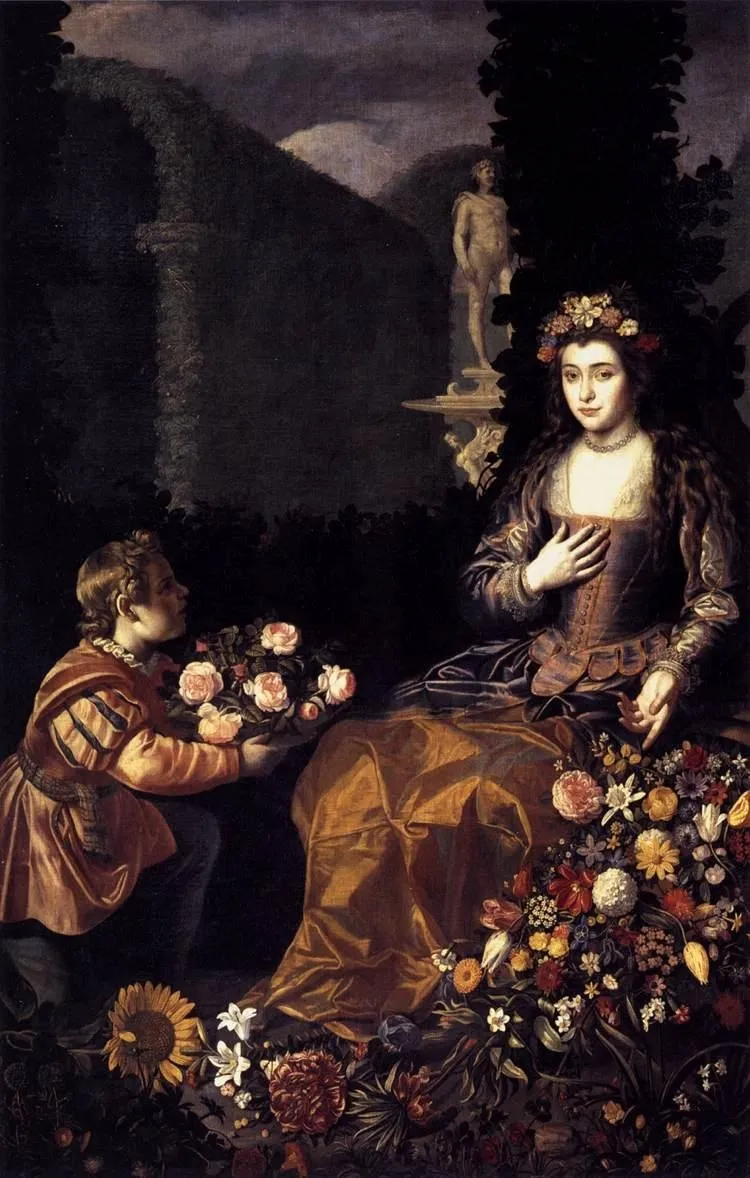
An Offering to Flora is an oil painting by the Early Baroque Italian artist Juan van der Hamen. It dates from 1627 and is held in the collection of the Museo del Prado.
About this work
Subject & Meaning
She is portrayed as a beautiful young woman touching her breast with one hand while displaying a cascade of flowers spilling from a cornucopia with the other.
This allegorical painting depicts Flora, the Roman goddess of flowers and natural generosity, seated elegantly within a garden setting. She is portrayed as a beautiful young woman touching her breast with one hand while displaying a cascade of flowers spilling from a cornucopia with the other. The background features a fountain and a statue of a laureled, nude youth, possibly alluding to the high-born suitors Flora favored or her husband Zephyr.
A kneeling boy presenting a basket of roses may represent an emissary of Zephyr. While the myth suggests Flora's exclusivity toward nobility, the work's chaste composition emphasizes her transformation into a dignified wife, interpreting the scene as a symbol of conjugal love rather than mere mythological narrative.
Technique & Style
Executed in oil paint on canvas in 1627, the work measures 216 by 140 cm. The composition centers on Flora seated in a garden, holding a cascading floral cornucopia in her left hand while her right touches her breast. A laurel-crowned youth appears in the background, and a kneeling figure presents a basket of roses, aligning with the painting’s allegorical program. The handling combines precise botanical detail with smooth modeling of drapery and flesh, characteristic of van der Hamen’s courtly style.
The canvas is signed and dated on a stone in the lower right: JUºAN VAN DER HAMEN FAC.1627.
History & Provenance
Painted by Juan van der Hamen in 1627, An Offering to Flora is an early mythological work signed and dated by the artist on a stone in the lower right corner. The canvas measures 216 x 140 cm and was created using oil paint. It is conjectured that this painting, along with Vertumnus and Pomona and another now lost work, was commissioned by Jean de Croÿ, the Count of Solre.
The work remained in private hands until 1944, when it entered the collection of the Museo del Prado in Madrid as part of the bequest left by Valentín Menéndez y San Juan, the Count of la Cimera.
An Offering to Flora is held in the collection of the Museo del Prado in Madrid, where it is registered under inventory number P000912. The oil on canvas painting, dated 1627, entered the museum's holdings in 1944 as part of the legacy of Valentín Menéndez y San Juan, Count of la Cimera.
While the work is recognized as an early mythological piece by Juan van der Hamen, potentially commissioned by Jean de Croÿ, the provided records do not list specific public exhibitions where the painting has been displayed.
Context
An Offering to Flora is an early work by Juan van der Hamen, a Spanish painter of Flemish descent active in Madrid in the early seventeenth century. Although he is regarded as the foremost still-life painter of his milieu, van der Hamen also practiced portraiture, landscape, and religious painting, and An Offering to Flora stands alongside Vertumnus and Pomona as one of his rare excursions into mythological subject matter. The canvas may have been commissioned, together with a now-lost companion piece, by Jean de Croÿ, Count of Solre.
The painting entered the Museo del Prado in 1944 as part of the bequest of Valentín Menéndez y San Juan, Count of la Cimera, and is catalogued there as an allegorical oil on canvas of 1627.
The work has been discussed in the standard scholarship on Spanish Golden Age still life, including studies by Pérez Sánchez, Cherry, Jordan, and Milicua, which situate van der Hamen's mythological canvases within the broader context of his courtly practice in Madrid.
Overview
Created in 1627 by the Madrid‑based painter Juan van der Hamen, An Offering to Flora is an oil on canvas that merges allegorical narrative with the conventions of still‑life. The work is part of the Prado Museum’s collection and exemplifies the artist’s early‑seventeenth‑century output, which combined decorative motifs with symbolic content.
Artist & collection
Artist
Juan van der Hamen y (Gómez de) León (baptized 8 April 1596 – 28 March 1631) was a Spanish painter, a master of still life paintings, also called bodegones.

- Joseph und Potiphars Weib
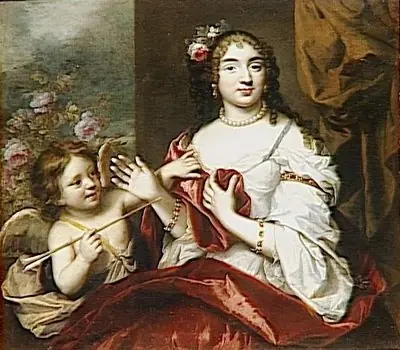 Portrait of Marie-Louise Rouxel de Médavy, Mademoiselle de Grancey
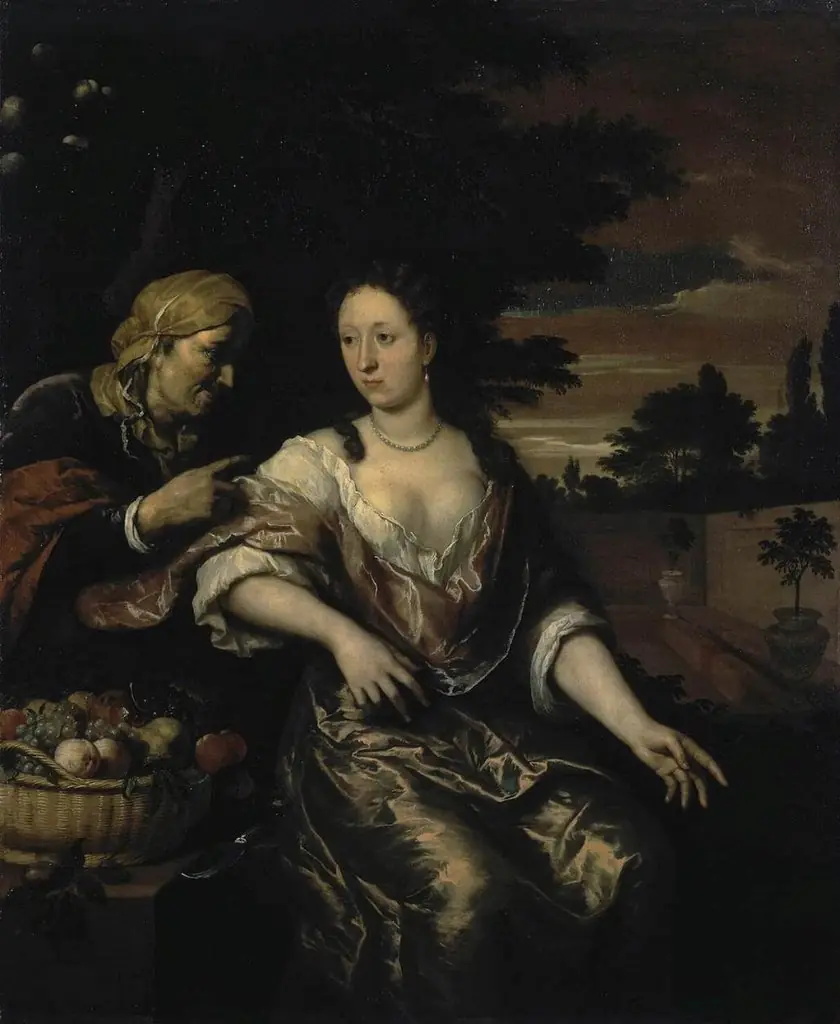 Vertumnus and Pomona
 Maria cu pruncul
 Laulava nainen ja kitaraa soittava herra, kopio Caspar Netscherin mukaan
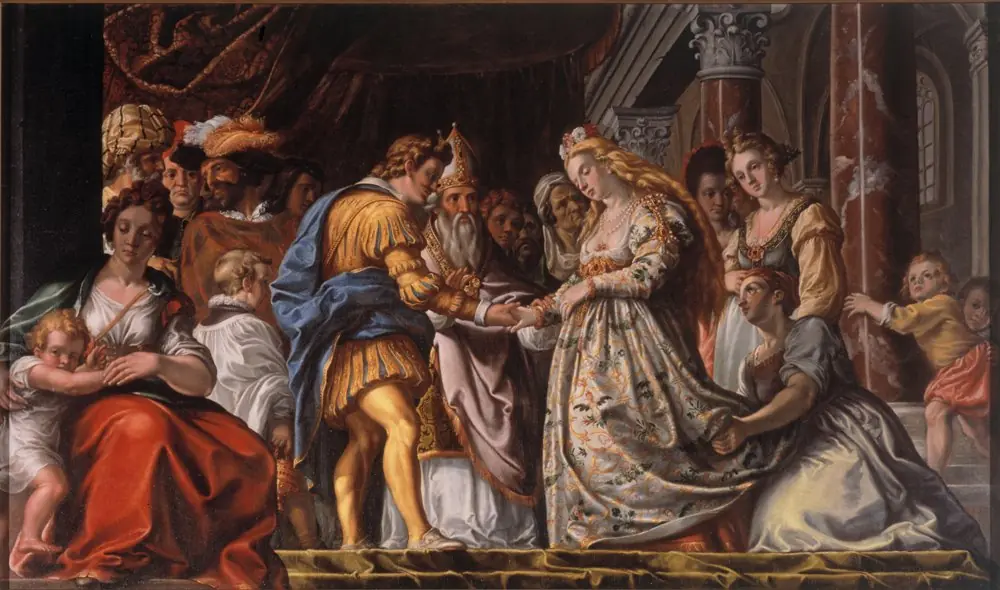 A Betrothal
 Blumenmarkt (Frühling)
 Allegory of Spring and Summer
 Allegory of Vanity
 Semiramis Receiving Word of the Revolt of Babylon
 Mother with her Three Children (Maria Ovens, the Wife of the Painter)
 Dutch courtship