Artwork
The Weeders
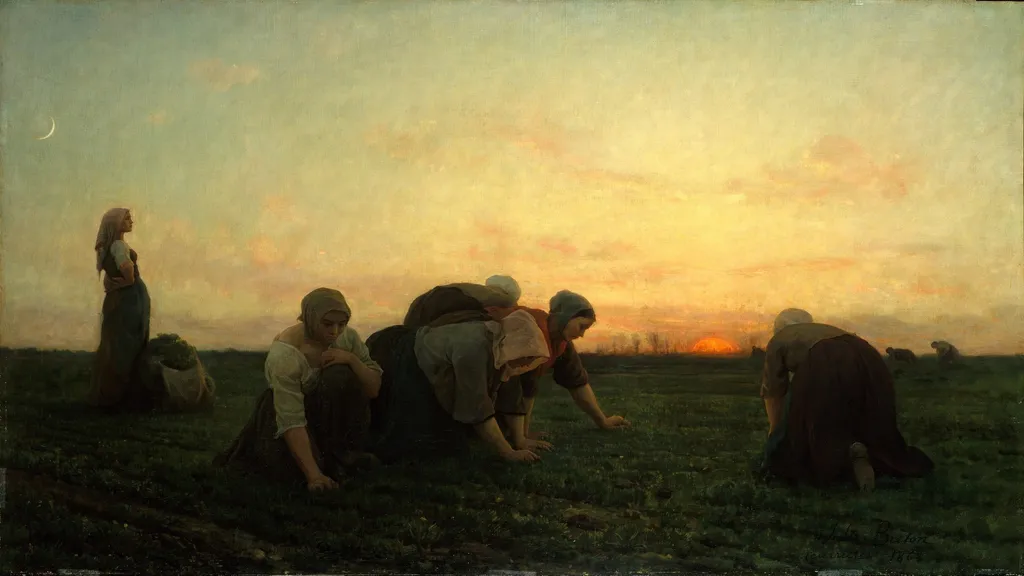
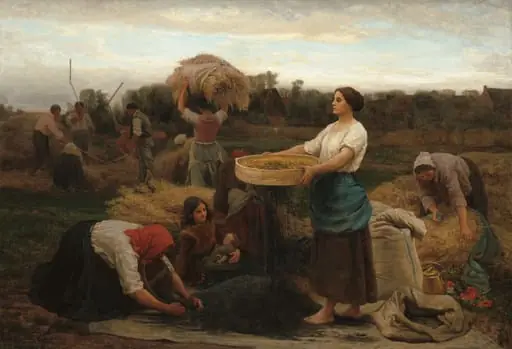
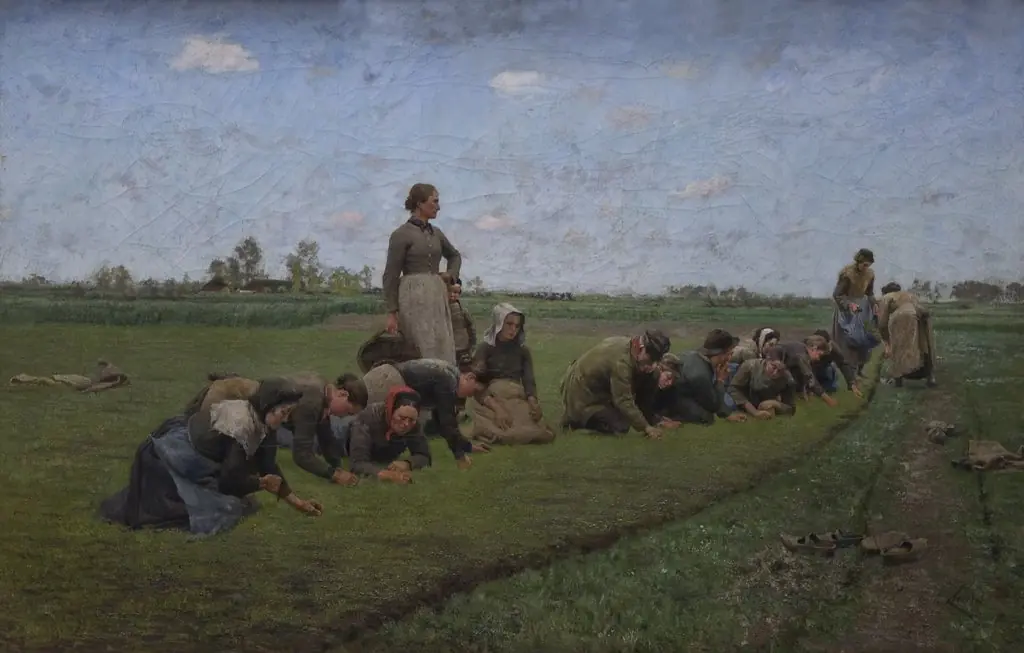
The Weeders is an oil painting by the Realist artist Jules Breton. It dates from 1868 and is held in the collection of the Metropolitan Museum of Art.
About this work
This painting shows women in a field, their backs bent as they pull weeds from the soil. It’s an oil painting by Jules Breton, made in 1868. You’ll find it at the Metropolitan Museum of Art in New York.
Breton painted northern France’s farm life with care. These women aren’t just workers, they look strong, steady, and real.
Next, look up the artist Jules Breton.
Subject & Meaning
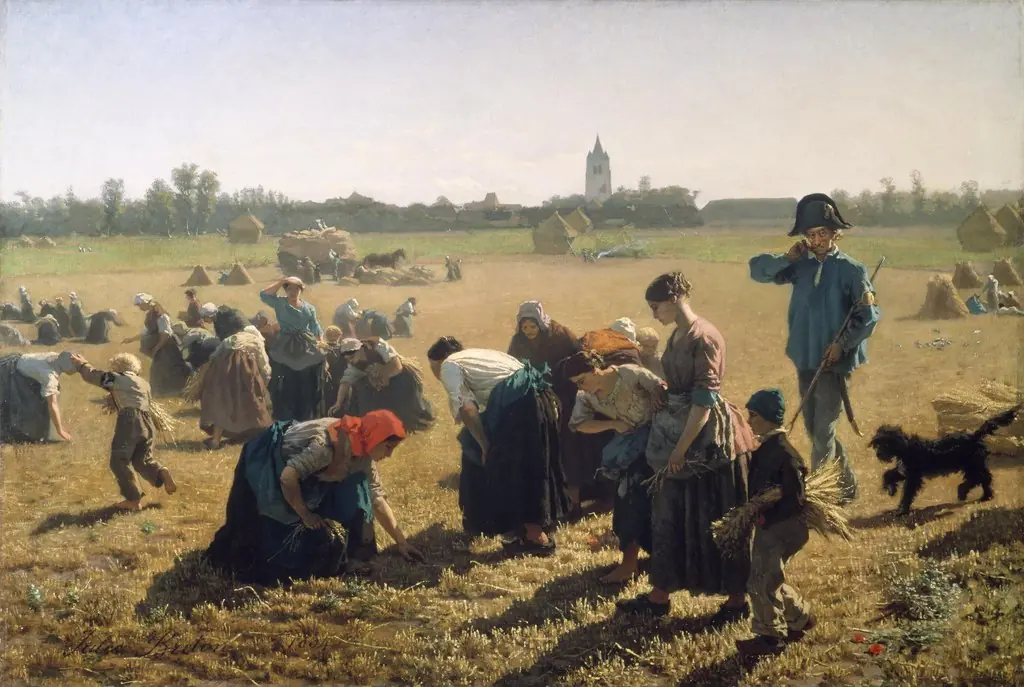
The Weeders depicts a group of peasant women laboring in the fields of northern France, bent to the task of clearing weeds and thistle from the soil.
The Weeders depicts a group of peasant women laboring in the fields of northern France, bent to the task of clearing weeds and thistle from the soil. Jules Breton painted the scene after observing farmers in his hometown of Courrières engaged in this same backbreaking work, marking his turn away from earlier historical subjects toward agrarian imagery.
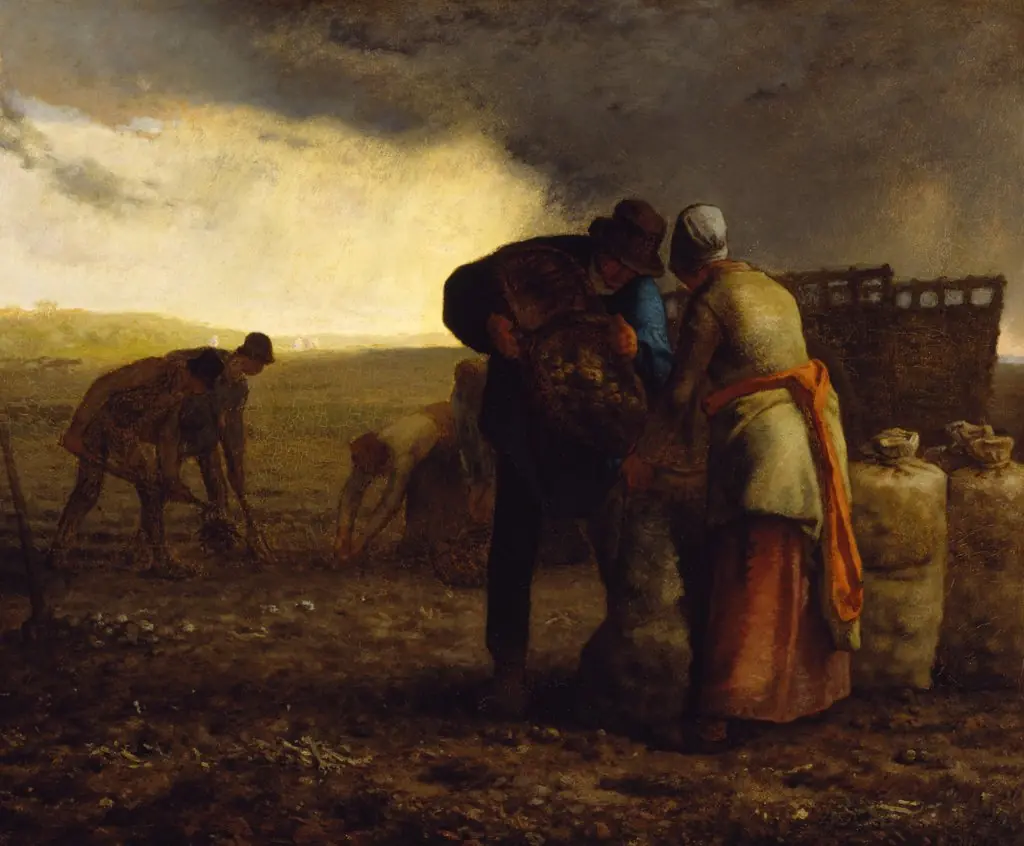
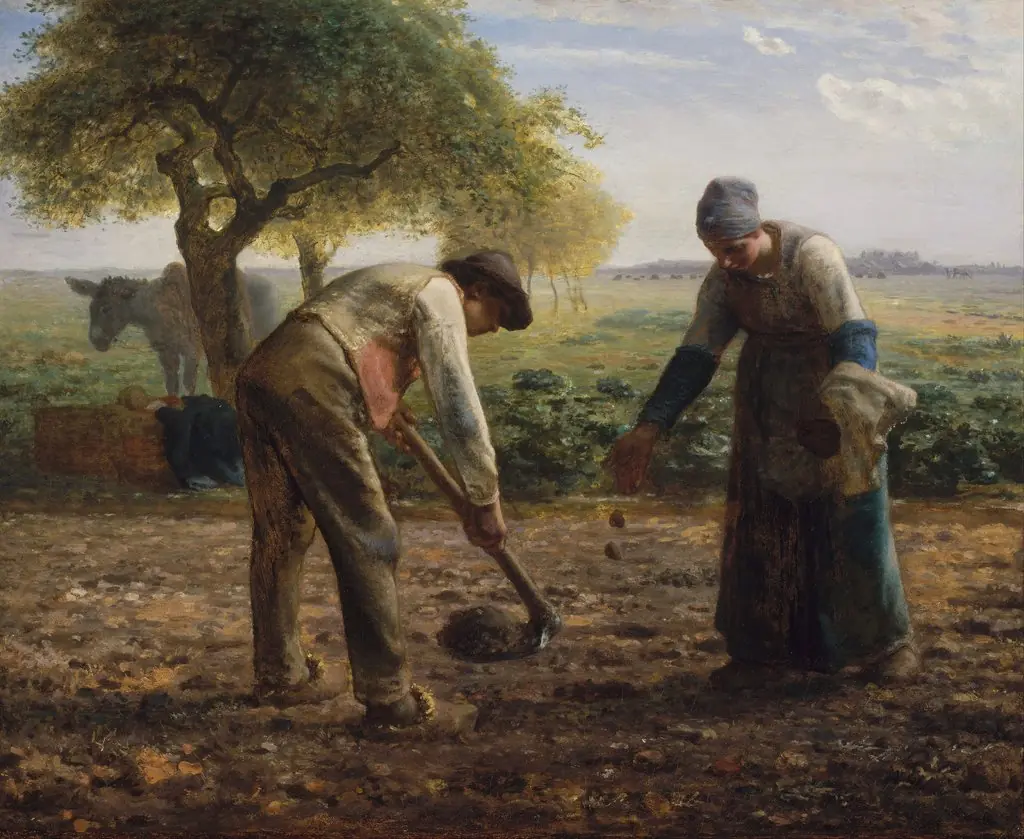
The composition draws on the visual tradition of rural labor established in French painting, and has been compared to Jean-François Millet's celebrated depiction of gleaners, painted roughly a decade earlier. By focusing on women performing one of the least prestigious tasks of field maintenance, Breton elevated an ordinary agricultural chore into a subject of dignified observation, lending the rural poor the same monumental treatment previously reserved for historical or mythological figures.
Technique & Style
Executed in 1868, The Weeders is an oil painting on canvas. The work measures 71.4 cm in height and 127.6 cm in width. Stylistically, the piece marks Jules Breton's transition from historical subjects to agrarian scenes, depicting peasant women clearing weeds and thistles from fields in Northern France.
This shift in focus was inspired by the artist's direct observation of farmers in his hometown of Courrières. The composition draws comparisons to Jean-François Millet's earlier depiction of gleaners, reflecting a continued interest in rural labor within the French artistic tradition of the period.
History & Provenance
The Weeders was painted by Jules Breton in 1868, shifting the artist’s focus from historical scenes to rural labor. Breton observed farmworkers in Courrières, northern France, clearing weeds and thistles from a field, which directly inspired the composition.
The painting entered the collection of the Metropolitan Museum of Art, New York, where it remains held. A related French title, Les Sarcleuses, reflects the same subject and approximate date.
Legacy
The Weeders (1868) established Jules Breton's reputation as a leading chronicler of rural labor, influencing later academic painters who adopted his idealized yet socially conscious depictions of agrarian life. The painting's composition and thematic focus on female agricultural workers resonated with contemporaries and subsequent artists, contributing to the broader 19th-century European movement that elevated rural scenes to subjects worthy of fine art. Its presence in major institutional collections, including the Metropolitan Museum of Art and the Joslyn Art Museum, reinforced its status as a representative work of Second Empire French realism and continues to inform scholarly discussions of gender and labor in 19th-century European painting.
The work's legacy is further underscored by its frequent citation in art historical literature as a benchmark for the genre, often referenced alongside Breton's other notable pieces such as The Gleaners, highlighting its role in shaping aesthetic standards for depicting agricultural labor.
Scholars note its compositional influence on later works depicting peasant life, particularly in its portrayal of collective female labor, though specific later works directly inspired by The Weeders are not documented in the provided sources.
Overview
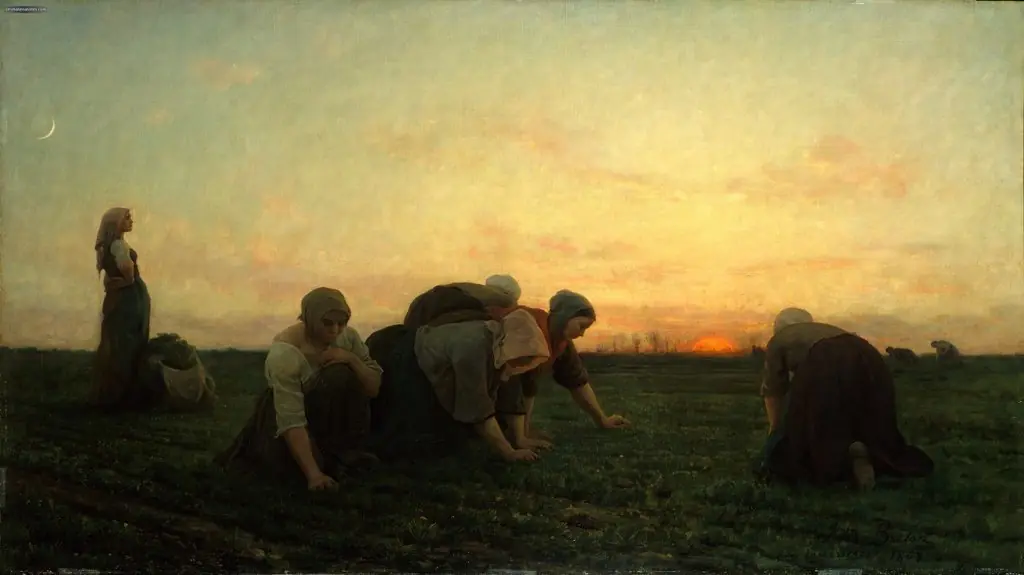
Jules Breton’s 1868 oil on canvas, titled The Weeders, portrays a group of peasant women laboring in a northern French field. The work captures a moment of agricultural toil, emphasizing the physicality of the task as the figures bend to pull weeds from the soil. The painting belongs to the permanent collection of the Joslyn Art Museum in Omaha, Nebraska.
Context
During the mid‑1800s, French artists increasingly turned to rural subjects, reflecting both Romantic nostalgia and emerging social concerns. Breton, known for his sympathetic depictions of peasant life, contributed to this trend by focusing on the labor of women, a relatively uncommon emphasis at the time.
Artist & collection
Artist
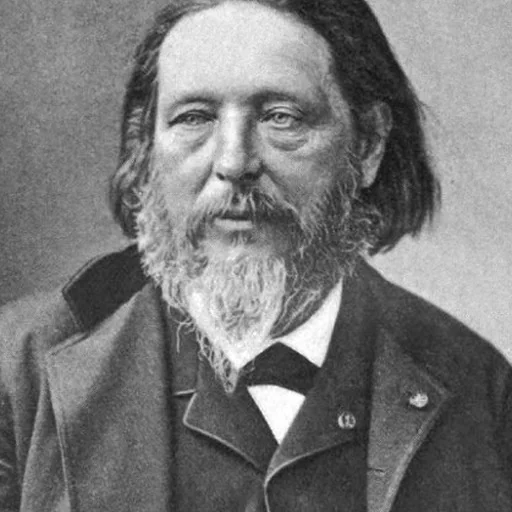
Jules Adolphe Aimé Louis Breton (French pronunciation:; 1 May 1827 – 5 July 1906) was a 19th-century French naturalist painter.