Subject
Sunset
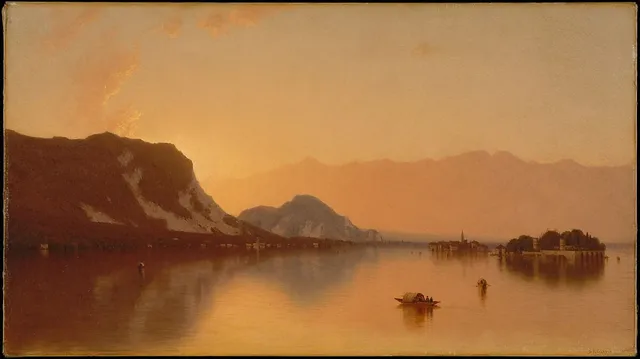
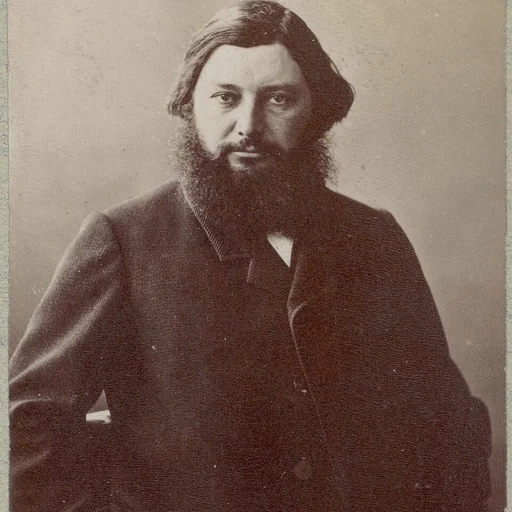
Sunset is a subject in art. The gallery holds 50 works in this subject in art, including works by Gustave Courbet, Thomas Chambers and Camille Pissarro.
Sunset (or sundown) is the disappearance of the Sun at the end of the Sun path, below the horizon of the Earth (or any other astronomical object in the Solar System) due to its rotation. As viewed from everywhere on Earth, it is a phenomenon that happens approximately once every 24 hours, except in areas close to the poles.
Key artists

Overview
Sunset, or sundown, is the daily disappearance of the Sun below the horizon, a phenomenon caused by the rotation of the Earth. Occurring approximately every 24 hours except near the poles, it marks the transition from daylight to twilight. Because the Sun's light must travel through a greater thickness of atmosphere near the horizon, shorter blue wavelengths scatter while longer red and orange wavelengths reach the observer, creating vivid skies. This daily spectacle has made sunset one of the most widely used subjects in art, valued both for its naturalistic display and its symbolic resonance. Artists have long been drawn to the challenge of preserving this fleeting interplay of light and color, finding in the fading day a versatile motif for exploring emotion, atmosphere, and the passage of time.
Iconography & meaning
In visual art, the iconography of sunset extends far beyond the recording of an atmospheric effect. The fading light routinely symbolizes the end of a journey, the passage of time, or the close of an era. In some cultural traditions, such as ancient Germanic, Jewish, Islamic, and Bahai practices, sunset marks the end of the day and the beginning of the next. Painters have utilized the motif to convey themes of obsolescence, nostalgia, and human mortality, contrasting the waning light with the encroaching darkness. Alternatively, the sunset can signify rest, peace, and spiritual transcendence, offering a quiet space for reflection. The same sky can also be manipulated to evoke psychological tension or existential angst, demonstrating that the motif is rarely merely a record of nature but a mirror for human experience.
Across movements & periods
The artistic treatment of sunset has shifted considerably across movements. In the Baroque period, Claude Lorrain pioneered the inclusion of the sun in landscape, carefully studying how light reflected on surrounding structures, which later influenced Romantic painters. Romanticism embraced the sunset for its emotional and sublime potential. Caspar David Friedrich used it to evoke spiritual reflection, while J. M. W. Turner prioritized color and atmosphere over precision, dissolving form into light in a way that anticipated later movements. Impressionism, driven by en plein air practices, shifted the focus to the ephemeral effects of changing light, with Claude Monet painting serial views to capture transient moments. In the United States, the Hudson River School and its offshoot Luminism, led by artists like Albert Bierstadt and Fitz Henry Lane, used sunset to emphasize the grandeur of untouched landscapes and the mood of tranquil waters. Later, Expressionists like Edvard Munch distorted the sunset sky into violent reds and oranges to externalize internal anxiety, while modernists like Georgia O'Keeffe distilled the motif into bold, abstract color fields.
Notable depictions
Several canonical depictions define the sunset motif in Western art. J. M. W. Turner's The Fighting Temeraire (1839) uses a blazing sunset over the Thames to symbolize the end of the age of sail as a warship is towed to scrap. Caspar David Friedrich's Sunset (Brothers) (circa 1830 to 1835) employs his characteristic Rückenfigur device, showing two men from behind as they contemplate the fading light over a coastal landscape. Claude Monet's Impression, Sunrise (1872) famously birthed the Impressionist movement through its loose brushwork and focus on light over detail, while his later San Giorgio Maggiore at Dusk (1908 to 1912) reduces the Venetian monastery to a silhouette against vibrant reflected color. Jean-Francois Millet's The Angelus (1857) frames rural piety against the dusk, and Ivan Aivazovsky's The Ninth Wave (1850) casts a dramatic glow over shipwrecked sailors. Vincent van Gogh's The Red Vineyard (1888) and Edvard Munch's The Scream (1893) further expanded the motif's emotional range, using the setting sun to convey labor and existential dread, respectively.
Legacy
The sunset motif has maintained a persistent hold on artistic imagination, bridging traditional landscape and modern abstraction. Turner's radical dissolution of form into atmospheric color established a legacy that directly paved the way for Impressionism and, eventually, abstract art. By the twentieth century, artists like Georgia O'Keeffe could reduce the sunset to its fundamental color elements, a trajectory that confirmed the motif's versatility beyond naturalistic representation. The enduring appeal of the sunset lies in its dual nature as both a universal visual spectacle and a deeply personal metaphor. Whether evoking tranquility, nostalgia, or psychological intensity, the depiction of the sun's descent continues to offer artists a powerful framework for exploring the relationship between light, emotion, and the human condition.
Works
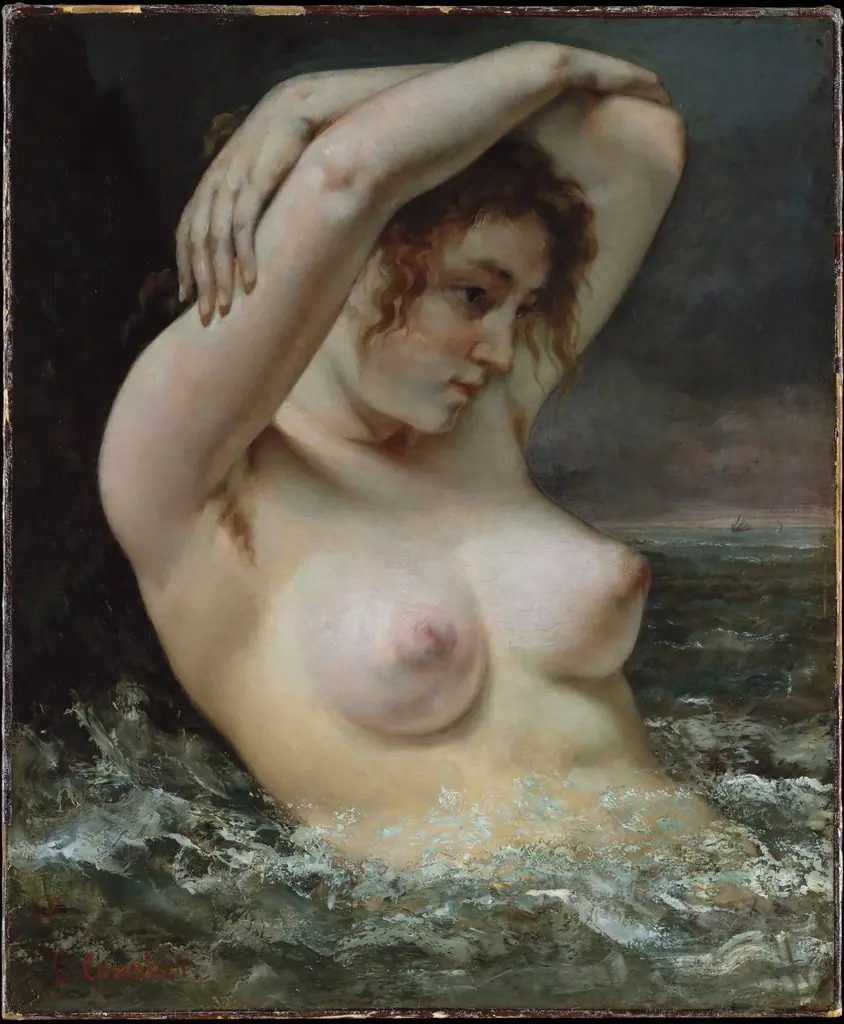 The Woman in the Waves
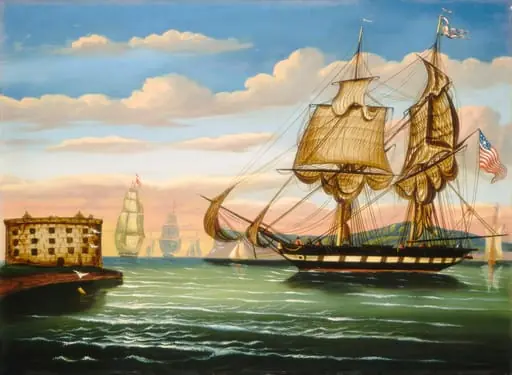 Bay of New York, Sunset
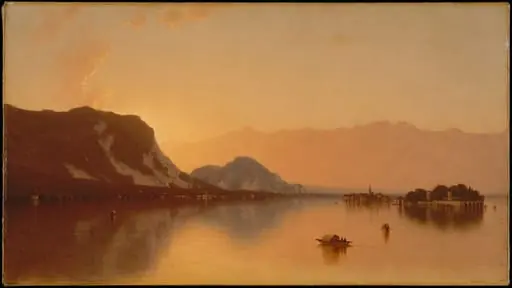 Isola Bella in Lago Maggiore
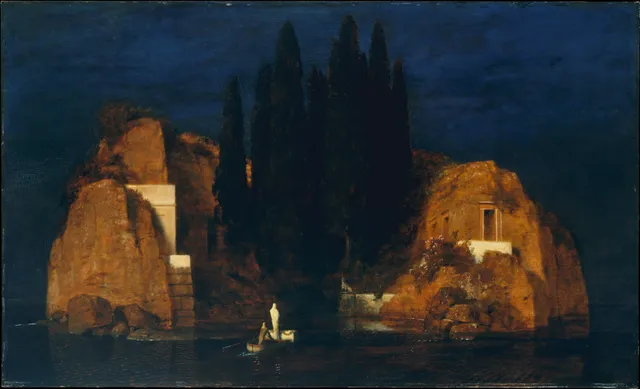
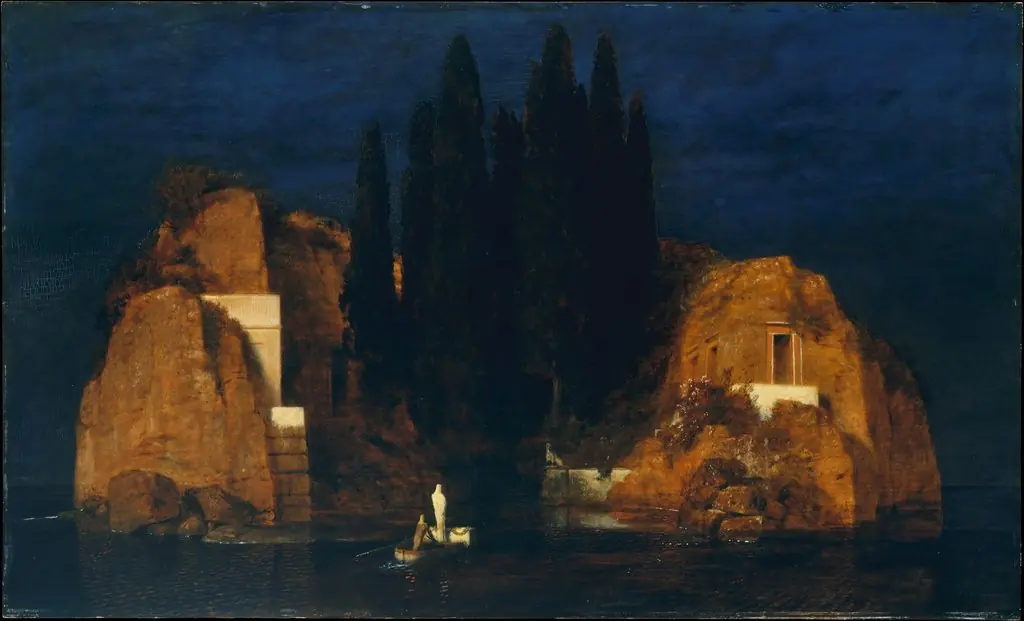 Isle of the Dead
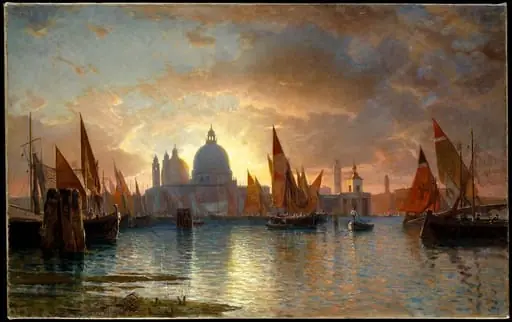 Santa Maria della Salute, Sunset
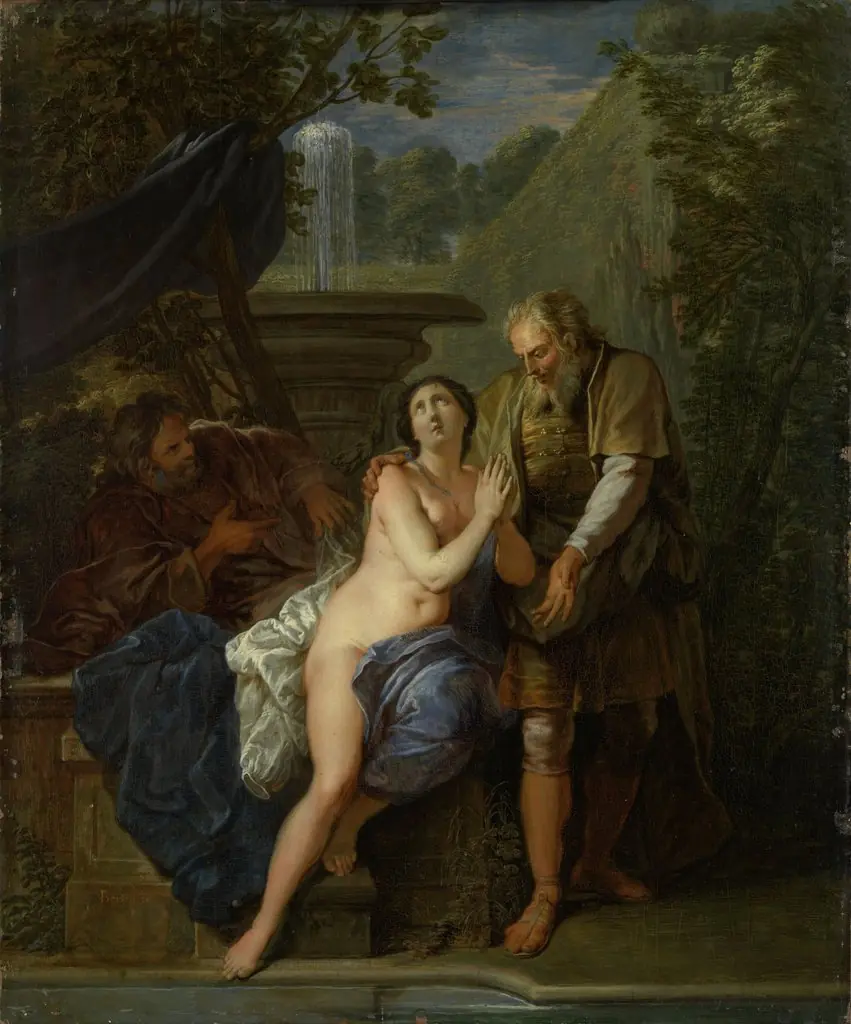 Susanna and the Elders
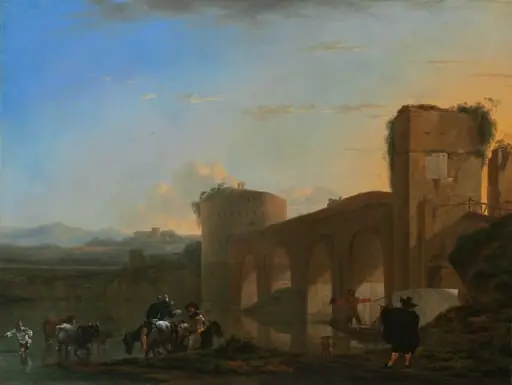 The Tiber River with the Ponte Molle at Sunset
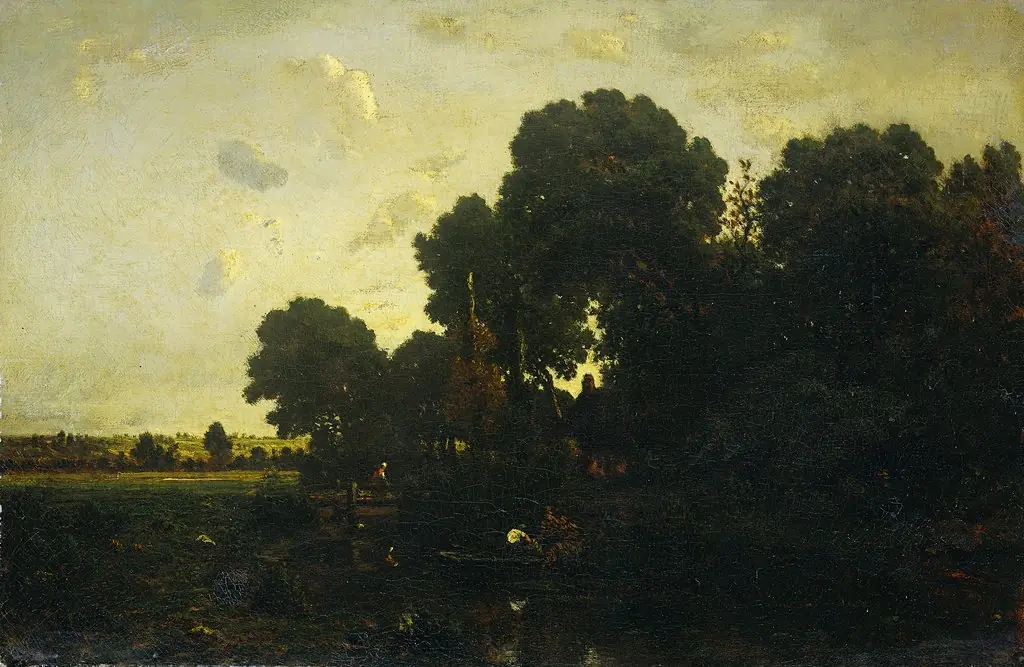 Twilight
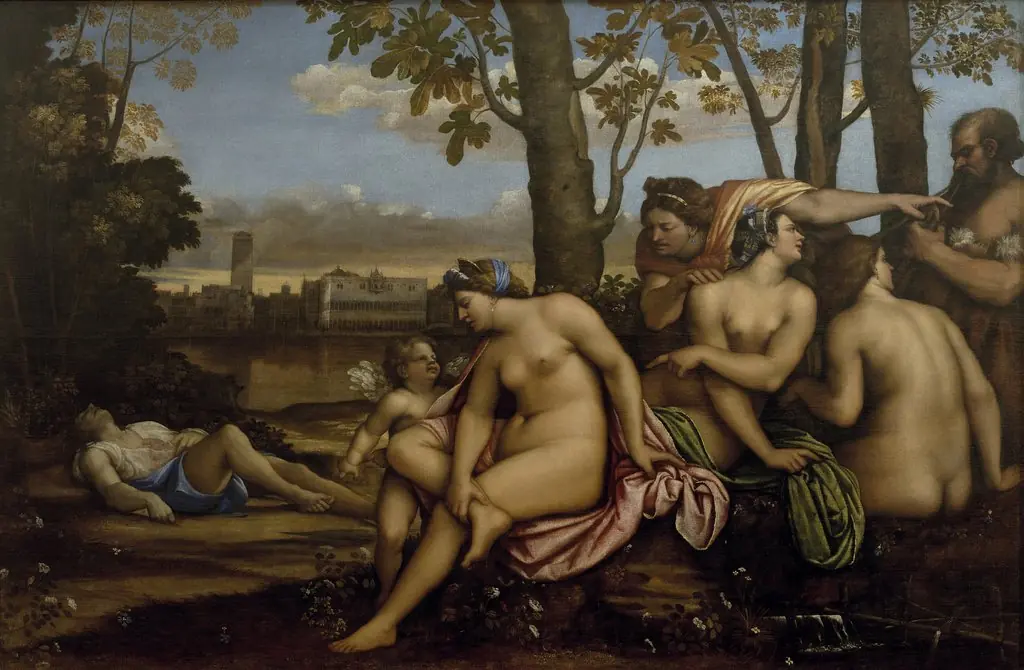 Death of Adonis
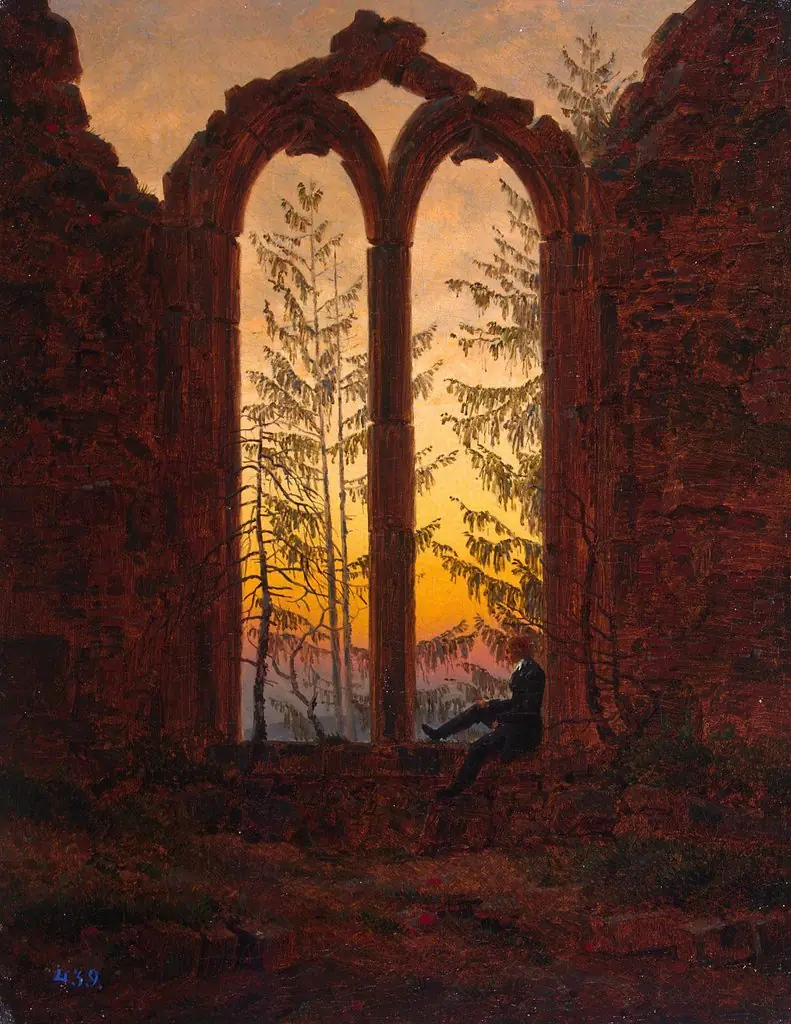 Ruins of the Oybin
 The People's Census at Bethlehem
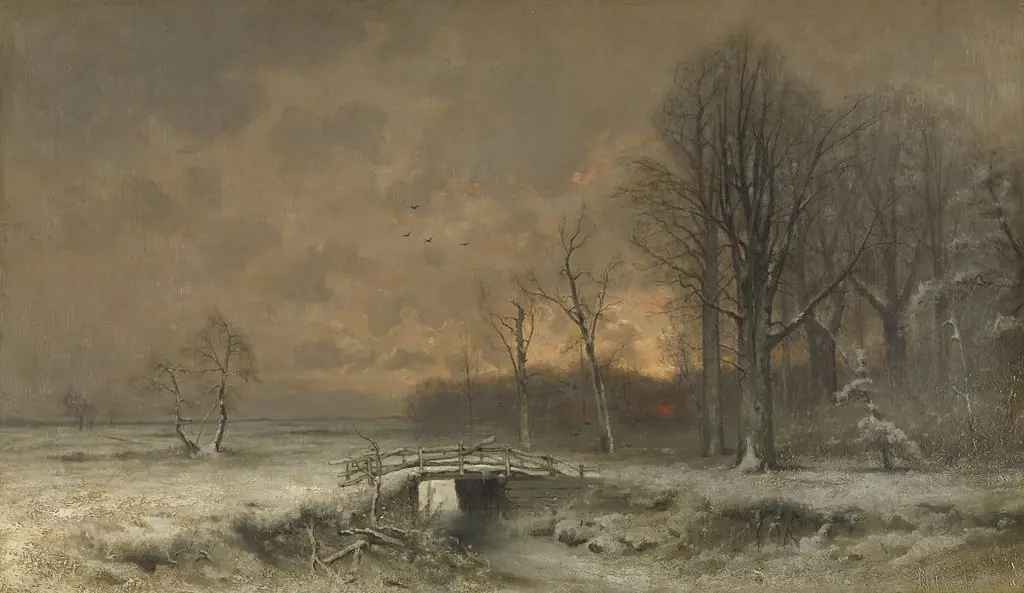 Winter Scene with the Sun Setting Behind Trees
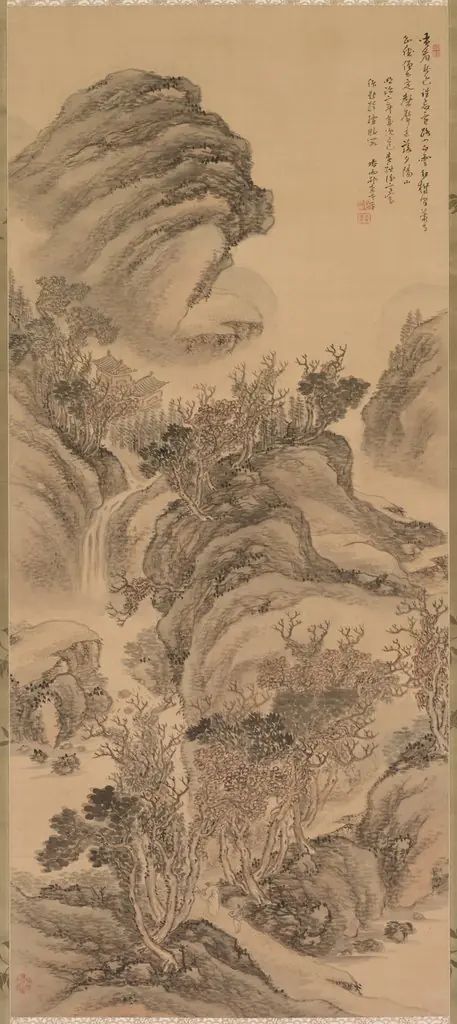 Sunset over Autumn Mountains
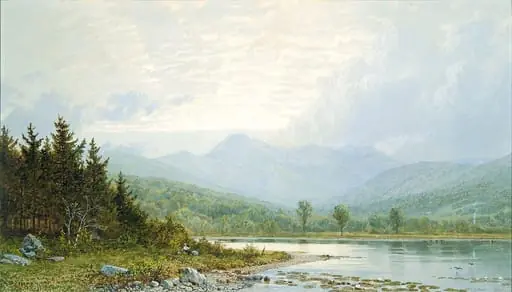 Sunset on Mount Chocorua, New Hampshire
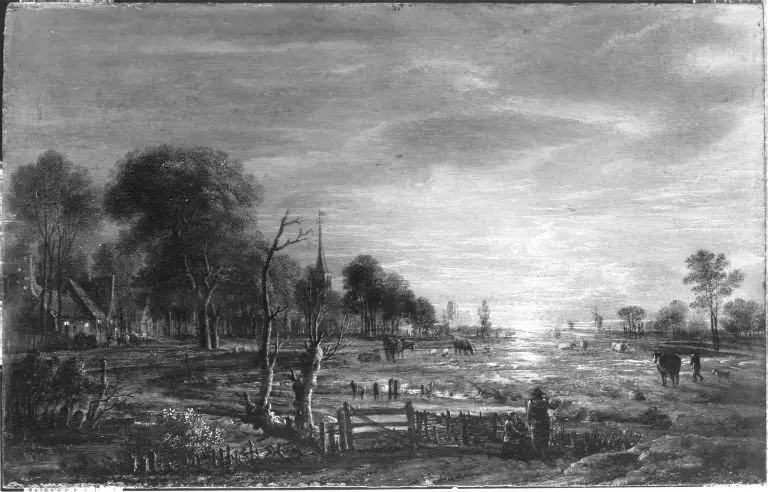 Sunset over a cattle meadow
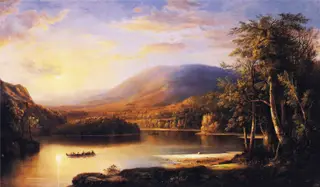 Ellen's Isle
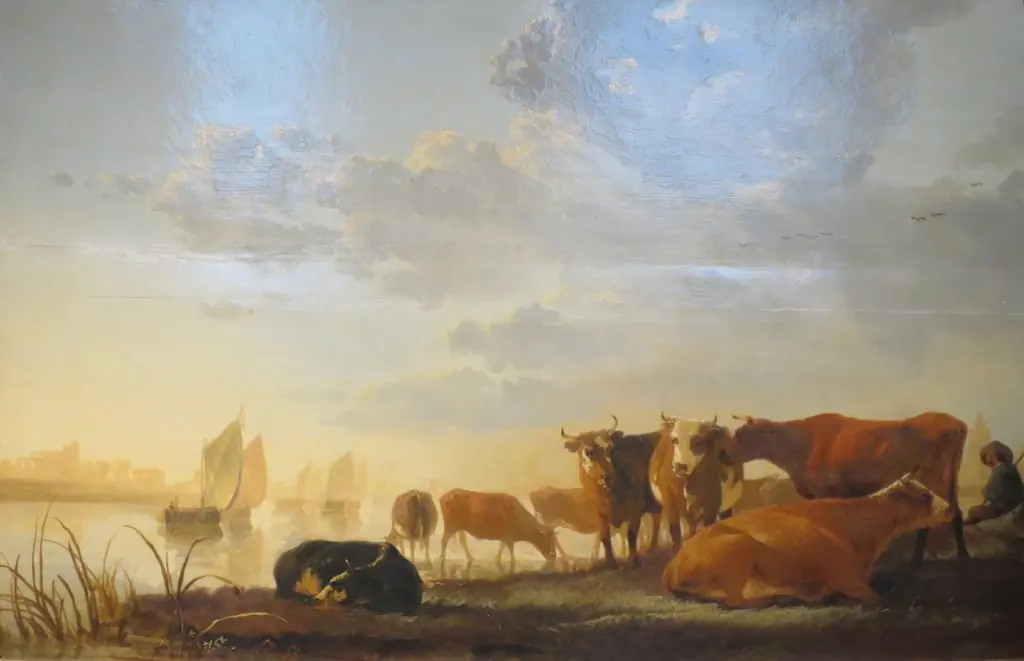 Cows in a River, at Sunset
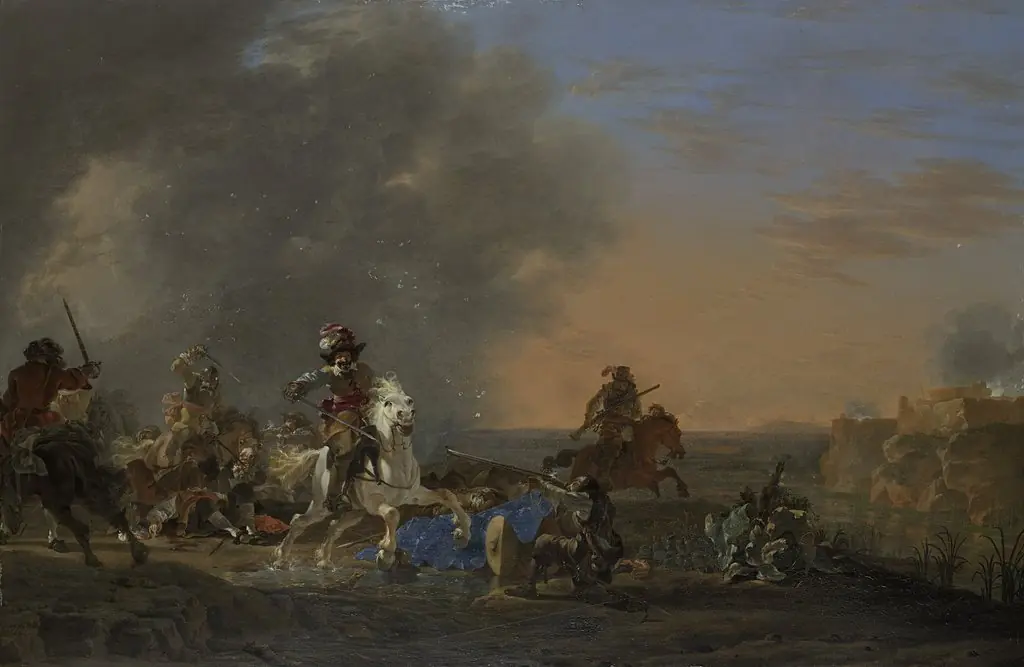 Cavalry attack at sunset
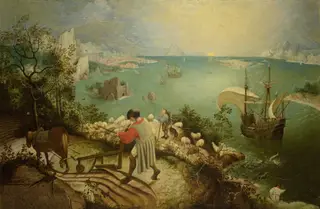 Landscape with the Fall of Icarus
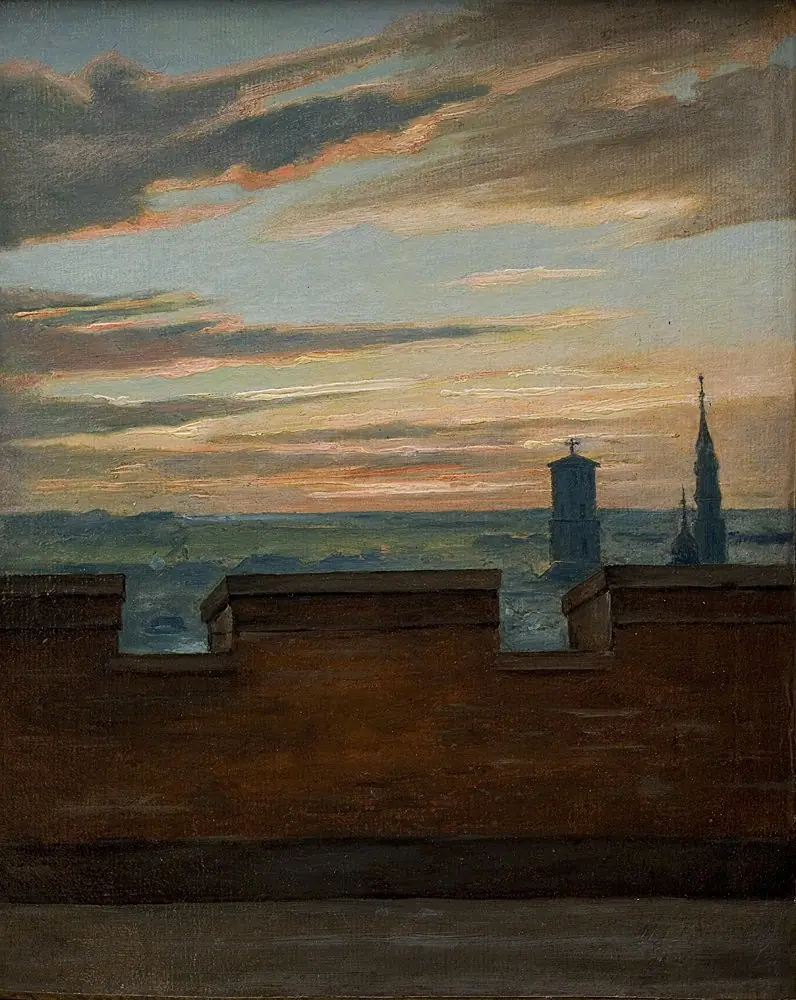 View of Copenhagen at Sunset
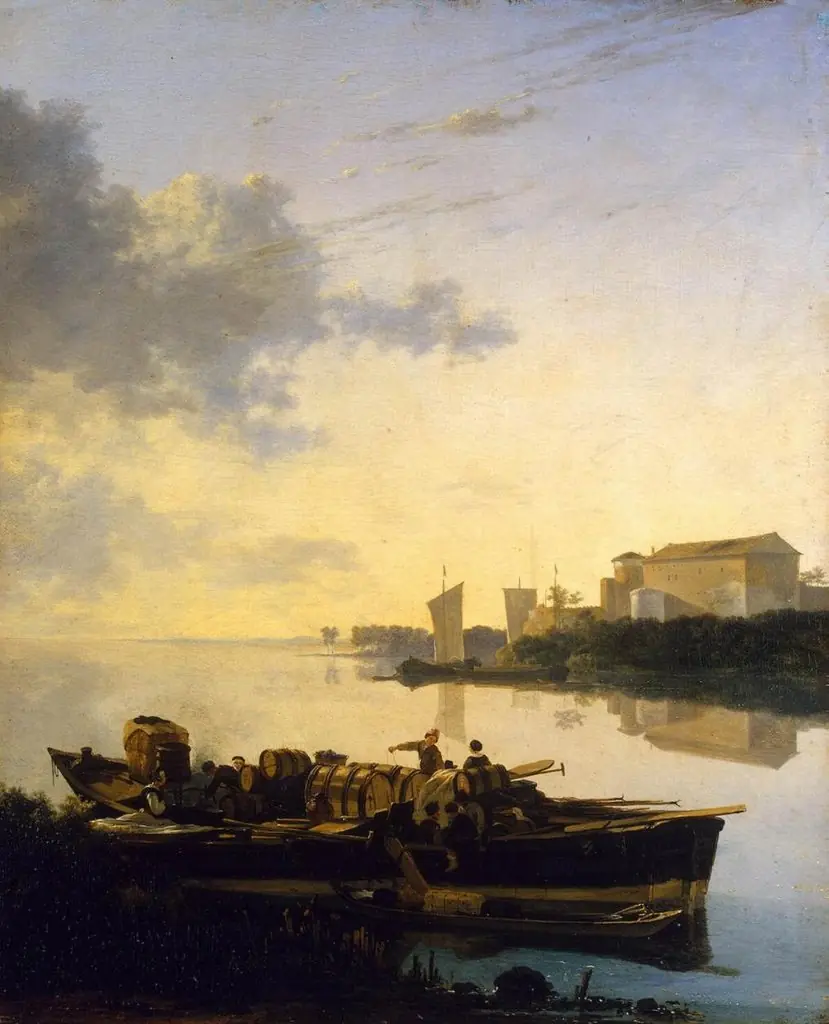 Boat at Sunset
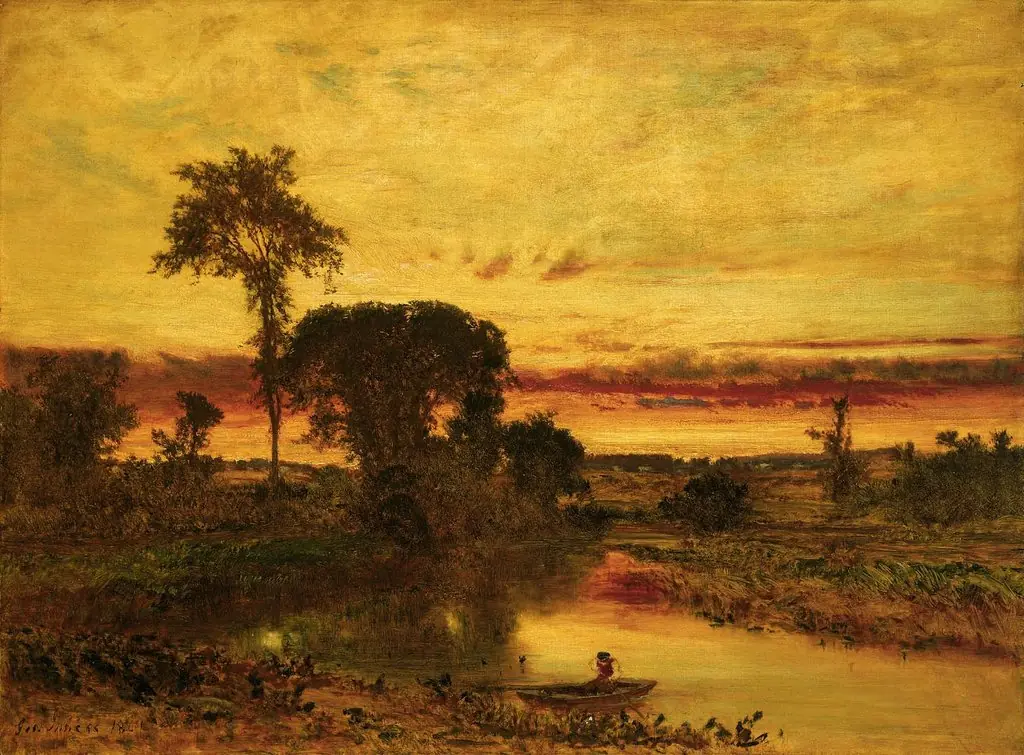 Sunset Landscape, Medfield
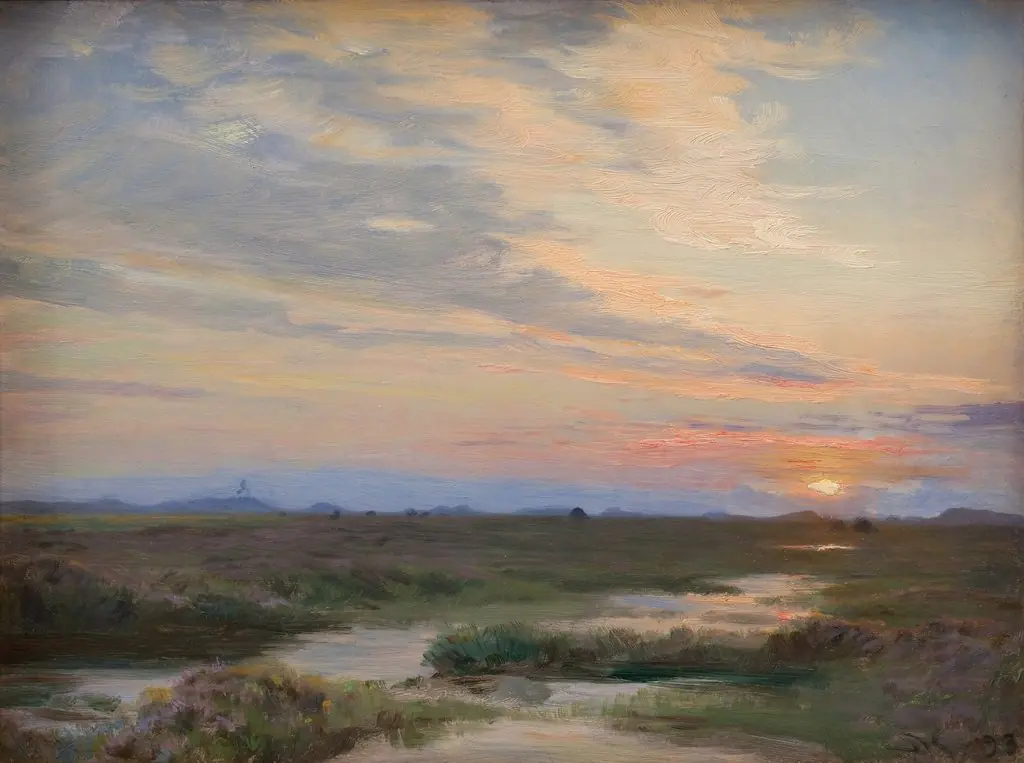 Evening at Skagen
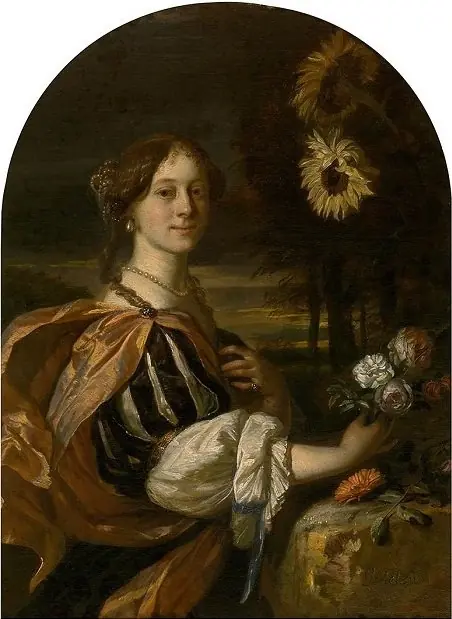 Portrait of a Woman with Sunflowers
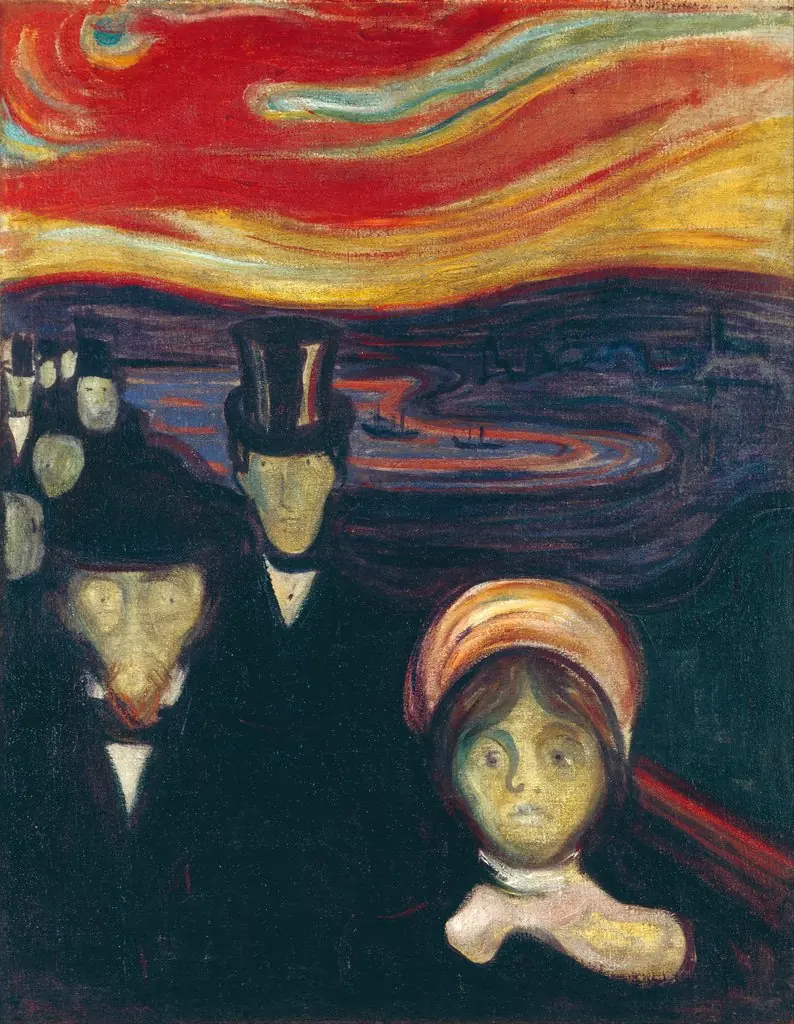 Anxiety
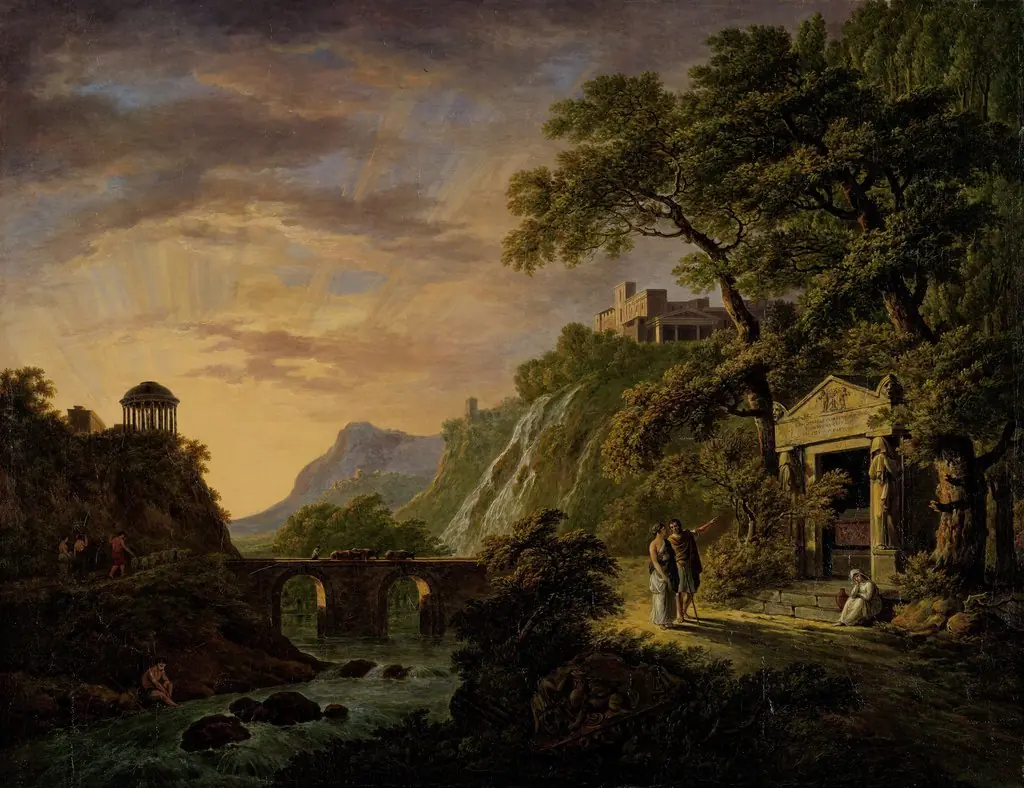 Arcadisch landschap met ondergaande zon
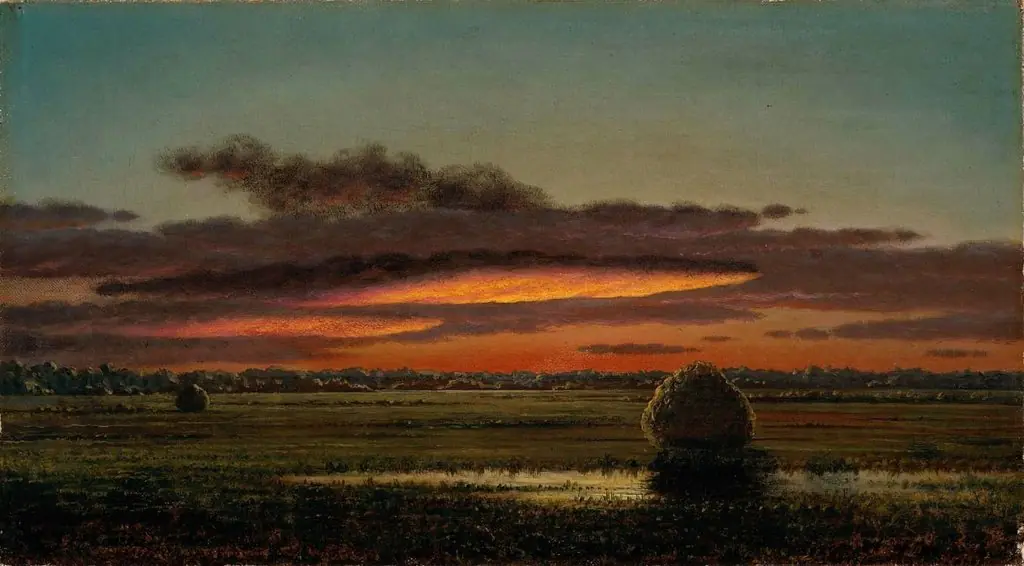 Sunset over the Marshes
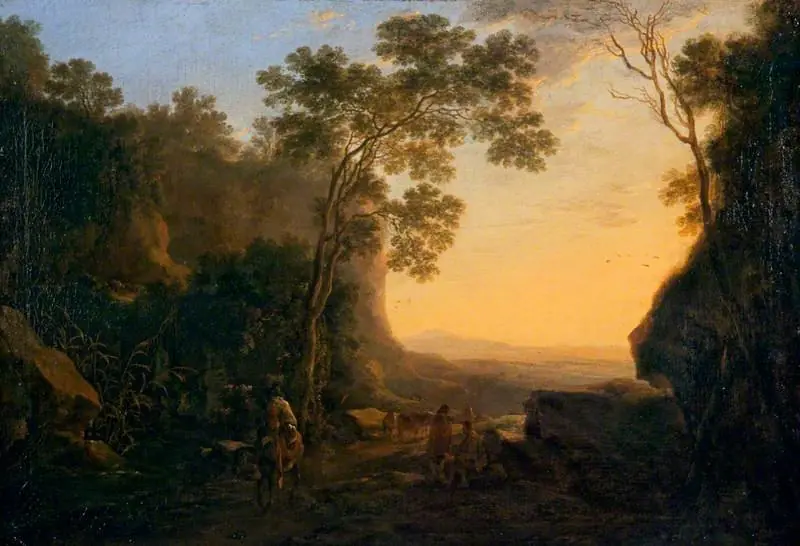 Landscape
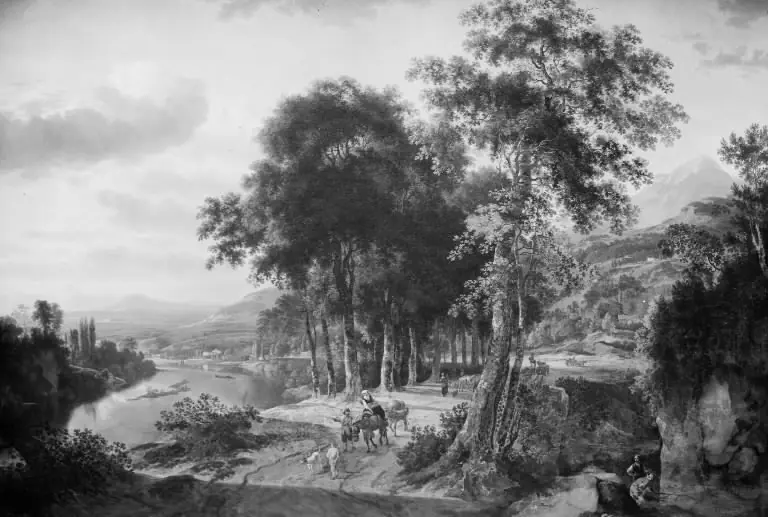 Southern Landscape, Sunset
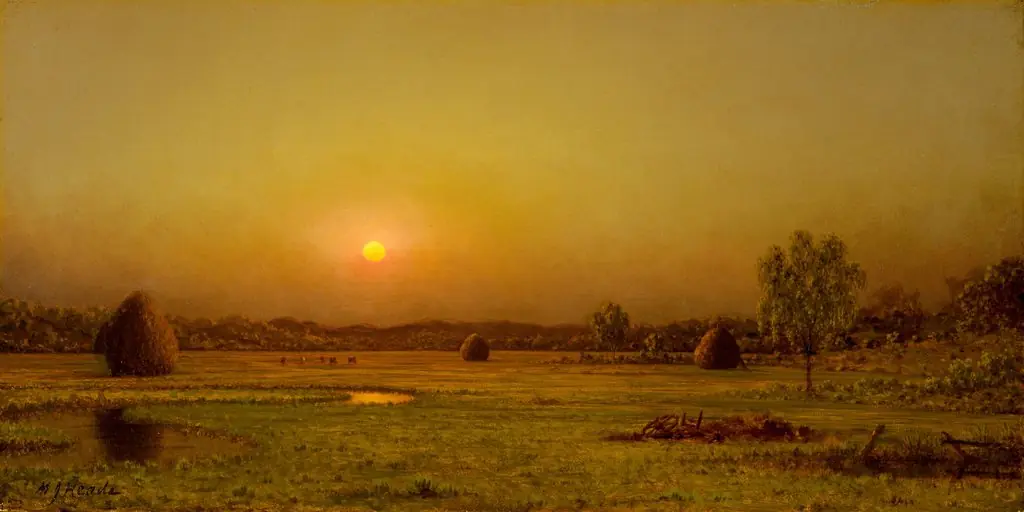 Marsh Sunset, Newburyport, Massachusetts
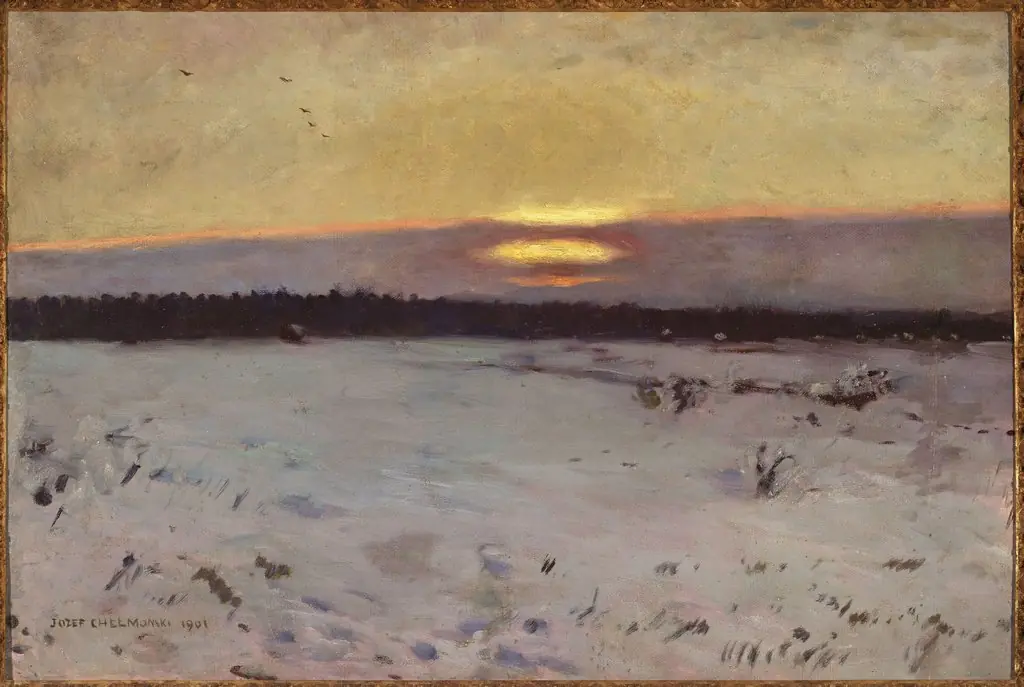 Sunset in winter
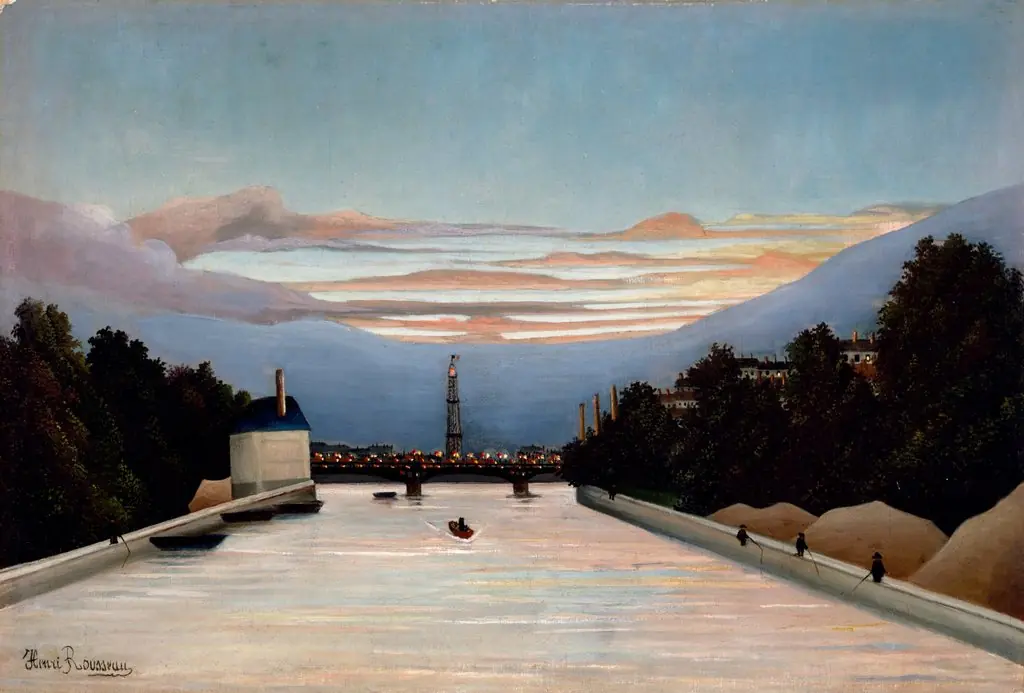 The Eiffel Tower
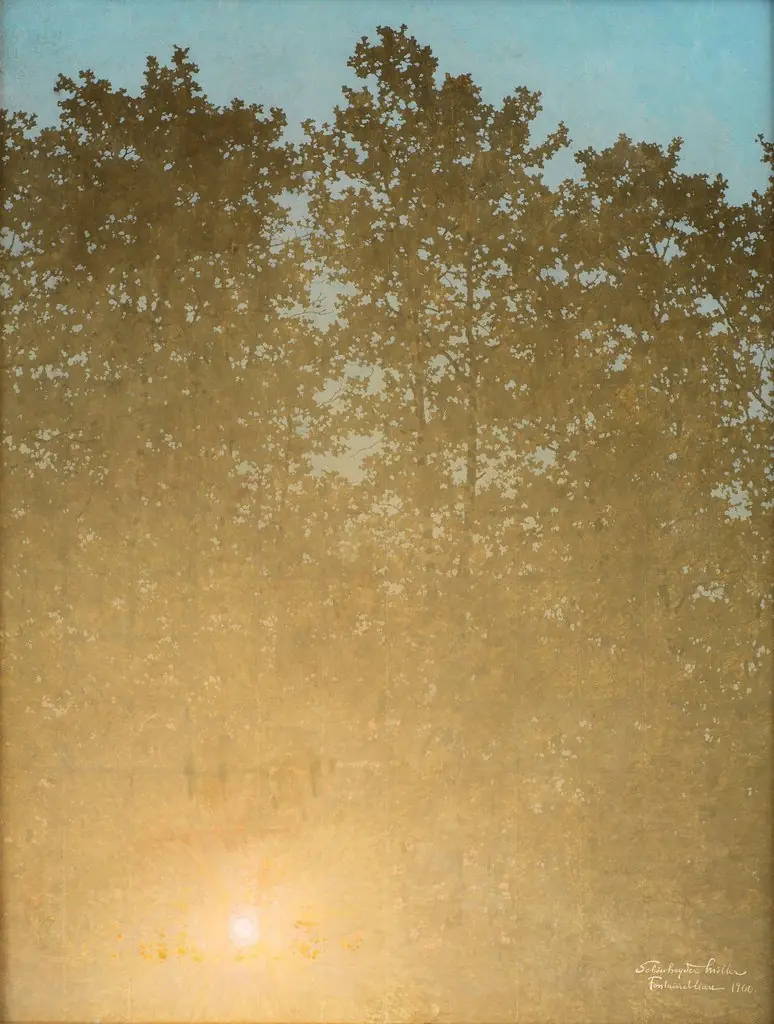 Sunset. Fontainebleau
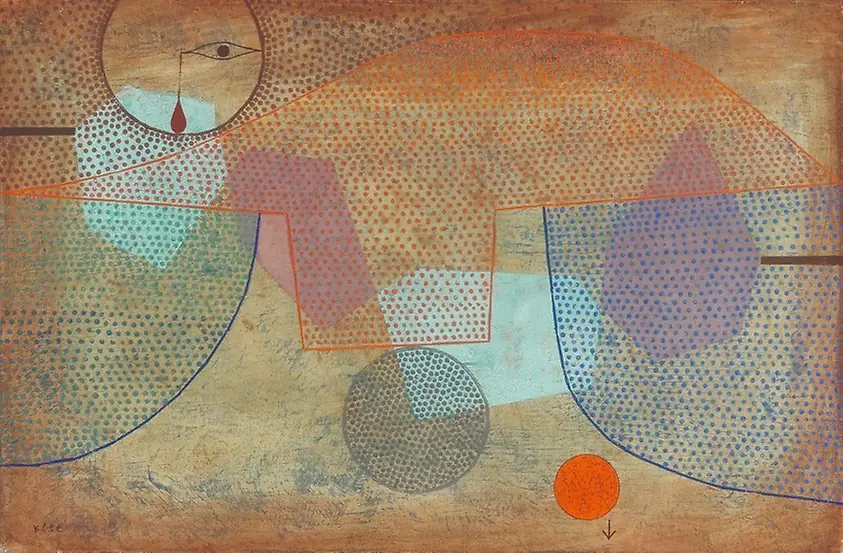 Sunset
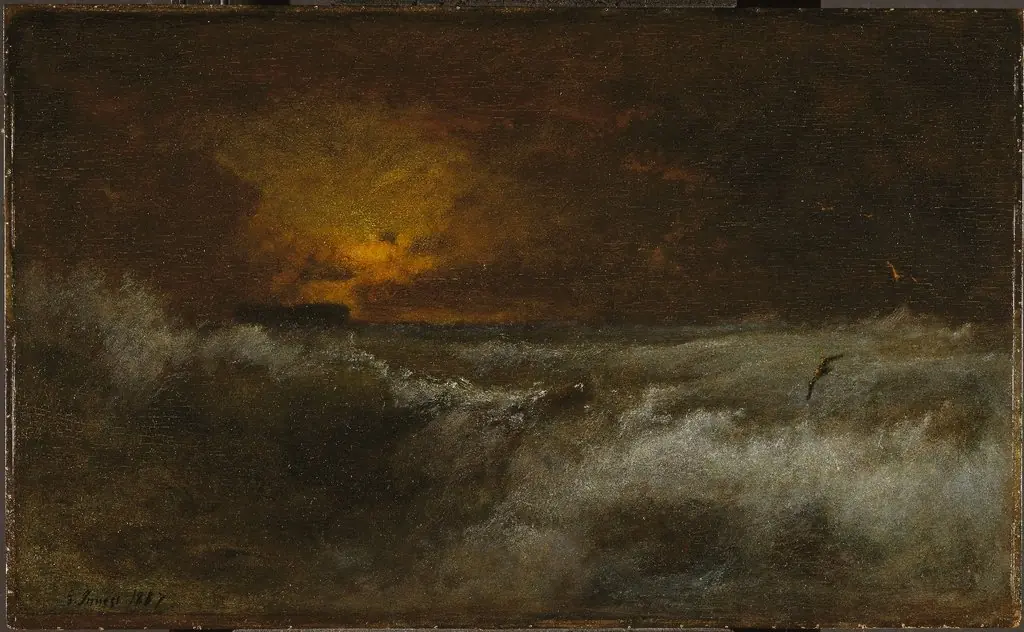 Sunset over the Sea
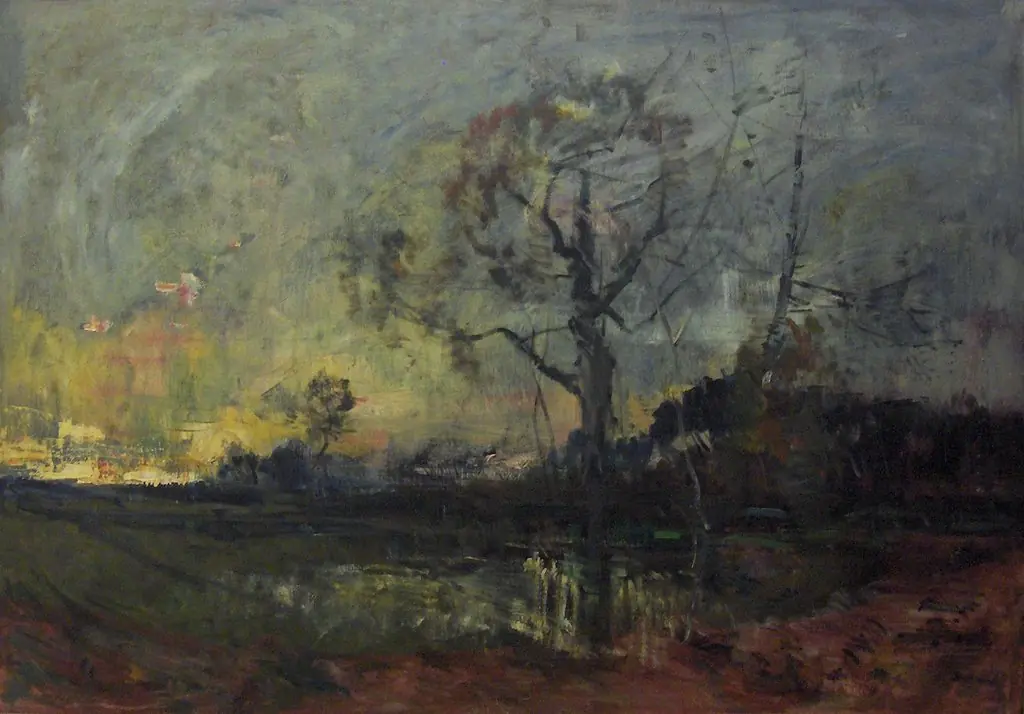 Dusk over the pool
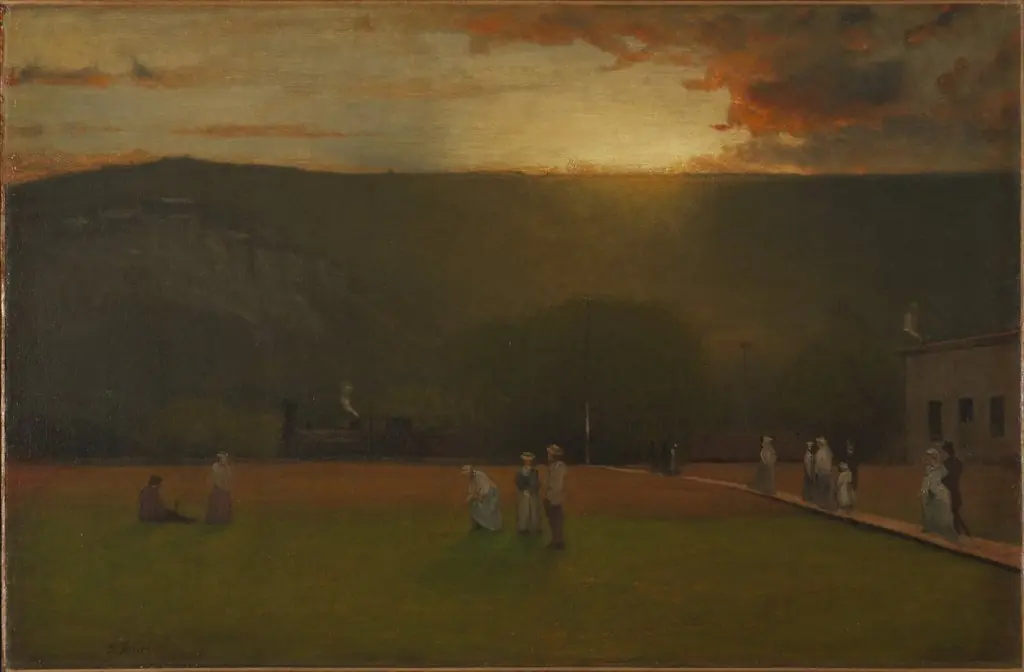 The Rigor of the Game, Kearsarge Hall, North Conway, New Hampshire
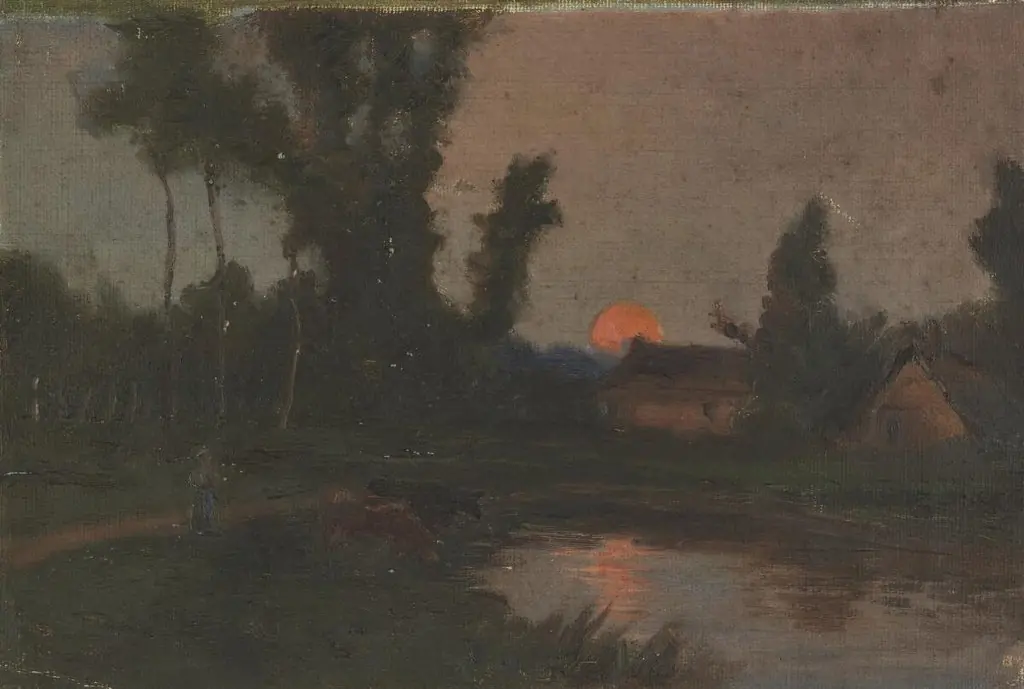 Sunset
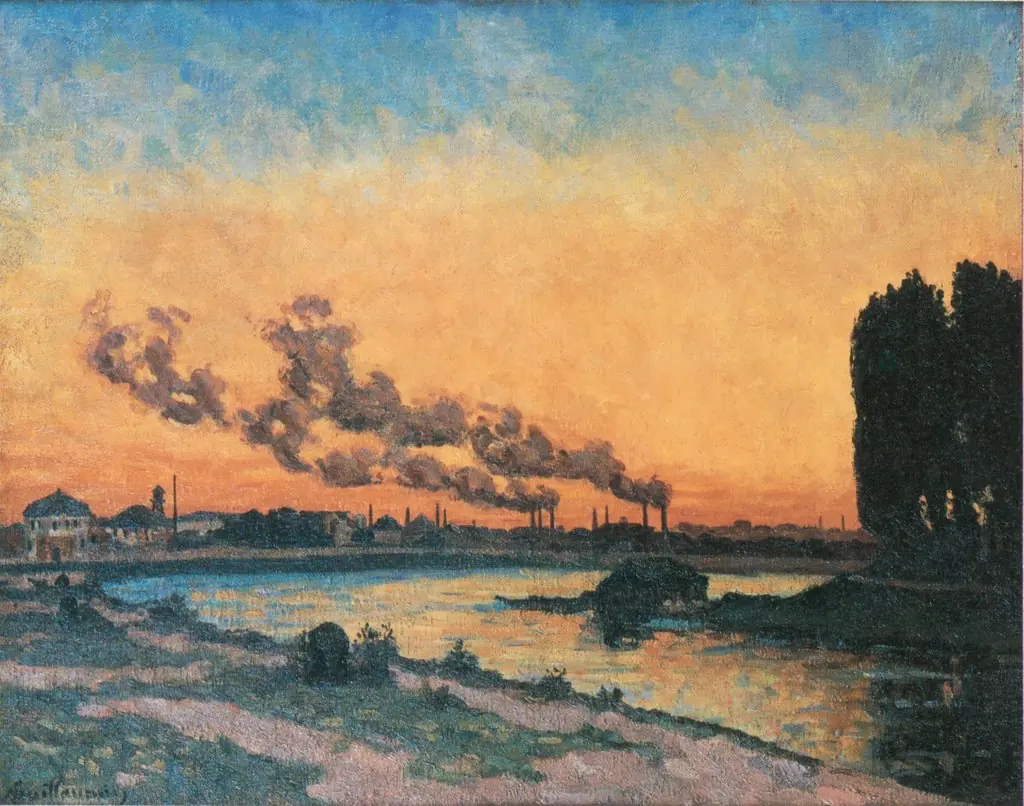 Soleil couchant à Ivry
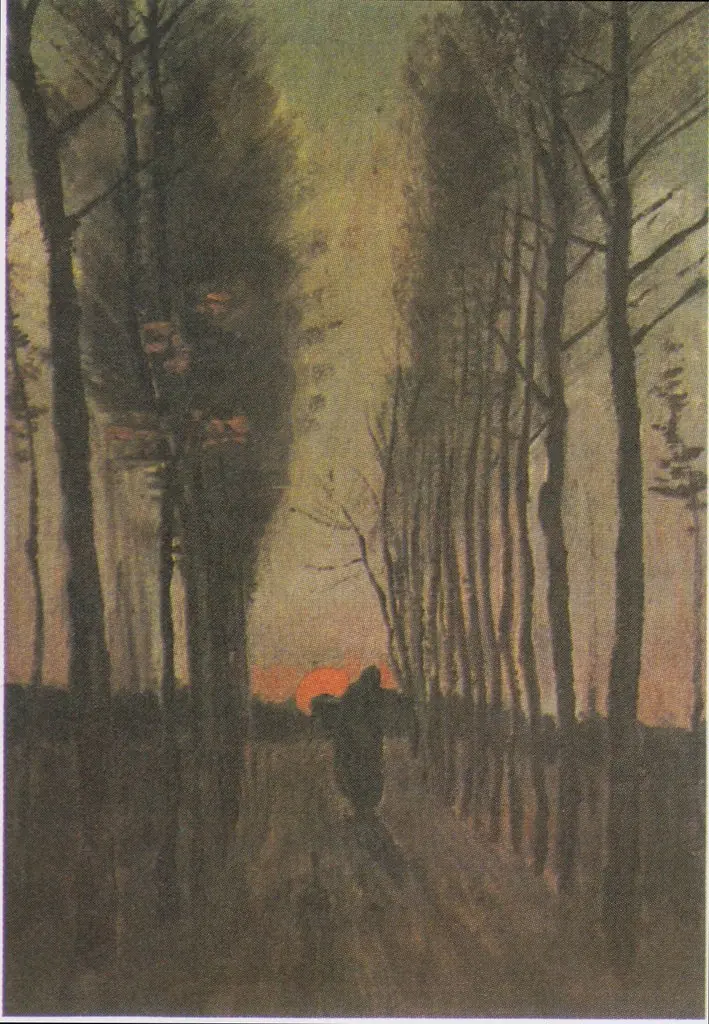 Avenue of Poplars at Sunset
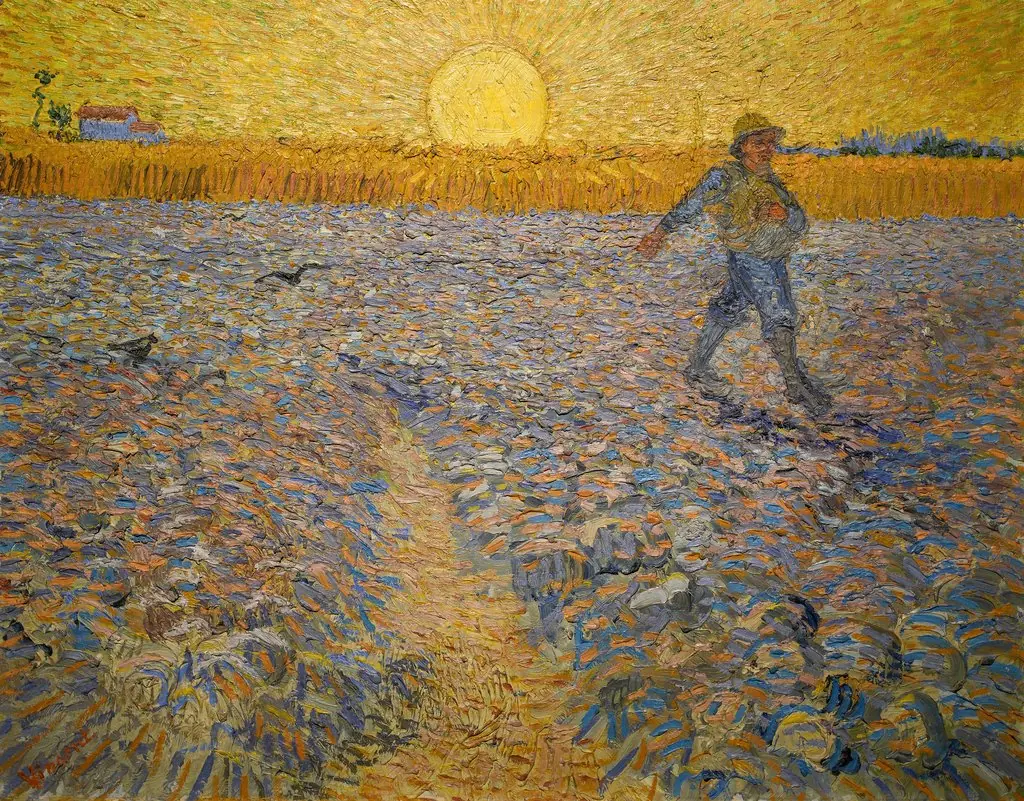 The Sower (Sower at Sunset)
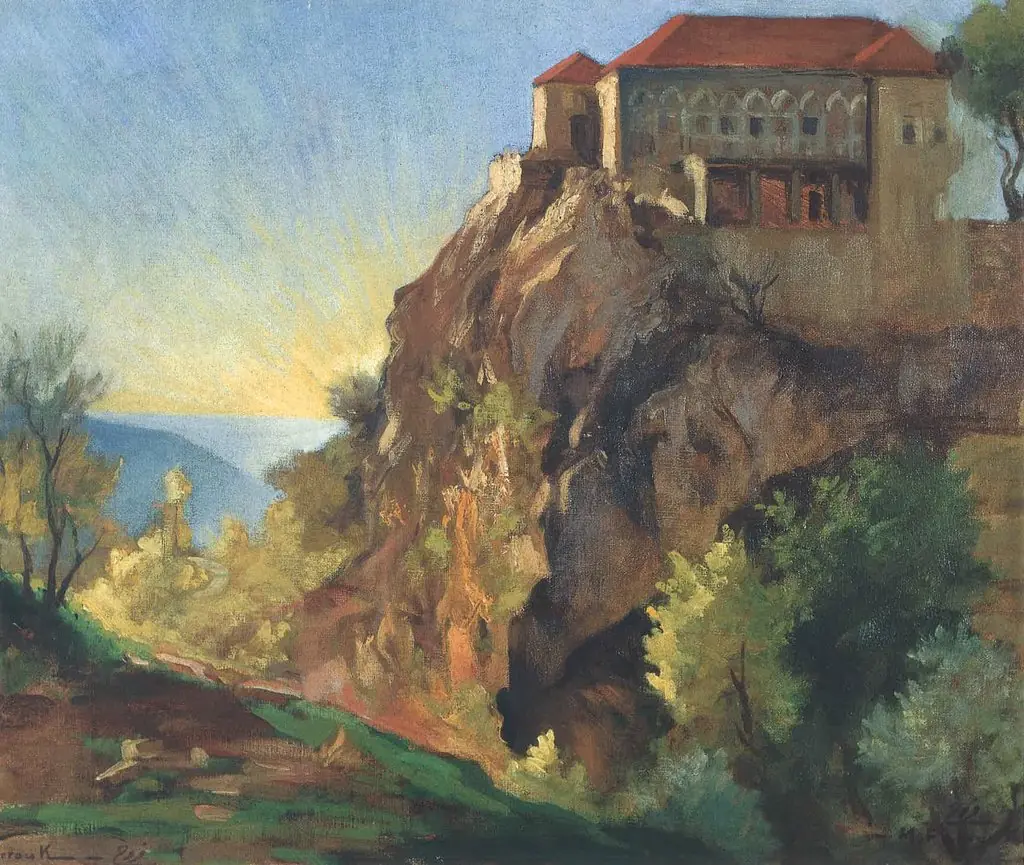 Lamartine's palace at Hammana
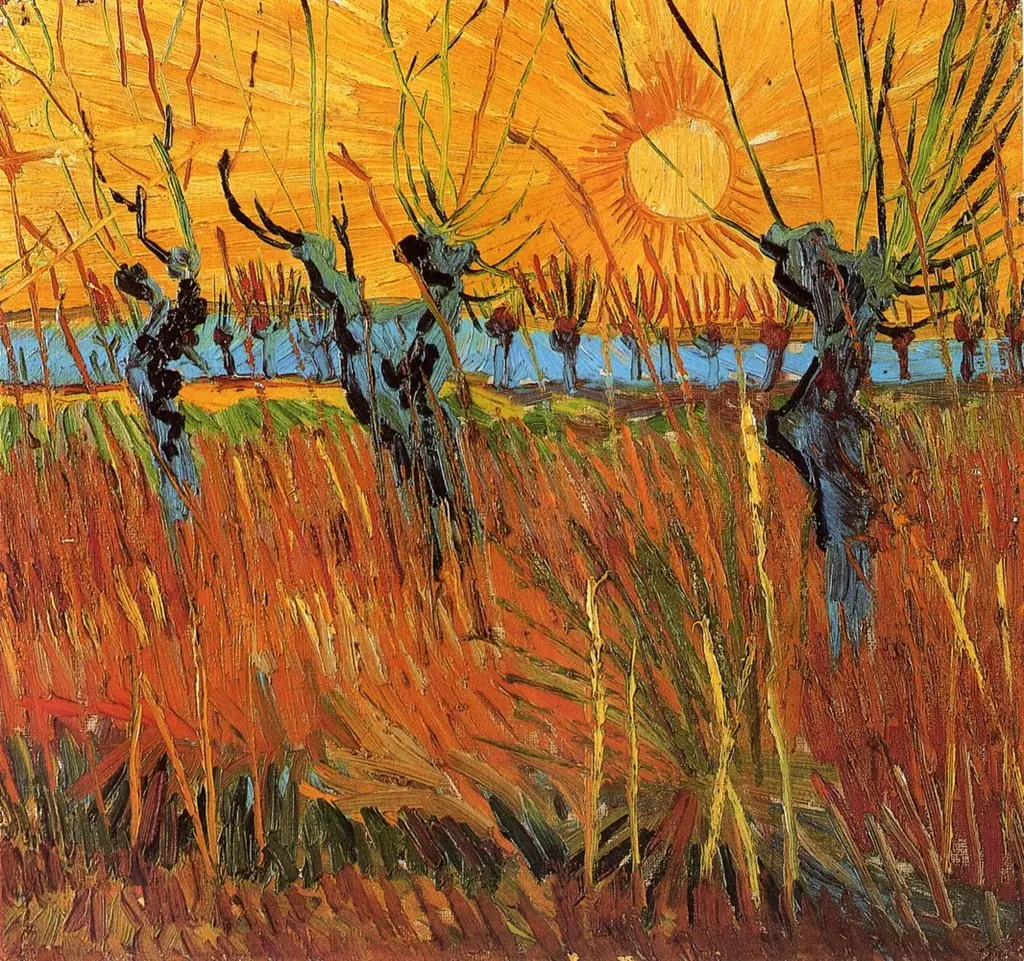 Willows at Sunset
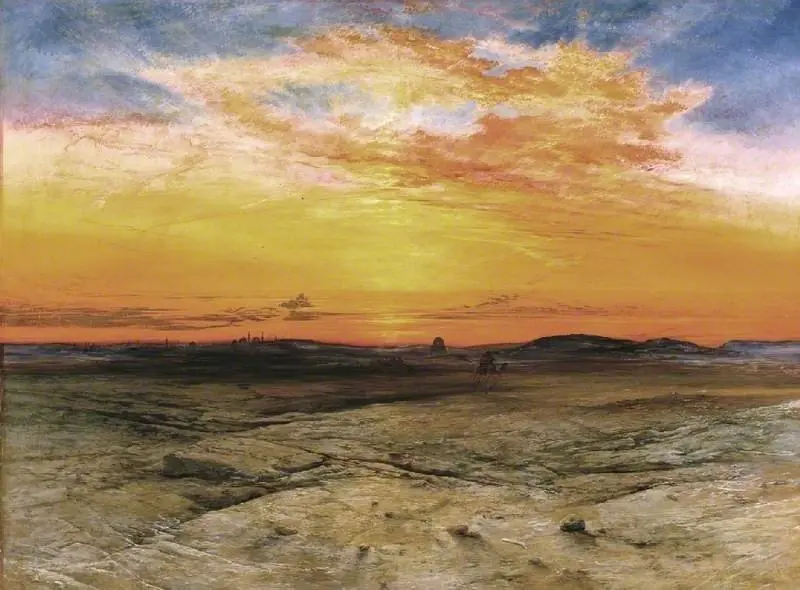 The Tombs of the Sultans near Cairo
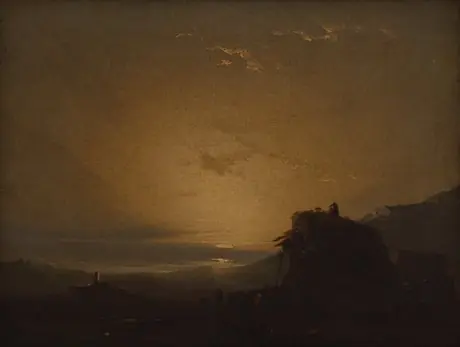 Sunset on the Sea
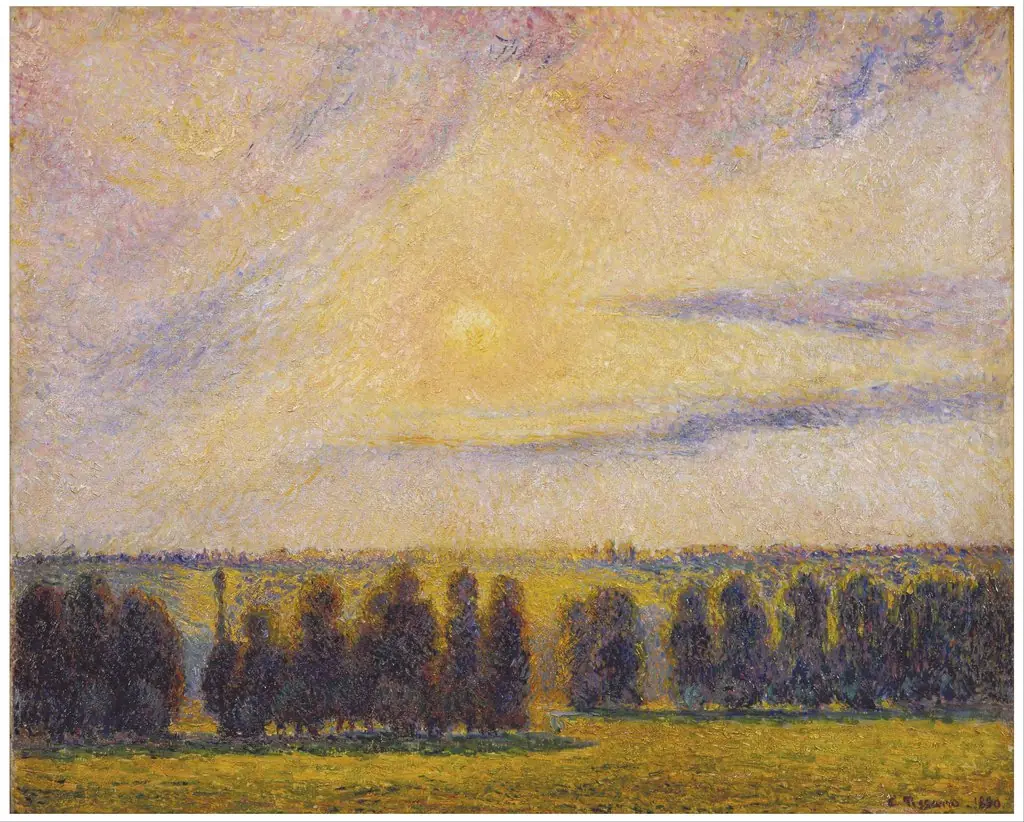 Sunset at Éragny
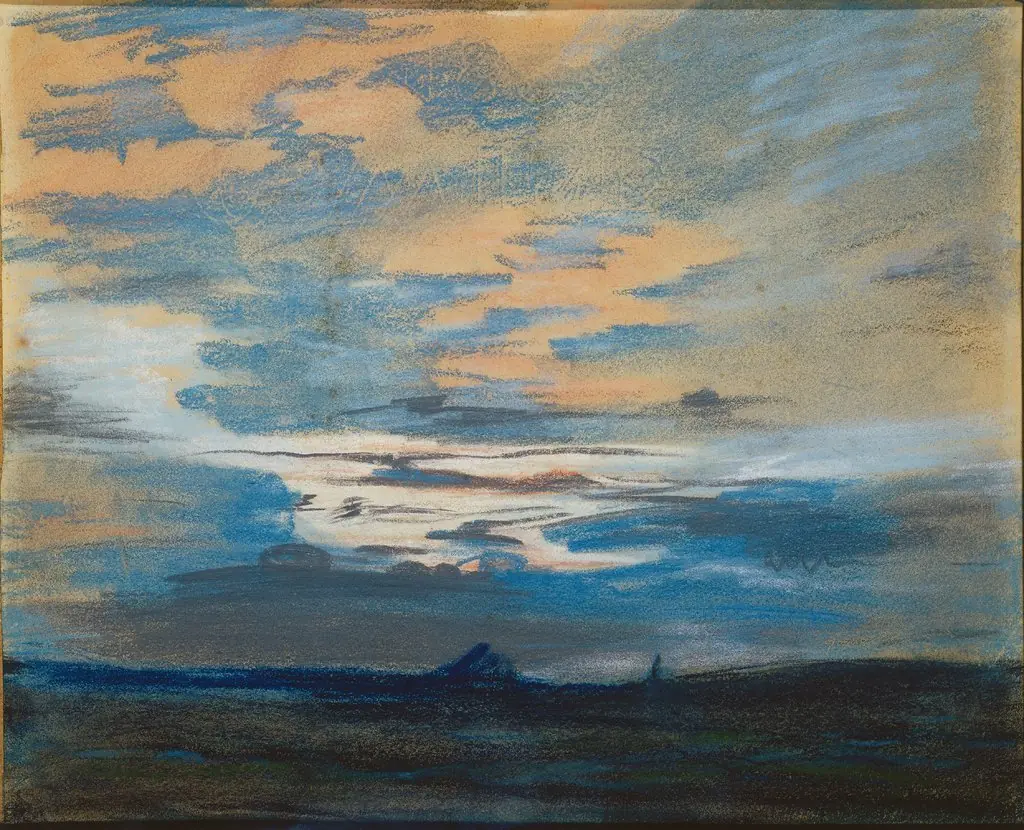 Sunset
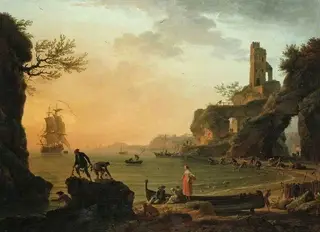 Sunset
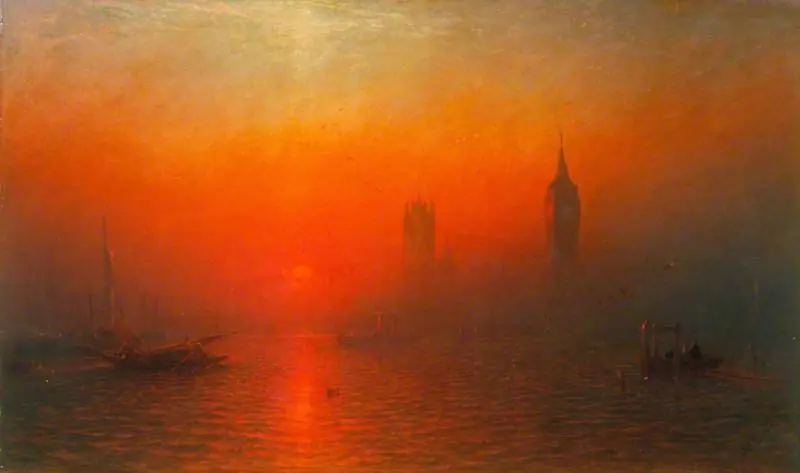 The Houses of Parliament from the River
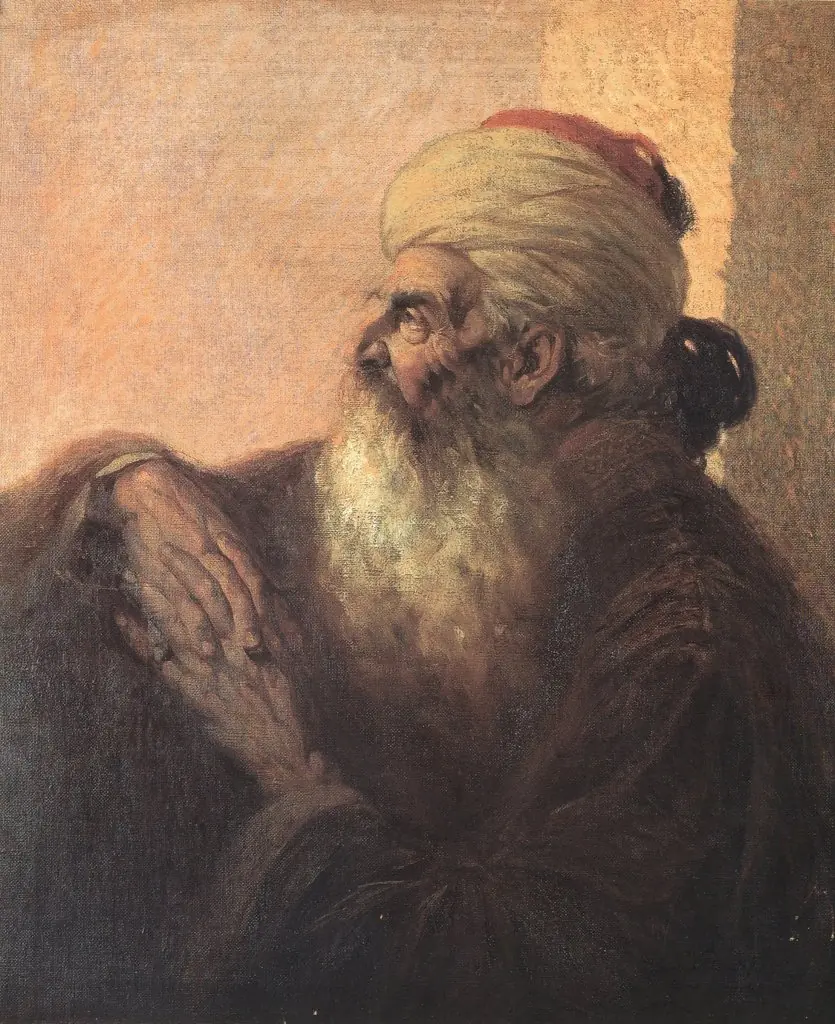 Sun and Life Setting
Frequently asked questions
What is Sunset?
Sunset (or sundown) is the disappearance of the Sun at the end of the Sun path, below the horizon of the Earth (or any other astronomical object in the Solar System) due to its rotation.
How many Sunset works does Artifact World Gallery have?
Artifact World Gallery holds 50 public-domain Sunset works, all free to view and download.
Who are the key Sunset artists?
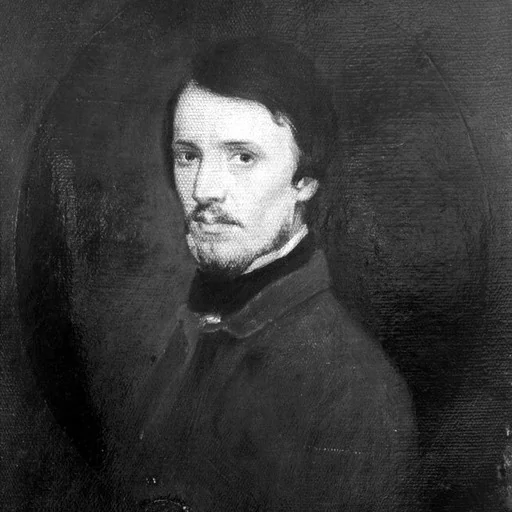
Key Sunset artists in the collection include Gustave Courbet, Thomas Chambers and Camille Pissarro.
Where can I see Sunset works?
Sunset works in the collection are held by Rijksmuseum, Metropolitan Museum of Art and Statens Museum for Kunst.