Artwork
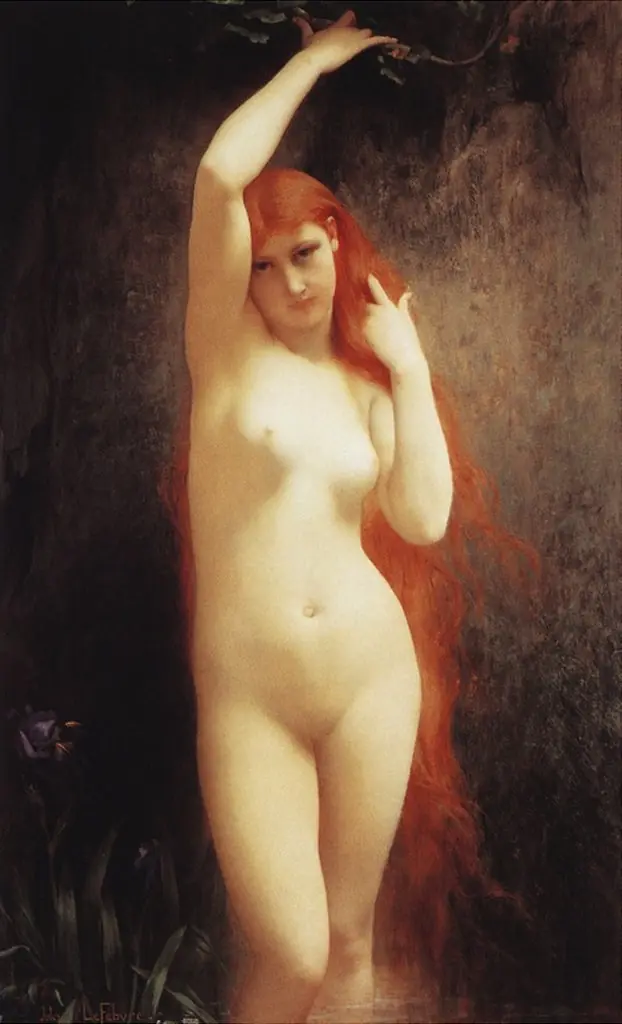
Mary Magdalene in a Grotto
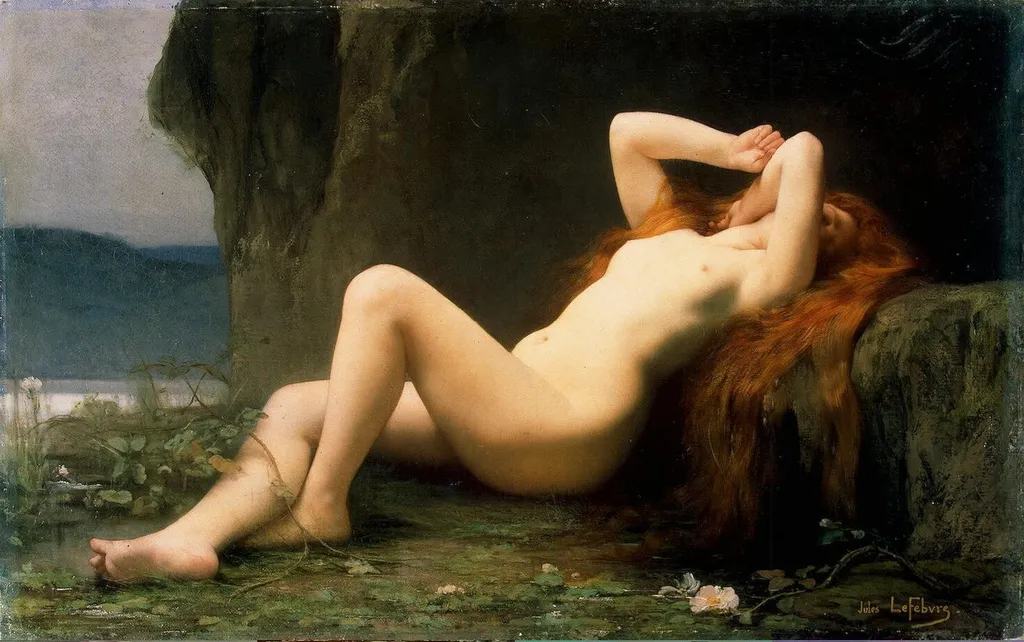
Mary Magdalene in a Grotto is an oil painting by the Academic Art artist Jules Lefebvre. It dates from 1888 and is held in the collection of the Hermitage Museum.
About this work
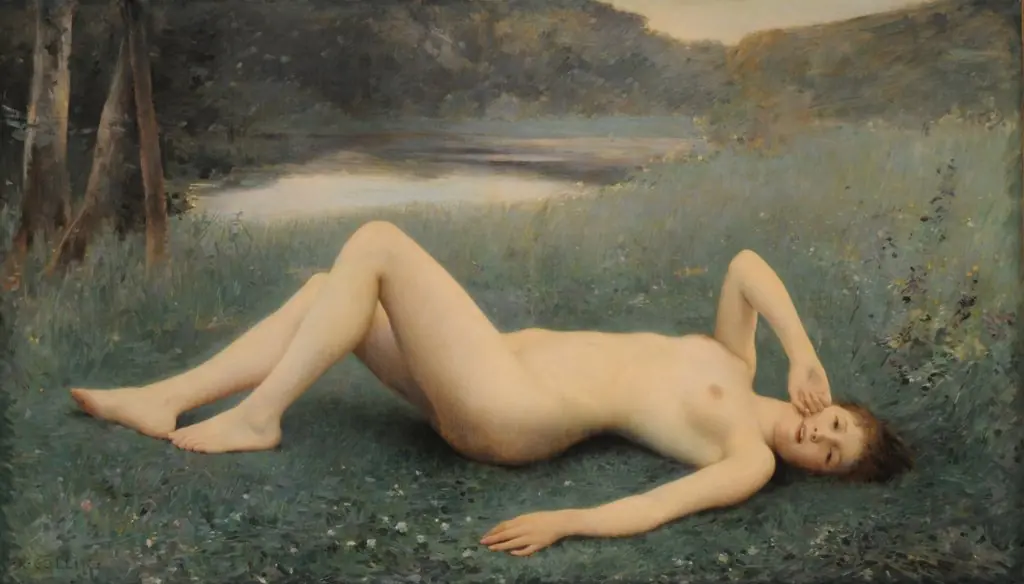
A woman reclines on a rocky outcrop, surrounded by green and a calm stretch of water, her long hair falling down her back and her gaze turned upward in thought. Jules Lefebvre's 1888 oil plays light across her skin, picking out the contours of face and body and her quiet expression.
Subject & Meaning
Her long red hair and nudity dominate the composition, alongside natural elements such as brambles, flowers, sky, and water.
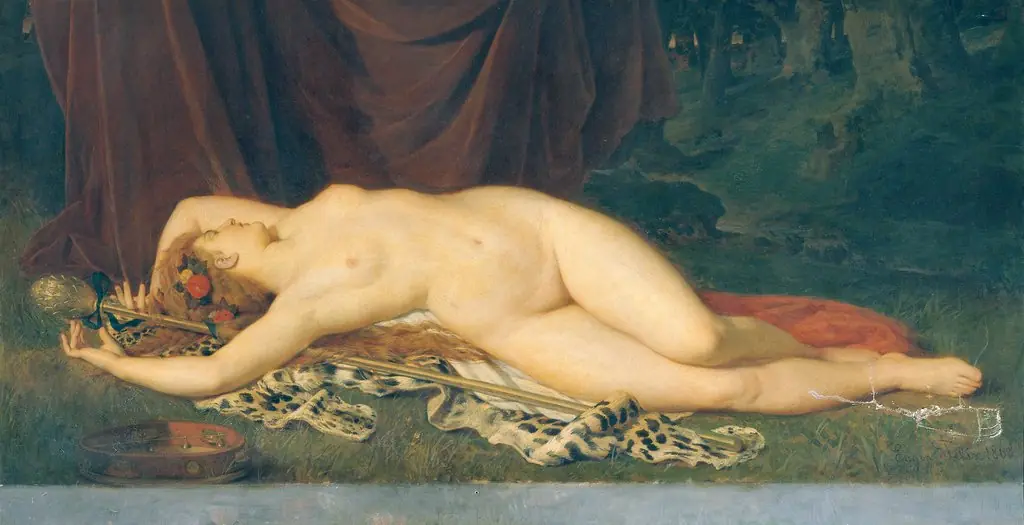
The painting depicts Mary Magdalene reclining nude at the entrance of a cave, covering her face with one arm and resting her head on a rock beside a body of water. Her long red hair and nudity dominate the composition, alongside natural elements such as brambles, flowers, sky, and water. The subject is the Penitent Magdalene, a traditional theme in Christian art, here treated in the academic nude tradition.
According to the Golden Legend of Jacopo da Varazze, after Christ's death and resurrection Mary Magdalene traveled to Gaul, withdrew into solitude near the mouth of the Rhône, and spent her final years weeping for her sins and practicing asceticism. The depiction of mortification of the flesh underscores her penitence. Art historian Albert Kostenevich has noted the work's erotic, voyeuristic treatment of the female nude within a religious subject as characteristic of Salon painting of the period.
Technique & Style
Created in 1888, Mary Magdalene in a Grotto is an oil painting on canvas, executed in the academic tradition. The work has a horizontal format measuring 71.5 by 113.5 centimetres. Stylistically, it combines religious subject matter with the conventions of the nude, depicting the saint with waist-length red hair in a reclining pose at a cave entrance.
The figure is shown completely nude, covering her face with one arm while resting her head on a stone near a body of water. The composition includes naturalistic details such as brambles, flowers, and a sky background. Art historical analysis notes the erotic quality typical of Paris Salon nudes of the period, despite the work's religious classification.
History & Provenance
Mary Magdalene in a Grotto was painted in 1888 by the French academic artist Jules Lefebvre as an oil on canvas. It debuted at the Paris Salon, where Alexandre Dumas fils purchased it to serve as a pendant to another Lefebvre painting he owned. After Dumas's death in 1895, the canvas was sent to Saint Petersburg for a Red Cross–benefit exhibition of French art; in November 1896 Tsar Nicholas II acquired it for 8,400 rubles and hung it in his private apartments at the Winter Palace.
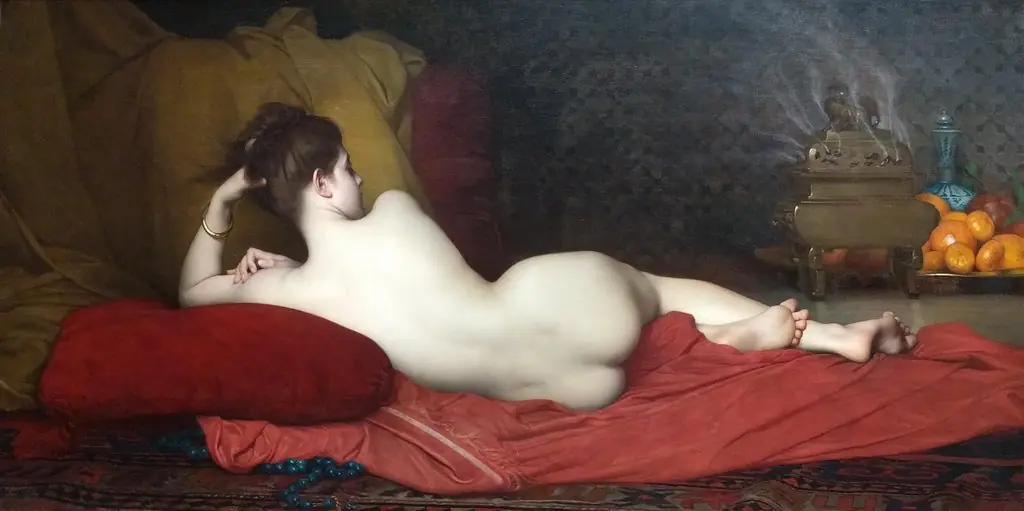
The painting entered the Hermitage Museum's collection in 1920, having been transferred from the imperial residence. A 1958 Hermitage catalogue erroneously listed it as a reclining nymph.
Context
As an academic religious nude by Jules Lefebvre, the picture situates the artist within the broader Salon trend of idealized, officially approved biblical imagery. Scholarship, notably Albert Kostenevich's essay on French nineteenth-century painting, observes that the work's erotic, voyeuristic treatment of a religious nude exemplifies academic Salon taste for such subjects. The painting's later history, its acquisition by Nicholas II, transfer to the Hermitage in 1920, and a 1958 catalogue that mistakenly labelled it a reclining nymph, reflects shifting perceptions of the academic nude across the late nineteenth and twentieth centuries.
Legacy
After its debut at the Paris Salon, the painting passed from Alexandre Dumas fils to Tsar Nicholas II, entering the Hermitage in 1920. Its display in the imperial palace and inclusion in the museum's 1958 catalogue, where it was renamed a reclining nymph, reflect changing scholarly perception of the work. Russian art historian Albert Kostenevich noted its erotic undertones within a religious context, situating it in the tradition of penitential nudes. The painting endures as an example of nineteenth-century academic religious art.
Overview
Mary Magdalene in a Grotto is an oil painting that portrays a solitary female figure within a natural, secluded environment. The subject reclines on a rocky ledge, enveloped by verdant foliage and a tranquil body of water. Her long hair flows down her back, and her upward gaze suggests contemplation or spiritual reflection, setting a meditative tone for the work.
Artist & collection