Artwork
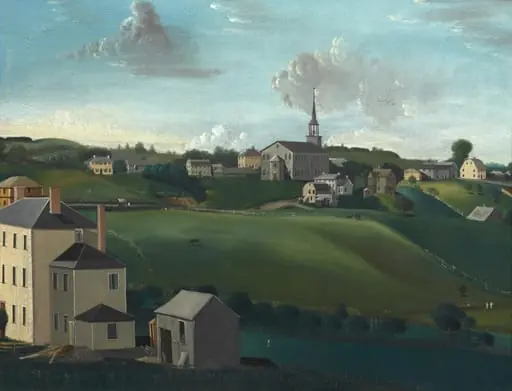
View of the Iron Works, Canton, Massachusetts
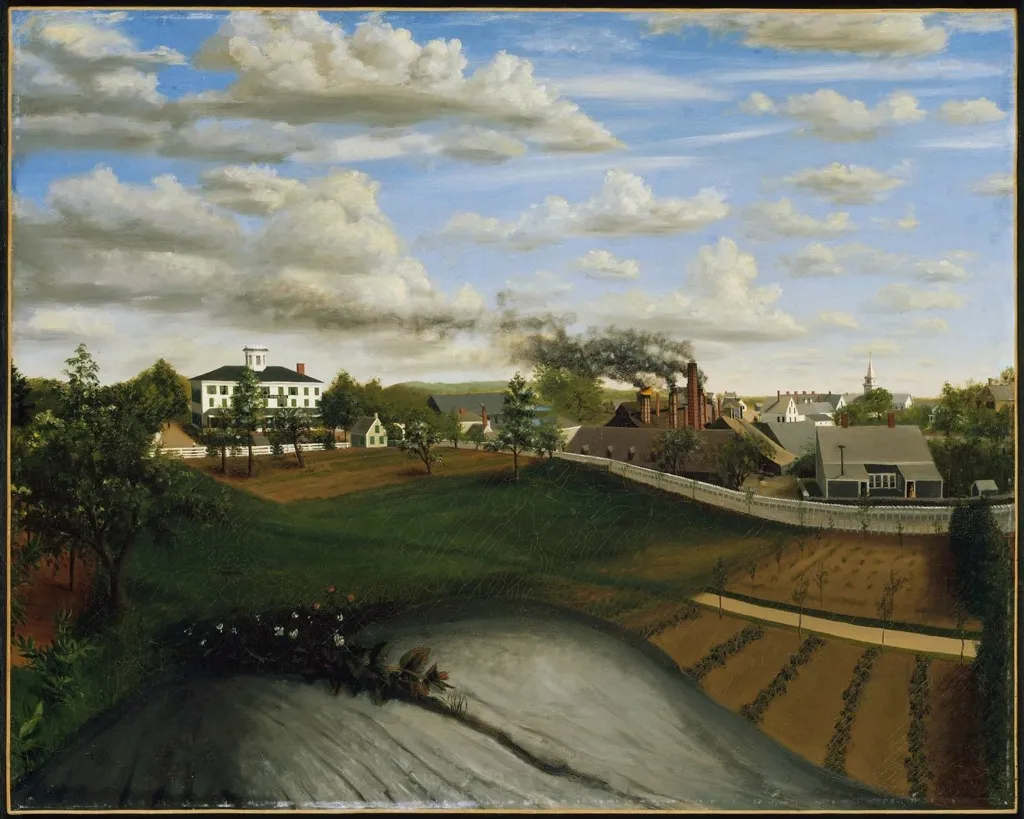
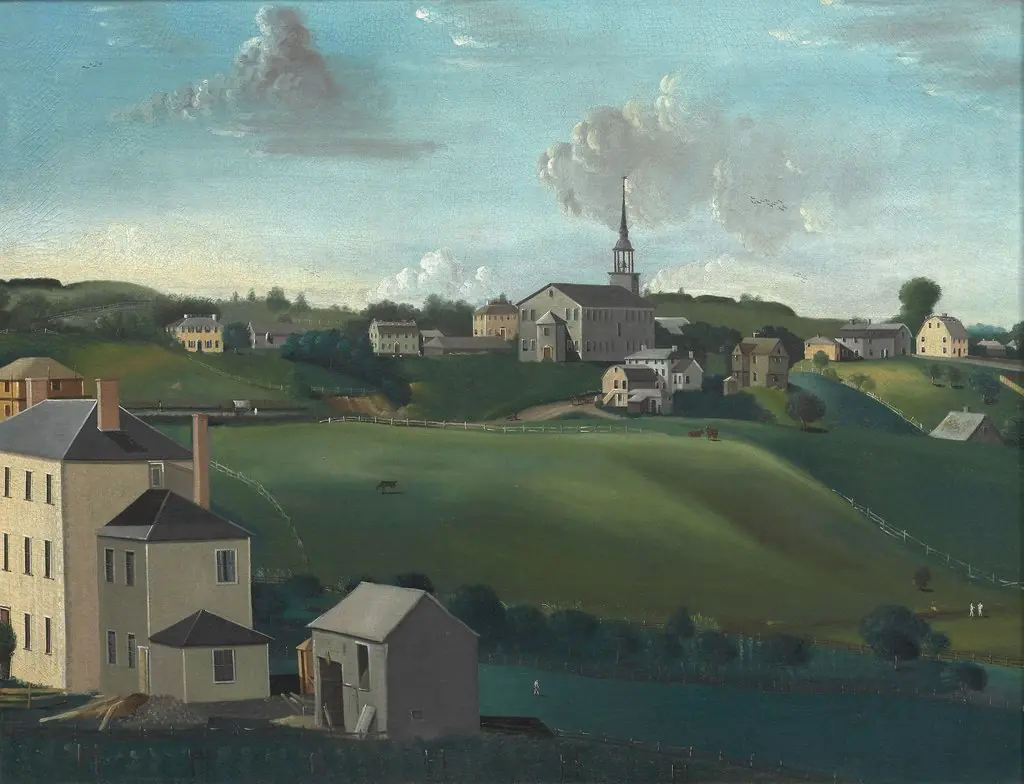
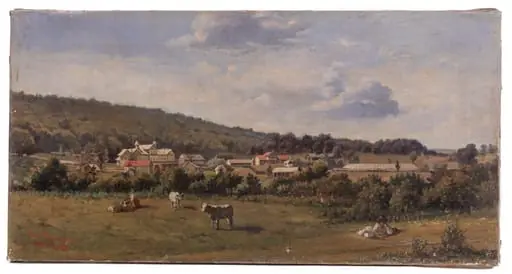
View of the Iron Works, Canton, Massachusetts is an oil painting by the American Folk Art artist Unknown. It dates from 1850 and is held in the collection of the Museum of Fine Arts Boston. This oil painting depicts a quiet landscape in Canton, Massachusetts, where industrial and rural elements coexist.
About this work
Overview
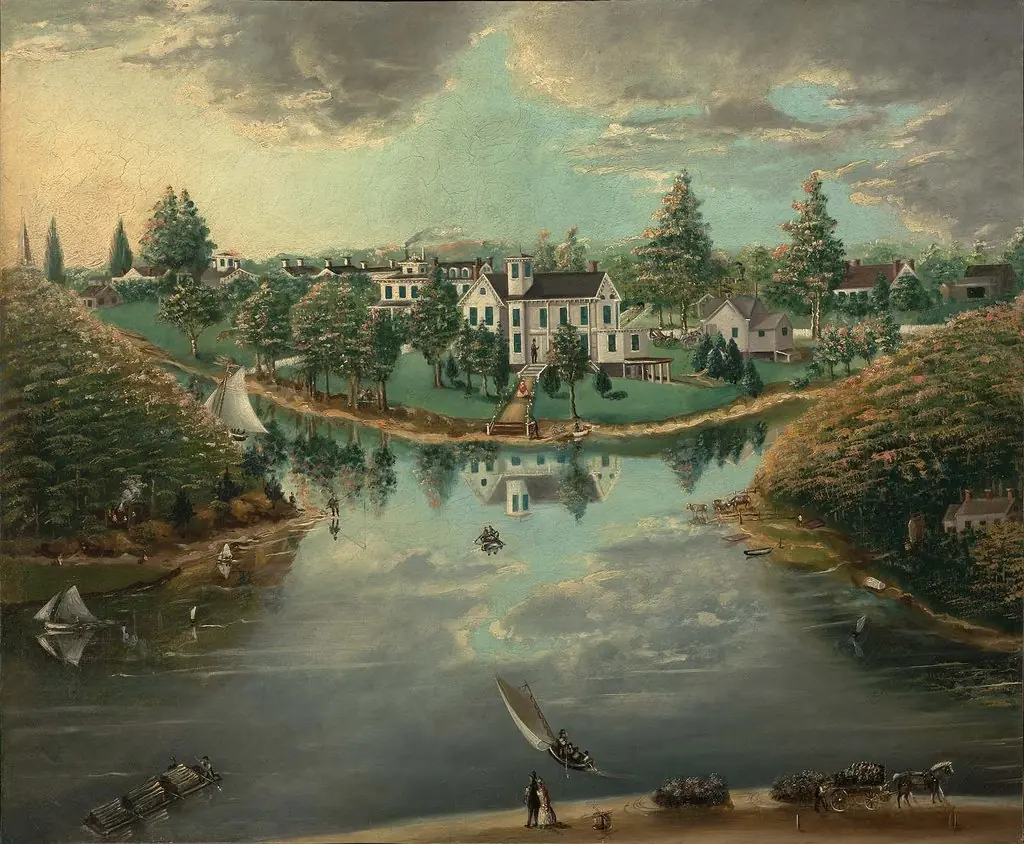
This oil painting depicts a quiet landscape in Canton, Massachusetts, where industrial and rural elements coexist. A white domestic residence stands on the left, while a functioning ironworks with a rising smokestack occupies the right. Between them, open fields, scattered trees, and a reflective body of water anchor the scene beneath a clear, cloud-dappled sky.
Subject & Meaning
The painting juxtaposes domestic tranquility with the quiet presence of early industrial activity. The ironworks, though prominent, does not dominate the scene; its smoke blends into the sky rather than obscuring it. This balance suggests a moment in American history when industry was integrated into, rather than alienating, the natural landscape.
Technique & Style
The artist employs soft, blended brushwork to render the sky and water, creating a sense of calm. Structural elements like the factory and house are rendered with sharper edges and muted tones, grounding them in the scene. The palette favors earthy greens, grays, and whites, reinforcing a restrained, observational approach to the subject.
History & Provenance
Created in the early 19th century, the painting was likely made by a local artist familiar with Canton’s industrial development. It entered the collection of the Museum of Fine Arts, Boston, where it remains today as a documented example of regional American landscape painting from the period of early industrialization.
Context
During the 1820s–1840s, Canton was home to one of New England’s earliest ironworks, supplying materials for infrastructure and tools. The painting reflects a broader cultural tendency to depict industry not as disruptive, but as a natural extension of the land, a view shaped by economic growth and limited environmental consequence at the time.
Legacy
The work contributes to a modest but significant body of American paintings that record the integration of industry into rural life before the full impact of the Industrial Revolution. It offers a visual record of a transitional moment, valued for its unembellished documentation rather than dramatic narrative.
Artist & collection