Artwork
Buddhist Retreat by Stream and Mountains
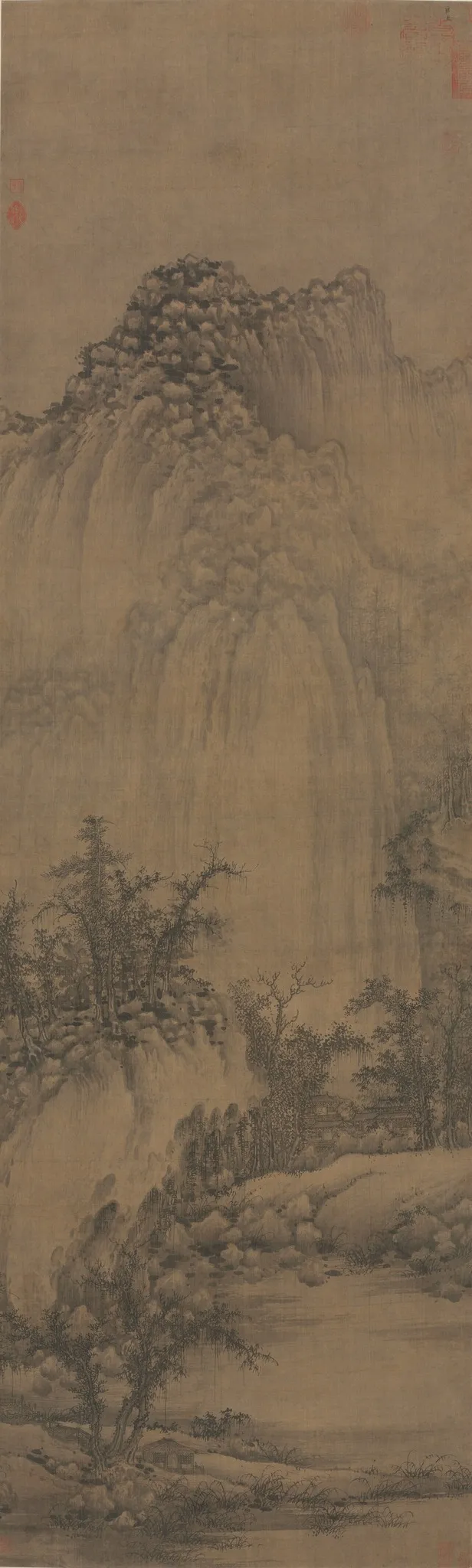
Buddhist Retreat by Stream and Mountains is an ink painting by the Song dynasty landscape artist Juran. It is held in the collection of the Cleveland Museum of Art.
About this work
History & Provenance
The provided sources do not contain information regarding specific exhibitions in which this artwork has been displayed.
The Buddhist Retreat by Stream and Mountains is attributed to the Chinese painter Juran, who was active between 960 and 985 CE, placing its creation in the mid‑10th century. The work entered the Cleveland Museum of Art in 1959 and is recorded there under accession number 1959.348; no earlier ownership or commission details are provided in the available sources. Executed in ink on silk, the painting measures approximately 185.4 cm in height and 57.5 cm in width.
Buddhist Retreat by Stream and Mountains is held in the collection of the Cleveland Museum of Art. The work is cataloged under the accession number 1959.348. Executed in ink on silk, the painting measures 185.4 cm in height and 57.5 cm in width. The provided sources do not contain information regarding specific exhibitions in which this artwork has been displayed.
Context
Juran's Buddhist Retreat by Stream and Mountains, a silk painting dated to the Song dynasty period of Chinese art history, depicts a tranquil retreat nestled within a mountainous landscape, reflecting Daoist and Buddhist ideals of harmony with nature. The work measures 185.4 cm in height and 57.5 cm in width, and is housed in the Cleveland Museum of Art, where it is part of their collection of Asian art. Scholars have noted its significance in the study of Chinese landscape painting traditions and its contribution to the understanding of Juran's artistic output, which is situated within the broader context of Southern Song dynasty painting.
The painting's composition and technique exemplify the integration of spiritual themes within naturalistic settings, a hallmark of the era's artistic expression.
The artwork's reception and scholarly interpretation underscore its role in advancing discourse on Chinese painting, particularly in relation to Buddhist and Daoist philosophical influences. Its presence in a major museum collection has facilitated detailed analysis of Juran's work within the framework of East Asian art history, contributing to the broader understanding of the cultural and historical context of Chinese painting during the Song dynasty.
Overview
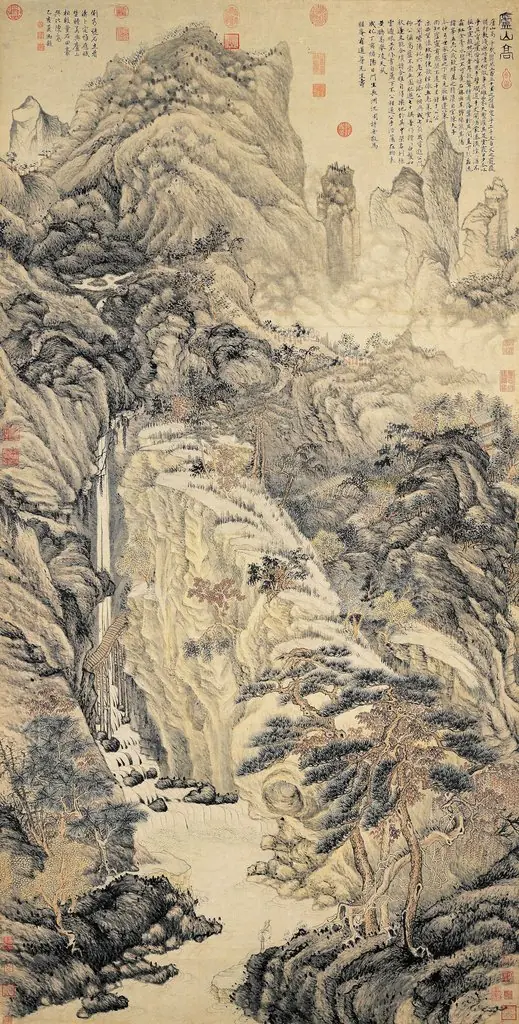
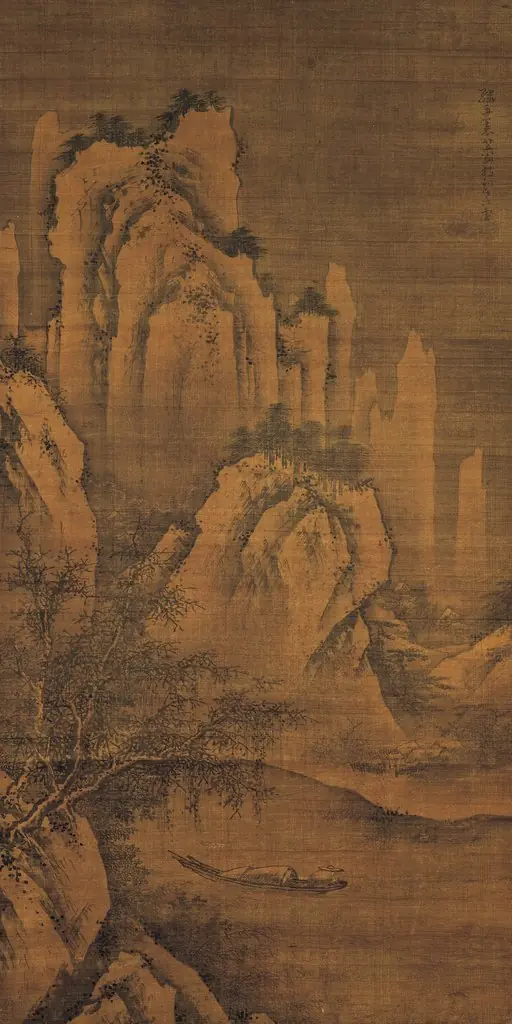
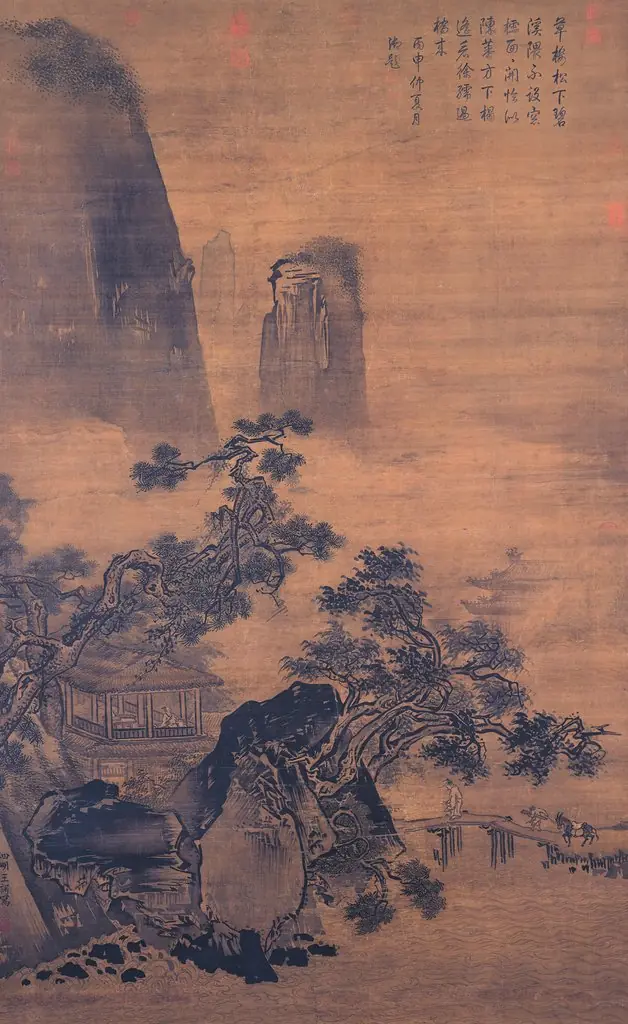
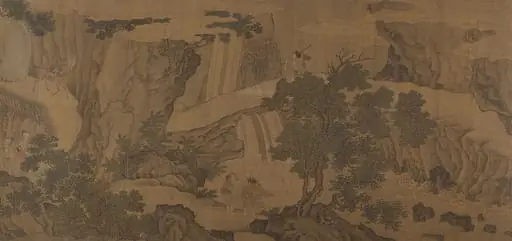
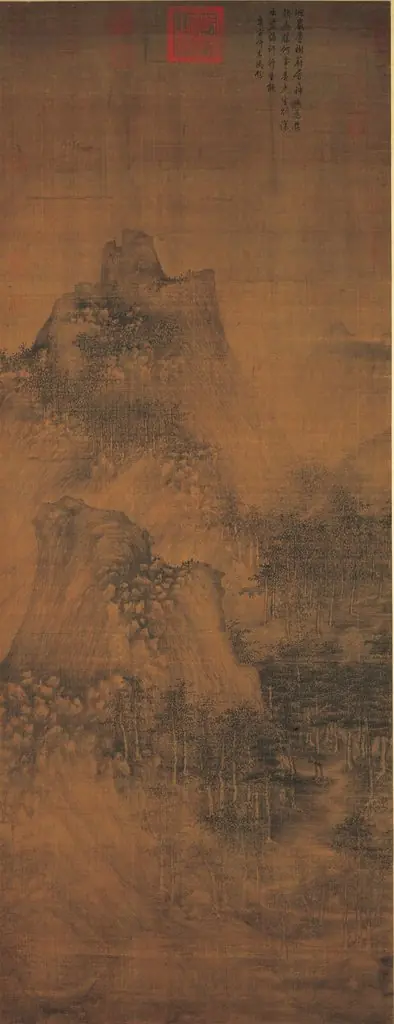
The work, titled Buddhist Retreat by Stream and Mountains, is a silk painting that depicts a solitary, craggy peak crowned by a cascading waterfall. Below the cliff, contorted trees cling to the slope while a narrow stream winds its way through the lower ground. The palette is dominated by muted browns and grays, punctuated by darker linear marks that suggest shadow and texture.
Subject & Meaning
The composition presents a secluded natural setting that evokes the contemplative atmosphere associated with Buddhist hermitages. The towering mountain and flowing water together suggest a place of retreat, where the rugged landscape serves as a backdrop for meditation and spiritual withdrawal.
Technique & Style
The artist employs soft, smudged brushstrokes that give the mountain a misty, almost breathing quality. The delicate handling of the silk surface allows subtle gradations of tone, while the darker lines delineate form and depth, creating a sense of atmospheric perspective.
Artist & collection
Artist
This artist painted ink-and-silk landscapes that feel like quiet walks into another time.