Artwork
Buddhist Retreat by Stream and Mountains
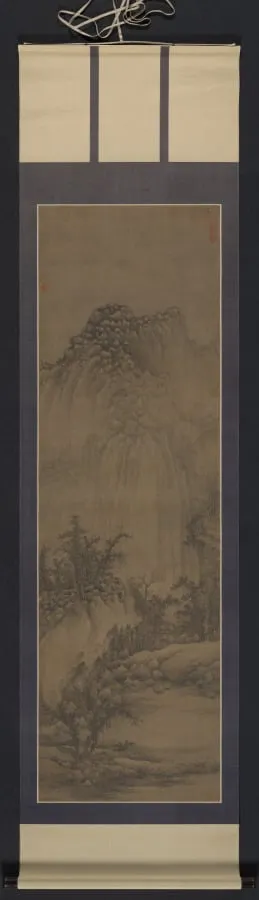
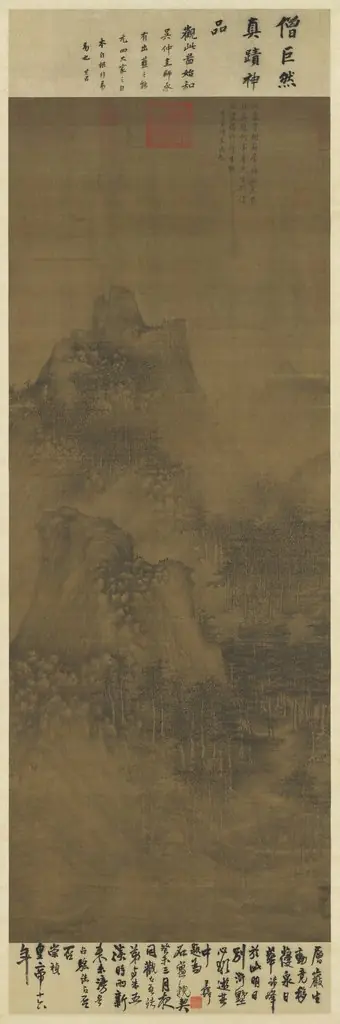
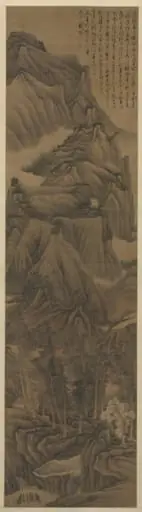
Buddhist Retreat by Stream and Mountains is an unspecified painting by the Song dynasty landscape artist Juran. It dates from 972 and is held in the collection of the Cleveland Museum of Art.
- Accession no.
- 1959.348
- Credit line
- Gift of Katharine Holden Thayer
About this work
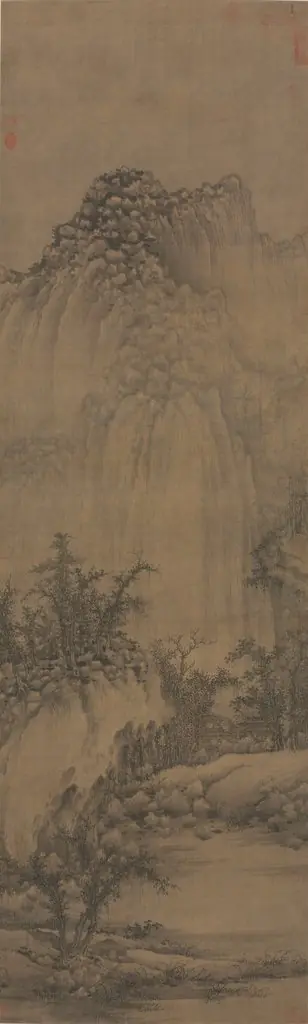
You see a tall mountain wrapped in mist, a temple tucked into the cliffs, and a thin waterfall spilling into a quiet stream.
You see a tall mountain wrapped in mist, a temple tucked into the cliffs, and a thin waterfall spilling into a quiet stream.
This painting helped start a new way of showing Chinese landscapes, soft, wet ink that blurs edges like morning fog. Juran painted it after his kingdom fell, so the mountain might feel like a safe place to hide.
To see how this style grew, look up subject: china, northern song dynasty (960-1127).
Overview
The hand‑scroll titled Buddhist Retreat by Stream and Mountains presents a solitary peak shrouded in mist, a modest temple clinging to its cliffs, and a narrow cascade feeding a tranquil waterway. The composition balances a dominant vertical element with delicate, atmospheric details, creating a contemplative scene that invites the viewer into a secluded, monastic landscape.
Subject & Meaning
The central mountain serves as a symbolic refuge, echoing the Buddhist ideal of withdrawal from worldly affairs. The tucked‑away temple and the gentle waterfall suggest a harmonious relationship between spiritual practice and the natural world, while the surrounding mist conveys a sense of impermanence and the veil between the earthly and the transcendent.
Technique & Style
Executed in wet ink on paper, the work combines the bold, textured brushwork of the northern academy, evident in the towering summit, with the softer, mist‑laden strokes characteristic of the Jiangnan school. Long, fibrous brush marks delineate the rock faces, while subtle dotting creates the illusion of distant boulders and a hazy atmosphere, blurring forms like early morning fog.
History & Provenance
Created by the monk‑artist Juran after the fall of the Southern Tang in 976, the painting reflects his relocation from Nanjing to Kaifeng under the Northern Song. Juran, a disciple of Dong Yuan, merged southern landscape traditions with northern stylistic influences, marking a transitional moment in Chinese art as political shifts prompted new aesthetic syntheses.
Artist & collection
Artist
This artist painted ink-and-silk landscapes that feel like quiet walks into another time.