Artwork
Silenus
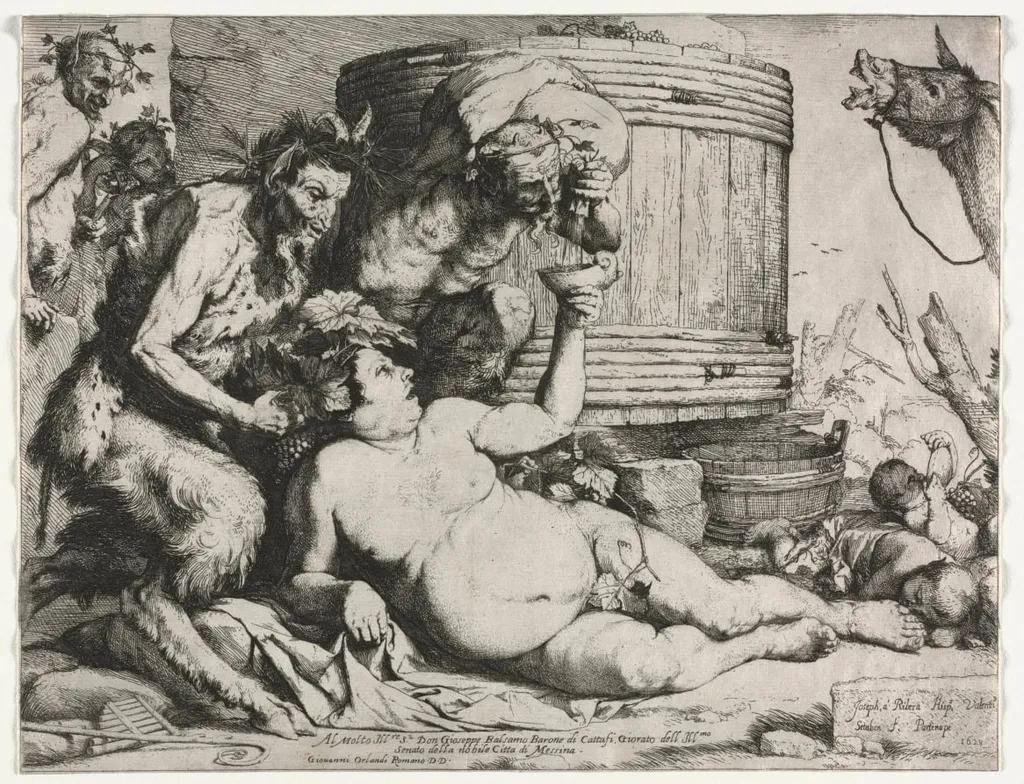
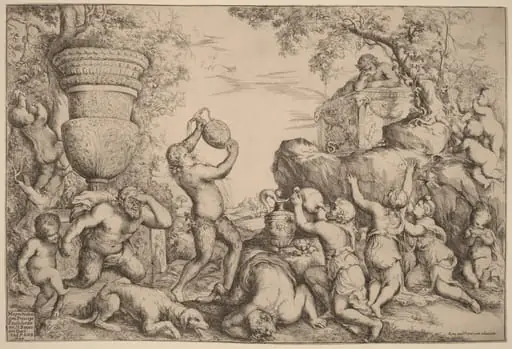
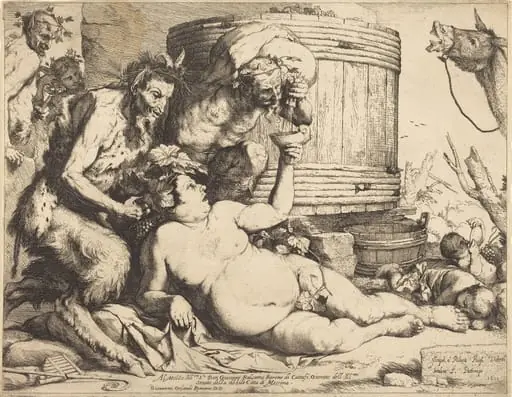
Silenus is a print by the Baroque artist Jusepe de Ribera. It dates from 1628 and is held in the collection of the Cleveland Museum of Art.
- Accession no.
- 1966.123
- Credit line
- Andrew R. and Martha Holden Jennings Fund
About this work
Overview
This print, titled Silenus, depicts a humorous scene centered around the inebriated tutor of Bacchus, the wine god. The work showcases Jusepe de Ribera's use of etching to create a richly textured and sensual atmosphere.
Subject & Meaning
The scene features Silenus lying drunk on the ground as a satyr pours wine into his raised cup, surrounded by chaotic and playful elements, including mimicking infants and a braying donkey. Pan crowns Silenus with grapevines, adding to the bacchanalian atmosphere.
Technique & Style
Ribera's etching technique is characterized by deep shadows and bright light, a style known as chiaroscuro, which gives the figures a pronounced three-dimensional quality. The use of chiaroscuro contributes to the overall sensuality and texture of the image.
History & Provenance
Ribera drew inspiration from Andrea Mantegna's bacchanalia image, adapting the subject matter to his own style by introducing more texture and sensuality.
Artist & collection
Artist
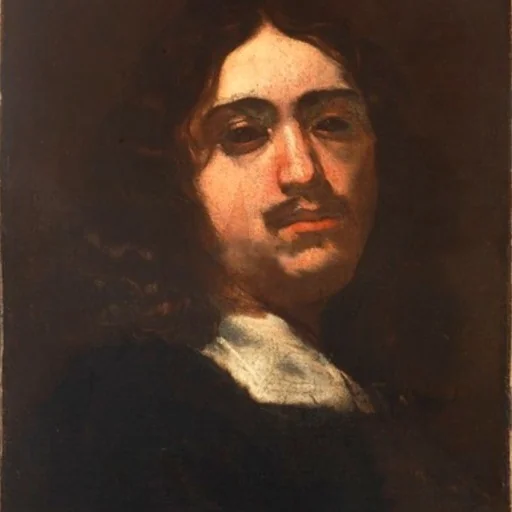
Jusepe de Ribera (Valencian:; baptised 17 February 1591 – 3 November 1652) was a Spanish painter and printmaker.