Artwork
Isaac and Jacob
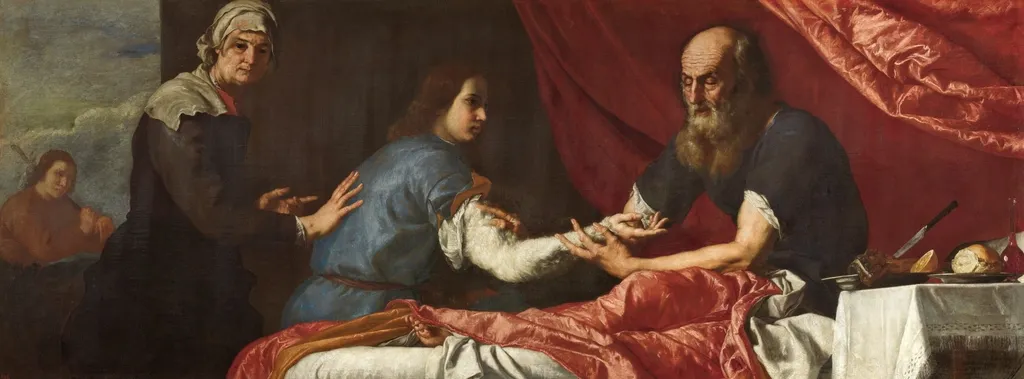
Isaac and Jacob is an oil painting by the Early Baroque Italian artist Jusepe de Ribera. It dates from 1637 and is held in the collection of the Museo del Prado.
About this work
Subject & Meaning
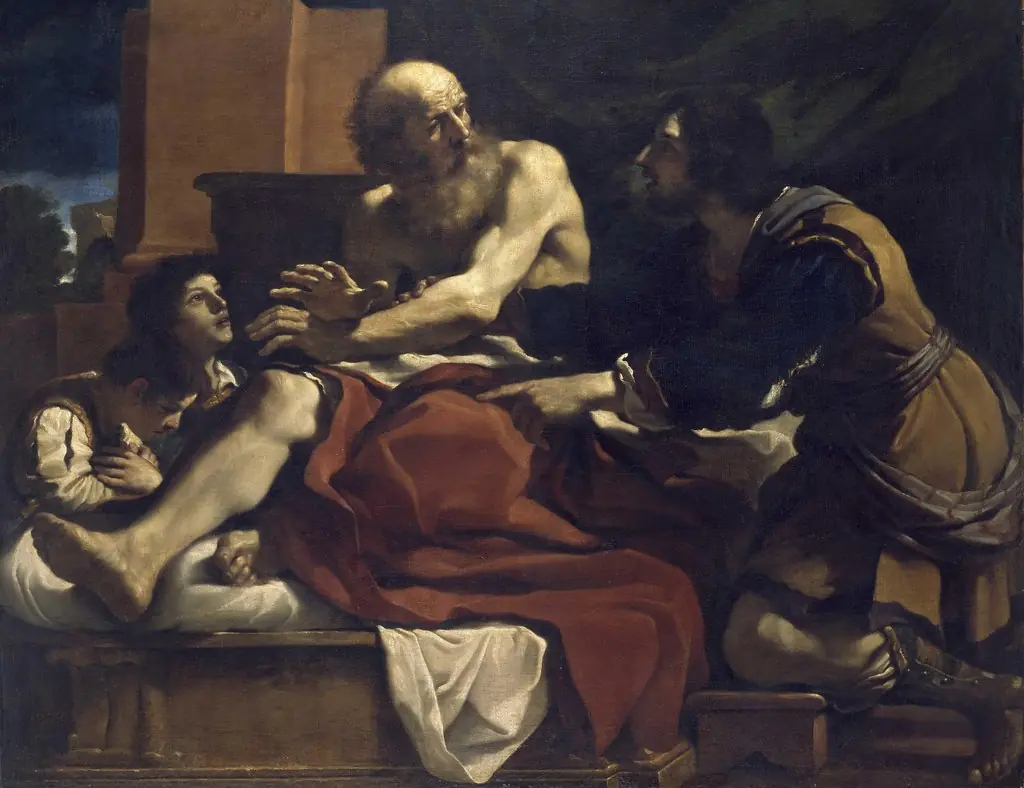
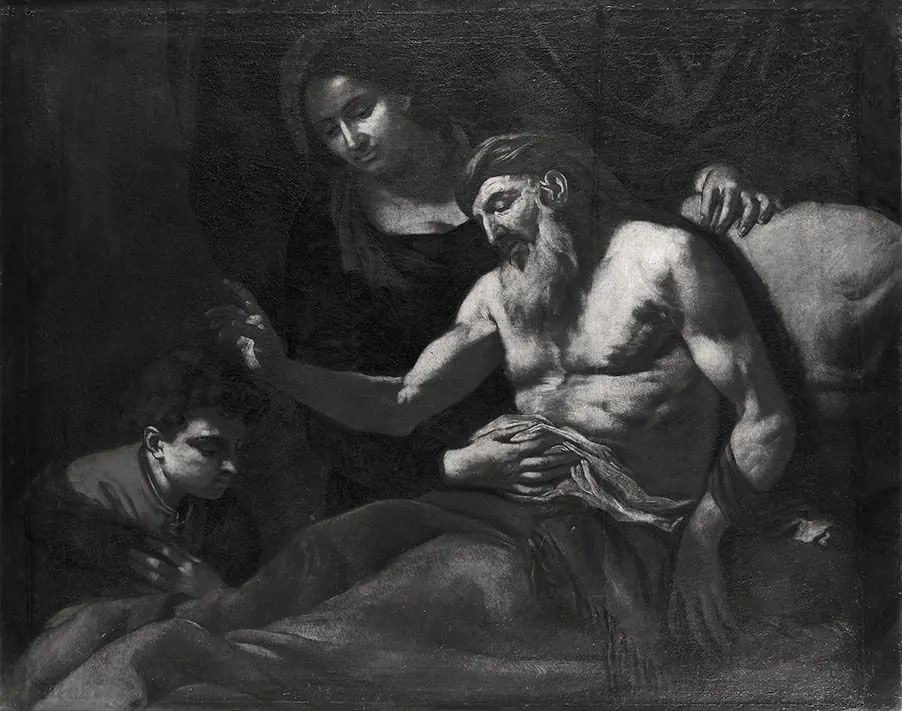
Isaac, blind and reclining, feels Jacob’s arm covered with sheepskin to mimic his hairy brother, while Rebekah guides the deception.
The canvas shows the biblical moment in which Jacob, aided by his mother Rebekah, receives Isaac’s blessing meant for Esau. Isaac, blind and reclining, feels Jacob’s arm covered with sheepskin to mimic his hairy brother, while Rebekah guides the deception. The scene includes Esau returning from the hunt, emphasizing the betrayal.
Ribera renders the figures in half‑length, using dramatic chiaroscuro and vibrant light to heighten tactile realism, from the texture of fabric to the sheepskin. The elongated format suggests the work was intended for a high placement such as an over‑door.
Technique & Style
Executed in 1637, this work is an oil painting on canvas featuring an elongated horizontal format. Sources vary slightly on precise measurements, recording dimensions as either 110 by 291.5 cm or 129 by 289 cm. The composition utilizes a considerably low focal point, suggesting it was originally designed to be viewed from below, possibly installed as an over-door or over-window piece.
Stylistically, the painting combines early naturalism and chiaroscuro with chromatic influences attributed to the Venetian School and Van Dyck. Ribera employs vibrant light to create a theatrical atmosphere, emphasizing the tactile qualities of fabrics and sheepskin while rendering the figures with striking naturalism. The scene includes a notable still life element on the right, a genre the artist rarely practiced, which served as a reference for later painters.
History & Provenance
Isaac and Jacob has been part of the Spanish Royal Collections since at least 1734, when it was recorded in the Royal Alcázar of Madrid, likely in the Hall of Mirrors, before being moved following a fire that year. It subsequently hung in the Royal Palace until after the War of Independence, after which King Ferdinand VII ordered its transfer to the Real Academia de Bellas Artes de San Fernando in 1816. The painting entered the Museo del Prado in Madrid in 1854, where it remains today.
Some sources indicate the work was displayed at the Prado as early as 1818, though the official transfer date is consistently cited as 1854. Its elongated format and low focal point suggest it was originally intended for placement above a door or window.
Context
Jusepe de Ribera’s 1637 canvas Isaac and Jacob entered the Royal Collections and later the Prado after surviving a 1734 fire, eventually becoming part of the museum’s permanent display. Art historians regard the work as one of the painter’s most mature expressions, noting its theatrical composition, low viewpoint, and masterful use of light to render texture and three‑dimensionality. The subject of Jacob’s deception of Isaac reflects Baroque concerns with biblical narrative and chiaroscuro, situating the painting within Ribera’s broader oeuvre of intense, naturalistic religious scenes.
Critical literature, including Pérez Sánchez and Spinosa’s 1992 monograph, emphasizes its significance as a high point in Spanish Baroque painting and as a reference point for later artists.
Legacy
Critical and art-historical discourse has consistently ranked Isaac and Jacob among Ribera’s most mature works, emphasizing its synthesis of naturalism, Venetian-inflected color, and pronounced chiaroscuro as foundational to his later reputation.
The painting’s elongated format and low viewpoint, likely intended for placement above a door or window, have been noted as innovative compositional strategies that influenced later Spanish and European treatments of dramatic, half-length narrative scenes. Its still-life detail on the right, despite Ribera’s limited engagement with the genre, became a touchstone for subsequent artists tackling similar biblical subjects, reinforcing the work’s status as a technical and thematic reference.
Overview
Jusepe de Ribera's painting, Isaac and Jacob, was completed in 1637. This oil on canvas work depicts a scene from the biblical narrative, showcasing the artist's characteristic approach to religious subjects. Ribera, a prominent figure in Spanish Baroque art, often rendered dramatic and emotionally charged compositions.
The painting exemplifies his mastery of the medium, utilizing oil paint to achieve rich textures and profound visual depth.
Artist & collection
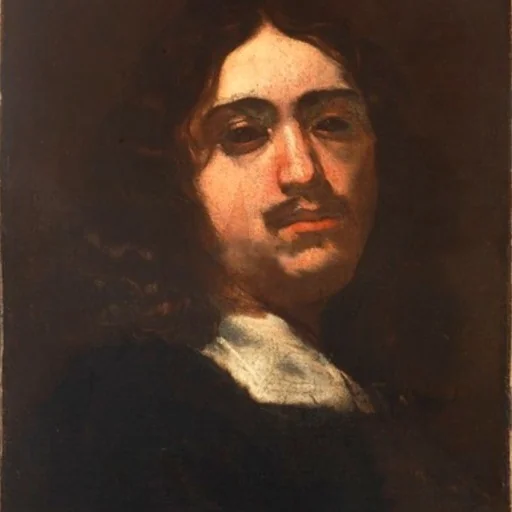
Artist
Jusepe de Ribera (Valencian:; baptised 17 February 1591 – 3 November 1652) was a Spanish painter and printmaker.