Artwork
Saint Jerome
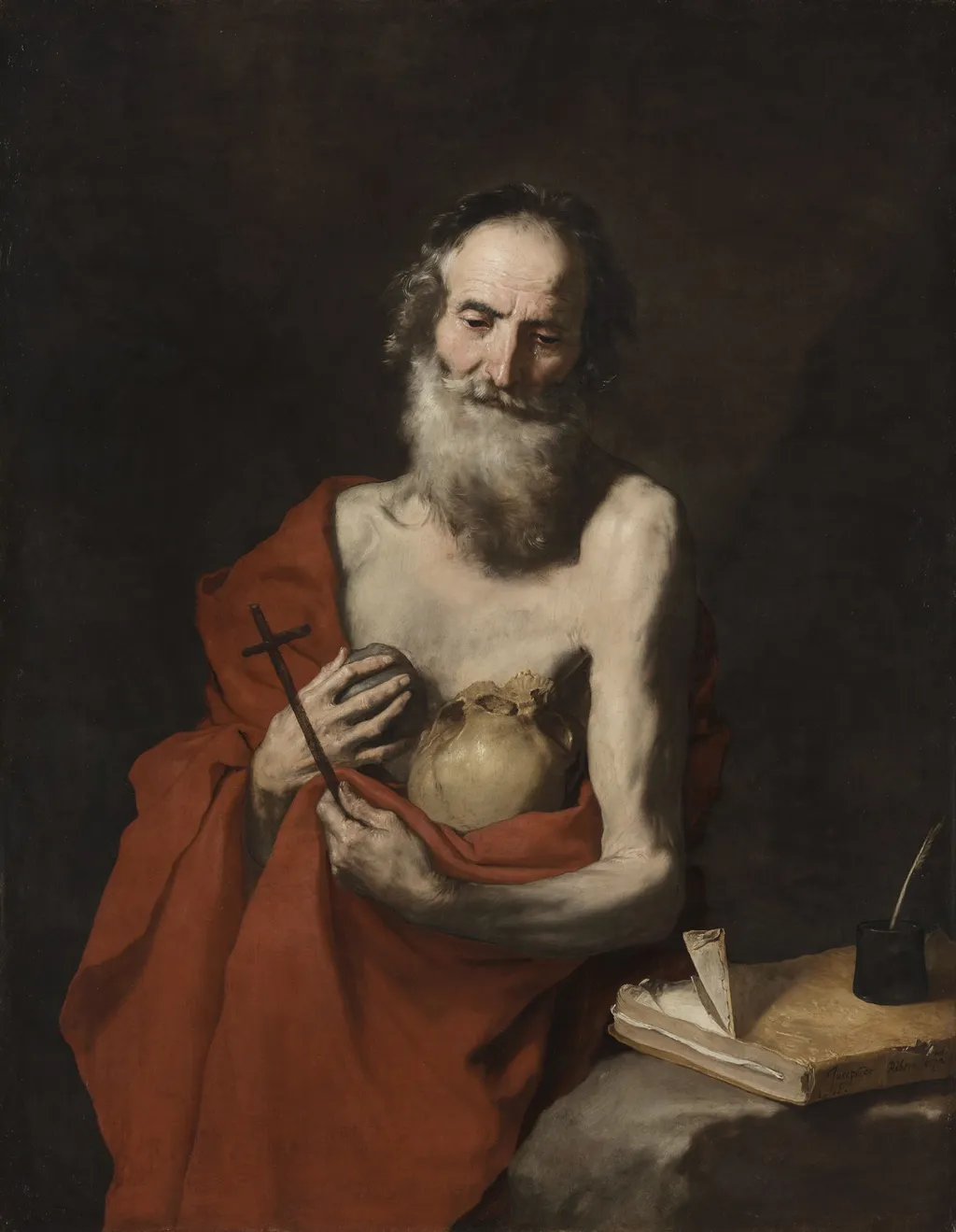
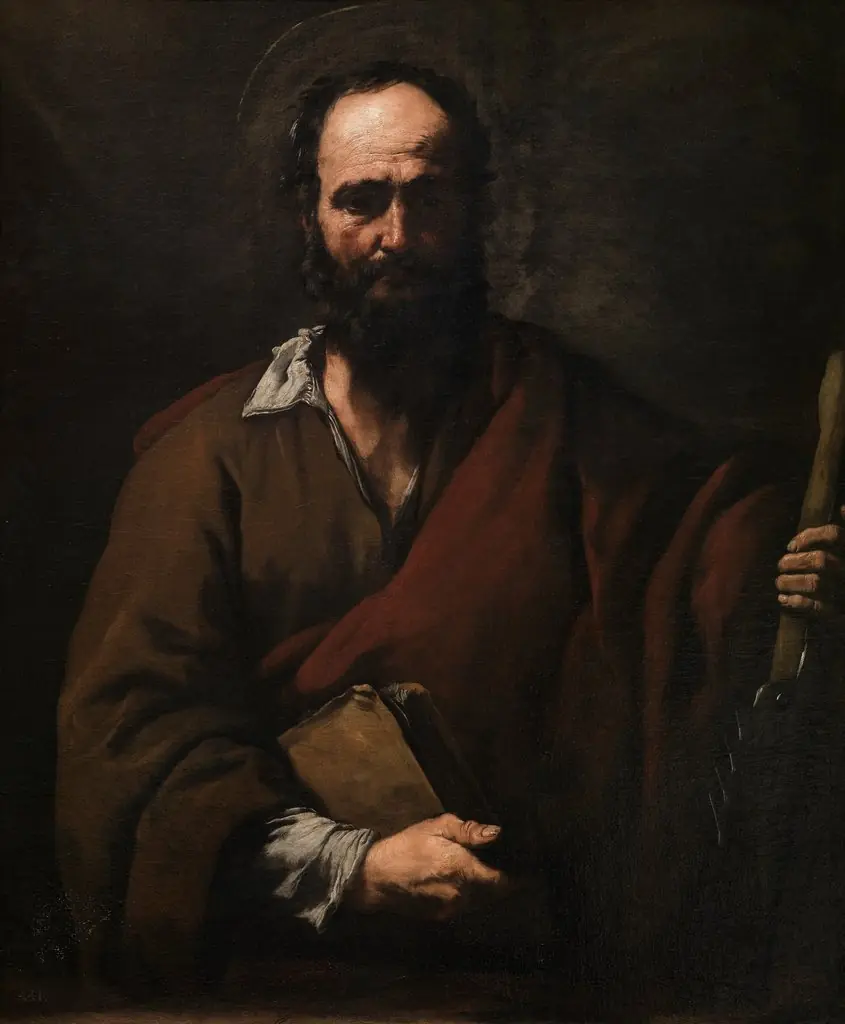
Saint Jerome is an oil painting by the Spanish Baroque Tenebrist artist Jusepe de Ribera. It dates from 1638 and is held in the collection of the Cleveland Museum of Art.
About this work
Subject & Meaning
As a religious genre piece produced in Spain, the work represents the veneration of Saint Jerome, serving as a devotional image centered on his identity.
Created in 1638 by Jusepe de Ribera, this oil painting depicts Saint Jerome as its sole main subject. Classified as a work of religious art, the image focuses entirely on the figure of Jerome, a prominent saint in Christian tradition. The sources identify the piece specifically by its depiction of this holy figure, without detailing additional iconographic attributes such as a lion, skull, or cardinal's hat that often accompany his portrayal in other contexts.
As a religious genre piece produced in Spain, the work represents the veneration of Saint Jerome, serving as a devotional image centered on his identity. The composition isolates the saint, emphasizing his spiritual significance within the Catholic faith during the seventeenth century.
Technique & Style
Jusepe de Ribera created Saint Jerome in 1638 using oil paint on canvas, a medium recorded for the work. The painting measures about 129 centimeters in height by 100.3 centimeters in width. It was produced in Spain and later passed through the ownership of Alessandro Morandotti and Kleinberger Galleries before being acquired by the Cleveland Museum of Art, where it is now part of the permanent collection. As a religious artwork, the piece depicts the saint Jerome.
History & Provenance
Saint Jerome is an oil-on-canvas painting by Jusepe de Ribera dated 1638, produced in Spain. The documented ownership chain begins with Alessandro Morandotti, after which the painting passed through Kleinberger Galleries before entering the Cleveland Museum of Art collection. No commission details or earlier provenance entries are recorded in the available sources.
The work is catalogued at the Cleveland Museum of Art under accession reference 1961.219, consistent with its mid-twentieth-century acquisition.
The painting is held by the Cleveland Museum of Art, where it is recorded as inventory number 1961.219. It entered the museum’s collection in 1961 through acquisition from Kleinberger Galleries. The work has not been recorded as part of any major public exhibitions in the museum’s published records.
Overview
Jusepe de Ribera, a prominent Spanish Baroque artist working in Naples, completed Saint Jerome in 1638. This oil painting portrays the revered scholar-saint, reflecting Ribera's frequent engagement with religious themes. The work is a significant example of 17th-century Spanish art and is now part of the collection at The Cleveland Museum of Art.
Context
Jusepe de Ribera was a pivotal figure in 17th-century Spanish Baroque painting, often considered alongside contemporaries such as Diego Velázquez and Francisco de Zurbarán. Although Spanish by birth, Ribera spent the majority of his career in Naples, then a Spanish viceroyalty, where his dramatic style profoundly influenced local artistic developments and established his reputation across Europe.
Own this work as a print
Artist & collection
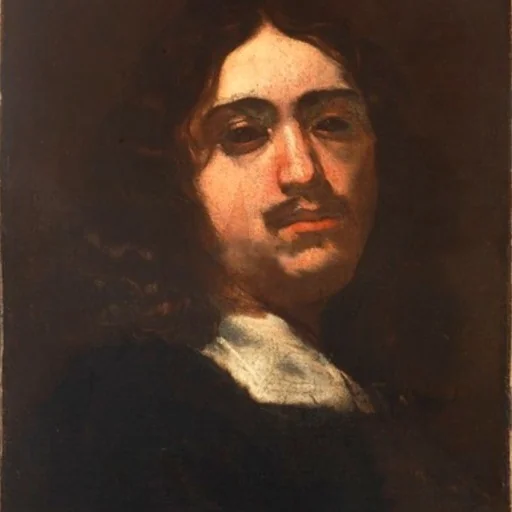
Artist
Jusepe de Ribera (Valencian:; baptised 17 February 1591 – 3 November 1652) was a Spanish painter and printmaker.