Artwork
山水唐人物図屏風|Landscapes with the Chinese Literati Su Shi and Tao Qian
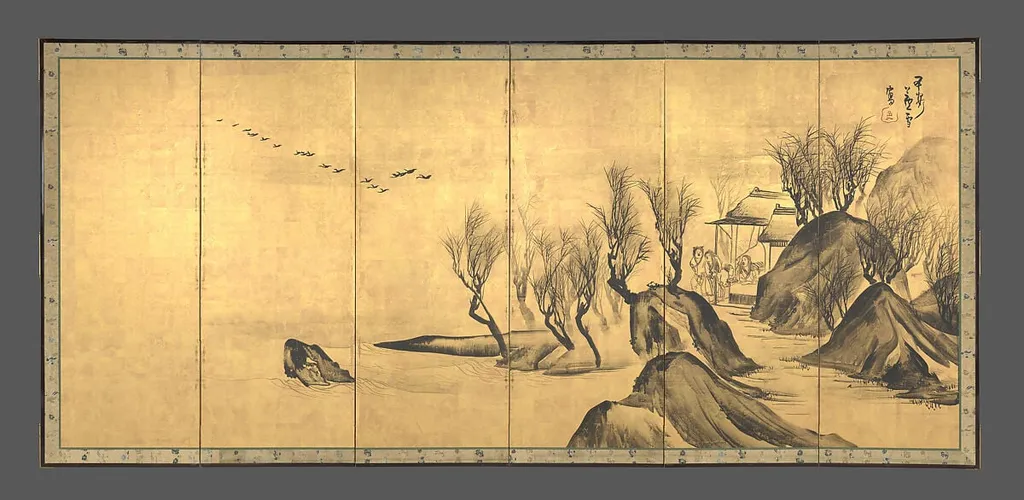
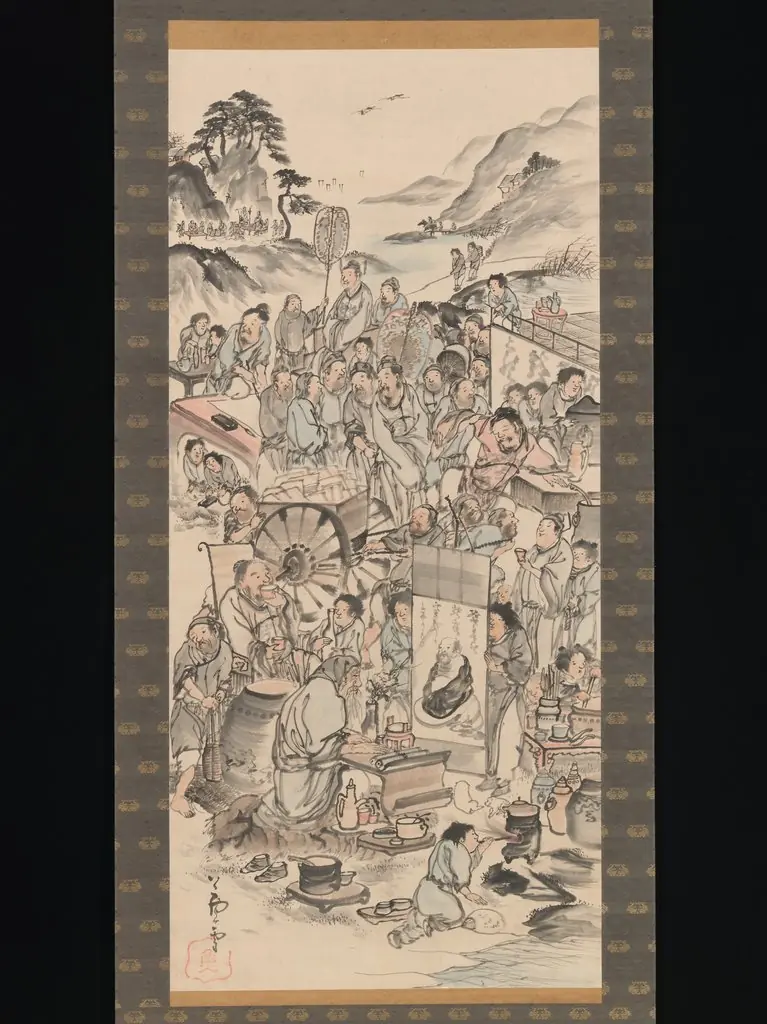
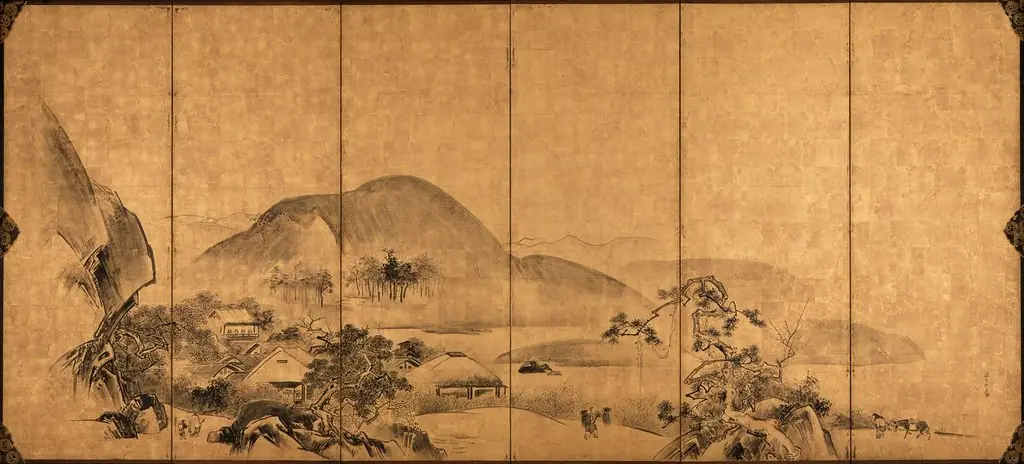
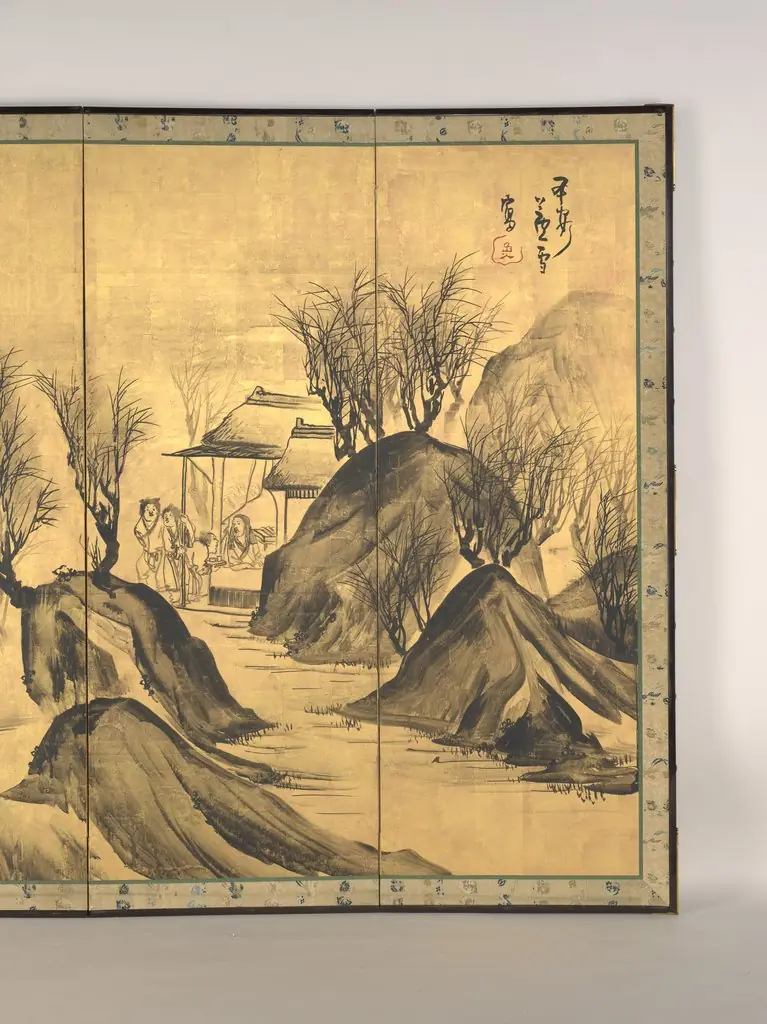
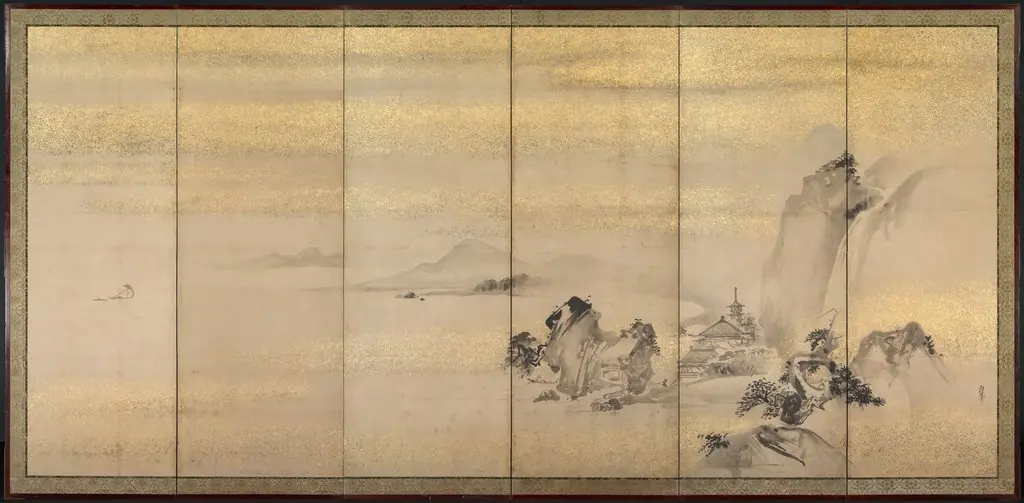
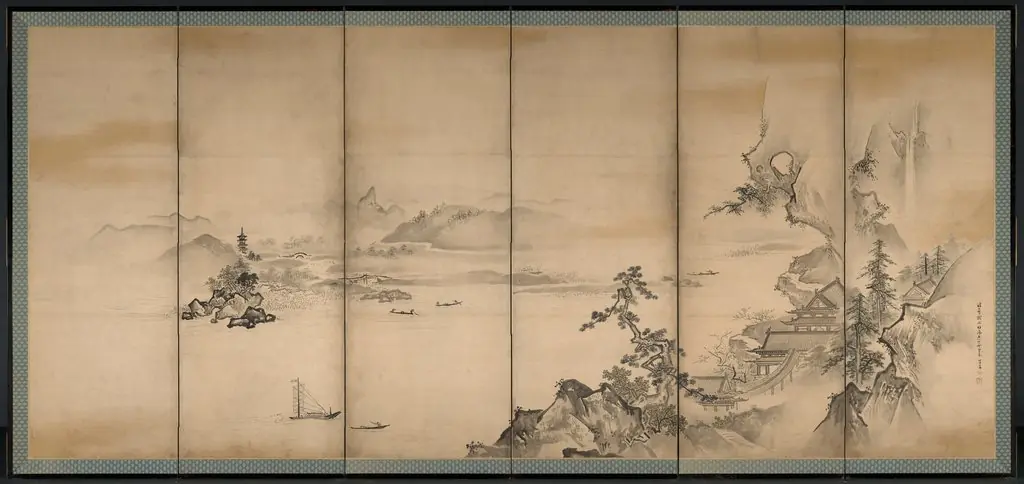
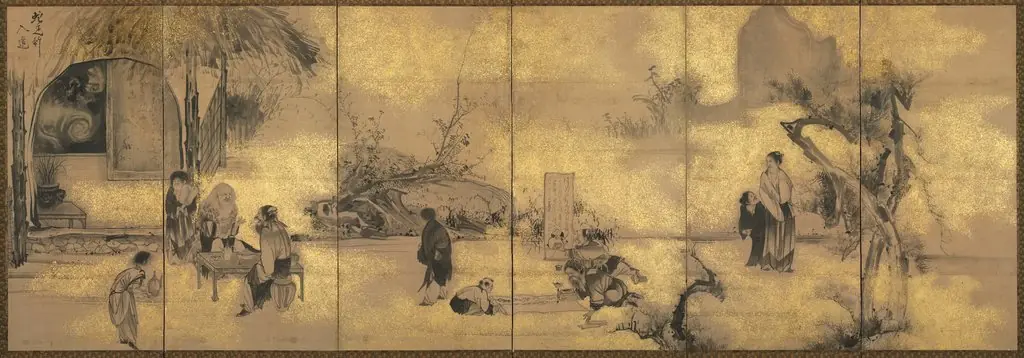
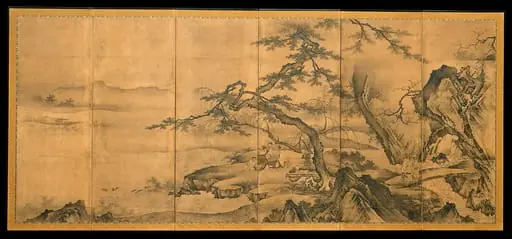
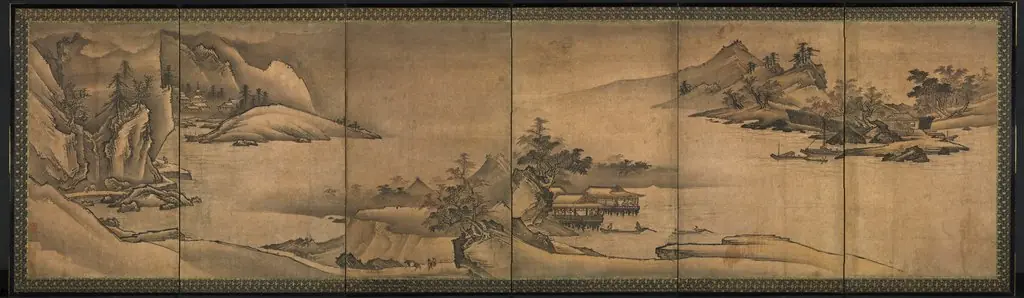
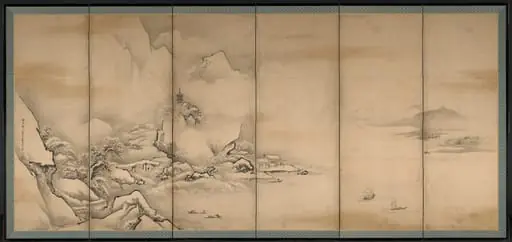
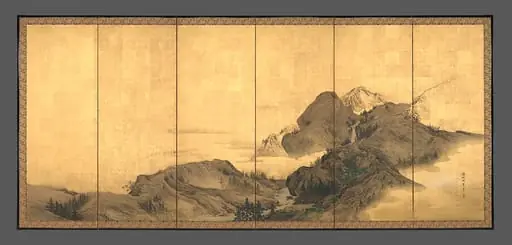
山水唐人物図屏風|Landscapes with the Chinese Literati Su Shi and Tao Qian is an ink painting by the Nihonga artist Nagasawa Rosetsu. It dates from 1797 and is held in the collection of the Metropolitan Museum of Art.
About this work
Overview
These screens exemplify Rosetsu's distinctive approach to landscape painting, blending traditional elements with a unique visual sensibility.
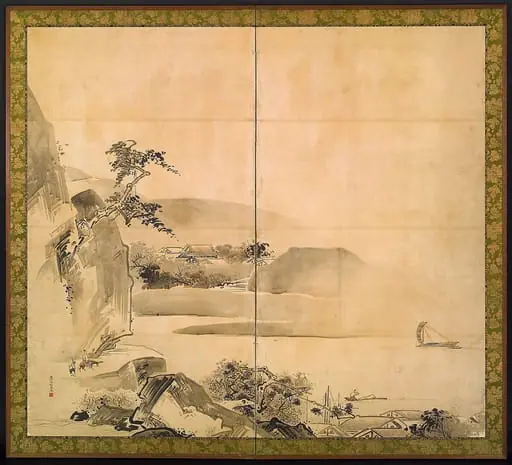
Nagasawa Rosetsu created this pair of six-panel folding screens, titled Landscapes with the Chinese Literati Su Shi and Tao Qian, in 1797. Executed with ink and gold leaf on paper, the paintings present a serene natural world. The composition features misty mountains, gnarled pine trees, and two figures, depicting celebrated Chinese poets. These screens exemplify Rosetsu's distinctive approach to landscape painting, blending traditional elements with a unique visual sensibility.
Subject & Meaning
The screens portray the esteemed Chinese poets Su Shi and Tao Qian, figures revered for their deep appreciation of nature and their commitment to a simple, contemplative existence. They are depicted amidst a landscape of twisted pines and ethereal mountains, reflecting their philosophical ideals. Rosetsu, a Japanese artist, frequently drew inspiration from Chinese literary and artistic traditions, using these historical figures to evoke themes of scholarly retreat and harmony with the natural world.
Technique & Style
Rosetsu utilized ink and gold leaf on paper to create these screens. The stark black ink lines define the natural forms, such as the gnarled trees and mountain contours, while the shimmering gold leaf serves as a luminous background. This application of gold was not merely decorative; it was designed to interact with ambient light, particularly candlelight, allowing the screens to emit a soft, warm glow and imbue a room with a subtle, animated presence during evening hours.
Context
Although painted in Japan by Nagasawa Rosetsu, the artwork's subject matter draws directly from Chinese culture. The inclusion of figures like Su Shi and Tao Qian highlights the enduring influence of Chinese literati traditions on Japanese art during the Edo period. Rosetsu's choice to depict these specific poets underscores a broader cultural exchange, where Japanese artists interpreted and recontextualized revered Chinese narratives and aesthetic principles within their own artistic framework.
Artist & collection

Artist
Nagasawa Rosetsu (長沢芦雪; 1754–1799) was a Japanese painter during the Edo period. A disciple of the Maruyama School, he was known for his versatile artistic style. He was born to the family of a low-ranking samurai. He…