Artwork
Chinese Landscape
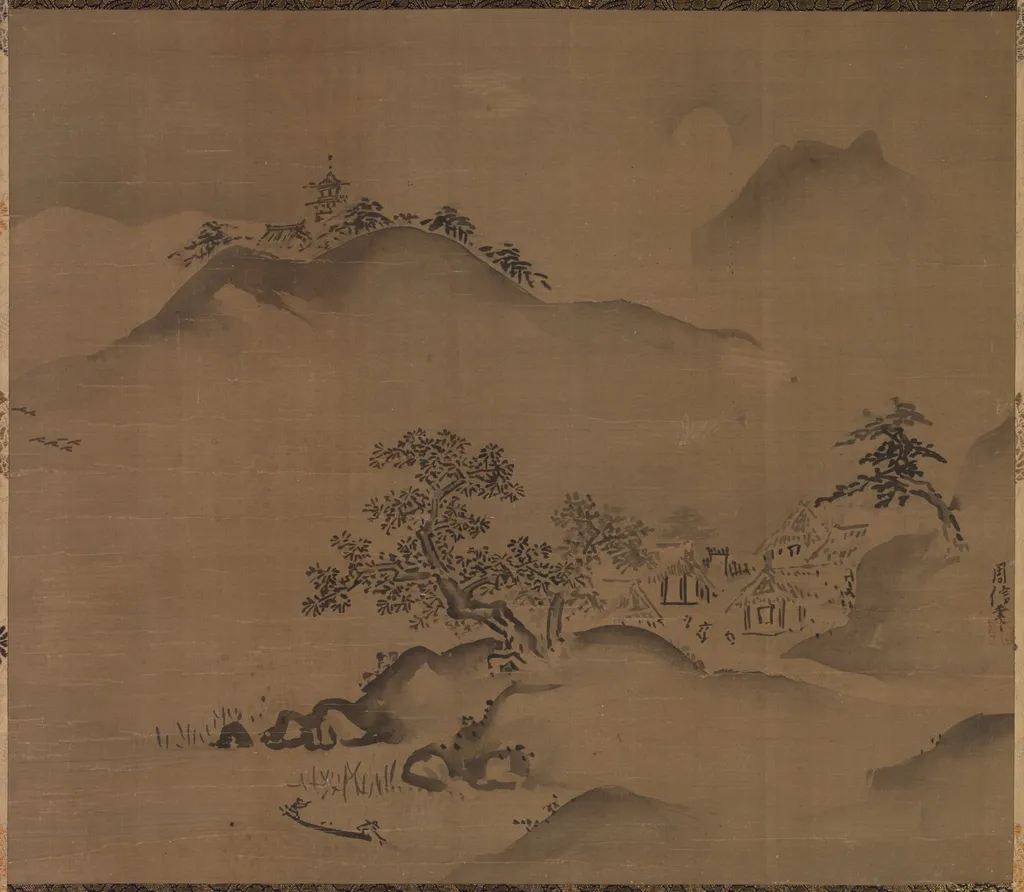
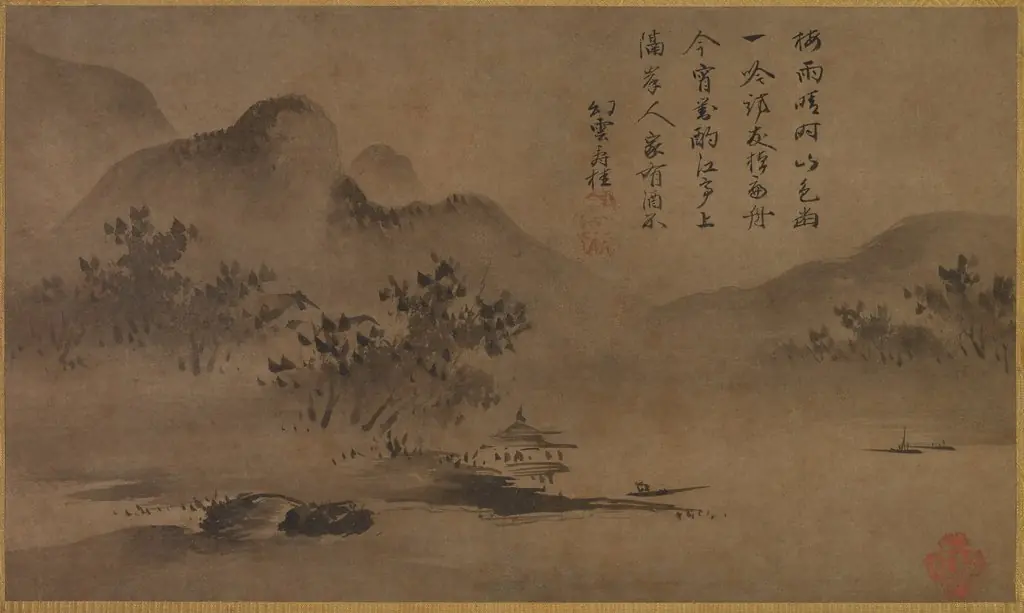
Chinese Landscape is an unspecified painting by the Baroque artist Kano Chikanobu. It dates from 1604 and is held in the collection of the Cleveland Museum of Art.
- Accession no.
- 1977.66
- Credit line
- Gift of Mr. and Mrs. Stanley I. Adelstein
About this work
Overview
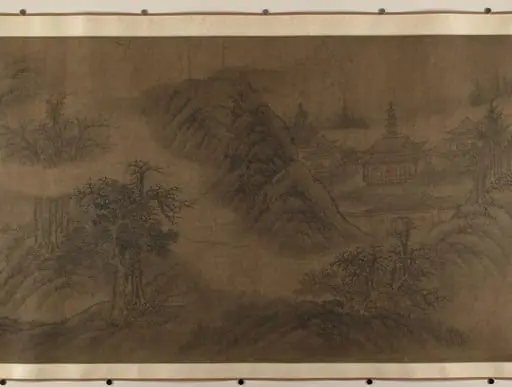
Chinese Landscape, attributed to Kano Chikanobu and dated to around 1604, is a monochrome ink painting in the collection of the Cleveland Museum of Art. The work presents a tranquil mountain setting rendered with restrained brushwork, emphasizing the relationship between natural forms and modest human structures.
Subject & Meaning
The composition depicts a rugged hillside dotted with sparse trees and a few diminutive buildings perched near the summit. The sparse human presence suggests a contemplative interaction with nature, a theme common in Japanese landscape painting that invites reflection on the transience of human activity within a timeless environment.
Technique & Style
Executed in ink on paper, the piece relies on fluid, loosely applied strokes that convey the texture of rock, foliage, and water. The limited palette of blacks, browns, and a subtle wash of blue for the sky highlights the artist’s emphasis on line and tonal variation rather than detailed coloration.
History & Provenance
Created in the early seventeenth century, the painting entered the Cleveland Museum of Art’s collection through a mid‑twentieth‑century acquisition, though earlier ownership records remain undocumented. Its attribution to Kano Chikanobu aligns it with the Kano school’s tradition of ink landscape work.
Context
During the period of its creation, Japanese ink painting was influenced by Chinese literati aesthetics, emphasizing spontaneity and the expressive potential of brushwork. Kano Chikanobu’s work reflects this cross‑cultural dialogue, integrating formal compositional principles with a personal, understated approach to natural scenery.
Own this work as a print
Artist & collection