Artwork
狩野周信筆 七福神唐子図屏風|Seven Gods of Good Fortune and Chinese Children
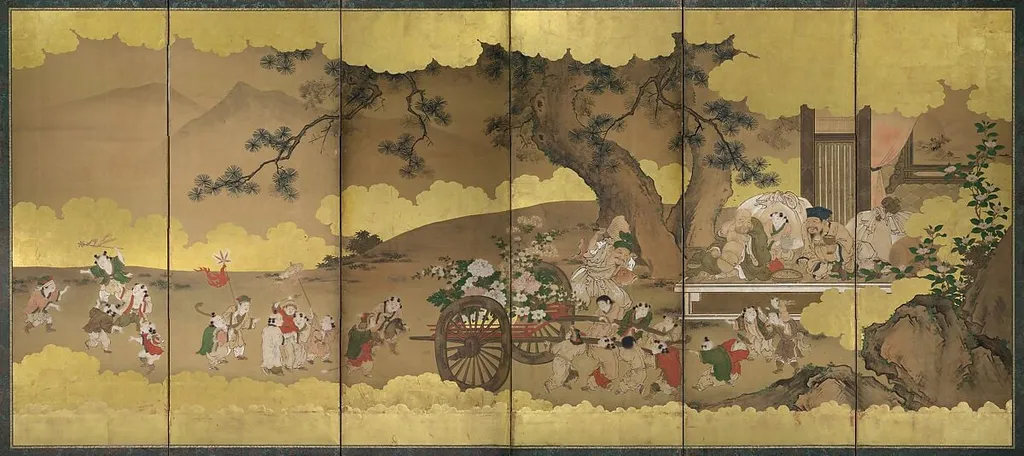
狩野周信筆 七福神唐子図屏風|Seven Gods of Good Fortune and Chinese Children is an ink painting by the Baroque artist Kano Chikanobu. It dates from 1700 and is held in the collection of the Metropolitan Museum of Art. This six-panel folding screen, titled "Seven Gods of Good Fortune and Chinese Children," depicts a lively garden scene.
About this work
Subject & Meaning
Peonies symbolize wealth and honor, the cart conveys the transport of blessings, and the children represent fertility and future prosperity.
The work depicts the Seven Gods of Good Fortune (Shichifukujin) accompanied by Chinese children (karako), as indicated by its title. Rendered as an allegory, the screen includes peonies, a cart, children, human figures, and a man. Peonies symbolize wealth and honor, the cart conveys the transport of blessings, and the children represent fertility and future prosperity. Together, the imagery conveys an auspicious wish for good fortune, happiness, and abundant blessings.
Technique & Style
The artwork is a six-panel folding screen created with ink, polychrome pigments, and gilt on paper; the reverse side is likewise treated with ink, color, and gold leaf. It depicts the Seven Gods of Good Fortune accompanied by Chinese children, incorporating allegorical motifs such as peonies, a cart, and various human figures. The technique combines fine ink drawing with decorative color and gold application, resulting in a balanced, rhythmic composition characteristic of Edo-period screen painting.
History & Provenance
The six-panel folding screen titled Seven Gods of Good Fortune and Chinese Children, attributed to Kano Chikanobu, is held in the collection of the Metropolitan Museum of Art in New York. The work is catalogued under the accession number 29.100.498. Created during the 17th to 18th centuries, the piece is executed in ink, color, and gilt on paper.
While the provided sources confirm the museum's possession and the specific inventory number, they do not contain details regarding the work's acquisition date, previous ownership history, or a record of specific exhibitions.
Overview
This six-panel folding screen, titled "Seven Gods of Good Fortune and Chinese Children," depicts a lively garden scene. Executed with ink, color, and gilt on paper, the artwork portrays the traditional Japanese deities of luck engaged in playful interaction with children in Chinese attire. The reverse side also features ink, color, and gold. This vibrant composition offers a celebratory vision of prosperity and joy.
Artist & collection


 The Tale of Taishokan
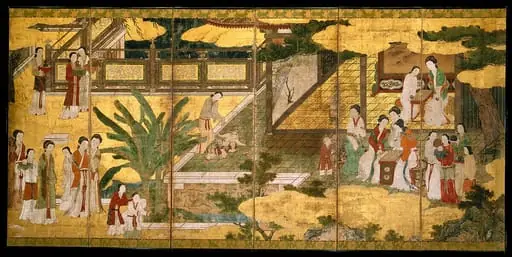 伝狩野永徳筆 唐美人唐子図屏風|Chinese Women and Children in a Palace Garden
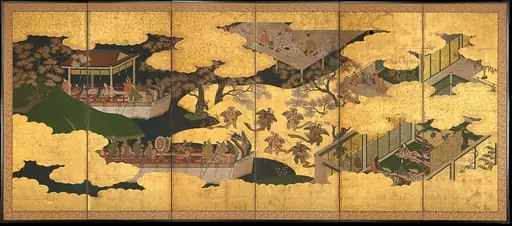 源氏物語図屏風 (胡蝶)|“Butterflies”
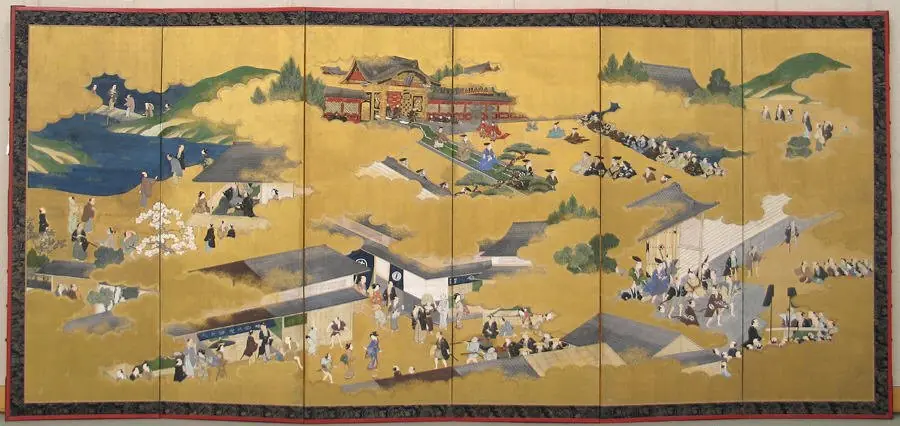 Daimyo Procession from Yūshō-in
 Scenes from the Tales of Ise
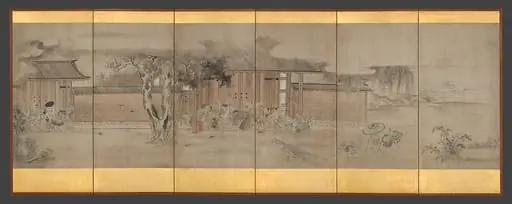 Untitled
 The Eight Immortals of the Wine Cup
 The Eight Immortals of the Wine Cup
 南蛮屏風|Arrival of the Europeans
 花見・紅葉狩図屏風|Cherry-Blossom and Maple-Leaf Viewing