Artwork
The Eight Immortals of the Wine Cup
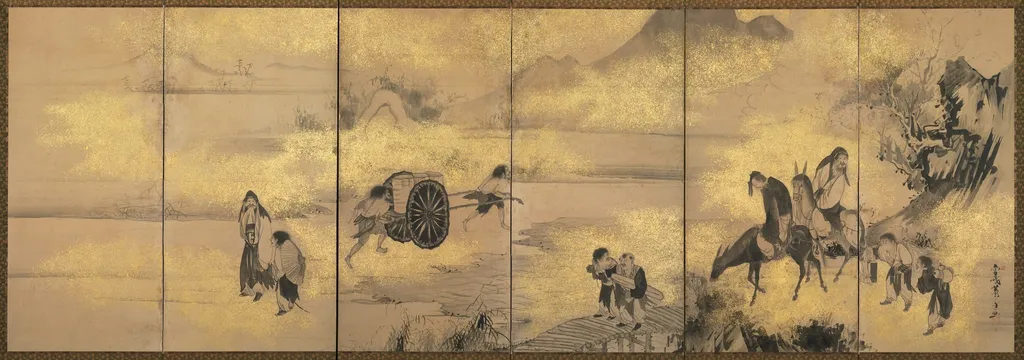
The Eight Immortals of the Wine Cup is an unspecified painting by the Nihonga artist Soga Shōhaku. It dates from 1765 and is held in the collection of the Cleveland Museum of Art.
About this work
Subject & Meaning
The work thus celebrates the ecstatic unity of the sacred and the profane in a moment of shared revelry.
The painting portrays the Eight Immortals of the Daoist pantheon gathered around a wine cup, each figure identified by his characteristic attribute: a bamboo cane, a lotus, a gourd, a bamboo flute, a long-necked gourd, a sword, a fan, and a scroll. These symbols convey the immortals' divine powers, their roles as patrons of longevity, health, and joy, and their association with the pleasures of earthly life. Together they embody the Daoist ideal of harmonious communion between the spiritual realm and everyday existence, a theme that Soga Shohaku emphasized through the lively, unrestrained brushwork and informal composition.
The work thus celebrates the ecstatic unity of the sacred and the profane in a moment of shared revelry.
History & Provenance
The painting is dated 1765 and is attributed to Soga Shōhaku based on the artist’s documented practice and the inscription on the work.
It entered the Cleveland Museum of Art in 1976 as accession number 1976.11, where it remains in the permanent collection.
The Eight Immortals of the Wine Cup is held in the collection of the Cleveland Museum of Art in Cleveland, United States. The museum acquired the 1765 painting by Soga Shōhaku in 1976, assigning it the accession number 1976.11. The work is recognized as a Japanese painting created by the artist between 1730 and 1781. No specific exhibition history is detailed in the provided sources.
Overview
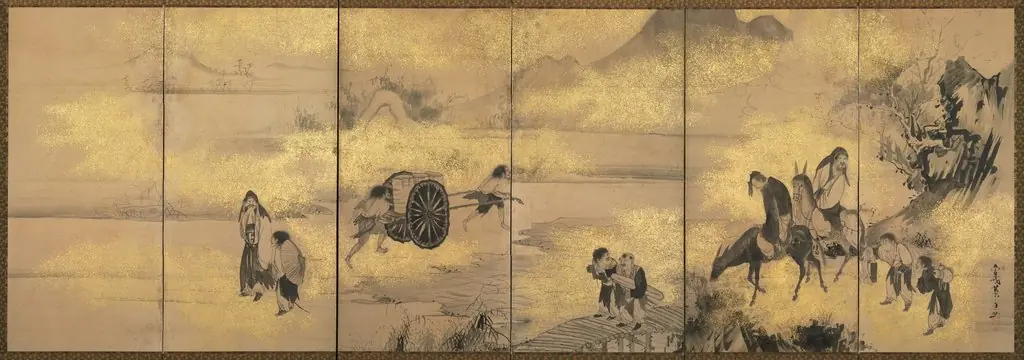
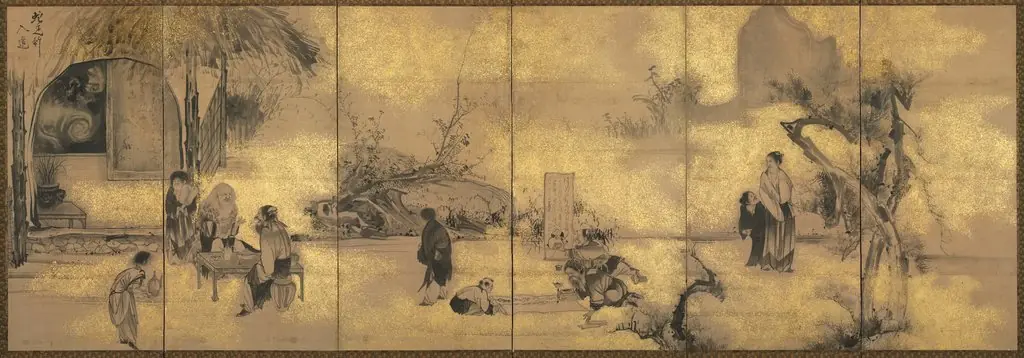
Created in 1765 by the Japanese painter Soga Shōhaku, the work titled The Eight Immortals of the Wine Cup is a six‑panel folding screen. It is part of the collection of the Cleveland Museum of Art. The panels are unified by a shimmering gold ground that frames a series of figures rendered in monochrome ink with occasional gold highlights.
Technique & Style
Shōhaku employs a realistic rendering of human forms and objects, using bold black ink lines against the gold background. The contrast of monochrome figures with selective gold accents creates a sense of depth while maintaining a decorative surface. The composition balances detailed observation of clothing and movement with the flat, luminous quality of the gilded plane.
Artist & collection

Artist
Shōhaku spent his life in Kyoto, the creative heart of Japan, where he painted scrolls and screens that looked nothing like the soft landscapes of his day.

 伝狩野永徳筆 唐美人唐子図屏風|Chinese Women and Children in a Palace Garden
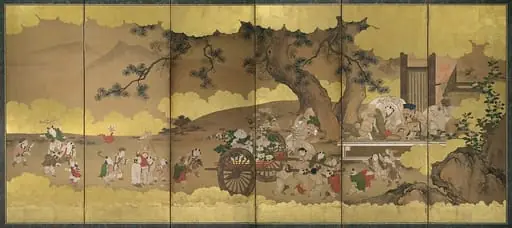 狩野周信筆 七福神唐子図屏風|Seven Gods of Good Fortune and Chinese Children
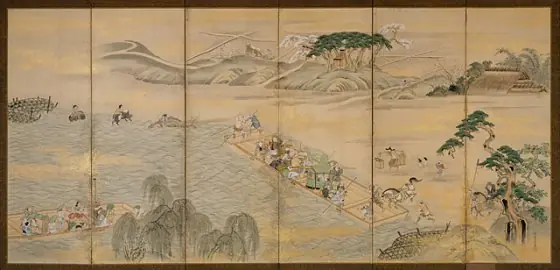 Genre Scenes
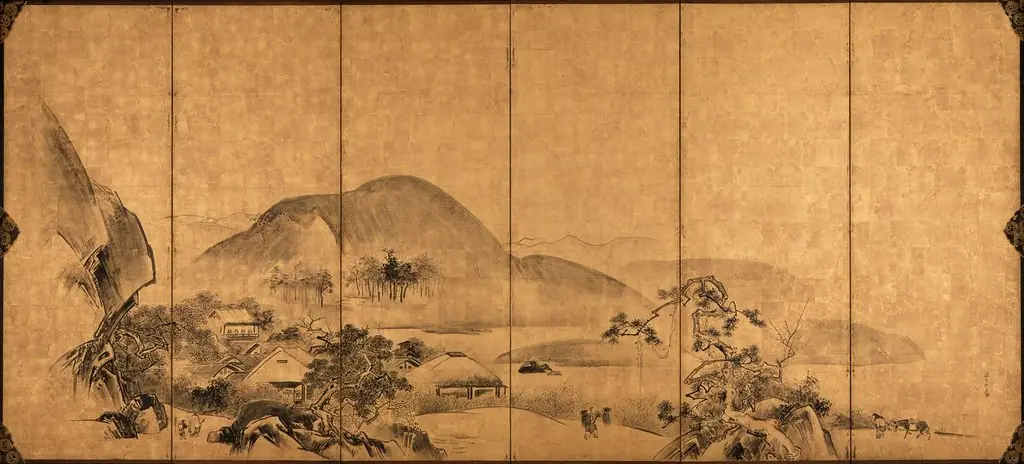 Landscape
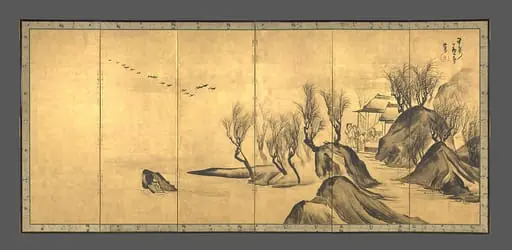 山水唐人物図屏風|Landscapes with the Chinese Literati Su Shi and Tao Qian
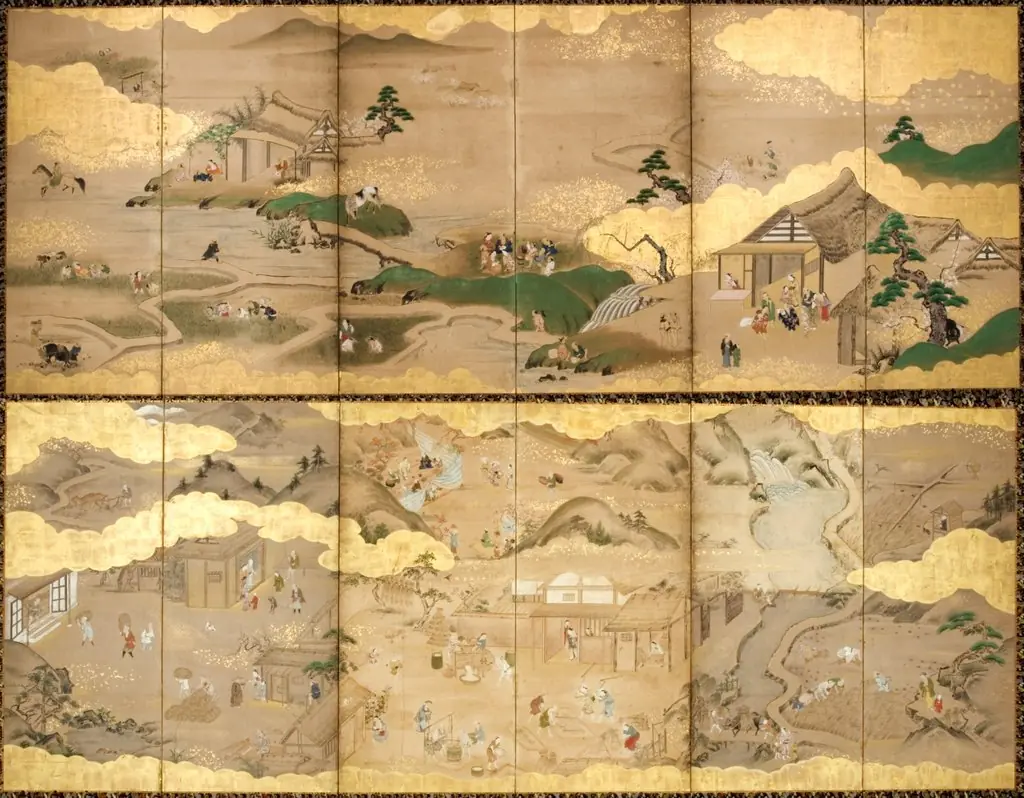 Rice Cultivation through the Four Seasons
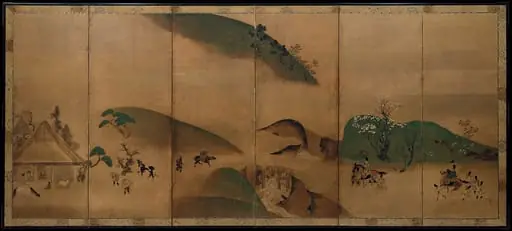 俵屋宗達工房 大原御幸図屏風|Royal Visit to Ōhara, from The Tale of the Heike
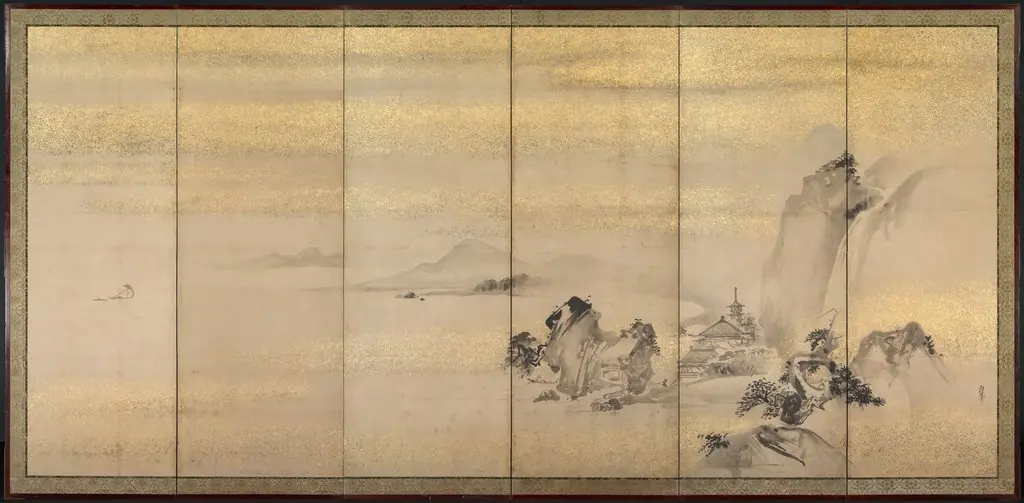 Summer and Winter Landscapes
 Summer and Winter Landscapes (one of a pair)