Artwork
Untitled
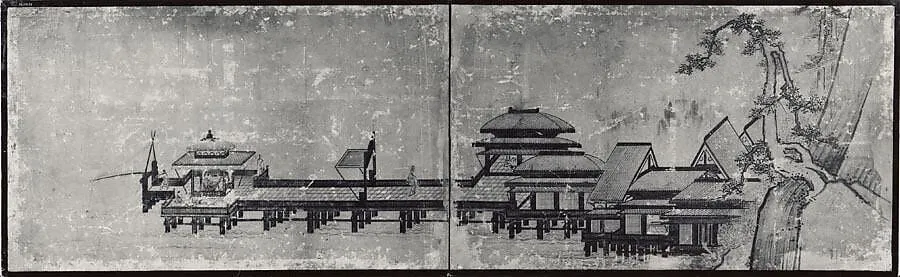
Untitled is an ink painting by the Baroque artist Kano School. It dates from 1650 and is held in the collection of the Metropolitan Museum of Art.
About this work
Overview
This two-panel folding screen, dated around 1650, is attributed to the Kano School of Japanese painting.
This two-panel folding screen, dated around 1650, is attributed to the Kano School of Japanese painting. Executed in ink, color, and gold leaf on paper, it presents a landscape scene divided between two sides: one richly adorned with gold and vibrant hues, the other restrained in muted tones. The work exemplifies the decorative and spatial conventions of Edo-period screen painting, designed for interior architectural settings rather than public display.
Subject & Meaning
The composition depicts a slender, elevated structure with curved roofs, seemingly suspended above water on slender stilts. A narrow bridge connects the building to the shore, while small figures and sparse trees suggest human presence without narrative focus. The structure may reference a pavilion or temple, evoking contemplative solitude.
The contrast between the ornate and subdued panels may imply a shift between the material and spiritual realms, a common theme in Japanese aesthetic traditions.
Technique & Style
The screen employs layered ink washes and delicate color application, with gold leaf used selectively on the left panel to enhance luminosity and spatial depth. The building appears to float through the strategic omission of a horizon line and the use of elevated perspective, a hallmark of Kano School spatial design. The reverse side, rendered without gold, relies on subtle ink gradations to suggest atmosphere, demonstrating a deliberate tonal contrast between the two faces of the screen.
History & Provenance
Created during the early Edo period, the screen likely originated as part of a private residence or elite patron’s interior decoration. It entered the collection of The Metropolitan Museum of Art in the 20th century, acquired through established channels of Japanese art export. Its condition suggests careful preservation, though its original context within a specific architectural space remains undocumented.
Context
The Kano School dominated Japanese painting from the 15th to the 19th century, serving as official artists to the shogunate. Their works often combined Chinese-inspired landscape motifs with Japanese decorative sensibilities. This screen reflects the school’s adaptation of Chinese ink traditions to local tastes, emphasizing harmony between architecture and nature, and using gold to signify sacred or elevated spaces within domestic environments.
Legacy
This screen exemplifies the Kano School’s enduring influence on Japanese decorative arts, particularly in the use of folding screens to define spatial experience. Its dual aesthetic, ornate versus restrained, became a model for later artists exploring contrast and balance. Though not widely exhibited, it remains a reference point in studies of Edo-period pictorial conventions and the symbolic use of materials in Japanese painting.
Artist & collection
Artist
The Kano School turned sliding doors, screens, and scrolls into shimmering worlds of ink, mineral color, and gold leaf.

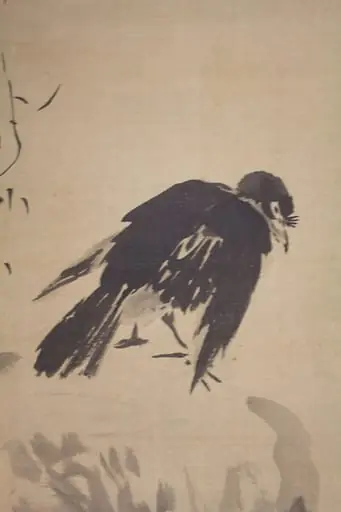
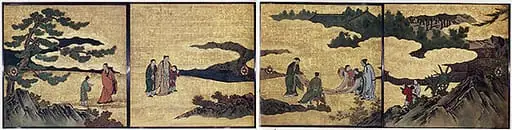
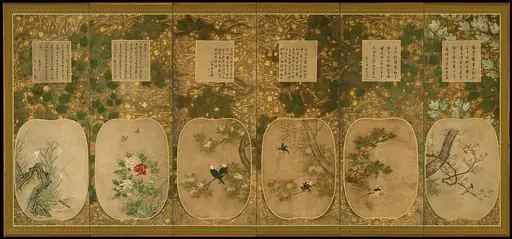
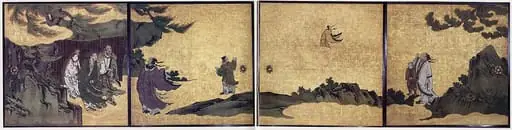
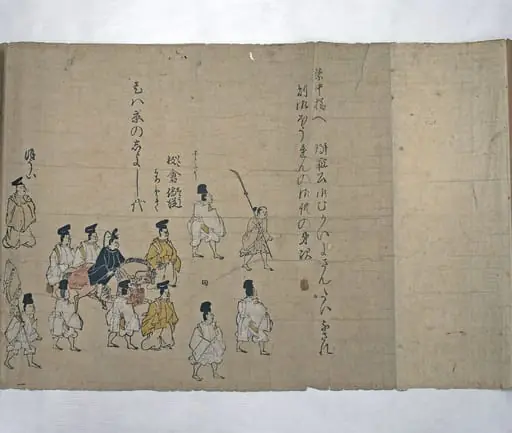
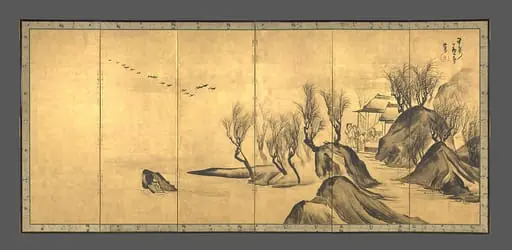
- 山水唐人物図屏風|Landscapes with the Chinese Literati Su Shi and Tao Qian
 Bright Lake and Beautiful Mountains
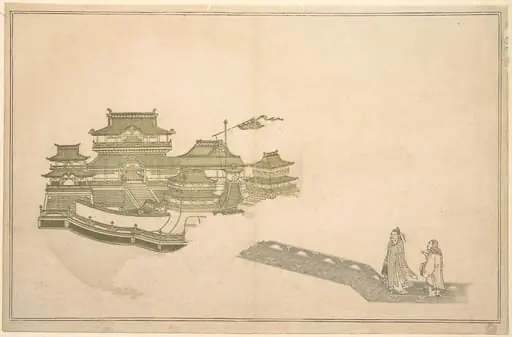 狂月坊|The Palace in the Moon
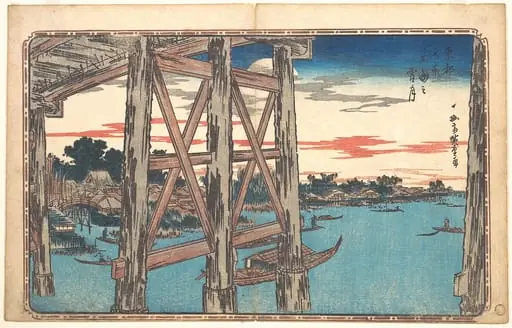 Ryogoku no yoizuki|東都名所 両国之宵月|Twilight Moon at Ryōgoku Bridge
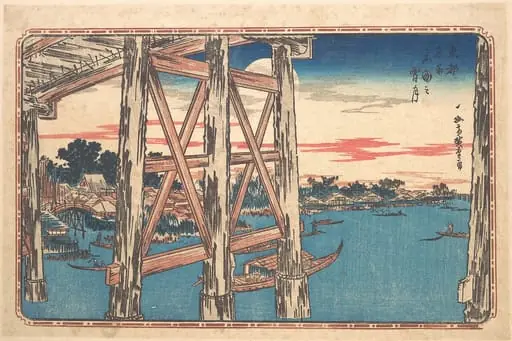 東都名所 両国之宵月|Twilight Moon at Ryōgoku Bridge
 The Shadow Dancers
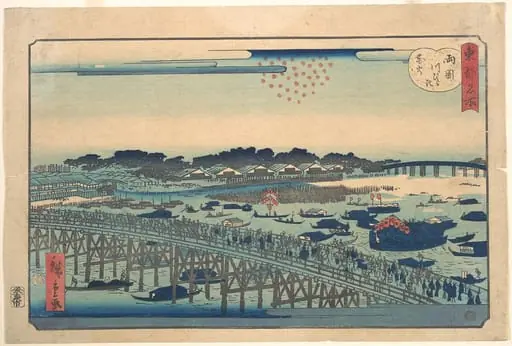 Untitled
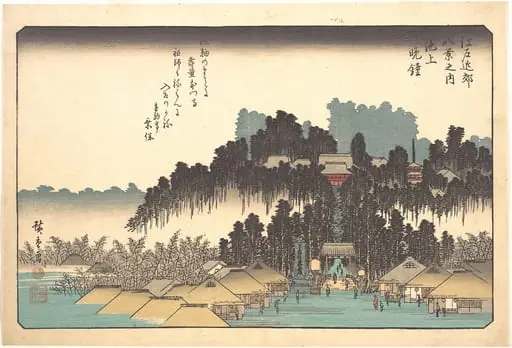 Ikegami Bansho|江戸近郊八景之内 池上晩鐘|Vesper Bells at Ikegami
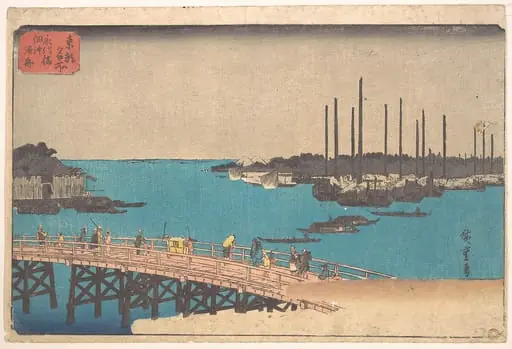 東都名所 永代橋佃沖漁舟|Eitai Bashi Tsukudajima Ryosen
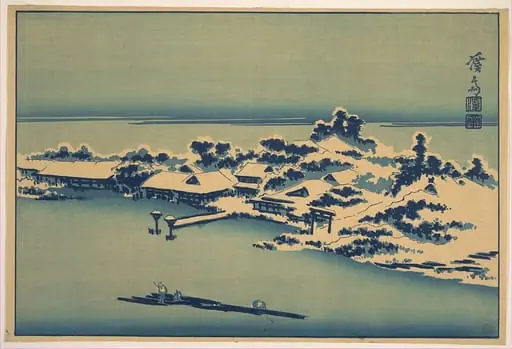 Untitled
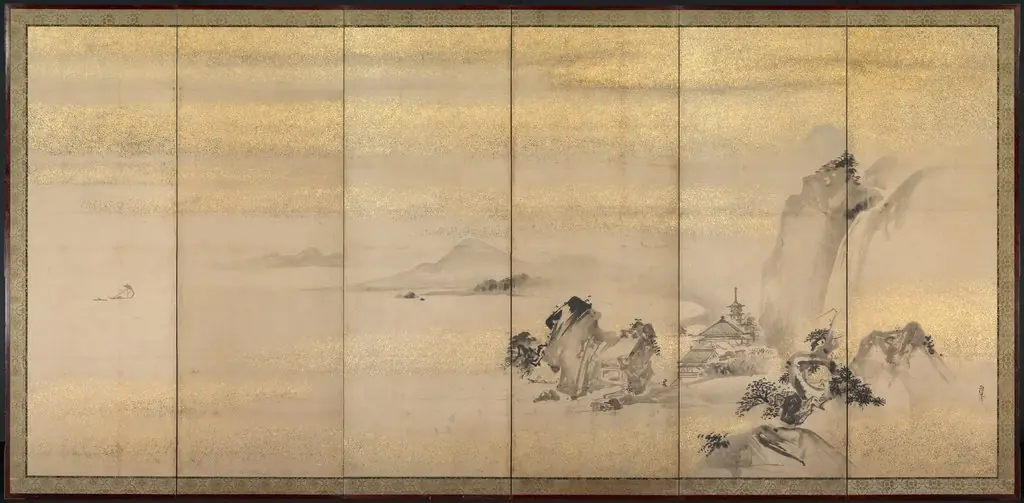 Summer and Winter Landscapes (one of a pair)
 Summer and Winter Landscapes