Artwork
The Shadow Dancers

The Shadow Dancers is an unspecified painting by the Nanga artist Yamamoto Baiitsu. It dates from 1833 and is held in the collection of the Cleveland Museum of Art.
About this work
History & Provenance
The work originated in Japan and is currently held in the collection of the Cleveland Museum of Art.
The Shadow Dancers is a painting created by the Japanese artist Yamamoto Baiitsu in 1833. The work originated in Japan and is currently held in the collection of the Cleveland Museum of Art. The museum acquired the piece with the accession number 1982.28.
The Shadow Dancers is held in the collection of the Cleveland Museum of Art in Cleveland. The work was accessioned under the inventory number 1982.28. Created by Yamamoto Baiitsu in 1833, the painting originates from Japan. The provided sources do not record any specific exhibition history for this artwork.
Overview
The Shadow Dancers, painted in 1833 by Yamamoto Baiitsu, is part of the collection at the Cleveland Museum of Art. The work presents a tranquil riverside landscape dominated by a long wooden bridge that extends across a gentle stream, framed by modest hills and sparse trees.
Subject & Meaning
At the left edge of the composition a modest pavilion shelters two figures, one of whom holds a crimson fan. Along the bridge, indistinct silhouettes of dancers or pedestrians glide in the distance, their forms merging with the surrounding light, evoking a sense of fleeting presence within an otherwise serene setting.
Technique & Style
Baiitsu employs a restrained palette of soft hues and delicate line work, allowing the figures to appear almost ethereal. The subtle gradations of tone and the fine, almost translucent brushstrokes create a dreamlike atmosphere, where the ghostly dancers seem to float above the landscape rather than occupy solid space.
Context
The painting reflects the Edo‑era fascination with lyrical, poetic scenes that blend everyday life with an idealized, almost spiritual ambience. Baiitsu’s use of shadowy figures aligns with contemporary Japanese artistic conventions that emphasize transience and the subtle interplay between presence and absence.

Artist & collection


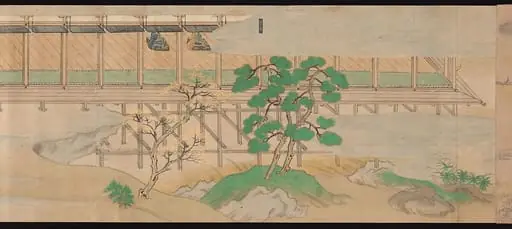 神於寺縁起絵巻断簡|Scene from The Illustrated Legends of Jin’ōji Temple (Jin’ōji engi emaki)
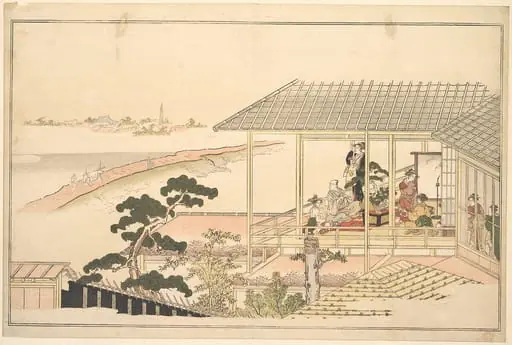 狂月坊|A Party of Merrymakers in a House in the Yoshiwara on a Moonlight Night
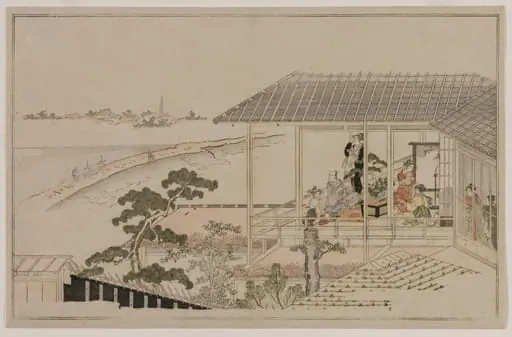 Moonrise Over the Nihon Embankment and the Yoshiwara
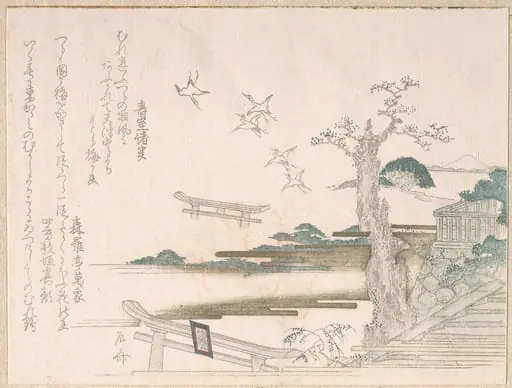 『春雨集』 摺物帖柳々居辰斎画 鎌倉の鶴岡八幡宮に鶴|Spring Rain Collection (Harusame shū), vol. 2: Cranes at Tsurugaoka Hachimangō Shrine in Kamakura
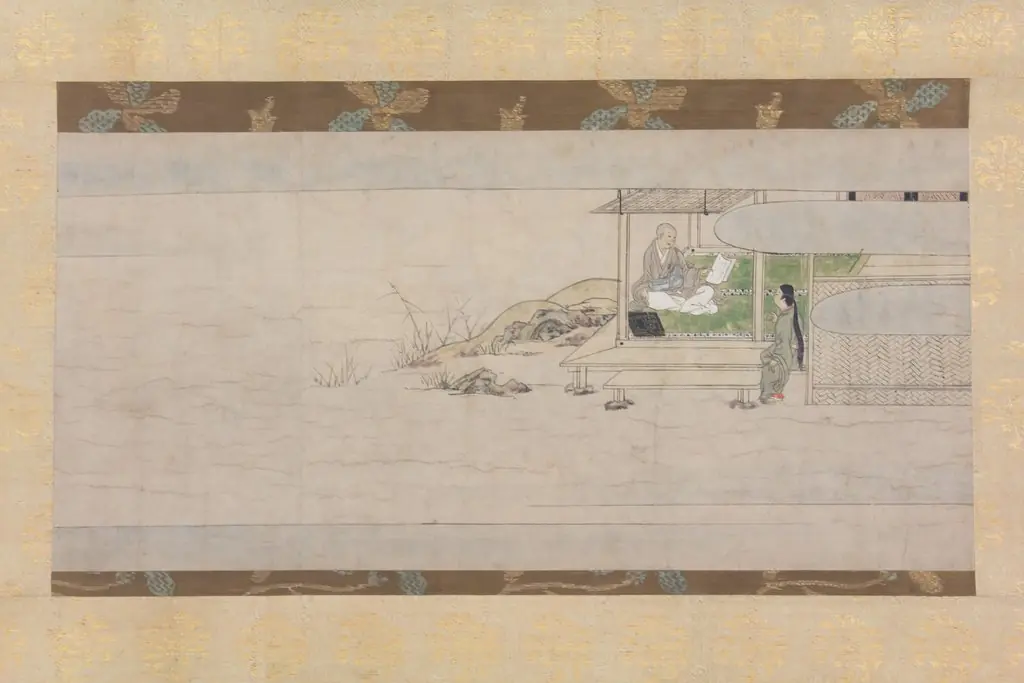 Scene from A Long Tale for an Autumn Night
 Untitled
 Untitled
 南宋 佚名 傳李公麟 豳風七月圖 卷|Odes of the State of Bin
 Untitled
 元 錢選 王羲之觀鵝圖 卷|Wang Xizhi watching geese
 清 樊圻 山水圖 冊 紙本|Landscapes
- The Shadow Dancers